|
| Before sunrise |
The ‘right’ answer is no longer understood as one that can’t go wrong but rather as one that everyone can agree is worth trying, given the knowledge available. ‘Adaptive management’ … stresses the importance of constantly reevaluating our knowledge and assumptions … based on the results of previous action.
- Nathan F. Sayre, Working Wilderness: The Malpai Borderlands Group and the Future of the Western Range
The ellipses I have inserted in the quote opening today’s post are not intended to slant the discussion but to broaden it. The quotation comes from a book that focuses on the Western range, and the approach of the Malpai Borderlands Group is ecological. Material omitted above is as follows: (1) “from which ecosystem management is derived” and (2) “about ecosystems.” I omitted that material because what I’m wondering is whether or not — and if so, how — the approach this group has taken, their formation of a “radical center,” might be broadened to address divisions in American society beyond ecosystem management.

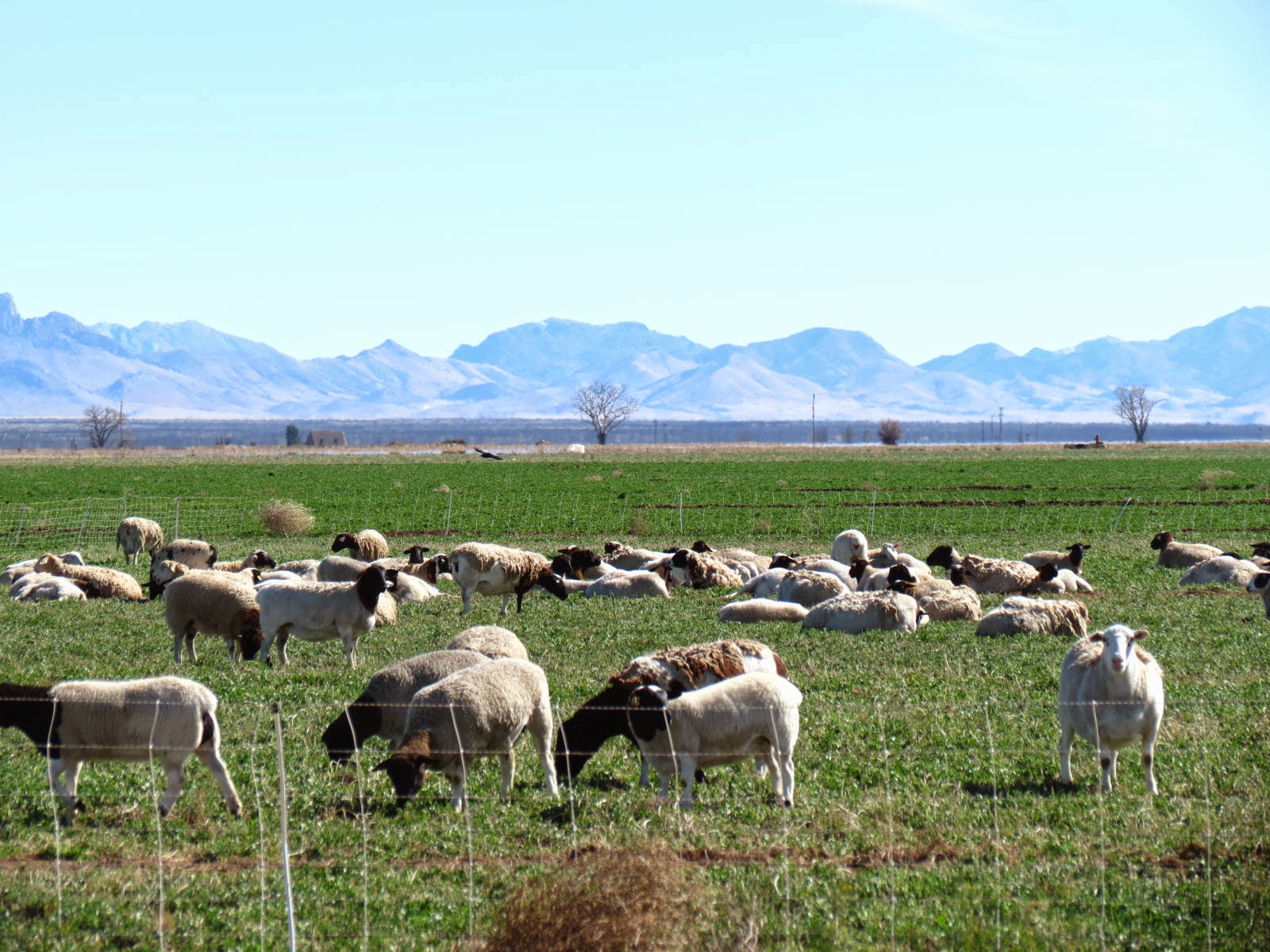
To understand my question, though, it will probably help to go back to the particular problem faced in southern Arizona and New Mexico and how the Malpai Group has sought to address it. At stake — for everyone — was protection of the land they loved. How best to protect the land and for whom and for what: the crucial ecological questions could not be addressed outside political considerations. Ranchers, understandably, wanted to continue ranching, which meant grazing their cattle on both private and public lands. Environmentalists believed, because the assumption had been enshrined in public policy for decades, that grazing degraded the environment and had to be reduced, if not stopped outright. (When a conservation group acquired land, therefore, it generally took that land out of the ranch economy entirely.) Battle lines had been drawn, therefore, with positions entrenched and parties unable to grant an inch to their opposition.
Meetings of ranchers, land managers, wildlife officials, and environmentalists routinely degenerated into insulting tirades….
What have I left out at the end of that sentence? Here’s how it wraps up:
… whereas the Malpai discussions and subsequent get-togethers managed to remain civil and constructive.
With, I might add, people coming from the same kinds of groups and backgrounds as attended the disorderly, unproductive meetings marked by “insulting tirades.” What was the difference? That difference was not in the life experience of those involved or in their educations or larger political allegiances. It was a genuine concern for a specific geographic area and the realization that without new and genuine solutions for that area’s problems, everyone involved would lose.
Trust was not immediately granted to the group, and not everyone in the area was interested in joining. The movement that created the group was literally and metaphorically grassroots, but it did not spring full-blown into being overnight. It began with a discussion group coming together to determine points of agreement, finally culminating in an official statement:
To reverse this [existing political] polarization [between ranchers and environmentalists], which is a no-win situation for the land and everyone concerned, the ‘Malpai Meeting’ proposes that a concerned effort be made to identify the conservational common ground that unites all of us who love the land, then to create programs in which we can work together to implement the values we share.
Valuing the land itself was the bedrock common value of the group.
All [of us] who love the land agree that it should not be cashed-in or mined-out and that its health takes precedence over profits.
That “over profits” part makes for a strong statement, given that ranching families depend on making their livelihood from the land, but that livelihood depends on the land’s health, and so the ranchers have the strongest economic stake, along with a deep love often going back generations — what Wendell Berry calls “affection” for the very specific piece of the earth they call home.

The scourge of mesquite that the Artist and I could not help noticing when we first arrived in southeast Arizona is more than an aesthetic concern. When shrubs outcompete grass, grazing suffers. On land dominated by woody plants with increasingly bare earth between shrubs, the desert’s sparse rainfall is lost more quickly to runoff, carrying with it more and more of the already thin topsoil. Without topsoil, and with shrubs having gained the upper hand, merely removing cattle from the land is no guarantee whatsoever that grasslands will regenerate. Old “wisdom” that called for maximum numbers of grazing animals per acre has proved insufficient protection for the land. Rainfall varies from season to season and year to year, and so both available water and season need to be taken into account when determining where and how many animals to graze. A universal formula (the holy grail of science) doesn’t cut it. “Averages” do not occur in nature.
— And here I will cut to the chase and reveal that fire is a big part of the long-term solution for preserving Southwestern desert grasslands. Decades of fire suppression are what gave mesquite the upper hand over grass. The overall situation, of course, is much more complex than what I have presented here, and anyone interested is advised to look into the book from which I have drawn my information. My own point today, here, much as I have come to love southeast Arizona and care for its future, is a broader one.
The “radical center” position created by the Malpai Borderlands Group, the author of the book explains, “was not simply centrist.
Rather than splitting the difference between two extremes, the radical center aimed to discard the polar oppositions that defined the spectrum in the first place.
I love that! This “center” is not some meaningless compromise where no one ends up satisfied. The goal of the group was nothing less than —
to unite ranching and conversation, to make them complementary and symbiotic if not synonymous … [in an] effort that would have to be public and multilateral.
Persons involved began by meeting in conversation to find common values. Their conversations were kept civil. Rejecting “expert” advice that had not worked in the past, they did not reject science but insisted on research conducted locally by scientists not wedded to specific outcomes promoted by any particular group. Members of the MBG, like the researchers on their lands, were determined to maintain open minds.
Quick recap:
Civil conversation among open-minded people not wedded in advance to specific political outcomes but agreeing to examine empirical evidence to determine what best accomplishes their shared goals.
That is how I see the MBG example as applicable to widely diverse economic, social, and environmental problems in other parts of our country. Can you see it, too?
Not everyone in the AZ/NM borderlands area, I’m sure, has joined the Malpai Borderlands Group. True, that’s just a guess on my part, but think about it. Even when a new approach to solving an old problem outperforms previous attempts, there are usually a few people who continue, in the face of all evidence, to clutch tightly to their previous ideologically-driven beliefs. That’s why I wouldn't be surprised if a few unconvinced extremists remain on both ends of the political continuum. But I bring that up not to cast any bad light on anyone but merely to urge those who would seek consensus and cooperation — and results — to realize that it is possible for committed individuals to join together and move forward without everyone within earshot being on board.
No individual or group in history has ever had 100% support and devotion. It isn’t necessary. Without 100% of a population being on board, however, the more people who come to see cooperation and empirical research bringing tangible benefits to all concerned, themselves included, the more support the “radical center” will gain — provided it holds to a nonconfrontational, noncoercive, open-minded approach.
What do you think? Worth a try in other areas of community life, in other parts of the United States? “Git ‘er done!” How about it?

Postscript, 4/10
In my eagerness to share the story of the Malpai Borderlands Group and my ideas for how what worked for them could work in other places and other situations, I may have glossed too quickly over another piece contributing to the group’s success. You see, it was not only that a civil conversation uncovered common values. It was much more. This group of property owners, environmentalists, ranchers, scientists, and government agency employees came together to address a specific problem because they shared a common goal.
“Our goal is to restore and maintain the natural processes that create and protect a healthy, unfragmented landscape to support a diverse, flourishing community of human, plant, and animal life in our borderlands region.”
The problem was that their regional landscape was threatened in several ways. Their mission was to find strategies to reach their shared goal (“to restore and maintain … natural processes…”) by accomplishing clear objectives embedded in the goal statement — preventing fragmentation, restoring grasslands, remediating shrub encroachment, and conserving ranching as a livelihood.
It’s one thing for people who disagree politically to come together to try listening to one another’s views. That’s very, very hard — and maybe it isn’t even worth the time spent. On the other hand, when people in a community, who share some common core value or values, disagree over how to accomplish a shared goal — that’s when conversation is most likely to be successful, as long as political ideologies, religious differences, “how we’ve always done things,” and the like can be set aside and the question at hand approached with open minds. When there is something that people agree needs doing, their problem is no longer a matter of abstract principle but a question of what will work. Pragmatism is America’s contribution to Western philosophy, and Americans have always been noted for their ability to find ways to get things done.
An ecological community, a village, a school district, a county fair committee, even a church — all, from time to time, face specific problems requiring consensus on how the problems will be solved. Too often the necessary discussions disintegrate into unproductive, painful, “insulting tirades.” A better model is available, if we’re adult enough to adopt it.