|
| Northern Michigan cherry orchard, spring |

In Food and Farming
by Emita Brady Hill
Detroit: Wayne State University Press (A Painted Turtle Book), 2020
Paper, 327pp w/ index, $24.99
Warning: This book is not a love story! It is 20 love stories, all told in the words of northern Michigan women involved in one way or another (some in multiple ways) with growing, preparing, selling, and/or writing about local food. Emita Hill had the genius to collect and edit these oral histories, and her daughter, Madeleine Hill Vedel, to whom the book is dedicated, took many of the portraits that introduce each section.
The book is organized into six sections:
I. Two Orchards and a CSA
II. Coffee, Tea, and Chocolate
III. Pastry and Cheese
IV. Chefs and Restaurants
V. Writers and Teachers
VI. Two Homesteads
It will not take readers long to discover, however, that there is much overlap in the backgrounds, interests, and passions of the women in the various stories. Many, though not all, are first-generation Americans (at least one an immigrant herself) who grew up in urban immigrant communities where food held families and neighborhoods together. Another related thread running through many of the stories is travel, with women exploring world food at all ages of their lives, in various ways, from Peace Corps work to cooking classes with famous chefs. A third commonality shared by almost all is education. Whether educated through on-the-job training, self-taught by trial and error, having studied under experts and/or at colleges and universities – also, teaching at every level imaginable -- these are women passionate about learning.

Before I get too far into my raving about this fascinating collection, though – and I’m so glad to see something like this in print! – I should acknowledge that I have known many of the subjects for years. For example, I met Anne and John Hoyt back when their Leelanau Cheese was still a dream: now, like my Dog Ears Books, their business has been around for over a quarter of a century. Julia Brabanec and Susan Odom are neighbors of ours -- at least, as country people measure neighborhoods. Barb Tholin’s son and one of our grandsons were kindergarden friends back in St. Paul, Minnesota. And so on.
Other of the women I have met only casually, and two or three not at all. Yet, I should add, because part of the joy and great privilege of having a bookstore is meeting in person people whose stories, true or fictional, I have loved between the covers of books. Emita Hill and I met for the first time only in 2019, after all. But right away, when she described her book to me and said that Wayne State University Press was the publisher, I was ready to buy it sight-unseen.
-- Fast forward to spring of 2020, this strange spring of COVID-19, which finds me sheltering in place in southeast Arizona, where my husband (the Artist) and I came for the winter, as we have done three or four times previously. I’ve had Northern Harvest on my to-read stack for several weeks and have picked it up many times to read a few pages. A couple of times I read paragraphs or whole pages aloud to the Artist. But I have been rationing my reading of this book, careful not to read too fast, since our return to Michigan and the re-opening of my bookstore are as uncertain for me as the future is for everyone these days, making these visits with friends back home no insignificant part of my current pleasure in the book. But enough about me. I want and need to tell you about the book itself.

First, the stories in Northern Harvest are not just about people I know and places I love, nor will they be only that for other readers. This is important: they are also stories about the growth and convergence of several social movements in the United States in recent decades and the roles played by women in the realization and coming together of those movements. The particularity and specificity of the northern Michigan setting authenticates the larger social picture, since every large social picture happens first to individuals at a local level.
Let’s begin at the beginning. Cheryl Kobernik and her husband are farmers who grow cherries organically. Cheryl comes from a background in sociology and counseling but says of her Up North life,
Not growing up in agriculture, it’s an honor to be accepted into the agrarian community. I know there are good people everywhere, but … I have never met people with such integrity in my life.
Although Jenny Tutlis, of Meadowlark CSA, and Julia Brabanec, organic apple grower for decades in Leelanau County with her late husband, John, started out life in art and drama, respectively, both take pride in years of growing healthy food for local markets. Says Julia,
This was our life, and we loved it. We worked very hard, and in later years when we would think back and talk about all that we did, we would say, “How on earth did we ever do that?”
Julia and John began their farming life in late middle age, and part of “that” was planting over a thousand trees by hand and pruning those trees year after year. Jenny came from a different beginning, inspired by stints in the Peace Corps and time at Innisfree Village, a community in Virginia.
It may have been inevitable that certain words and scenes would jump out at me from each story, especially at this time in the world’s history. When Anne Hoyt, for instance, talks about the crucial importance of hygiene in cheese-making, she mentions training workers in her business on cleaning and sanitizing:
From silly things, from handwashing. You would think – everybody thinks they know how to wash their hands, but they actually don’t. It’s understanding what’s dirty and what’s clean.
Today, in the spring of coronavirus, the “Wash your hands” mantra on everyone’s lips, with all of us told to sing “Row, Row, Row Your Boat” or “Happy Birthday to You” as we scrub, I think of Anne as being years ahead of that learning curve – although ‘curve’ is another word that has new and vivid connotations at the moment….
Anne’s story, however, is in for the most part a happy one, that of a dream come through -- by dint of very hard work, of course, which is what it takes for most of us to make our dreams come true and keep them alive.
Other Northern Harvest stories more often tell of career paths revealed only after a winding trail had been blazed. Carol Worsley of a B&B called Thyme Inn in Glen Arbor says of the cooking classes she teaches, “It certainly wasn’t my plan. I never had a plan.”
 |
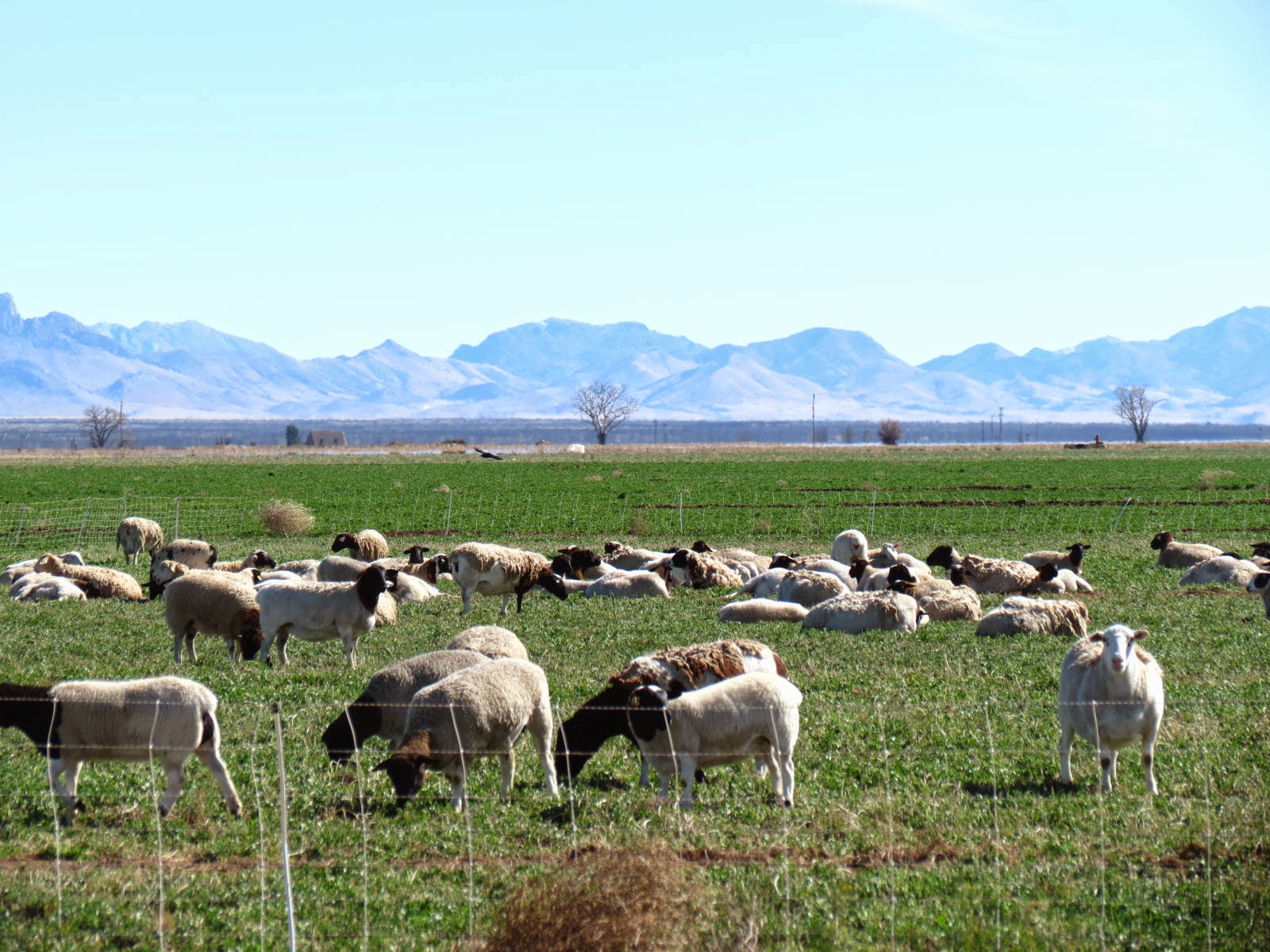
| (Sorry. I don't have any photos of sheep!) |
Barb Tholin’s original plan, after apprenticing at a Vermont farm affiliated with Sterling College and earning a bachelor’s degree in agronomy, was eventually to have her own farm. A sheep farm, she decided at one point (like Bathsheba Everdene in Thomas Hardy’s Far From the Madding Crowd, you must pardon me for thinking). Instead Barb went from working in a macrobiotic restaurant in Chicago for “a couple of years” to managing the produce department at a food co-op in St. Paul, Minnesota, for 19 years, and finally founding the magazine Edible Grande Traverse, which she continues to edit today as partner with her former husband, who manages the advertising accounts.
 |
| Madagascar Vanilla Rooibos |
… not exactly by trial and error, but it was just doing my research first, and then making up a small batch … and tasting it, and paying attention to the effect on my own body.
She worked with food labs at Cornell University and the University of Nebraska, and her tea farm, which she did not initially think of as a “business,” is now the only certified and Demeter Biodynamic tea farm in North America. Still, in order to farm and produce her teas so that they meet her personal high standards, Macke works 80-90 hours a week from April to November.
Mimi Wheeler, born in Denmark, founded Grocer’s Daughter Chocolate in the village of Empire and operated it for a decade before she retired and sold the business to Jody Dotson Hayden and her husband, who continue the business today. Mimi’s working life began in social work, fueled by a passion for social justice. Coming to the U.S., she worked in community mental health and school counseling, but the dream of having her own business – something related to food – was always in the background.
Since I had made chocolate desserts, made souffles, cakes, truffles for a number of occasions over many years and had gotten a lot of praise for this, it dawned on me that chocolate was what I had to start doing as a new career.
Grocer’s Daughter Chocolate put the village of Empire on the national food map. Appropriately, social justice was a concern shared by the people who took over the business when Mimi decided to retire and focus on her grandchildren. Jody Hayden and her former husband, Chris Streeter, were founders of Higher Grounds Trading Company, a coffee company devoted to paying farmers, in places like Chiapas, a fair price for their crop. Chris continues to run Higher Grounds, and when Jody and her present husband, a Traverse City native from a cherry orchard family, bought Grocer’s Daughter in 2012 they continued in the spirit of the founder, sourcing local dairy products, honey, maple syrup, cherries, and blueberries.
We could make more money if we sourced everything more cheaply. And that’s what a lot of chocolate companies do. But our first ingredient isn’t sugar … we do chocolate first and foremost and then we add really great ingredients to that.
Supporting local community – that is another important belief and practice in the lives of these northern Michigan women.
Who works harder than a chef, pastry or other? Susie McConnell worked in various nodes of the food network the women in Northern Harvest represent. With a start at the Leland Lodge and Sugarloaf, she went on to work at Hattie’s Restaurant in Suttons Bay, for Carol Worsley at Thyme Inn in Glen Arbor, for Martha Ryan at Martha’s Leelanau Table in Suttons Bay, and finally three years with Angela Macke’s Light of Tea tea farm, learning about biodynamic agriculture, before retiring to her own home and garden and kitchen.
 |
| Farm market shoppers in line for 9 Bean Rows bread |
Then there is the farm-to-table group: Jennifer Blakeslee at Cooks’ House in Traverse City; Jennifer Welty of 9 Bean Rows Bakery (that deservedly famous sea salt fennel bread!); Martha Ryan of Martha’s Leelanau Table in Suttons Bay; Amanda Danielson of Trattoria Stella in Traverse City; and Donna Folgarelli, known far and wide for her family business in Traverse City, Folgarelli’s Market and Wine Shop. As I was reading the stories in this book, just when I thought I’d read about the hardest-working woman in the food world, I would turn to the next and find another. This is certainly not a world for high-maintenance princesses who need to be coddled!
In the “Chefs and Restaurateurs” section, Martha Ryan is the woman I know best, but I learned much I hadn’t known before about her. I knew the Leland School and Stonehouse Bread Café parts of her story but not that she was from Kalamazoo or that she lived in ethnic neighborhoods in Cleveland, Ohio, or that she attended Michigan State University. And how had I never heard of her 11-week backpacking trip through France, Spain, England, and Ireland, with special focus on France? If Martha and I ever have time in our busy northern Michigan lives to talk about that trip, I’d love to hear more!
(And, by the way, as an example of how incestuously entwined northern Michigan lives are – in a good way! – Martha’s Leelanau Table has its home in “the red house” on St. Joseph Street in Suttons Bay, which is owned by and was completely remodeled under the direction of architect Judy Balas, wife of the very Bruce who has been my part-time bookstore volunteer [“bookstore angel”] at Dog Ears Books for – how many years now? Maybe two decades? Is that possible?)
 |
| Rose Hollander |
I loved reading this statement by Patty LaNoue Stearns: “I was a terrible high school student.” I am always amazed by adolescents who have a clear idea of what they want to do in later life. Those of us who stumble into our calling, as Stearns did with journalism, are more the norm, I believe – or the lucky ones.
And I am eager to try out Nancy Allen’s Thai Coconut Curry Base – because what I neglected to mention earlier, in my excitement, is that each story in the book begins with a photograph and short bio and ends with a recipe.
 |
| CSA field |
The final two chapters (in “Two Homesteads: Preserve the Past and Celebrate the Future”) bring us back to farms, which is where we began. Susan Odom’s introduction to 19th-century growing, cooking, and living came with her job as an interpreter at Greenfield Village. Similarly, Emily Umbarger learned old ways when she and her grandmother began as volunteer gardeners at historic Fort Michilimackinac. Odom now makes her home and her living at Hillside Homestead in Leelanau County, Umbarger with her husband and sons at Hearth and Harvest Homestead outside Interlochen. In both these women’s lives, education continues as a passion alongside farming. Says Odom,
I am re-creating the sort of little nineteenth-century farm and trying to do things the way they used to be done on a small scale. I think I’m particularly good at explaining that to [Farm Stay] guests and visitors. … There is limited use for that in life. Being a good interpreter. In museums, yes, but sadly the thing is that nobody ever makes much money in museums. So I’m right at home on a farm because you don’t make much money on a farm either.
At the time of her interview, Emily Umbarger was working for pay as a counselor at Interlochen Arts Academy and also working as a volunteer in a not-yet-funded program at Interlochen to grow food for its kitchen and compost as much as possible, involving students in the entire process. She was also pretty much running the family farm business, since her husband’s job had necessitated a move to the night shift. In her oral history, Emily said she doesn’t think about the number of tasks she faces each day but rather...
“What are the cool things that I can do [today] with my kids? What are the cool things that I can do with my husband? That we can do as a family? And how is that going to enrich our life?”
She also notes, “The heart of the educator in me is always at work, even with my own kids.”
Because, for all these women, it is never just about making enough money to pay the bills. It’s about love and respect for earth’s bounty, providing healthy food grown in a sustainable manner, community building and support, stewardship of natural resources, a passion for learning and the fearless daring to make mistakes, educating all ages for a healthy future -- and plenty of uncomplaining, unremitting elbow grease.
I make no apology for the very personal nature of this post. These are women from my home, and I share their beliefs and principles. And while far from northern Michigan at present, I do believe that "we are -- truly -- all in this together,” wherever we are.
Author Emita Hill holds a doctorate in Romance Languages and Literature from Harvard University. Her previous work includes Bronx Faces and Voices (2014), oral histories of sixteen men and women who rebuilt community after suffering crime and blight. Dr. Hill divides her time between New York City and northern Michigan.
Northern Harvest: Twenty Michigan Women in Food and Farming offers delightful stories, hope for the future, and is a most timely contribution to the literature and history of a beautiful region of our country.