Search This Blog

Showing posts with label book review. Show all posts

Thursday, September 11, 2025

Guest Book Review: ISABELA'S WAY

Book cover for ISABELA'S WAY


Local Northport author Barbara Stark-Nemon has done it again. After two other outstanding novels (Even in Darkness and Hard Cider), Isabela’s Way may be her best work yet.


Set in the early seventeenth century, this absorbing historical novel describes the impact of the Inquisition on families forced to flee persecution. As the story opens, non-Catholics have been expelled from Spain, and enforcement of the Inquisition is spreading to Portugal.


Isabela is a conscientious fourteen-year-old Portuguese girl and a talented needlework artist. Her mother has died of the plague. Her father, a textile merchant, is traveling and living in Hamburg. While her village is roiled by illness and the terrifying unrest of the Inquisition, Isabela maintains the household and fends for herself, with help from her friend David.


An enigmatic stranger, Ana, contacts Isabela with an urgent message from her father: Isabela is in danger and must leave Portugal immediately. As cover for her escape, Ana announces that Isabela has been commissioned by a family in the Basque region to embroider their daughter’s trousseau. 


Raised as a Christian, Isabela had assumed she would be safe from religious persecution. She is shocked to discover that her own heritage is Jewish and that she and her family, as converts, or “New Christians,” are also at risk. Isabela learns that her friend David has fled Portugal with his sisters and is escaping along a northern route. 


During their journeys across Spain, Ana, Isabela, David and his sisters are aided by a network of friends and sympathizers helping Jews escape persecution. Isabela finds a safe retreat with the Basque family and completes her commissioned work, but she is at growing peril of being exposed and eager to find her father. 


Ana, Isabela, David and his sisters continue traveling east, seeking refuge with additional sympathizers in France. All of them are also being pursued by a priest from their home village, who is determined to enforce the strictures of the Inquisition. The account of Isabela’s attempts to escape to safety and reunite with her father and David is gripping, with many suspenseful scenes and unexpected twists.


The book is rich with historical detail, offering deeply evocative descriptions of the cities, architecture, and culture of seventeenth-century Europe. At the same time, the themes of religious intolerance and oppression are utterly (and unfortunately) contemporary and relevant. 


Stark-Nemon is masterful at creating spirited female characters. Isabela uses her embroidery talent to assist with the refugees’ safe passage; she stitches elaborate symbols for banners that indicate safety or danger at each sanctuary on their route. Her growth from a perceptive but innocent girl to an assured, wise woman makes for a compelling coming-of-age tale. Similarly, Ana is a compassionate and gifted herbalist and healer; she bravely risks being apprehended as a heretic when she aids the sick and injured along the way. They are inspiring characters facing menacing danger with grace and hope.


Like Isabela’s embroidery, this intricate, beautifully written novel, with its complex, intertwining story lines, is a testament to human resilience and strength even in times of tyranny and cruelty. 


Author's needlework rendition of book cover


Reviewer Kristen Rabe also says:


"I am always thrilled when Pamela invites me to review a book for her blog. We have so many talented authors in Northern Michigan, and it’s a delight to highlight their work. Barbara Stark-Nemon is among the very best of those authors, and this fascinating historical novel with its remarkably relevant themes should attract a wide readership. Thank you once again, Pamela, for all you do to promote thoughtful discussion in our community."


Note: The release date of this book is Tuesday, September 16, 2025. I have it on back order and should have copies next week. Barbara will also be signing and selling her book at a booth during Leelanau UnCaged in Northport on Saturday, September 27.

Monday, May 12, 2025

Guest Book Review: IN DEFENSE OF GOOD WOMEN


When Pamela Grath invited me to review a novel by a local Michigan author, I knew the book would be good. But, as it turns out, In Defense of Good Women, by Marilyn Zimmerman, is remarkably good. In fact, once I started reading this compelling, suspenseful story, I couldn’t put it down. 


In Defense of Good Women is a legal thriller that tackles the controversial topic of neonaticide, the killing of an infant within its first twenty-four hours. This fascinating book features strong, complex female characters and an evocative portrait of a coastal town in southeastern Michigan.


The lead character, Victoria Stephens, is a smart, accomplished criminal attorney with a twenty-year career. In the small town of Port Huron, she projects a perfect image of success with her Chanel sunglasses, designer shoes, and new Mercedes. At the insistence of a chief circuit judge she has known for years, Victoria reluctantly takes on a seemingly impossible case. 


The client, seventeen-year-old Callie Thomas, has been charged with murdering her newborn infant. The baby was drowned in the St. Clair River, hours after being born. Callie insists she is innocent. She does not remember giving birth or even being pregnant, though the DNA evidence is indisputable. Adding to the uproar, Callie is the daughter of a locally prominent Evangelical minister, known for his strident pro-life opinions.


As Victoria constructs a defense, she consults a psychologist with expertise on neonaticide syndrome, a kind of dissociation that occurs in women, particularly teenagers, who have been traumatized by their pregnancy. Closely related to temporary insanity, the syndrome is a controversial diagnosis that is not exactly abortion and not exactly infanticide. The woman wants to get rid of the baby after it’s born, and then she’ll block it from her mind, as if the baby never existed. The hypothesis would explain a lot about Callie’s behavior and frame of mind, though the expert admits that the defense may not work in U.S. courts.


The story has several unexpected twists that I won’t spoil. But I will say that Zimmerman is brave and even-handed in confronting tough issues related to pregnancy, motherhood, and the expectations that weigh on women facing difficult decisions. She also does a fantastic job of developing her lead characters. Callie is traumatized and reticent, but she’s also sensitive and artistic. And Victoria, even with her Jimmy Choo shoes and diamond wristwatch, is a complicated woman who carries wounds of her own. By its conclusion, the novel resolves the mystery of what happened to the baby and to Callie. But there is a deliberate raggedness to the ending that is startling and thought-provoking.


The book effectively captures the ambience of small-town Michigan. The media turmoil, the rumors and judgments, and the intertwining lives are all recognizable and believable. Especially captivating are the descriptions of the cozy cottage Victoria inherited from her father. Constructed by bootleggers during Prohibition on the St. Clair River, the home conjures memories of her parents and has become her sanctuary. 


Like most great books, In Defense of Good Women works on several levels. With its crisp pacing, compelling characters, and suspenseful plot, the book would make fabulous beach reading. On a deeper level, it would also be a wonderful choice for a book club seeking meaningful discussion around women’s reproductive health and the right to choose.


Thank you, Pamela, for sharing this book—and for all you do to inspire community and introspection in beautiful Northport. And thank you, Marilyn Zimmerman, for writing such an intelligent, entertaining, and timely book. I hope you’re already at work on your next manuscript!


Postscript from your usual blogger: First, thanks to Kristen Rabe for being an excellent guest reviewer! Second, we will be hosting a launch in June for Marilyn’s book—details to be announced when plans are firm.

Wednesday, December 6, 2023

Total Immersion Recommended


[Note: Images in this post are photographs from my Leelanau home, not the world of downstate Whiteheart, but I tried to get as close in spirit as possible.]
 

Weeks passed between the day I received my ARC of Bonnie Jo Campbell’s new novel and the evening I finally gave myself the delayed pleasure of opening it and plunging into that rural mid-Michigan world, familiar to me not only from her previous books but also from my years spent in Barry and Kalamazoo counties. It’s a rather different world from Leelanau. The soil is different, the sun rises and sets over different landscapes, and the people inhabiting that world live different lives from most of Leelanau. Most. Not all. The thing is, Campbell’s world is one not often ventured into by American literature, but it's been there all along, waiting to be seen.


One of Bonnie Jo Campbell’s short story collections focused on men, another on women, all apparently lost souls to whose lives she brought great sympathy. Her novel Q Road gave us three protagonists -- a man, a young woman, and a boy -- along with a host of fascinating minor characters. Then came Once Upon a River, the novel completely owned by Margo Crane. 


The Waters is a different kind of story. Large and ambitious, containing themes and worlds both mythic and postmodern, The Waters gives us from Campbell, for the first time, an entire community, bound together -- and torn apart – and bound together again -- by its own unique history. A community seeking redemption and a way forward in difficult and uncertain times. They often have a hard time showing it, but these people care about each other.


The home of Hermine (not Hermione) Zook, healer and matriarch, is a bog island protected by a drawbridge. When local people come to her for healing medicines, consultations take place off the island, out by the house built and formerly lived in by Hermine’s husband, the legendary Wild Will Zook (long ago banished by his wife), a house he lived in alone until joined by Hermine’s oldest daughter, Primrose, who has also disappeared, moving across the continent to California. Molly, a nurse of modern medical ways, is the practical, nearby (and only biological) daughter. Finally, there is the lazy, lovely, magical Rose Thorn, golden-haired mother of eleven-year-old Dorothy, known as Donkey, a mathematical genius made nervous by infinity, a child being raised on M'sauga Island by Herself (Hermine).  


Donkey milks the cow, avoids eating meat, eavesdrops and spies on adults, and longs for a father. Titus is the father she wants, and the choice is logical (passionate Donkey tries hard to be logical), given the electricity that has always crackled between Rose Thorn and Titus. In this postmodern rural Michigan fairy tale, as in European fairy tales of old, however, missing fathers are a recurring theme. Never mind that the entire community of Whiteheart, Michigan, longs to see Titus and Rose Thorn together.


“Once upon a time” opens Chapter Zero: Prologue, and Chapter Six opens with an echoing “Once upon a time,” the phrase signaling both history and fabulism. Each chapter bears, besides its number, a sentence heading. Chapter One announces a crucial truth: “Rose Thorn always comes home.” Whiteheart can accept the absence of Wild Will Zook, but they need Rose Thorn. They need Rose and Titus together. This is where we begin.


Chapter One introduces us to Whiteheart. With the addition of Smiley, the barkeeper, the men drinking beers and pops at the picnic table outside the Muck Rattler Lounge after church on Sunday – Rick Dickmon, gun-totin’ Jamie Standish, Tony Martin (known as “Two-Inch Tony,” but not for reasons you might at first imagine), Whitey Whitby, pot-bellied Ralph Darling – constitute the core community we come to know as we read. The men reappear singly and as a group throughout the novel, their wives and girlfriends remaining in the background, along with Titus’s father and his Aunt Ada, but together they fill in a picture that foregrounds the reclusive healer and her three daughters. It is, however, Titus Clay to whom all local eyes turn. It is Titus, together with Rose Thorn, they believe, who will hold them together, if only --. But it is Rose Thorn, not Titus, who leaves and returns….


Old celery fields, a cranberry bog, a gravel truck that makes its regular run along Lovers Road (that truck reminds me of the caterpillars in Q Road, easily overlooked but a symbol of what life has become in this place), rumbling past Wild Will Zook’s empty house and the Boneset Table where Hermine leaves her cures to be retrieved by those in need. Farm fields and giant black willows. Somewhere in the background, the Old Woman River and pollution from a paper mill no longer in operation. Donkeys and wild, flowering plants, massasauga rattlesnakes (“muck rattlers,” Whiteheart calls them) and church-going people, unsure of what they believe but longing for beauty.


What will become of them all?


A customary request accompanying ARCs asks that reviewers refrain from making direct quotes, as changes may be made between advance copies and the book as later released to the public, and only that request and my bookseller conscience could have stopped me. But this post is not even, I realize, a book review, as I have written almost nothing about the conflicts and secrets that create a taut, suspenseful story line. So be it. I waited as long as I could before beginning this novel, because I knew before opening to the first page that I would not want it ever to end, and what I want for you, dear readers, is to have the whole of the pleasure, also, as you immerse yourself in The Waters, of coming to know the world of Whiteheart and its people for yourself, as I did. 


Before writing this post, I read no other reviews of The Waters (and still have not), though eventually I’m sure I will. For now, I am simply basking in the luxury of being a small-town bookseller and blogger rather than a paid reviewer who must meet certain conventional expectations. I am also happy, in my modest role of bookseller-blogger, not to be preparing a class in American literature, which would require me to trace out echoes of mythic themes that reverberate through the novel. 


(After you read this marvelous story, you may want to review the story in Genesis of the snake in the garden and explore other stories, as well, such as the Brothers Grimm tale of “Rumpelstiltskin” and the Lives of the Saints -- but please wait until after you have read the book! What you already know and what you find in the novel’s pages will be enough for your first time through. Just be immersed in the experience, please.)


Afterward. After-word. Ah, yes! I finished the last chapter of The Waters before going to sleep and saved the Epilogue to read the next morning. My last word today is that if an epiphany be tearful and inarticulate, that’s what I experienced. Stillness. Gratitude. Perfection.


The Waters

by Bonnie Jo Campbell

W.W. Norton & Company

Janary 2024

Hardcover $30


I will happily take orders in advance for reserved copies!

Tuesday, April 18, 2023

Getting "Out in Nature” (Kind of a Book Review)

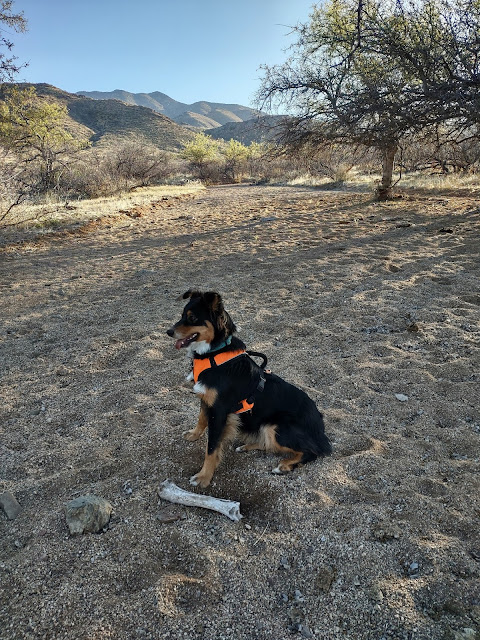
Sunny and I get out every morning, and the desert is greening up now.
 

Strange beings, human beings, aren’t we? So often we forget that we are not separate from nature but natural creatures ourselves, which means that we are always “in,” as in “part of” nature. At the same time, we also know the difference between indoors and outdoors, the difference between houses and shopping malls and office buildings and classrooms as opposed to parks and woods, beaches, mountains, and campgrounds, and so, in a way, the scientific “news” in Florence Williams’s book, The Nature Fix: Why Nature Makes Us Happier, Healthier, and More Creative (NY: W. W. Norton & Co., 2017, paper, $15.95) didn’t seem like news to me at all. 
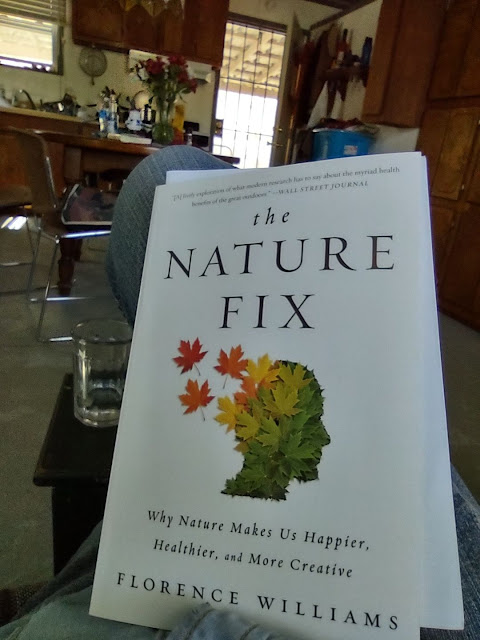

Reading indoors, but with doors and windows open, birdsong audible in the background


When I worked office jobs, back in the 1970s and 1980s, I often felt like a captive, so tethered to my telephone and typewriter (these were the old days) for hours, on such a short leash, that even going down the hall to the restroom meant being jerked back by a ringing phone. But was that just me -- or me and people like me but not everyone? What about those who say, “I’m not an outdoor person”?


Ah, but that’s where it gets interesting! Because some of the researchers looking at all the ways the outdoors benefits us felt no personal desire themselves to leave their computers and laboratories and were skeptical of other researchers’ work that found huge gains in physical and mental health among test populations. Some even work on developing “virtual nature,” an oxymoron if I ever heard one but quite a lively field, apparently. (Go figure!) 


One such skeptic was Frances Kuo, director of the Landscape and Human Health Laboratory at the University of Illinois, Urbana-Champaign, whose research focused on urban environments, comparing public housing apartment complexes with various sorts of courtyards: (1) those with no greenery whatsoever, (2) those with both greenery and concrete, and (3) those with grass and trees. Over a two-year period, her study found the buildings in the middle group had 42% fewer crimes compared to the concrete-only group, and the buildings with the greenest surroundings had, compared to the non-green courtyard buildings, 48% fewer property crimes and 56% fewer violent crimes.


“I am not historically a nature lover,” Kuo told me. “I had no personal intuition when I started that these findings would come out the way they have. But twenty years later, I have convinced myself.” 


So to the question, “Do we really need to study this to know that nature is necessary to human beings?” the answer is yes, because in modern Western civilization Western science is such a driving force in our lives that until scientists are convinced, natural needs can be and usually are downplayed or outright ignored.


The Finns got into the research game early, for economic reasons, wanting to lower health care costs. Their studies would also, they believed, provide data for city planners, depending on conclusions those studies might reach, and for them subjects do more than take a walk in the park. Data is key. Questionnaires, blood pressure samples, heart rate measurements, even saliva samples taken before and after a half-hour walk, for example. The bottom line for the Finns was that five hours a month in natural settings was the minimum for the biggest health gains.


And then there was Roger Ulrich, not a skeptic but simply a curious scientist.


A young psychologist named Roger Ulrich was curious why so many Michigan drivers chose to go out of their way to take a tree-lined roadway to the mall. 


So first he had a group of volunteers in the 1980s view slides of nature scenes, while the another group saw “utilitarian urban buildings.” Okay, good. Next he subjected volunteers first to stress, by showing them “bloody accidents in a woodworking shop” (No, thank you!), and then showed them either scenes of either nature or city to see how long it would take them to recover from the stress. EEG readings of what Williams calls the “brains-on-nature” viewers returned to baseline within five minutes, while the urban viewers continued to exhibit stress ten minutes later. 


These studies, Williams tells us, were considered “soft science” at the time, and the field did not really grow for decades, but Ulrich kept at it. He followed the records of hospital patients following gallbladder surgery, those whose rooms had a window view of trees and those who could see only a brick wall from their beds. 


He found that the patients with the green views needed fewer postoperative days in the hospital, requested less pain medication and were described in nurses’ notes as having better attitudes. Published in Science in 1984, the study made a splash and has been cited by thousands of researchers. If you’ve ever noticed a nature photograph on the ceiling or walls of your dentist’s exam room, you have Ulrich to thank. 


Another name that appears over and over in The Nature Fix is that of data-seeker David Strayer. He’s the cognitive psychology researcher from the University of Utah who discovered what has been called (one of his friends coined the term) the “3-day effect” (explained in the Williams book without the popular term being used), a key to which is being in the wilderness unplugged – no cell phone, smart watch, or anything like that. Because the clever adaptations we make in our artificial environments are often not consistent with the way our brains work, our brains need restoration from time to time. 


I mean, can you believe that 36% of people [Americans only?] check their cell phones during sex?! No citation appears for this claim, made by one of Strayer’s academic wilderness companion researchers. Strayer himself made the statement that the “average person looks at their phone 150 times a day,” which I can quite easily believe.


Science, then, has found the following gains from time outdoors “in nature”: less stress, lowered anxiety, lowered aggression, heightened optimism, increased sense of well-being, and increased feelings of connection not only to “nature” but also to other human beings. 


(Obviously all this has surprised a lot of people. Do they forget how and where our species evolved? We are, first and foremost, earthlings! Yet I notice that the big money man behind the world’s arguably most experimental car, who is eager to send human beings to Mars, has yet to put himself into orbit. He sent a car instead. And then, see The Starship and the Canoe, by Kenneth Brower, a book I highly recommend, about physicist Freeman Dyson and his son, George Dyson. The physicist, obsessed with space travel, was for a time a regular reviewer for the New York Review of Books, a highly respected academic, but his son, living in a treehouse, was seen as an eccentric dreamer. As to which man can claim a firmer grasp of the human condition, its strengths and its limitations, you can pretty much guess where I come down -- not that I expect everyone to agree with me….)


Here's what some other countries are doing to meet their citizens' need for time in nature:


➡️ Sweden recognizes “horticulture therapy.” 


➡️ Singapore, the third-densest country on earth, intentionally increased its percentage of green space from 36% to 47%, even as its population grew by over two million people.


➡️ Japan has a long cultural history of attention to nature, and the country has developed 48 official “Forest Therapy” trails. Japanese medicine also recognizes “forest medicine” as a specialty.


Can it be that we human beings are finally waking up and paying attention to what we are and where we live? (Earthlings, earth.)


Recommendations From the Author


Williams draws her recommendations from various scientific sources, and one she particularly likes is the “nature pyramid” concept promoted by Tom Beatley of the Biophilic Cities Project at the University of Virginia. (Remember the food pyramid, you old folks?) The base of the nature pyramid is “daily interactions with nearby nature that help us destress, find focus and lighten our mental fatigue." (When I was working those office jobs, at least I walked an hour to work through my neighborhood and a campus with plenty of greenery and past a couple of ponds.) The next level up is weekly outings, followed by monthly excursions – each level also being more immersive – and finally reaching, at the summit, “rare but essential doses of wilderness.” Like this --
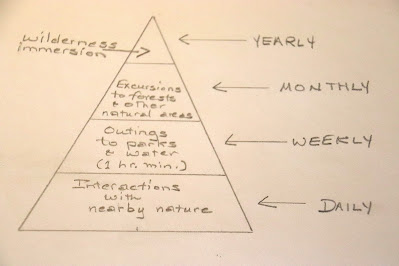

Yes, I made this pyramid just for YOU!


If you live in the country or in an urban environment with plenty of parks, you are lucky. (Stepkids and grandkids take note: Top city on the “ParkScore” index is Minneapolis.) Yet for myself, for all the time I spend outdoors, both in the Arizona winter and my Michigan summer, I have to admit I rarely if ever reach the pinnacle, retreating for at least three days into wilderness. Do you think exceeding the minimum on the other levels can make up for not reaching the top? That's something for scientists to check out, don't you think?


Desert thorn in bloom, Cochise County, AZ

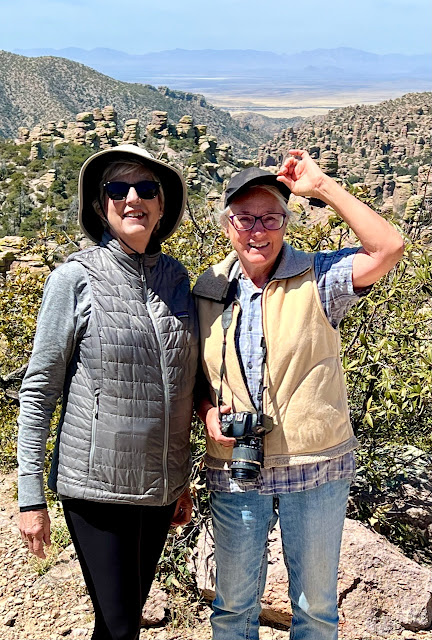
Here I am (below) with my new "cousins" from the Phoenix area. When they came to visit, we hiked part of the Echo Canyon Loop in the Chiricahua National Monument. We loved our outdoor time together!
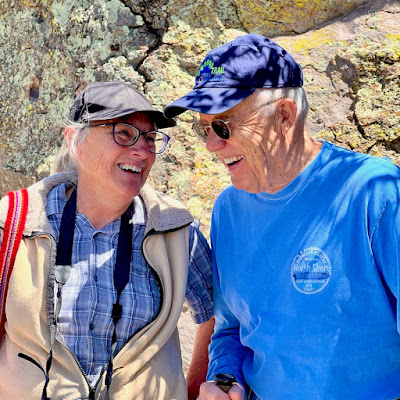

Me with Jim

Carol and me


Where can you walk in other countries


Hold onto your heartstrings! The answers are interesting. Finland has the concept of “everyman’s right,” which means there is no such thing as “trespassing” in privately owned forests. Anyone can walk and pick berries and mushrooms. The only forbidden activities on private land are cutting timber and hunting game. Scotland has similar “right-to-roam” laws. There you are prohibited from hunting, sheep-stealing, and digging up plants, but you can roam to your heart’s desire. 
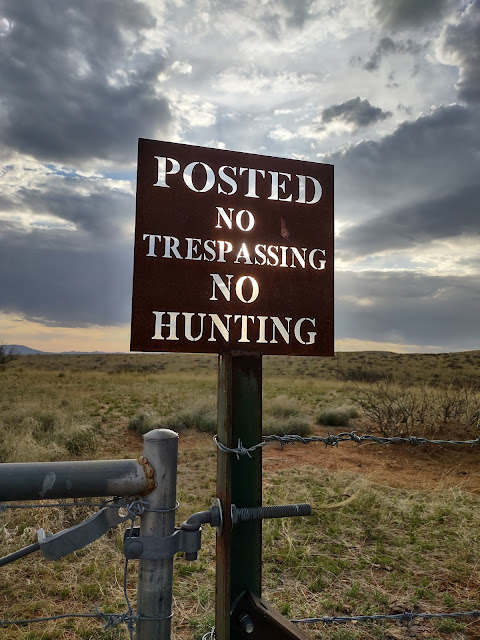

America: Land of the Free?


One minor criticism 


This book could really have used an index! But imperfection is – well, an opportunity to embrace wabi sabi, right? The Artist loved that whole idea, and it's pretty much the way we two imperfect beings lived together….


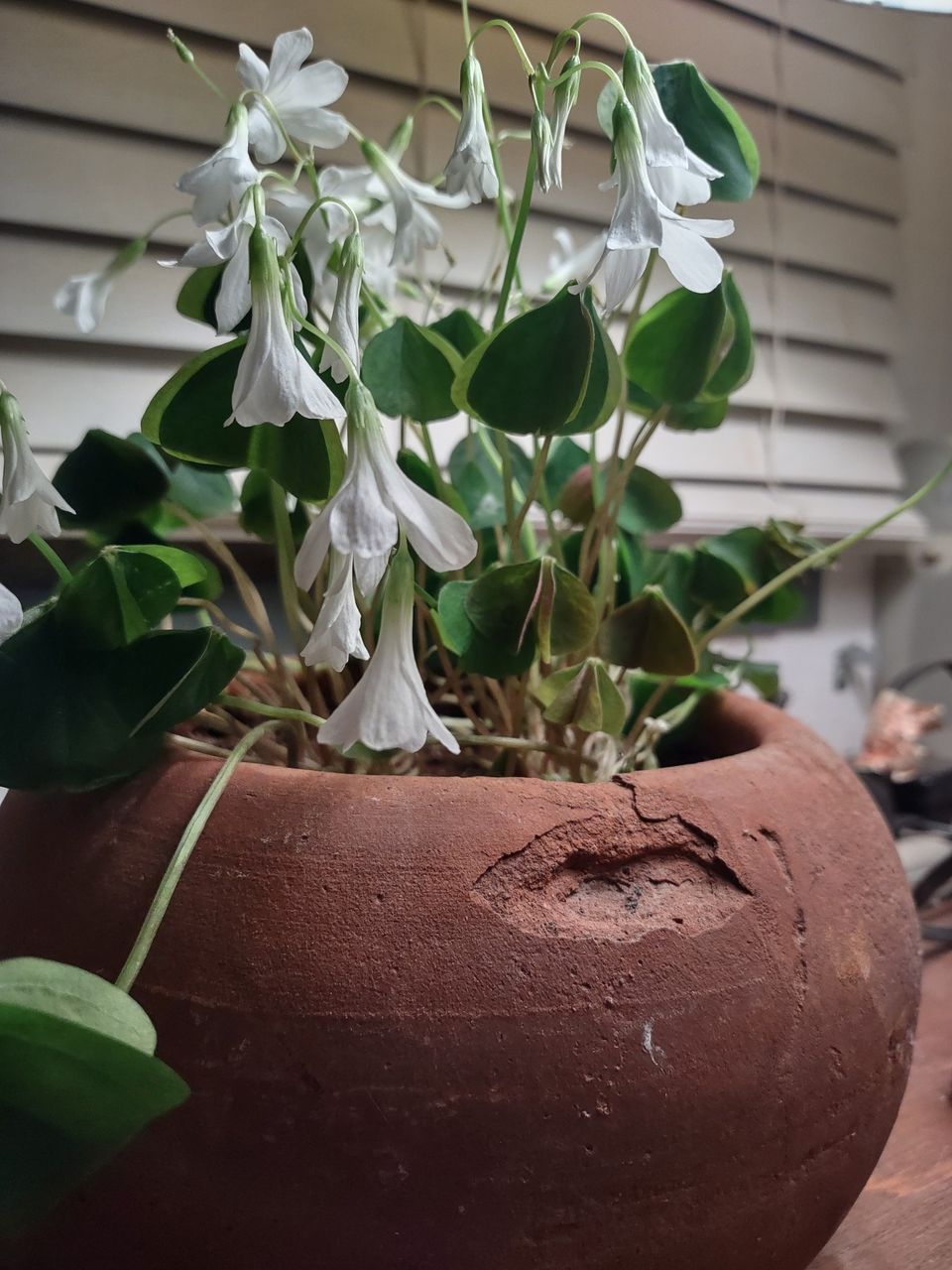
Dear imperfection of a perfectly shaped clay pot!


If you think you don't need to go outdoors, you need to read this book, and if you love going outdoors, you can read it to feel even better about your fresh air time. The author tells us at the beginning that she is wrestling with a move from the Great West to Washington, D.C., looking for more and better ways to enjoy nature in her new urban environment. As one interviewee points out, parks are free, and more Americans need to get out in them. 

Florence Williams has done us all a service by putting her own experiences together with research reports. Well done! Recommended!


Saturday, August 6, 2022

Shoemaker Book Launch in Northport Next Month


Sarah Shoemaker of Northport, Michigan, author of the critically acclaimed Mr. Rochester, has a new novel coming out this fall. Children of the Catastrophe, set in the city of Smyrna in the early 20th century, is, as the author herself describes it, a story of family, love and loss, crisis and survival. The book’s release date is September 6, the day after Labor Day, and Shoemaker will be at the Leelanau Township Library that evening to meet and greet the public. Dog Ears Books will be on hand, as well, to sell books to those wishing to purchase, which the author will be happy to sign. 


In her new work of historical fiction, Shoemaker goes behind the bare facts to imagine two families over the course of years leading up to a tragic real event in history. Early in the novel a marriage is arranged within Smyrna’s Greek community. The bride is one of four sisters, the groom an only child. Parents of the two (especially the mothers) have traditional concerns about qualities they wish to see in a partner for their respective children, but happily for the bride and groom in this case, they are attracted to one another from the start, and soon a new generation of Greeks is growing up in a happy home in Smyrna, little suspecting that their world is about to be utterly destroyed. 


There are, Shoemaker said in a recent interview, 27 million refugees in the world today, and every one of those people represents “a family, a community, a way of life that is forever lost to them.” In large world events – every catastrophe, especially – it is easy to lose sight of particular individuals and families. Yet every war, every famine, every horrendous headline event changes the world forever for people who were up until then, most of them, living very ordinary lives. 


What must it be like to have almost everything and then suddenly to lose it all? How does this affect families, and what differences are there in the responses of different family members? Different generations? These are questions Shoemaker sought answers for in her novel.  


Shoemaker has lived in Greece and also for two years in Izmir, Turkey, the present seaport city on the former site of Smyrna. She knew the history and heard the personal story of one survivor whose entire family was lost in the Great Fire (1922), also known to Greeks as the Catastrophe. So, all in all, she felt this was a story she could write. 


“Every time I see pictures from Ukraine,” Shoemaker said to her interviewer, “our most recent world events that impact people’s lives – seriously -- I see those people now, having written this book, differently, because I see them as individuals who’ve had lives.” She observes that it’s easy to lose sight of individual lives when we see masses of refugees in events not happening to us. But – “This could be us sometime. Or this could be somebody I care about sometime.” What tragic events do to real people’s real lives is what Shoemaker wants readers to take away from her novel. And in this aim, she succeeds brilliantly. 


As a reader, one comes to live inside the story, to live inside houses inhabited by people one comes to know. One hundred years later in time and far distant in space, while reading we inhabit the world of early 20th-century Greek Smyrna and feel connected to the characters’ hopes and dreams, sympathetic to their problems, concerned for their lives. In the end, we realize that their tragedy is our tragedy, in that it is a human tragedy, and we are all human beings, despite our differences.


-- Can you tell I am excited about this book? It is going to be an excellent choice for book clubs, too! 


Tuesday, September 6, 7:30 p.m., Leelanau Township Library, Northport, MI: Sarah Shoemaker and Children of the Catastrophe


P.S. You can hear the complete interview with Sarah Shoemaker on the Library Love Fest podcast from Harper Collins, publisher of Children of the Catastrophe. Sarah Nelson, vice president and executive editor of Harper Collins, introduces and interviews Sarah Shoemaker in the podcast.


Monday, April 12, 2021

What Can I Call This Potluck of a Post?

Intriguing window treatment, no?

Bisbee, AZ

It post is a miscellany, but I'll back and start with our 2021 trip to Bisbee, which is where my eye was drawn to that Kafka book set against a brown paper-covered display window. Some of you might remember a time when I warned against going to Bisbee on a Monday. Lesson learned. So this year we prudently waited until Tuesday to make the trek -- and found the town was closed up just as tight! The high point of the trip was being allowed to sit on the outdoor gallery of the public library (library itself closed; pickup only) to try to read a New York Times (available nowhere else in the county) in the wind. 


There are always interesting sights to see while walking around Bisbee, however, so the long drive was not a complete loss. There was that Kafka book in the window, after all. Not many posters advertising events, but a utility pole studded with staples caught my eye. And I don't remember this attractive building from other visits to Bisbee.


Now home of a recording studio, we were told


The amazing part of this thin-on-plot story is that we didn’t acquire a single book the whole day. Library, FOL bookstore, and Meridian Books (down the Rabbit Hole), all highlights of former trips to the county seat, were each and every one closed and locked. But yes, we do have plenty to read as it is. 


Reading -- and a Book Review


In general, I’m not one to observe a lot of official days and weeks and months, but I’ve made more of an effort for Black History, Women’s History, and National Poetry Month this year – really, don’t you think history should be inclusive every month of the year and that poetry should be part of our daily lives? Anyway, be that as it may, think what you will, I’ve been reading Thomas Lynch, Jim Harrison (always), Judy Juanita (below), Marge Piercy, and Anne Sexton the past couple of weeks, and it’s Judy Juanita I want to write about today. 


When a young friend asked me once, “What were the Sixties really like?” I told her it depends on who you were, how old you were, and where in the world and country you happened to be. Virgin Soul, Judy Juanita’s semi-autobiographical novel, published in 2013, was my first introduction to her writing, when an ARC from the publicist found its way to me at Dog Ears Books. Like her fictional protagonist, Juanita found herself “where it’s at” during her junior year of college. She had joined the Black Panther Party in 1967, and when Huey Newton was jailed he appointed her editor-in-chief of the Panthers’ newspaper, which began as a strike journal, resulting in the first Black Studies program in the United States. Since then Juanita has published a number of plays, poems, and essays, and now a new book of her poetry, Manhattan, My Ass, You’re in Oakland. 


The title is a preview of the poems in the book: Here is a poet who pulls no punches. Whether her subject is love, sex, or friendships, violence against women or racial injustice, her distinctive voice tells the story in a way you’ve never heard it before and might not have the nerve yourself to repeat. She has the nerve, though. Her voice is clear and unhesitating, her command of a variety of poetic forms sure, as she uses those forms in her own new ways. Juanita has performed her poetry on occasion, and though I’ve never seen her in person or heard her with my ears, I hear her voice in my mind when I read her work. I’m not alone, either. Kirkus Reviews has called her poetry “unsettling, important, and unforgettable.”


Manhattan, My Ass, You’re in Oakland

by Judy Juanita

EquiDistance Press

Paper, 101pp

$9.95


Horse and Dog Stuff


WJRA lineup


It isn't only books that take me to exciting places, though, and the Artist and I don’t have to drive all the way to Bisbee to have a good time. This past weekend was once again WJRA – Willcox Junior Rodeo Association meeting out at Quail Park. As we were leaving, after a very satisfying couple of hours watching and admiring and walking around with my camera (see my completely incomplete visual story here), I said with a happy sigh, “There’s nothing about it that I don’t like!” My happiness of the day included a very dusty little dog that reminded me of a smaller and much older and wiser version of Peasy. “Wouldn’t this be the perfect life for Mr. Pea?” I asked earnestly. 


old dog at rodeo


For now, however, we are making the most of our silly little snuggle-bug, whose "pack time" personality could never have been guessed by the skittish, fearful performance he put on in that cold, bare cell at the pound. 


silly boy at home


Monday, March 15, 2021

Book Review: TIN CAMP ROAD


If someone recommended a novel about a young single mother living in poverty, making a precarious living by cleaning motel rooms, dressing herself and her daughter in used clothing bought in thrift stores, their lives suddenly threatened by eviction and homelessness, what else would you expect of the story? Would you anticipate a “gritty” urban setting? Characters living on fast food burgers and fries? A mother ground down by the hopelessness of her situation? I’m betting you wouldn’t anticipate a rabbit hunt or a beach fire with marshmallows under the Perseid meteor showers on a Lake Superior beach. Author Ellen Airgood’s novels, however, are full of the quietly unusual and unanticipated.


Airgood's first novel, South of Superior, was published by Riverhead Books in 2011, followed by two middle-grade novels, Prairie Evers and The Education of Ivy Blake. Like many of Airgood’s fans, I have read all three more than once, and while I enjoyed the fiction for young people (the stories about Prairie and her friend Ivy), at the same time I longed for another novel set in the Upper Peninsula of Michigan featuring adult characters. Now we have that second U.P. novel at last. Tin Camp Road is scheduled for release in August of this year, and those who loved South of Superior will not be disappointed by Tin Camp Road.


All of Airgood’s fiction, whether for adults or young people, shares a committed attention to the "messy" (her word) lives of ordinary people. That human beings must deal with the unexpected is not Airgood’s exclusive discovery, of course, but her particular presentation of “the plans of mice and men gang aft a-gley” is all her own. 


Whether you realize it or not, you probably know someone with experiences similar to those of the character Laurel Hill. Maybe you’ve been there yourself. So much of our lives' confusion and its complications is hidden from public view, if hiding is possible. In this novel, we see secrets not revealed in shocking cinematic flashbacks or tidy Freudian explanations, just as simple facts of life.


Publishers, however, are no doubt reluctant to describe any book as “quiet,” afraid that potential buyers will interpret that to mean boring. Thus the publisher’s blurb on the back cover of the advance reader’s copy of Tin Camp Road describes Laurel’s relation with her daughter by saying they are “each other’s everything,” with subsequent phrases such as include “dangerous incident,” “hardscrabble life,” and “embrace the wild.” In my opinion, the publisher’s description makes the story sound more melodramatic and less satisfyingly real than it is. I am grateful to Riverhead Books for publishing Airgood’s novels, and I understand the motivation behind the hyped-up description: fiction is fiction, and advertising is advertising, and the latter can never deliver what only reading a novel can offer. Still….


Can any parent and child be “everything” to one another? Before the unplanned pregnancy that brought Skye into her life, Laurel’s chief passion was running. When we meet her at the beginning of the novel, she has not indulged that passion for years. In the hands of most fiction writers, a passion long given up and eventually reclaimed by a main character would be showcased as the story's heart. Similarly, certain troubling behavior her teacher sees in Skye when her life is disrupted would usually be presented in more heightened emotional terms as another seemingly unconquerable crisis. But melodrama is not Airgood’s way. Quietly and simply, she surprises us again and again.


As a friend of mine who grew up in a northern Michigan small town put it admiringly after reading South of Superior, “She knows the life!” 


Yes, this author knows the intimate familiarity of small towns, the unremitting struggle for survival, the deep love for these rural “flyover” places, and she gives it to us in its equally stark beauty and challenges, in the ordinary hues and tones of passing days and seasons. At several points in the novel, we think we know where Laurel will jump next, but we are usually wrong. Nothing feels inevitable in Tin Camp Road. Laurel Hill’s life does not get tied up in a neat bow on the last page, laid out once and for all. If you want a fast-paced, tightly plotted story with lots of action involving glamorous characters, look elsewhere. Airgood gives us something much richer. She gives us real life, characters we see and feel as real people, people we care about, with possibilities and choices that might have been, as Jane Kenyon’s wonderful poem tells us, otherwise. But in this case, they were not otherwise. They are as they are.


At a certain point in my own life, I remember realizing that I was not traveling some clear path to a distant goal but making things up as I went along. “It’s the ‘revisable life,’” I wrote to a friend. That, I think, is the life most of us live. It is Laurel Hill’s life in Tin Camp Road, and I am eager to turn back to the first page and read her story over again, beginning today.


Tin Camp Road

by Ellen Airgood

NY: Riverhead Books

Release date: August 3, 2021

ISBN 978-0-399-16336-4

Hardcover, 304pp, $27