Search This Blog

Showing posts with label memoir. Show all posts

Friday, July 11, 2025

Do you wanna be Up North? Are you here already?

Sandhill cranes return every year.
 

Everyone wants to be here! Is that a problem?


Bear with me while I start far from Michigan....


Wilma Dykeman, in the volume of the “Rivers of America” series entitled The French Broad, which gives the history of a river region that encompassed western Tennessee and eastern North Carolina, writes in one chapter of a boom in tourism set off initially by “lowlanders” on the coast seeking to escape heat and malaria by summering in the mountains. At first conditions were rustic, but as time went on more and more elaborate hotels and resorts were built. The boom did not last forever—as transportation alternatives came along that allowed greater distances to be covered, the lowlanders were able to vacation much farther from home than Appalachia—but while it was on, it was definitely on, enticing foreigners from England, Scotland, and Germany as well as residents of North Carolina’s seacoast. In the 19th century, the region of the French Broad River saw “a mingling of Northern wealth and Southern abandon.” 


Everyone, it seemed, wanted to be there. 


It was the peak of the boom for the watering places in the French Broad country. To these springs and hotels came people who at a later date would be gasping over the canyon of the Yellowstone rather than the canyons of the French Broad. The ‘Lowlanders,’ who set out from their malarial flatlands with a caravan of carriages and trekked up through the foothills and into the mountains on a journey that cost at least two weeks every year, were looking for the same things many of the tourists who hurry through so rapidly today are seeking: A combination of comfort and ruggedness, the uneasy balance between a luxurious personal surrounding and an untamed natural background. They simultaneously sought new experiences yet managed to establish many of their old ways of life in the country they visited. 


-      The French Broad, by Wilma Dykeman, from the Rivers of America series, edited by Carl Carmer, as planned and started by Constance Lindsay Skinner


The French Broad was published in 1955, that post-World War II era when Americans began vacationing in automobiles, when motels began to replace earlier “tourist resort” campgrounds, but are Americans who leave home today, whether for two weeks or permanently, much different? Don't most still want new places to offer both comfort and ruggedness, nature and luxury, the excitement of new experiences along with the familiarity of their old ways of life?


My bookstore is in Leelanau County, Michigan, and these days it sometimes seems to locals as if everyone wants to be here. Or in Grand Traverse or Benzie County or Antrim or Charlevoix or – well, a bookseller friend in the U.P. feels as if everyone wants to live on her road! But the other side of the coin is that businesses rely on customers, whether locals or weekenders or new residents. Then, too, not all of us who live here were born here, by a long shot. I was born in South Dakota myself, of an Ohio-born father and a California-born mother!

***

Who wouldn't want to be here?

[PLEASE NOTE: I was still reading the two books discussed below, i.e., had not finished either one, when I put this post out into the world, because I could not wait!]


Tim Mulherin’s This Magnetic Book: Candid Conversations on a Changing Northern Michigan explores the “relocation phenomenon” that is swelling the population of places like Traverse City. Northern Michigan, of course, is not the only destination of people fleeing crowds and climate disasters. Arizona and New Mexico and Idaho and Montana are all getting their share of well-to-do “climate refugees” from California. Some people are still moving to the South for warmer winters and sunshine, but others are moving away from the South. 


Americans on the move! Pulled by magnetic forces away from home to new homes!


Mulherin begins with his own migration story, but then in Chapter 2 ups the ante seriously with “An Indigenous Perspective,” interviewing several members of the Grand Traverse Band, whose people were here long before Europeans “discovered” North America. In fact, a list of chapters will tell you a lot about the scope of Tim’s book: 


Chapter 1. “A Migration Story”

Chapter 2. “Indigenous Perspectives”

Chapter 3. “Welcome Wagon”

Chapter 4. “Settlers”

Chapter 5. “A Taste of Northern Michigan”

Chapter 6. “Invasive Species”

Chapter 7. “America’s Most Beautiful Place”

Chapter 8. “Protecting Paradise”

Chapter 9. “Eyes to the Sky”

Chapteer 10. “Every Day is Earth Day”


Mulherin interviewed over 75 Northerners from various walks of life and a multitude of backgrounds. Pandemic & climate refugees or lifestyle migrants? Which label fits better as you see it? If you came here from downstate or farther away, does either label seem to fit your move to Leelanau or the greater Grand Traverse area? If you’ve lived here all your life, how do you view newcomers and change? 


One fruit grower Mulherin interviews points out that the very places seen as most desirable for new houses are also the most advantageous locations for orchards.


Growing specialty fruit crops in northern Michigan calls for being close to Lake Michigan, within several miles, and on sloping ground. This, of course, also makes for perfect view property. ‘Our desirable fruit-growing land is getting turned into golf courses and subdivisions and wonderful view mansions that can see Grand Traverse Bay,’ King McAvoy explains with a tinge of cynicism.


The lake offers protection, cooling the land in summer and keeping it warmer in winter, but property prices keep going up, while farming remains a gamble from year to year.


Mulherin, who still maintains a home in Indiana, does not presume to have answers or give prescriptions, but it’s clear that no one he talked to wants change and growth to destroy what makes this part of the country such a magnet for vacationers and relocators alike. Unfortunately, where some see destruction, others see improvement. 


I admit that part of my pleasure in reading Mulherin's book is encountering so many old friends, but anyone who loves our area and cares about its future will want to read This Magnetic North.


***


Now, can work be a vacation? Maybe that depends on where you are.


When Robert “Carlos” Fuentes introduced himself and his book to me recently, my enthusiasm was immediate. The Vacation: A Teenage Migrant Farmworker’s Experience Picking Cherries in Michigan is a personal account of what it was like to work in a Leelanau cherry orchard a few decades ago. Robert’s family were not year-round farm workers—his father had a floor cleaning business—but the summer he was 14 Robert was told by his father that the family was going to Lake Leelanau for vacation. The only catch was that they would be picking cherries from 8 a.m. to 5 p.m. on weekdays and for a few hours on Saturday mornings. 


The day before they left home, when Robert tells his friend Luis that he’s going to Lake Leelanau for a cherry-picking vacation, Luis scoffs at the idea of picking cherries as a “vacation.” 


He tells me it is hard, dirty, thankless, and physically strenuous work. His family is still partly in the migrant farmworker stream. All Mexican American families in our neighborhood were from Texas and came to Michigan as migrant farmworkers. Luis tells me that he and his family have already done two weeks of hoeing at some local fields and will soon be heading up north to pick cherries at a farm on Old Mission Peninsula.


Robert was grateful he didn’t have to move around the country harvesting different crops. He liked having a settled home in Alma, Michigan. But he was excited about the “vacation” his father had planned for the family on the Esch Farm in Leelanau County, where his grandfather had first come (from Texas) to pick cherries in 1946 and, in later summers, had led church services in Spanish in the barn for the migrant workers.


Before mechanical shakers came along, cherries, like apples, were picked by hand. The author writes in his brief introduction that when machines came to the orchard,


…the backbreaking tradition of handpicking gave way to mechanized efficiency. In a matter of years, the thousands of workers who had once filled the orchards, their laughter and voices rising with the rustling leaves, were no longer needed. A way of life was disappearing. 


With these few, spare introductory lines, Fuentes reminds us that change is nothing new in northern Michigan. 


Robert’s cherry-picking vacation was in 1969, just a year before I moved to Traverse City from Lansing, and I remember the era well: “muscle” cars, Wolfman Jack, the miniature model Traverse City and the zoo in Clinch Park. I don’t remember ice cream at NJ’s. The Twister for ice cream (where Fiddleheads is now) must have come along much later.


But whether you knew the area in 1969 or not, the author will take you back in time, as he seamlessly weaves facts about the cherry industry with personal experience (Robert could pick enough to fill an average of 22 lugs in eight and a half hours; the best pickers could fill 25-30 lugs a day but worked longer hours; growers were paying 80 cents a lug in 1969; and growers were paid by the pound, varying from seven to 15 cents in those days), and his story includes not only facts and sights but also sounds and tastes and smells of those days, as well as descriptions of his own thoughts and moods. 


As we read, we hear the whine of mosquitoes and the strains of Tejano music from car and truck radios, taste a special lakeside supper of grilled hot dogs with catsup and mustard (a change from the family’s customary and probably more delicious Mexican fare), smell the Zest soap in the cold shower, and see the roadside daylilies that catch Robert’s eye. He is nervous about talking to a girl he finds attractive, but when she smiles at him all the world is bright.


On a typical day, he and his siblings would have cereal for breakfast, pick fruit until stopping for a half-hour picnic lunch, pick again until quitting time, and then enjoy a trip to a Lake Leelanau beach for another picnic meal, maybe later to NJ’s for ice cream, winding up, for Robert, with an evening gathering of teen boys in their “clubhouse” in the barn, where they would trade baseball cards and have farting contests, which he acknowledges was totally a guy thing. Outside the clubhouse, however, his sensitive nature responded to northern Michigan.


Walking back to the tent through dew-covered grass, I take in my surroundings. I gaze at the sky, marveling at the stars and planets. The wind rustles the leaves, their sound blending with the chorus of crickets and katydids…. This place feels so peaceful right now….


***


I am reading Mulherin and Fuentes almost simultaneously--toggling back and forth between them, that is. I’m enjoying the experience, immersed in how life was then compared to how it is now in the same region, and I recommend you do the same. 


The big question is, of course, what do we want this part of Michigan to be in the future, and what can we do about it? Your thoughts?


P.S. Current summer bookstore hours here. 

Monday, February 12, 2024

Back For More

February 9 seems early, even for hellebore.
 

(Always) More Garden Thoughts


Other than a few remnant patches here and there, our snow melted and evaporated, leaving bare, squashed grass, weeds, and last autumn’s fallen leaves, a tired palette not at all brightened by a string of grey, overcast days. Cold wind didn’t help, either. During an unseasonably warm spell, my sturdy hellebore dared to put forth blossoms. Will they survive, now that the temperature has gone back below freezing at night?


Friday was busy in the bookstore, Saturday not, but a cheery surprise awaited me at the post office: my seed order had arrived! 


Small packages hold big dreams.


It may not look like much, but my kitchen garden is small, so I tried not to get carried away, because besides these packets I’ll be starting tomatoes from seed and, as usual, buying other plants as my budget permits. Oh, frabjus joy! Another year of gardening! More planting and weeding and watering and pruning and moving things around in the endless search for the right placement for all -- the doing as rewarding as the results, if not more so.


Seeds to start indoors --

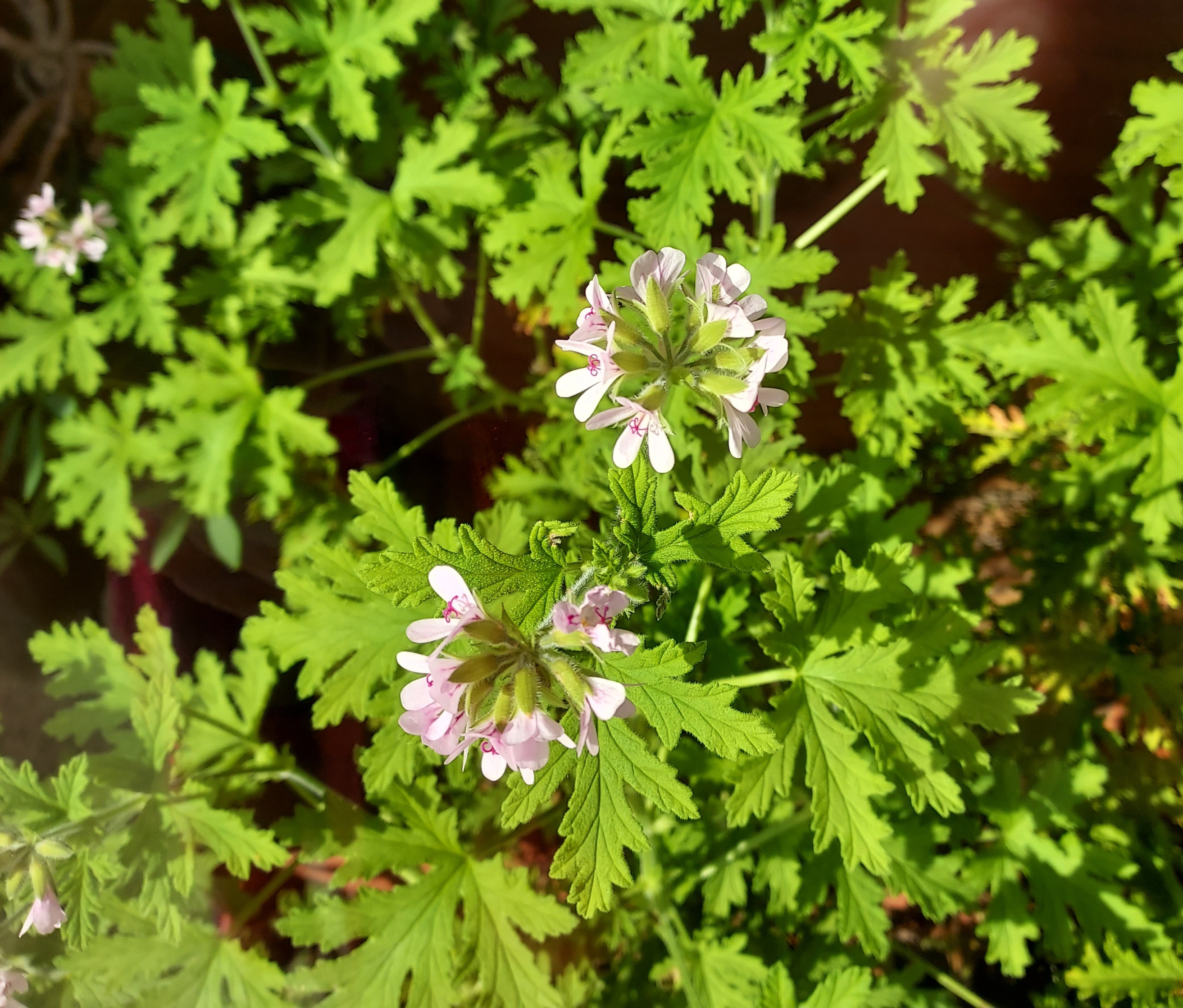
Six weeks from last frost date. As I see it, that means it will be mid-April when I’ll have to rearrange my home office to make way for seed trays and pots in the big south-facing window. Meanwhile, at the bookstore, the big pot of parsley continues to thrive, as do geraniums, asparagus fern, and citronella. Citronella has small pink blossoms! Not showy, but still, it’s cheery and encouraging at this time of year to see any kind of blooms. The citronella will go back outdoors for the summer, but perhaps I should break off some leaves now to take home and deploy as mouse repellant? Because a couple of those little devils made uninvited indoor appearances recently....


More Book Thoughts


Since my last blog post (which was shorter than usual, with not a single picture of my dog), I’ve continued to think about Bonnie Jo Campbell’s novel, The Waters, in connection with Tara Westover’s memoir, Educated. A novel is fiction, a memoir nonfiction, so that’s an important difference, not to be forgotten, and there are others. For example, The Waters puts a woman in the driver’s seat, as it were: Hermine Zook, the healer, dominates the island as well as the hearts and minds of her daughters and granddaughter. Westover, on the other hand, despite relationships with her mother and sisters, is ruled over (as are the mother and sisters and brothers) by her father in more ways than one. Her brothers play major roles in her life, as well -- for better or for worse.


As for similarities, here I’ll quote what I wrote a few days ago: “Yet in both stories, unlike as they are in so many ways, there is a family isolated from its own surrounding community, as well as from the larger world; a young girl, hungry to learn, who is kept out of school; a mother who knows herbs and how to take care of babies; and violence, an omnipresent threat, that breaks out from time to time without warning.”


Continuing to think about both stories, the fictional and the actual, has led me to watch several interviews each with authors Campbell and Westover. (I’ve linked two here, and you can find many others by searching online yourself.) One thought since my last post (this came from the linked interview with Campbell) is how important choice is to the women we meet in both stories. As in life, much happens that was not chosen by Tara or Hermine or Rose Thorn or Donkey, but in other moments and situations they did make choices, sometimes considered for a long while beforehand, but not always. Sometimes impulse gave voice to feelings that had been simmering unrecognized beneath the surface until the moment they burst through. 


Tara’s father made many choices for her before she became strong enough to know what she wanted for herself, and the same was true of Donkey, with her mother and grandmother deciding her fate for years. Is personal growth is a paradox or a feedback loop? It is only by making choices that we become ourselves, and at the same time we have to gain knowledge of ourselves in order to be strong enough to make choices that we need to make.


(Campbell seems to be having a wonderful time with her book tour travels and visits, and she has certainly earned every bit of the attention she’s getting. Also, as she herself notes, it doesn’t make sense to spend years working on a book and then not do everything possible to get it into readers’ hands. Westover’s memoir was a sensation when it first appeared in 2018, and she was a national phenomenon, appearing everywhere, so if she has chosen to disappear from the public eye for a while, as it seems is the case, one can hardly wonder at that decision.) 


The question of home, like that of choice, looms large for Tara in the memoir and for the women of M’sauga Island in the novel. Molly and Prim have left the island to live elsewhere, and Molly wants her mother and Donkey to move off the island, too, but Hermine would not be at home anywhere else, and the four adult women are “more themselves” when there, together, the author tells us, even when they are at odds with each other. For Hermine and Donkey, the relationship to the natural world in which they live is as important as Rose Cottage. But Donkey needs a larger world, one that includes school – and boys and men.


Tara Westover had to leave her mountain home to go to school, and she wanted to go much more than she wanted to stay, and yet the mountain pulled her back over and over again. In “the end” -- of the memoir, that is, which isn’t “the end” of her story, of course, since she and family members are all still alive -- she had to lose half her family, including both parents, in order to be true to herself. It was interesting, however, that in one of her appearances (on a podcast called “Mormon Stories”), two of her aunts and a cousin showed up to support the decisions she had made.


Q. If Tara Westover were to read The Waters (and I hope she will), would she think Campbell romanticized rural isolation and the life of a child kept out of school and away from doctors, despite the violent incidents that take place in the novel?


Q. If Bonnie Jo Campbell were to read Educated (and perhaps she has), I’m sure she would point out differences between the Westover family and the Zooks, but would she also see parallels in the strength that both Tara and Donkey needed to make their own way in a larger world?


I keep searching out interviews with both authors and will continue to think about their stories, I’m sure, for a long time to come.


More Dog Reports and Thoughts 


Two years ago I often called her "Tiny Girl."

Sunny and I have been to the dog park in Northport a couple times in the past weeks, and she has made some new friends, human and canine. The last time we were there, she was one of four dogs (about an ideal number, as far as I’m concerned, at one time), the others a hound named Gilbert (who chases soap bubbles) and two Labrador retrievers, but Sunny Juliet was the only one of the four with any interest in chasing tennis balls. I thought of my sister saying that their Labs have never been big on chasing balls, and for the first time it occurred to me that while Labs are “retrievers,” they are bird dogs, and the hunter does not throw a bird for the dog to bring back! Ah, but then I remember a friend’s golden retriever, who would chase and bring back tennis balls for as long as anyone could be persuaded to throw them, so – small sample, no conclusions here. Any thoughts on this burning question?


As for why a dog like Sunny, bred for herding, would care for tennis ball play, I have no explanation, and neither can I venture a guess why she behaves like a terrier – dig! dig! dig! -- whenever she senses a mouse or mole in a pile of brush or underground. 


Oh, and then there is her fascination with wild animals that take refuge in our old, ramshackle barn! Birds and feral cats and skunks, you name it. Sunday morning she had a mild skunking, what I call a "skunking-at-a-distance," i.e., not so strong as to bring tears to human eyes but still not a smell I would want on my bed, so out came the Dawn detergent (2 T), hydrogen peroxide (1 quart), and baking soda (1/4 cup) for a deskunking bath (need to renew those important supplies), plus a strip of bacon to lure her into the bathtub. She was not eager but didn’t make a big fuss, thank heaven. Important note: The deskunking mixture must not be mixed up ahead of time and/or ever stored in a closed container! But if you have a dog, it’s a good idea to have the ingredients and recipe on hand.


Afterward, she was full of smiles and wiggles and so much energy that I gave her three of the calming treats that would have been helpful, maybe, an hour earlier. Supplies have since been restocked, but I do have to hope that Sunny won't go back for more skunk experiences any time soon!


None the worse for her experiences!


Monday, December 19, 2022

Smörgåsbord Grazing of the Bookish Variety

Happy holidays with (a few) jingle bells!


…There is an “idea” boat that is an emotion, and because the emotion is so strong it is probable that no other tool is made with so much honesty as a boat. Bad boats are built, surely, but not many of them. It can be argued that a bad boat cannot survive tide and wave and hence is not worth building, but the same might be said of a bad automobile on a rough road. Apparently the builder of a boat acts under a compulsion greater than himself. Ribs are strong by definition and feeling. Keels are sound, planking truly chosen and set. A man builds the best of himself into a boat – builds many of the unconscious memories of his ancestors….

- John Steinbeck, The Log From the ‘Sea of Cortez’


I wanted to title this post “SmörgÃ¥sbord of Books” and have that title in Swedish. Alas! Search as I might for a Swedish translation of the phrase, all I could come up with was books of recipes for a smörgÃ¥sbord, and it isn’t tasty food tidbits that is my subject today but a mode of reading that some of us get into from time to time, which consists of dipping into one book for a few greedy pages and then moving on to something entirely different, until one has bookmarks in half a dozen or so books.


This happened recently (once again, I should say, because it is no rare occurrence with me) because – I went to a book sale! Oh, more than that! I went twice, on the first day and again on the third and last day. I took my camera, thinking I might photograph the sale, but what was I thinking? Do I forget who I am? Of course I could do nothing but look at books, pick up books, make piles of books, until I had filled – well, never mind how many boxes! 


(How will I get all these books back to Michigan? The Artist and I had already accumulated so many books here in Arizona that the question was hardly a new one, and so, by my logic, it mattered not at all how many I added to an already-problematic collection. I’ll worry about transporting my treasures when the time comes.)


Winnowed through and rearranged #1


Before attending the sale, I was halfway through A Southwestern Utopia, by Thomas A. Robertson, the story of an experimental colony established in Mexico in the latter 1800s, based on Albert K. Owen’s principles of “Integral Co-operation,” but from my Thursday morning haul, I couldn’t resist slipping into the first few pages of Washington Irving’s A Tour on the Prairies. Irving made his expedition from the East Coast of the United States to Buffalo, New York, and from there to St. Louis and eventually into what is now Oklahoma, land that had been designated as “Indian country” but was already then, in 1832, being subjected to President Andrew Jackson’s infamous Indian Removal Act of 1830.


Winnowed through and reorganized #2


Thus I was deep in the nineteenth century of North America, with two different books competing for my attention; however, my Saturday’s repeat foray into the gigantic book sale overloaded my table of bookish temptations, and one little paperback in particular, the one quoted from at the head of this post, stole –and broke! – my heart from the very first page. 


The Artist and I were both, we had discovered early in our acquaintance, fans of Steinbeck’s Cannery Row and found the character of Doc especially enchanting. So imagine my mingled delight and heartbreak to find the first 70 pages of the little volume in my hands devoted to Steinbeck’s reminiscences of Ed Ricketts, the friend on whom he modeled the character of Doc! And then – he and Ed, a.k.a. “Doc,” are going on off together on a boat! The Artist, a self-described “stone Pisces,” although never a sailor, loved boats! Houseboats and rowing boats, mostly, though he didn’t turn up his nose at a quiet trolling motor. 


River Rat's summer abode


But he would read about any kind of adventure on any kind of boat, from Jerome K. Jerome’s Three Men in a Boat to Melville’s Moby Dick, and I am finding it almost unbearable that he never had a chance to read this book that would undoubtedly have had a prominent place on his shelf of favorites. So when I wake up at 2 a.m. and reach for the little volume, I am reading it for him as much as for myself. 


An Arizona friend had a request, though, and I turned my mind to that on Sunday afternoon. She wanted “something light” for her holiday flight back east to visit family in Michigan. When I found two different Laurie Lee titles at the sale, Cider with Rosie and As I Walked Out One Midsummer Morning, my first thought was, Perfect! But then I wondered. Maybe that wouldn’t exactly be my friend’s cup of tea. I know that when she reads novels, she focuses more on action and dialogue than description – in fact, she confesses that she sometimes skips over long passages of description. So with that in mind, I went back to my shelves, and when a little paperback edition of The Borrowers, by Mary Norton, whispered, “Take me!” I thought, yes, that’s a good choice. Still playing it safe, however, I went to my Southwest corner, where Lisa G. Sharp’s memoir, A Slow Trot Home, seemed another likely winner. There! Three books – and all together, in volume and weight, less than many a hardcover novel. This way, whichever book she tries first, if it doesn’t suit her mood, she will have backup. But then, naturally, I had to read the first few pages of both the Laurie Lee books! 


It was 1934. I was nineteen years old, still soft at the edges, but with a confident belief in good fortune. I carried a small rolled-up tent, a violin in a blanket, a change of clothes, a tin of treacle biscuits, and some cheese. I was excited, vain-glorious, knowing I had far to go; but not, as yet, how far. As I left home that morning and walked away from the sleeping village, it never occurred to me that others had done this before me. 

    -  Laurie Lee, As I Walked Out One Midsummer Morning


Also, since I had a lot of work to do, what with de-acquisitioning and rearranging books to make room for those recently acquired, naturally I was looking into several of those “new” books and couldn’t help reading a couple of chapters in Edmund Wilson’s Red, Black, Blond and Olive: Studies in Four Civilizations, which reads more like a detailed travel narrative than a sociological tract, I’m happy to say. 


Minimally rearranged; cannot eliminate much from this corner.

Tucked away -- but not completely out of sight like the 17 books in a box in the closet!


Well, Sunday was a grey day. Overcast. Chilly. I’d thought I might drive to Willcox for fresh-roasted coffee beans but decided to stay put with puppy and private library instead. Sunny Juliet and I did some more “work” on identifying her various toys (rabbit, skunk, kong, ball, bear), although she would have been just as happy or happier to have me throw the tennis ball from one end of the house to the other, over and over, if we were going to stay indoors. 


Not a reader, but I love her!


Tuesday, August 11, 2020

Change, the Only Constant


The night pasture was a small piece of land. Much of it had been cleared once, then taken out of cultivation. As the years went by, we used that pasture less and less. At first the wildflowers were better than ever. Then the protected land began to change. I watched it, puzzled. I had not realized how the land, if left alone, begins moving back toward some inevitable destiny of its own.  

Goldenrod crept into the open land, beginning to cover the hillside with bright yellow plumes that moved in waves with the wind. A year or two later, black raspberry vines began to replace the goldenrod. Hazel brush moved out from the edge of the trees to compete with the berries.  

Most of the wildflowers were gone from the hillside by the time the scraggly sumac trees began to grow there. In a few more years, the poplars, with their restless singing leaves, had started. Soon the young oak trees began to spread out from the woods….  

-      Ben Logan, The Land Remembers


I think we in northern Michigan are now in the season Tom Springer, in The Star in the Sycamore, calls “between the raspberries and the goldenrod,” but I’ll have to re-order that book to find out, as the first copy I had in the store sold before I could do much more than look at the table of contents. On that first glance, however, I very much appreciated Springer’s observation that four seasons hardly seem adequate to describe a year in nature. I have always been skeptical about calendar divisions, sensing much more intersection and gradation and seesawing between the seasons than twelve months divided into four can possibly suggest.


Ben Logan’s memoir is divided into four seasons, but he is aware of finer distinctions, writing, for example, of fall that it 


…does not seem like a true season. It never settles down into a steady sameness of days the way summer and winter do. Fall is a time of change, an end of the growing season, a preparation for the season of cold and snow that is coming. 


It’s a rare Michigan August that fails to bring mornings that feel like September, mornings with the scent of leaf mold and fungus on cool, humid air and the first maple or sumac leaves turning red – ahead of schedule, we can’t help thinking, but nature isn’t going by our calendar.


The Land Remembers is set in Logan’s boyhood Wisconsin, on a ridgetop farm called “Seldom Seen.” The work he remembered was hard and never-ending, winter blizzards serious, crops always uncertain, but his memoir is a joyful one. His father, an immigrant from southern Norway, was still farming with horses when Ben and his brothers were boys, and their mother, who had been a schoolteacher before marrying, clearly enjoyed continuing to teach her own brood. The Logans on their family farm grew corn and oats, kept and milked cows, made hay all summer long, and in the winter they ate from the bounty of their land – chickens and eggs, milk and cream, garden produce (root cellared in sand, as well as canned), fruit preserves and jams, and berries and nuts gathered from the wild places around them. 


Explanations of the workings of different farm machinery and equipment in that time period, as well as his father’s careful choosing of seeds to save for the next spring’s sowing, made this memoir, at least in my mind, a kind of parallel to Ben K. Green’s Wild Cow Tales. That is, both books are reminiscences, the memories rural, and the way of doing things then largely been left behind today. More’s the pity, one cannot help thinking. While much of the work was physical and very hard, its rewards – for those who loved the work, that is, as did the Logans -- were satisfaction in visible results, family solidarity, and closeness to the earth. 


I don’t remember the name of the earth science teacher I had my freshman year of high school, but I always remember something he said on the first day of that class: “Change is the only constant.” Another memory from that subject, that year, is that when the teacher asked how many students lived in houses heated with coal, mine was the only hand raised. My parents considered themselves very modern when they had a stoker installed. Before that, I remember shoveling coal into a monster basement furnace at home (and standing in front of the open door envisioning, in the flames, Shadrach, Meshach, and Abednego). I also remember visiting grandparents in rural Ohio who still relied on an outhouse and a hand pump rather than modern plumbing … and I remember 4-cent first-class postage stamps … the amazing miracle of the advent of lightweight transistor radios and our family house before it was invaded by television and when we still had a party telephone line, and I have fond memories of doing dishes by hand (as I have always done and still do), singing rounds with my mother and sisters as we cleaned up after dinner each night. 


My parents are gone now, the family home sold, and my grandparents have been gone even longer. Do any siblings still sing together while doing chores? Is there an American home in the Midwest heated by a coal furnace? How many of us regularly exchange written letters with friends and relatives elsewhere? American life has changed from the mid-20th century to now.


I wonder if the reading of memoirs and biography, like the reading of history, is something we develop an appreciation for as we grow older, when we have accumulated a rich trove of our own memories and are looking backward to try to make sense of our lives and understand our society. Certainly, life is always changing for all of us. The world is changing, constantly, every day and from year to year. 


Recently in the mornings I’ve been looking for cardinal flower, thinking it should be about time to find it in bloom. A friend who grew up in Leelanau County told me that roadside ditches used to be red with cardinal flower in late summer, back before roadsides were regularly sprayed and mowed. Now it is a treasure in certain wet, off-road pockets, but I haven’t found it this year in the very place it was last year and the year before.


The corner of M-22 and Jelinek Road is being taken over by the dreadful autumn olive. One year, long ago, that corner was planted in wheat. I think it was in wheat only that one season, and yet I’ve never forgotten it as a wheat field. My own meadow was once a hayfield, one year a cornfield. Will it be woods someday in the future -- again, that is, as it doubtless was before ever there was a farm here?


Change! Where will next summer’s morels and blackberries and ash seedlings and cardinal flowers appear? Will we still be wearing masks in public places to stop the spread of coronavirus? The only thing we can count on is that there will be changes as we move from ephemeral present into unforeseeable future.


Friday, March 20, 2020

What Do You Think You Will Remember?

My desk in December
When we arrived at our ghost town hideaway for the winter, I made notes on the route we’d taken west and the places we had stayed: Kalamazoo, MI; Springfield, IL; Sedalia, MO; Wellington, KS; Dalhart, TX; Alamagordo, NM; and finally here, Dos Cabezas, AZ, 15 miles southeast of Willcox, AZ, and about 25 beautiful, winding miles west of the Chiricahua National Monument. The first page of the same composition book was already taken up with lists of things to pack (one list for the humans, another for the dog), and it was only on our second morning in the ghost town that I began keeping a sketchy narrative history of our season here. Back then, happy to be settling in for a few months under a sunny sky filled with wintering sandhill cranes, I had no idea that my notebook would become, in time a plague journal!

I always read a lot of books during our Arizona winters … write letters … blog about my reading and about our Cochise County adventures and explorations. It just happened that this year, for the first time, I also began keeping a journal. I certainly didn’t anticipate that I would be recording historic events; I merely wanted to fix everyday small details on paper. Because those little everyday details, the stuff of short-term memory, are easily lost as days slip into the past, and my time here is precious to me. I want to be able to hold the days in my hand as it were, and look at them again and again when I am far from these mountains and this desert. 

Winter morning
So most of my mornings began, starting in December, with a session of journal-writing. The weather (no, it isn’t boring), social engagements, personal happenings (getting keys to the mailbox is a big deal to me), daily errands, and descriptions of surroundings flowed from my pen, along with re-emerging childhood memories and a few observations of the current national political scene. Quite a lot about hearing coyotes, through the night and in early, still-dark morning. A few notes on books read.

In short, nothing particularly earth-shaking. And that’s how it went, week after week.

… Sandhill crane count … first visit to the Smile4Jesus Thrift Shop … tales of my husband’s new friend in Willcox, the one I call the Born-Again Bear … brief accounts of dreams (very few remembered long enough to write down) … walks and hikes with neighbors.… 

There were only a few words on the impeachment, although I thought it would never end … and very little on presidential campaigns, debates, caucuses, as I tried to keep attention on politics to a minimum … much more on my volunteer mornings at the library bookstore and the elementary school in Willcox. Of course, the political issues bled in from time to time, from impeachment to debates to caucuses to the State of the Union, because that was the news, nonstop, on the radio and television, but I tried to keep my attention locally focussed, as much as possible, escaping from the news to the outdoors.

People I love found their way onto the pages. One of my sisters was in Mexico for two weeks. The other went through the pain of losing an old dog. We spent February 15-17 in Tucson and anticipated a return in March. The Artist had a birthday. Then in late February, my former husband, the father of my only child, was moved (after only three days) from hospital to hospice, where he died a week later, and my son and I began spending daily time together on the phone. 

In the larger world, a few of the Democratic hopefuls began to drop out of the race for candidacy, but too many yet remained, and far from business and home responsibilities in Michigan as I was, I found the world crowding in, events racing along, piling on top of each other without time to catch a breath. In many ways, the world seemed all present, minute by minute. 

Yet only on March 10 did coronavirus come into my journal, when I noted that the Tucson Festival of Books, scheduled for March 14-15, had been cancelled the day before, adding at the bottom of that page: “Politics and coronavirus — our world today.” Two days later, March 12, I recorded that the president had announced, the evening previous, a ban on travelers from Europe, Ireland and the U.K. excluded. We began hearing daily about the terrible situation in Italy. COVID-19, the virus was now called. Less than two weeks ago. And yet now, March 20 as I am composing these thoughts, just past the spring equinox — such a short time since we were first told to stock our pantries for a possible two-week emergency quarantine — almost all universities and public schools are closed, churches have stopped holding services, restaurants all over the United States are open for take-out only, grocery store shelves are near-empty in key aisles (paper products, soaps and cleaning products, the dairy case), and more and more Americans, even those not yet on “lockdown,” are “sheltering in place,” even if they have not put themselves under “self-quarantine.” That is our national language now. 

Still, though all of us are affected, each of us is experiencing these days of isolation differently. We are spread out across a very large country, and while some friends find themselves alone, far from family and close friends, others see their households expanding with schoolchildren and college-age sons and daughters home all day. I lost my volunteer jobs, but many other people have lost paying jobs, jobs they needed for basic food and shelter. “Lucky” ones see their savings “evaporating before our very eyes,” while the homeless appear at intersections, holding up cardboard signs. No one can hope to remain unaffected, from the most expendable part-time hourly wage worker to the most pampered trust fund baby whose investment portfolios has plummeting in value.

Here’s another personal note, this one I know shared by many — the strange realization that, simply because of our ages, the Artist and I are in a “vulnerable” group, members of an “at-risk” category. It was already strange enough just trying to get it through our heads that we are no longer young — hell, no longer middle-aged! — we still can’t fully believe that! — and now we are also particularly “at risk”?

For me, personally, there is the added strange feeling of being disconnected, physically, from the world that has been mine for almost 27 years, i.e., the world of books. I am not, after all, in my Northport bookstore, weighing the question of whether to entirely for the duration of the crisis or stay open to process phone and mail orders, make sales through the front door (or deliver books to local customers), and gratefully accept whatever help my little community might offer, along with doing what I might do to help the community. I’m not there. Instead of being “on the front lines,” as it were, I only read each day in Shelf Awareness what is happening with other bookstores around the country. So peculiar and unsettling! My feeling must be something like what my sister felt when Hurricane Katrina hit New Orleans just after she had moved away, that feeling of I should be there! Then added to that the uncertainty of not knowing if we will even be back in early May as planned — if that will be possible at all. 

That’s part of my story. Everyone else has a story, too, quite different from mine. The general point I’m making is that each of us is having a unique subjective experience of these times, which means that together we will have a staggering number of stories, coming from myriad different vantage points, looking through lenses offering a kaleidoscope of perspectives. 

So, are you keeping a “plague” journal? Years from now, what will you remember? What is strangely ordinary about this time for you? In what ways does the crisis seem real or unreal? What other times of crisis does it call to your mind? How is it unlike anything else you’ve ever experienced? 


What books are you reading, and what kinds of meals do you find yourself putting together? Are you able to get outdoors for fresh air and exercise? Do you listen or watch or in some way follow news compulsively, every waking minute, or do you ration what you let into your consciousness each day? Do you sleep through the night or lie awake? If you sleep, what do you dream? If awake, what are your thoughts? How do you seek out comfort, and what gives you comfort?

With how many other people are you “sheltering in place,” and how is that going? Are you spending more time on the phone, calling and texting, or on your computer, e-mailing and following friends’ posts on social media? Do you feel more or less connected to those you love? Differently connected?

What is the best and worst aspect of this time for you? I should add so far to that previous question, shouldn’t I? Because we don’t know yet what will be the best and worst in the days and weeks ahead.

When I look at my own handwritten journal and see that I only used the word ‘coronavirus’ there for the first time ten days ago, I can hardly believe my eyes, but there it is on the page, although subjectively, right now, it feels like at least a full month that we have been obsessed with this news, every waking minute, to the exclusion of almost all else. I know I heard the news from China before March 10, but at that point, as the absence of it in my journal illustrates, the danger must have seemed very remote, a foreign problem only. That’s how fast everything has been happening.

Friends, I see some of your posts on Facebook, but those “news feeds” will be superseded overnight, you know, by whatever comes next, and even a year from now we will have a hard time remembering exactly when and now the pandemic (another frequently occurring word these days) first touched us personally. And besides, as long as you are “sheltering in place,” wouldn’t you like to use some of your time to make a lasting record for yourself and those who come after you? In all human lives, there are watershed events, some personal, others part of a national or world-historic fabric, and this is one of those times that will stand out whenever, in future, we look back on our lives. If you don’t see yourself as a writer, maybe you can keep a scrapbook or a photo album or make a quilt of “plague times.” We don’t have to be greedy opportunists to find opportunity in crisis. 

What stories will you have to tell years from now?

We each see the world from our own little corner....