Search This Blog

Showing posts with label memories. Show all posts

Tuesday, December 30, 2025

Nineteen Years Ago

What is written down and kept brings the past back to life.


I read a lot of books (over 150 in this year that is soon coming to an end), but now and again I look back and read my own words. For instance, on and off in my life I have carried around little dimestore notebooks filled with random jottings. This red-covered one from 2006 that surfaced recently begins with names of people met for the first time in my bookshop and in social settings. Nancy P., Michael H., Angela W. and Dennis S., Trudy C., all of them lasting friends, I first met that year. 


A few pages in, however, the jottings change character, because when the Artist and I traveled, I always kept notes, so I see that we left Leland on September 10th that year, with the odometer reading 176,729. The day was sunny, clear, and cool, morning wet with heavy dew. East and north of Traverse City, it seemed to me that we entered a different world.


None of the elements is foreign to our own peninsula, but here they occur in unfamiliar configurations—not the hills, trees, fields we know but strange hills, strange pines, strange oaks, orchards, barns, subdivisions and business development.
 

That would be Antrim, Charlevoix, and Emmet counties going north. The September sunlight, I had written, was 


…soft and glaring at the same time, bringing every color forward—asters and goldenrod, the subtle lavender and plum and purple underlying green….


When we crossed the Mackinac Bridge, I spotted the firewood drop-off site and vowed to drop off “my worries and frets” at that point in our travels and leave them there. What was worrying me in 2006? Luckily, I don’t recall.


Crossing from the lower to the upper peninsula is always significant, but that September we were going farther, crossing into Canada at the Soo (Sault Ste. Marie). We stopped for gas on the U.S. side (12 gallons), and noticed a group of couples on motorcycles going in the same direction we were headed, searching for their passports to have them ready to hand, “so we won’t have to get off the bike,” as one of them put it.


In Ontario we stopped at the Visitors’ Centre to change money, then at a gas station to buy bottled water, and already I was “elated, giddy.” Everything was different! We were in a foreign country! I overheard a man at a pay phone speaking in a dialect of French so far from the French I had learned in school that I could hardly pick out a single word. Down the road at Bobber’s Restaurant (Bruce Mines, Ont.) was a trio of Germans conversing in their home language. A foreign country, a different Great Lake—not Michigan or Superior, our home lakes, but north Lake Huron, with pre-Cambrian shores and wild verges of tansy.


Next day: 


17-East is a road from heaven this morning. Traffic light. Fall color coming on. The bones of the Canadian Shield thrust up through a thin skin of soil. Old wooden fences surround pioneer fields, [and there are] small stone cairns on rock shoulders, glimpses of cool lakes and rivers, signs for trailer camping parks.


Sometimes all I write is a list of place names: Spruce Grove Cemetery, Iron Bridge (pop. 900), Iron Bridge Motel, Three Aces Restaurant, Elly’s Diner—“Mom & Pops,” I write. Then—“Mississagi River, big and beautiful, shining on its way.”


Finally, this list:


      patch of loosestrife

      iron bridge

      old board-and-wooden shingle house


with a note to self appended: “Picture these. Souvenez-les.” Remember them.


There were people congregated across the river at a rapids, many of them fishing, not many catching. Mississagi First Nation issues permits. And next came Blind River, pop. 3600. A float plane! Helicopter! Mixed yellows of tansy, butter-&-eggs, goldenrod, hawkweed, and coltsfoot.


Rocky points jut out, horizon filled with islands, sky with clouds, water with whitecaps and glints of reflected sunlight.


Next to the library (I remember the street and picture it today in my mind) was a real estate board listing 1000’ of shoreline, with 10 acres and year-round access, for $49,500. We were only in the market for lunch, though, and happy to find a Chinese restaurant and meet the proprietor, Ivy Chen, 16 years in Canada, over a year in Blind River, Ivy’s family including a husband and two children, 9-year-old boy and 10-year-old girl who sat with us while doing their homework. The soup was turkey broth with pork and pork wontons “and no MSG,” Mrs. Chen assured us. It was beautiful and delicious. I bought four books at the library for $1.25, and we were on our way again. Much later, when we were back in Leelanau County, I sent a couple books they had requested to the Chen children, who would be all grown up now. Looks like Blind River has grown, too, since we were there.


Serpent River … First Nation Trading Post … what I called “a sea of nothing but cattails in the sun, their seasons short-lived.” Above an outcropping, leaves were red and orange, “echoing the iron-stained color of the ancient rock surface.” Then I noted parenthetically, casting my mind back to the day before,


(Yesterday, somewhere, golden ferns and seedlings of red sumac on the ground looked as if the color had dripped down from the branches above.)


In Massy, Ontario (pop. 1,000), where we had stopped on a previous trip to photograph outdoor metal sculptures by Laval Bouchard, we decided to stay overnight at the Mohawk Motel, stopping while it was still afternoon. While the Artist rested from the drive, I sat outdoors with book and notebook, looking forward to exploring nearby Chutes Park and then, the next day, reaching Manitoulin Island, where I had arranged to rent a little cabin on a lake on the island for four nights. We decided we would come back to Massey on Saturday, after our time on Manitoulin, for a big street painting event. 


The Mohawk Motel was German-run and had a long list of written rules—quite a long list!—but the room was large and had everything,” and the Artist loved it. Our cabin on Manitoulin would have no TV, so he was happy to have a movie channel for one night in Massey. Later we walked (1 kilometer) to Chutes Provincial Park and found our way through the campground to the waterfall before a light supper and well-earned sleep. Morning was coffee in our room, a dog walk, TV, then more coffee in the lobby, with toast, fresh muffin, and conversation with the owners, who were looking forward to the second year of their street painting festival. The wife had organized the event, and artists would be coming from Germany, the U.S., and other parts of Canada. Previous year’s attendance had been 10,000. Government funding had helped with a publicity campaign. I wonder if that festival is still going on…. 


And that is only a few pages in the beginning of a little notebook that goes on to recount our time on Manitoulin, the return visit to Massey for the festival, and finally a stretch of days in dear, familiar Grand Marais. It was one of our longer September getaways and one I love revisiting now, seeing those scenes once more as I flip the little pages.


Do you keep written notes on your travels? Sketchier or more fulsome than mine? Do your notes or diaries help you recall those earlier times?


Happy new year, if I don't write again until NEXT YEAR!


Friday, November 14, 2025

Time’s Wingèd Chariot


She might like to speed me up sometimes.

Excitement in Northport


“Have things pretty much slowed down now?” people frequently ask in my shop. Good question. There are slow hours now, even the occasional slow day, but time’s general pace continues inexorable for the busy small town bookseller, homeowner, and dog mom. One day there were leaves to rake, the next day snow to shovel! One day it was Halloween, and then—it seemed suddenly—the long-anticipated author event of November, Chuck Collins with his latest book, right there in little Northport!


Author and bookseller


There’s no way to make a room larger than it is, try as one might, so with thirty chairs set up and more than forty people eager to hear the speaker, a group of us crowded around the doorway between bookshop and gallery. Author Chuck Collins had a lot of bad news to deliver, but he delivered it calmly, as a friend, and he is not at all a gloom-and-doom kind of guy. He does not counsel despair. He gave examples of “fixes” that can begin—and in some cases, are already underway—at the grassroots level to return power to the people. The audience was fully engaged.


Author and SRO crowd

One of his more obvious illustrations of bad news was how, after a couple of decades in which wages rose in concert with productivity, the economy continued to grow while wages stagnated, this wealth gap fueling a social divide. But in the midst of this discouraging talk, almost as a throwaway line, when citing some positive examples of what can be done, he used a phrase that sang out to me: “reweaving the social fabric,” words seemed to sum up the import of how the gap, having been widened, can be narrowed again


We in this country need the feeling again that we are all in it together, that we are all one another’s neighbors, so I am taking my inspiration from Collins’s phrase: Reweaving the social fabric. That is our task. 


Again, Chuck Collins’s new book is Burned by Billionaires: How Concentrated Wealth and Power Are Ruining Our Lives and Planet, and though my stock is currently sold out, I have additional copies back-ordered and will be happy to put names on a waiting list.


For now, I extend many, many thanks to Chuck Collins for graciously coming to Northport to speak at Dog Ears Books! And many, many, many thanks to Northporters who turned out to hear him and to purchase his book and to do me proud! It was certainly an event to remember. I'll add (blowing my own horn as well as the author's) that Chuck’s book tour takes him from little Dog Ears Books in Northport to Politics & Prose in Washington, D.C., today! Now what do you think of that?


The chariot speeds along!


We had our first snow of the season on Sunday, November 9. Glad it was a Sunday (day off), I stayed home all day (no trip to the dog park), alternating work and play outdoors with food preserving tasks indoors. Scenes of snow, however, like those warm-toned autumn leaves, demanded attention, too, and I clicked away on my phone, storing up images as eagerly as I was storing up food. I won’t say I have a million photographs of autumn scenes—let alone a ton (have you noticed how everything seems to be described in tons these days? except when quantities come in bunches?) —but I have so many that it’s difficult to choose from among them. Maybe a couple of contrasting pairs will best give a picture of our Up North world. 


Leaves on my boardwalk

Second clearing of snow from boardwalk in one day

New life from old at a corner of the woods

The same woods corner after first snowfall


There are more (though never enough) over on my photo blog, A Shot in the Light, but maybe I just need to do what is inelegantly called a photo dump over there, eh? Yeah, that’s the idea….


Jim Harrison, A Life


I devoured the biography of Jim Harrison, Devouring Time, by Todd Goddard, and it was a strange, moving experience. Although the Artist and I were not in the inner circle of Jim’s friends in poetry and publishing or hunting and fishing (overlapping groups), much less part of the high-profile Hollywood personality crowd, we spent a fair amount of time with Jim and Linda in Leelanau County in the 1970s and ‘80s. When I first met the Artist, in fact, he had just returned from Key West, from the shooting of “Ninety-Two in the Shade” and from having been in Jimmy Buffett’s apartment when the first pressing of “A Pirate Looks at 40” arrived (40? Wow! That seems so young to me now!), and he had many stories to tell of Buffett and Harrison and McGuane and Kidder and all. Then I began reading Jim’s books. 


Eventually the Artist took me to the Writer’s home for our first meeting, and there was a time when I did a spate of manuscript typing for Jim (a poetry collection, a novel, a couple of screenplays), but then the Harrisons moved west, and the last time the four of us were together was in Patagonia, Arizona, in the spring of 2015.


As it was, all through the book, as each chapter announces the years covered, I relived my own life, remembering where I was in those years and picking up all the successive threads of love and friendship and acquaintance as time went by, braiding them together and feeling them tug at my heart. I wasn’t even sure I could manage the very last pages of the book. I miss the love of my life, my dear friends, the way we all were! That last spring evening in Patagonia, the Artist asked the Writer's wife, “Do you miss Leelanau County?” She answered, “I miss the way it used to be.” I do, too.


Lucky woman!


When the Artist and I lived in Kalamazoo, we sometimes fantasized about having a bookstore in Paw Paw. We were always drawn to small towns and country life and always discovering and bringing home used books wherever they found us. It was a long and winding road that brought the two of us together again in Leland, with more books than our little house could hold when, without the benefit of long-term planning, rather as a summer lark, I first fell into bookselling, having no idea that I would be selling books 32 years later, no idea at all of the many adventures and friendships that would enrich those years.


When Chuck Collins arrived for his event on Wednesday, one of the first things he wanted to do was to buy the Goddard biography of Harrison. He gave his talk in what is still David Grath's gallery. Later, over dinner, Bobbie Collins reminded me of the images of Grath paintings that grace a series of music CDs her husband Edward J. Collins commissioned, music written by his own father, Edward Joseph Collins, who was born in Joliet, Illinois, the town where I grew up (after my parents moved there from my birth state, South Dakota). 


We had dinner after Chuck’s bookstore talk at the new Bluebird in Leland, only opened recently, where I was touched to see the Dreadnaught on the menu. It was the Artist who “invented” that burger, “the Dreadnaught of our cheeseburger line,” he liked to say—although he always insisted it really should be served on an English muffin, but that’s another matter entirely. My point is that, in the old days, in addition to the Bluebird’s printed menu, there was an unwritten menu of things that could be ordered only if one knew about them, and always, before ordering one of those items, you would ask, “Who’s cooking tonight?” The Dreadnaught was one of those items. Now it's on the printed menu. 


“My husband invented the Dreadnaught,” I told the waiter on Wednesday evening. I didn’t think he had registered my statement (why would he?), but later he came back to ask my husband’s name, and Bobbie Collins said, “He was an artist,” and I said, “You can Google him,” and he, the waiter, said, “I will.”


Is that a pointless story? Not to me. To me, it all ties together, because it's all part of my life, and when an old friend of the Collins family who had joined us for dinner told a story about Fred and Molly Petroskey, that tied in, too. All those nights around a big table at the old Bluebird, all those old “regulars” now dispersed or even gone from earth—they all still live in my memory, and Chuck and Mary are now woven permanently into the fabric of my life, too, along with Bobbie, who was already there.


Many years ago, my son once complained that he was “tired of being poor,” and the Artist corrected him. “We’re not poor, we’re just broke. We have a very rich life.” Our life together grew richer and richer in later years, in ways so much more meaningful than money! My memories are “savings” that I live on each and every day, and yet the wealth does not diminish. 


Of course there is Sunny Juliet, too.


Sometimes an apple is a plaything.

Sometimes it's a snack.

Friday was a blue sky day, and after closing shop at 3 o’clock I hurried home to my girl. “Go for a walk?” I asked her. “It’s a beautiful day, and we’re alive!” How many times did the Artist say that to me? We had so many beautiful days!


The world is still beautiful.

It is rich in color and memory.

And it keeps on turning....

Postscript: Friday sunset


Wednesday, April 30, 2025

My Own Personal "'Hamlet' Back-&-Forth"


 “What kind of boat is she?”


An embarrassing question; for it was suddenly apparent that this small craft could not be classified. She was neither sailor nor steamer; she was not a trader, still less a yacht. A roof, the width of the beam, had been raised over a black, flat-bottomed hull; small square-paned windows had been cut in, and a short mast raised above. Space had been left in the bow for anchor and ropes; in the stern a tiny deck gave just enough room for the sweep of the tiller.


“She’s a—well—she’s a painter’s boat.” 


The San Luca, by Cilette Ofaire, book’s title taken from the name of the boat in the travel narrative, was on a bookshelf I was looking through at home. I wondered why it hadn’t been on the shelf with the houseboat books, where I would have found it months ago when moving those books from living room to office. Although the “painter’s boat” was not exactly a houseboat, they did live aboard for years, the husband and wife, both of them painters. (It should really have been called a “painters’ boat,” with the apostrophe indicated plural artists.) In any case, the subject matter moved me to set aside a novel I’d planned to read at bedtime in favor of traveling aboard the ‘San Luca.’ 


They begin in Germany, with the plan of giving up cheap apartment hunting and the dreariness of even cheaper hotel rooms in the years following World War I, to take to Europe’s canals, living and working in their waterborne vessel. 


Charles had found her in a partly drained canal in the dreary marshes bordering the Elbe between Hamburg and the sea. She made us think of a peddler’s booth abandoned after a fair, or a broken-down circus wagon left by the roadside. On her prow she had carried the carved wooden head of a dragon, set off by daubs of green and yellow, and along the sides of the hull had been painted wings which ended in a sort of tail vanishing into the rudder. We could not help smiling at her absurd, helpless air.


Charles and Cilette did not have Harlan and Anna Hubbard’s drifting voyage down the Ohio and Mississippi rivers. Sometimes they had an opportunity to moor in some lovely pastoral backwater, but just as often they were towed from one city to another in a long “train” of barges, a tugboat the motive engine of the train, past factories and cranes and sad little remnants of pathetic, bare-limbed trees. And in fact, being towed by some other vessel seemed their primary way of moving, from Germany to Czechoslovakia to Holland and beyond, in a world of customs officials, police, required permissions, and rules.


Intermission in Northport


I left my reading at the end of Part I to begin another day, first outdoors with dog and then indoors at bookshop. Part I of the story had ended sadly, with the suspicious disappearance of their little dog in Amsterdam, suspicious because neighbors on hand had complained about the boat being moored on “their” canal, and one had falsely claimed to the police that the quiet, sleeping dog “barked all night.” 


After a couple of early customers, the shop settled down to a dead quiet until, one by one, friends trickled in. Even before being introduced to one another (those not already acquainted), lively conversation ensued. Books were purchased and ordered, recommendations made, questions asked, until the talk ranged far and wide from Waukazoo Street, ceasing only a few minutes after closing time. It was a good day in Northport. And the next day, Saturday, would be Independent Bookstore Day! 


But first, back home to Sunny. In the rain. A short walk under an umbrella, dinner preparations, and then an hour of relaxation, the momma with her book, Sunny with her bone. 


Back to the Boat


What a surprise awaited me at the beginning of Part II. Charles and Cilette sell their boat! Right in the middle of the book! The new owner, a friend of theirs, gives it a new name, and C&C purchase another boat and christen it ‘San Luca’ to continue their voyaging, now through Belgium and on to France. 


Early in the story, we were told that Charles “knew how to create an atmosphere of intimacy out of the barest of materials” and thus transformed the droll, abandoned, dragon-headed boat into a waterborne home and studio to two wandering artists. Charles’s ingenuity is exercised once again on the new boat, a “lamentable figure” when first they see her, “streaked with rust” and further disfigured with “ugly red paint.” As soon as they found her,


…Charles began to draw up plans: taking her to pieces, putting her together again, modifying her to fit all our needs and our wishes. 


“The entry here,” he said aloud, “will become the living-room.” He shut his eyes and Cilette knew that he was building the wall over in his dream.


The Artist's houseboat in Leland, Michigan!

Oh, what memories such passages evoke for me! The Artist whose life I shared was a boat dreamer, also, and could not see an old hull anywhere on land or a smart vessel in harbor without making elaborate mental changes, sometimes even committing plans and sketches to paper, and so whenever we would read aloud to each from books such as this one, he could not bear to rush through descriptions of renovations and would often say, if I were the one with the book in hand, “Wait. Read that last part again. I didn’t quite picture it.” 


Daydream material

Sketching a remodel....


Then Back in the Bookstore


On Saturday, April 26, the sun came out in Northport for Independent Bookstore Day!!! More importantly, probably, from a traditional Northport point of view, it was the day of the annual Scott Brow Fishing Derby for families of young children up at the millpond. Some people came for both books and fish, though, and that worked fine.


Discussing movies and TV series with a customer-friend from Cedar, I needed to check on the date of the 19th-century establishment of the town that became the ghost town where the Artist and I spent several contented winters. Imagine my horror, in looking up my own blog post from 2015, to discover that I had mistyped the date for the first Dos Cabezas post office! It was, of course, 1879, not 1979! All this time, and of all the people who had read that post (a popular one because of its subject matter), no one had corrected me! It’s kind of a hassle to make a correction to a post that far back in time, but I persisted until victory was mine.


Two dogs visited the bookshop on Saturday, Charlie and, later, another little dog about the same size but held in the owner’s arms. Friend Lucia also stopped by (though she had bought books only the day before) to wish me a Happy Indie Bookstore Day! 


Always good to see Lucia!


My bedtime book on Saturday was, once again, Ellen Airgood’s South of Superior, my go-to comfort book, the one that soothes my soul in troubled times and strengthens my resolve.


An excerpt from one of my favorite books


…It was hard to say who the “real” people were. She didn’t have anything against most of the new people, not the retirees or the summer people or tourists or even the snowmobilers, not on a case-by-case basis, except that they tended to expect too much, to assume too much. But they paid their taxes and kept their lawns mowed and volunteered at the school and spent money in the local stores and had as much right to be here as Gladys did, she realized that. And McAllaster had always been a tourist town, a resort town; her own parents had made a living off that fact. 


But things were changing fast now. Too fast. Half a dozen new summer places got built on the beach every year, and no one was content with a regular house, everyone had to have a mansion. At this rate she wouldn’t be able to afford the taxes on the house she’d lived in for more than fifty years….


-      Ellen Airgood, South of Superior


On the road!


Last time I went anywhere farther from home than Benzie or Grand Traverse County? Last fall I ventured all the way to Cadillac, and in late spring of 2024 I made it up to the U.P. once. 


My spring road trip 2025 took me to Reed City, the halfway point a friend from Kalamazoo and I had chosen for this season’s rendez-vous. 


Always good to see Laurie!


We did no sight-seeing, and so I have no album of photographs to share, but I did stop to hover a few moments at a little farm village called Chase, where I mailed a postcard to a friend in the U.P. and used my phone to capture a couple of old buildings, the first because it must have been very important at one time in local history, the second because it made me think of how often I have meditated on hiding out in some out-of-the-way place where no one would ever find me. Why such an idea? Don’t you have occasional fantasies of leaving everything behind?


Faded glory

No one would look for me here.


Now, in closing, another excerpt


A somewhat strange book came into my hands. The title is King Noanett, the subtitle A Story of Old Virginia and the Masssachusetts Bay, the author’s name on the title page given as F. J. Stimson, but in parentheses below that J.S. of Dale. The main character is a young man of Devon, who meets a lass and falls in love – an old story, so far. This particular story, however, is set in the time of great conflict in England, and as the young man’s grandfather is a Parliamentarian and the young woman’s grandfather a royalist, the lovers are star-crossed. And here I must reveal that the young man’s unusual name is Bamfyde Moore Carew.


Let me here skip ahead in the story. Carew is convicted of giving aid to the royalists and sentenced to “transportation” (i.e., deportation to the colonies) and several years’ servitude (I forget how many), but eventually he and an Irishman who had shared the same transport vessel escape their masters and join an army. Horrors of slaughter and dissipation drive them from that life, also, and they carry away with them a girl whom neither of them wishes to marry (because the Irishman, like the Devon man, is in love with another) but whom they cannot leave to the life of the camp. 


Enough of background. Of this convoluted story, I only want to leave you today with a speech the Irishman makes to his friend:


“Beauty is given man, the good kind of beauty to enjoy, the bad kind to tempt him and teach him strength. In this way even pleasure hath its place—and a Puritan is but a suicide that thrusts him, like a blubbering child, away from the fires that are to try him! Let monks renounce—a man is here to live, and touch and try the lives of others; to feel his life and use it to the full, and then to give it away—to the first cause, maybe? Men to be brave and true, maids to be brave and gentle—and both their highest duty to be kind.” 


“Their highest duty to be kind.” Isn’t that a noble thought for the day? 


Quietly spectacular hellebore

Monday, March 24, 2025

The Past Is Close at Hand


Where am I?
 

On Sunday morning I finished one nonfiction book I’d been reading and had knocked off the remainder of another in the afternoon after housework, so at bedtime I was thrown back on a volume from Robert Hale’s Regional Series, books written in the mid-20th century on various parts of England, featuring history, landscape, architecture, and so on. This second one, Exmoor, I’m not finding as charming as Olive Cook’s Breckland (each book in the series has a different author), but I am not reading it carefully for legal-historical detail, simply as escape from the present to another place and time. The “historic” parts that please me most are the most purely local. Here is an example: 


"From here we will cross Hoar Oak Hill to Hoar Oak Tree. This celebrated tree was, from 1300 when the Forest was curtailed until 1815 when Simonsbath was colonized, one of the only two trees in the entire Forest. In 1658 it fell from “very age and rottenness,” and four years later a young tree was planted there to take its place, and this newcomer was in turn blown down in 1916."


-      Lawrence Meynell, Exmoor (1953)


Bits like that I slow down to read and re-read, picturing the scene in my mind. I wonder if the replacement tree was replaced in turn when it fell in 1916. The author doesn’t say. 


I didn’t read very far in that book on Sunday evening before falling asleep, however, because before picking it up I read my entire 190-page journal from December 12, 2019, to March 16, 2020, reliving a long trip west (seven days on the road, longer than usual because in New Mexico I was felled by what I considered at the time a migraine attack but have since learned was more probably vertigo), ghost town hikes and social events, a first exploration of Turkey Creek Road, our “Coyote Christmas” (I would link this if I could, but the platform is not cooperating), Sarah’s last full winter with us, the onset of the pandemic, and so much more. A friend and I had been trying to remember when she and her then-partner visited us, first in Willcox and later in Dos Cabezas, and both of those visits I found recorded in this 2019-20 journal, the first of a series that has now reached Vol. XIII and page 2240 (as of this morning), memories important only to me. 


Sarah in Tucson, Arizona

The Artist and I made a couple of trips to Tucson that winter and visited bookstores in the “Old Pueblo,” as locals still like to call their city. David loved Speedway Boulevard! I was happy to get back to our quiet ghost town. We both loved the old library in Bisbee. 

In the library, Bisbee, AZ

My son’s father died in the spring, and I spoke with my son by phone almost every day. The Artist and I found again, having become yearlings, the new foals on the edge of Willcox that had captured my heart the winter before. On Monday mornings I volunteered at the Friendly Bookstore and on Wednesdays at Willcox Elementary School. We made new friends in Willcox. I hiked with neighbors on our home ground and a piece of public land down the road. 


"Sandhill cranes not far off, heard before seen & sometimes not seen at all, they fly so high. Brief thrill of daily passenger train [speeding through town nonstop], and in the quiet that follows its disappearance, again the distant, purling music of the cranes, now visible overhead, sunlit in their turning."  


-      1/25/2020, Willcox, AZ


"A high forest of ocotillo as we climbed & at the peak gave way partway down along a fault line to beargrass at the sedimentary/igneous shift. Northeast slope, shaded, held surprising pockets of tiny ferns & flourishing mosses, & the trail in places was muddy. Moisture no doubt came from snowmelt; springs that high unlikely."


      2/3/2020


We saw the new “Little Women" film in Willcox, and a Stage-to-Cinema showing of “The Nutcracker,” the 1984 production of the Royal London Ballet created by Peter Wright. 


"And while a large group, we were told, had formed the afternoon audience, we were the audience at 7 o’clock. A private showing! As if we were the king and queen!


"David loved it every bit as much as I did. “Superb! Magnificent!” It was a perfect holiday gift. And before & after the show, there were the magical lights in Railroad Park, their glorious colors reflected in puddles from the day’s storms….


"Two years ago we went to Paris at the Willcox Historic Theatre when the show was “Figaro” from the Opera de la Bastille. Now, London. It would be thrilling to attend the opera in Paris, the ballet in London, but having these experiences in a little Arizona cow town & coming outside to the dark of high desert winter has a magic all its own, almost as unlikely as the fantastical “Nutcracker” story itself."


      - 1/29/19


Railroad Park, Willcox, AZ, lighted for holidays in 2019


Sketchbooks were still part of my life that year.


"I had two sketchbooks with me yesterday, having taken the second as a mental reminder to get started. [Apparently the second was still empty, the first almost full.] It isn’t that anyone else cares … or that I would “do” anything with [the] drawings, even having made them. It’s that I feel good when drawing. Leave thoughts & self behind. Exist purely in the moment. See fully. And afterwards I can revisit those places & times: by looking at old drawings, I am plunged back into the ‘now’ of ‘then.’"


-      1/25/2020


Exploring up Turkey Creek Road in the Chiricahua Mountains

The ‘Now’ of ‘Now’!

Monday, March 24, 2025

From ‘then’ I return to ‘now,’ as winter weather has returned once more to spring Leelanau, snow deep and heavy and still coming down as Sunny and I ventured out into the morning. Maybe I will not get to Northport today, after all, and that’s all right. There are potatoes and onions and lentils a-plenty in the house—“lentils for the apocalypse,” I found myself thinking, a thought perhaps arising from recollections of the drive the Artist and I made back to Michigan in June 2020, one night staying in a three-story motel in which we seemed to be the only guests, an eerie place I named “the motel of the Apocalypse.”


As always, the present is saturated with the past. We are time beings.


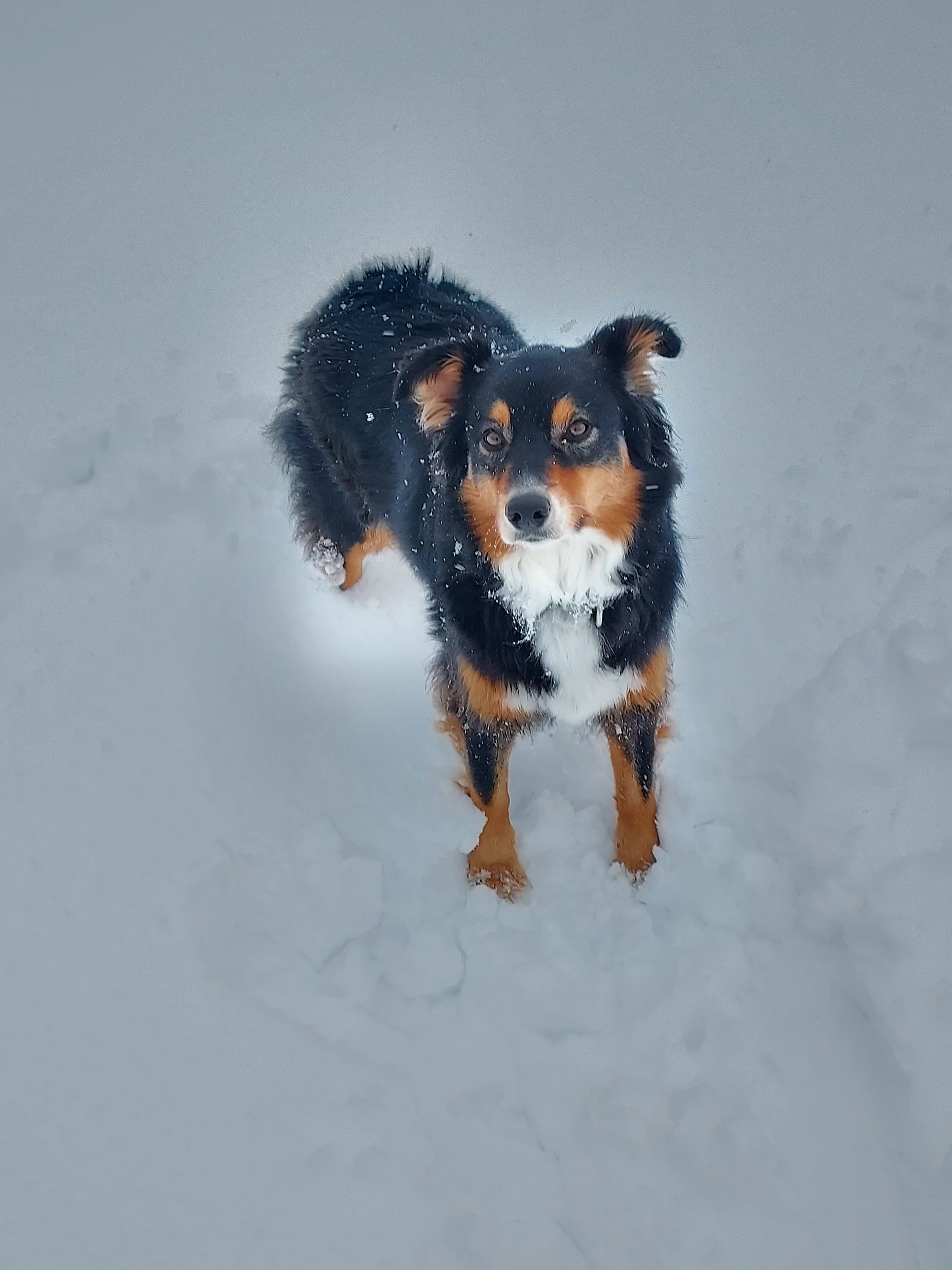
"No dog park today, huh?"


Note: As I say, the platform has turned uncooperative, and one of the several things it will not let me do is format quotations as indented paragraphs. I don't know if this is a temporary or a permanent problem. All I can do is use quotation marks and a different color font.