Search This Blog

Showing posts with label country life. Show all posts

Tuesday, July 15, 2025

What are you missing? What do you love?

Taking a break from the hurdles--with her beloved tennis ball!

“You haven’t been posting as much about Sunny on your blog lately,” one bookstore browser observed recently.  In the old days of Dog Ears Books and Books in Northport, the Artist and our dog Sarah were the stars. 


Sarah in the bookstore

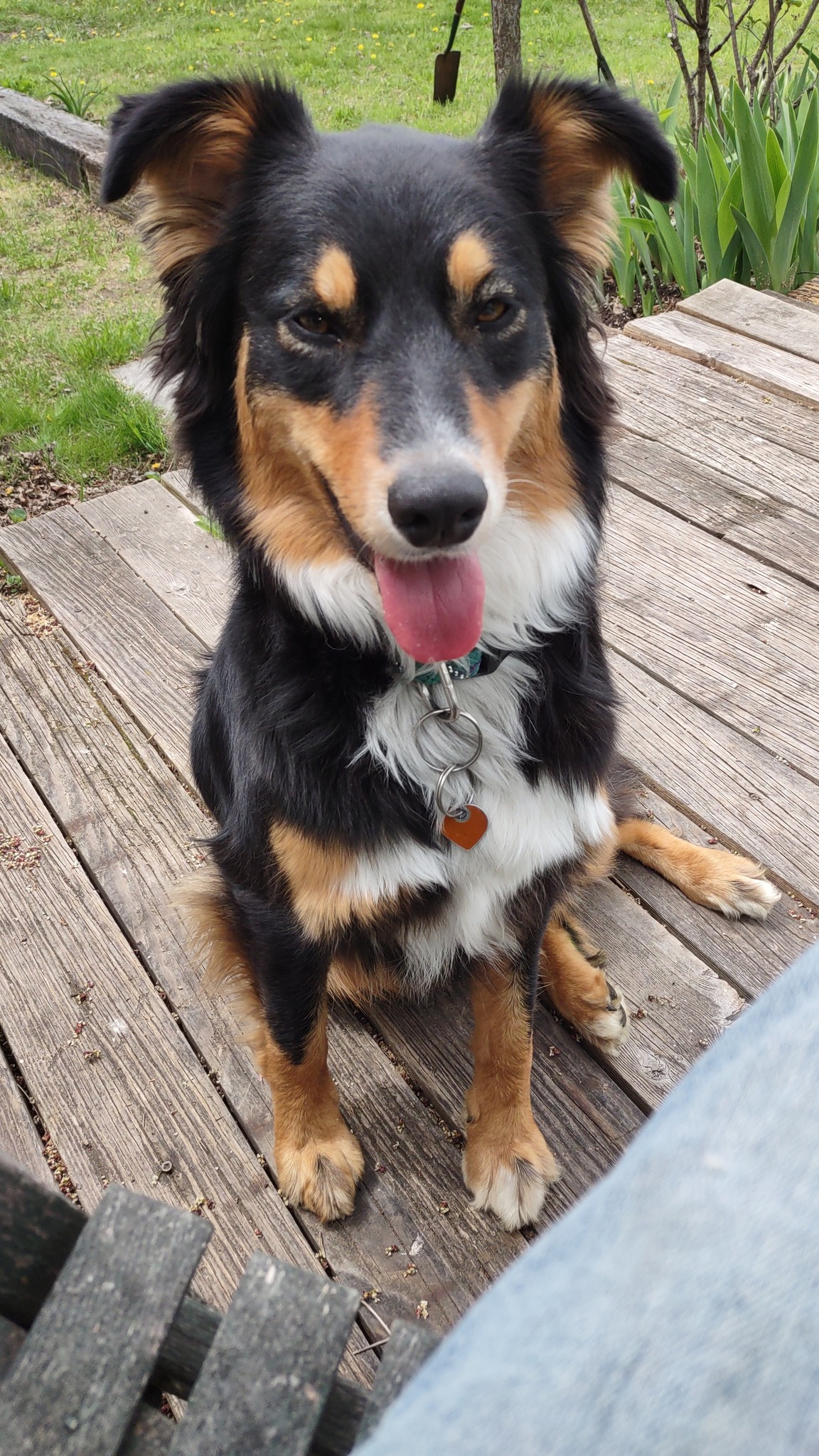
Now (though not in the bookstore) it’s Sunny who is my blog star, so here she is opening the show today before I go on to my usual bookish meanderings. Sunny Juliet is still a Naughty Barker, nowhere near the almost-perfect bookstore dog that her predecessor, Sarah, was for 13 years, but she and I are pretty bonded, her recall improves steadily, and she is the stronger member of our one-person, one-dog agility team, no question about it.


Gli Etruschi e io


La campagna


“The Etruscans and me”? Not really. Not me, personally. It’s D.H. Lawrence and the Etruscans I encountered in the author’s posthumously published book, Etruscan Places. But the title captured my attention, because whether a book is fiction or nonfiction, place-based literature, stories and experiences anchored in a village or a region, is what I find most compelling. 


Il lago


Etruscan Places, in addition to being very much anchored in place, is also very personal to the author. Unlike his fiction, this book’s style is more like letters written to a friend, with emotional responses accompanying Lawrence’s observations. He doesn’t only write about the Etruscan tombs, either, but includes by name all the wildflowers along the way, which (naturally!) I found charming. Judgments on history and the present day also begin on the very first page:


The Etruscans, as everyone knows, were the people who occupied the middle of Italy in early Roman days, and whom the Romans, in their usual neighbourly fashion, wiped out entirely in order to make room for Rome with a very big R. They couldn’t have wiped them all out, there were too many of them. But they did wipe out the Etruscan existence as a nation and a people. However, this seems to be the inevitable result of expansion with a big E, which is the sole raison d’ĂȘtre of people like the Romans.


Lawrence was not a fan of the Romans. He saw the Etruscans as a people living attuned to Nature (and was instantly drawn to them when he first saw some of their artifacts in a museum),  the Romans as a foe of that sweet life, wanting only to crush and dominate it. Whether he is comparing paintings or architecture, he sees everywhere the same contrast. The “impious pagan duality,” a phrase he uses only in order to reject it, “did not,” he claims, “contain the later pious duality of good and evil.” He sees the Etruscans as a more natural people, more accepting of death—which they saw as a continuation of life on earth, rather than existence in an entirely different kind of realm—and at the same time much more playful than the Romans who came later. 


Besides his observations on the tombs and the art in the tombs and his personal judgments on the art and how it compares to Greek and Roman and modern art, Lawrence notes wildflowers he sees along the way, what he and his companion saw in the villages and the countryside, and the different mood called forth by each place.


It is very pleasant to go down from the hill on which the present Tarquinia stands, down into the valley and up to the opposite hill, on which the Etruscan Tarquinii surely stood. There are many flowers, the blue grape-hyacinth and the white, the mauve tassel anemone with the red, sore centre—the big-petalled sort. It is curious how the anemone varies. Only in this one place in Tarquinia have I found the whity-pink kind, with the dark, sore-red center. But probably that is just chance. 


The town ends really with the wall. At the foot of the wall is wild hillside, and down the slope is only one little farm, with another little house made of straw. The country is clear of houses. The peasants live in the city.


Probably in Etruscan days it was much the same….


Bellissimi fiori


What Lawrence never states explicitly but what readers in 1932 understood is that the Italy of Lawrence’s investigative travels into history was also the Italy of Benito Mussolini, who had transformed the country into a one-party dictatorship, first by outlawing labor strikes and soon with the use of secret police, eventually allying his Fascist authoritarian state with Hitler’s Germany and Imperial Japan. So when he writes about the “all-conquering Romans,” he is also heaping scorn on the Fascists, for the latter “consider themselves in all things Roman,” and he despises Romans and Fascists alike. 


Myself, I like to think of the little wooden temples of the early Greeks and of the Etruscans: small, dainty, fragile, and evanescent as flowers. We have reached the stage when we are weary of huge stone erections, and we begin to realize that it is better to keep life fluid and changing than to try to hold it fast down in heavy monuments.


Only a little while later he asks,


Why has mankind had such a craving to be imposed upon? Why this lust after imposing creeds, imposing deeds, imposing buidings, imposing language, imposing works of art? The thing becomes an imposition and a weariness at last. Give us things that are alive and flexible, which won’t last too long and become an obstruction and a weariness. Even Michelangelo becomes at last a lump and a bore. It is so hard to see past him.
 

We may well object here. How can anyone reject Michelangelo? But life in the shade of Fascism, along with the tuberculosis that was soon to bring about the author’s death, may have made him impatient. He did love the Italian countryside:


Such a pure, uprising, unsullied country, in the greenness of wheat on an April morning!—and the queer complication of hills! There seems nothing of the modern world here—no houses, no contrivances, only a sort of fair wonder and stillness, an openness which has not been violated. 


One morning I gave myself a complete vacation from news headlines and enjoyed, before my bookish day, immersion in my own “pure, uprising, unsullied” countryside. Deer in the orchard, ducks and loons on Lake Leelanau, Canada geese overhead, and everywhere the deep, rich, varied greens of summer! 


Una bella mattina! E vivo in campagna! Che fortuna!


But how long are we going to let ourselves be imposed upon, and how far will we let the impostors impose on us? Where and when is it going to stop?


Why we (I and others of my ilk) keep harping on current events


The question was asked, Why do Democrats care so much about ICE raids and deportation of immigrants? Why don’t they worry and demonstrate instead about other unsolved problems in our country, such as the plight of the mentally ill or the homeless or people suffering from natural disasters? Years ago, one of my uncles took me to task for donating to the ACLU, arguing that they had done nothing for disaster relief that week. I forget what the specific disaster was, but I explained to my uncle that the mission of the ACLU was not disaster relief and that I had donated to Lutheran World Relief and indicated that my donation was to go to that week’s specific disaster, for which LWR had promised to provide 100% of donations so targeted. 


Supporting one cause does not mean ignoring others.


There are always ongoing issues we care about and contribute to and work for year after year. Most of us contribute regularly to various nonprofit organizations, each one with a different and important goal. I have a sponsored child through “Save the Children,” donate annually to the Michael J. Fox Foundation (for Parkinson’s Disease), and generally give to disaster relief funds through Save the Children or Lutheran World Relief, besides making annual donations to the ACLU and Southern Poverty Law Center. Memorial donations are an opportunity to give to specific hospitals or churches or libraries (wherever they may be) or local organizations.


The reason to pay so much attention to "this stuff” right now—to pardons for insurrectionists; firings of judges for being impartial rather than partisan; arrests, detainments, and deportations without due process—and to demonstrate and to continue to spread the word about what’s happening is that our country, the country we love, is at a critical crossroads. Democracy is in crisis. Understandably but tragically, many Americans, including the young, have stopped following the news, and this is how authoritarianism takes hold. 


As Eric Holder, the 82nd U.S. Attorney General , wrote recently: 


Right now, core pillars of our democracy are under attack – including a free press and educational institutions that teach independent and critical thinking. This isn’t isolated or random — this is an intentional effort by the far right to weaken the very systems we have in place to ensure the health of our democracy. They are dragging us toward authoritarianism. What’s happening now is NOT normal. 


If law enforcement and the judicial system are replaced by authoritarian goon squads of revenge, no one will be safe, and all those people Democrats are accused of ignoring will be among the victims, simply because they are so vulnerable. The fight for American ideals is not choosing to care only about, for instance, immigrants. It is about assuring a future in which everyone in this country is accorded dignity, in which everyone’s humanity is recognized and respected.


Back to the Books


On Wednesday evening, August 13, Dog Ears Books will host Timothy Mulherin, author of This Magnetic North: Candid Conversations on a Changing Northern Michigan. These conversations with northern Michigan residents from all walks of life (he interviewed over 75 people for the book), explore the topic of “relocation,” how it may be (some think yes, some think no) changing the face and character of northern Michigan, and what different people think of the changes and hope to see in the future. 


Do you see our area changing? If so, how do you feel about it? What do you want us to hold onto, and what could be improved upon? Are there things you miss about the Old Days?


Kinda "old days" in Northport

Older days in Leland

We were all young once.

August 13 promises a lively discussion with this author, who splits his life between Indiana and Leelanau County, so mark your calendar and don’t forget! I’ll issue reminders, never fear.


Tuesday, June 3, 2025

My Unexpected Vacation Day

Orchard road

[In China] I took deep interest … in the farming problems of our neighbors, the difficulties of raising crops…. I watched the turn of seasons and was anxious with the farmers when there was no rain and yearned with them in their prayer processions and was grateful when sometimes the rain did fall.


-      Pearl S. Buck, My Several Worlds: A Personal Record


Up North, when days finally grow long and bright again, the question asked between people meeting for the first time in this new year is always the same: “How was your winter?” 


My answer this year: “In retrospect, it went fast.” 


I admit that individual days sometimes felt long, and yet, each week, as I looked back on it, seemed to have flown by. Spring’s arrival, however, seemed reluctant as back and forth it went, a yo-yo season, giving us hope only to dash our optimism the following day. Yet difficult as were those days of March and April, they were cold spring days, January now only a memory.


Cherry blossom was unspectacular this year in my immediate neighborhood. We had ice and rain and wind, and though trees bloomed, I missed the usual rolling acres of brilliantly white flowering trees in the spring sun. Either I missed it, or the wind and rain tore the blossoms untimely from the boughs. If I'm correct about there having been a shorter flowering time, will it affect the harvest? Farmers need a lot of faith to keep going, it seems.


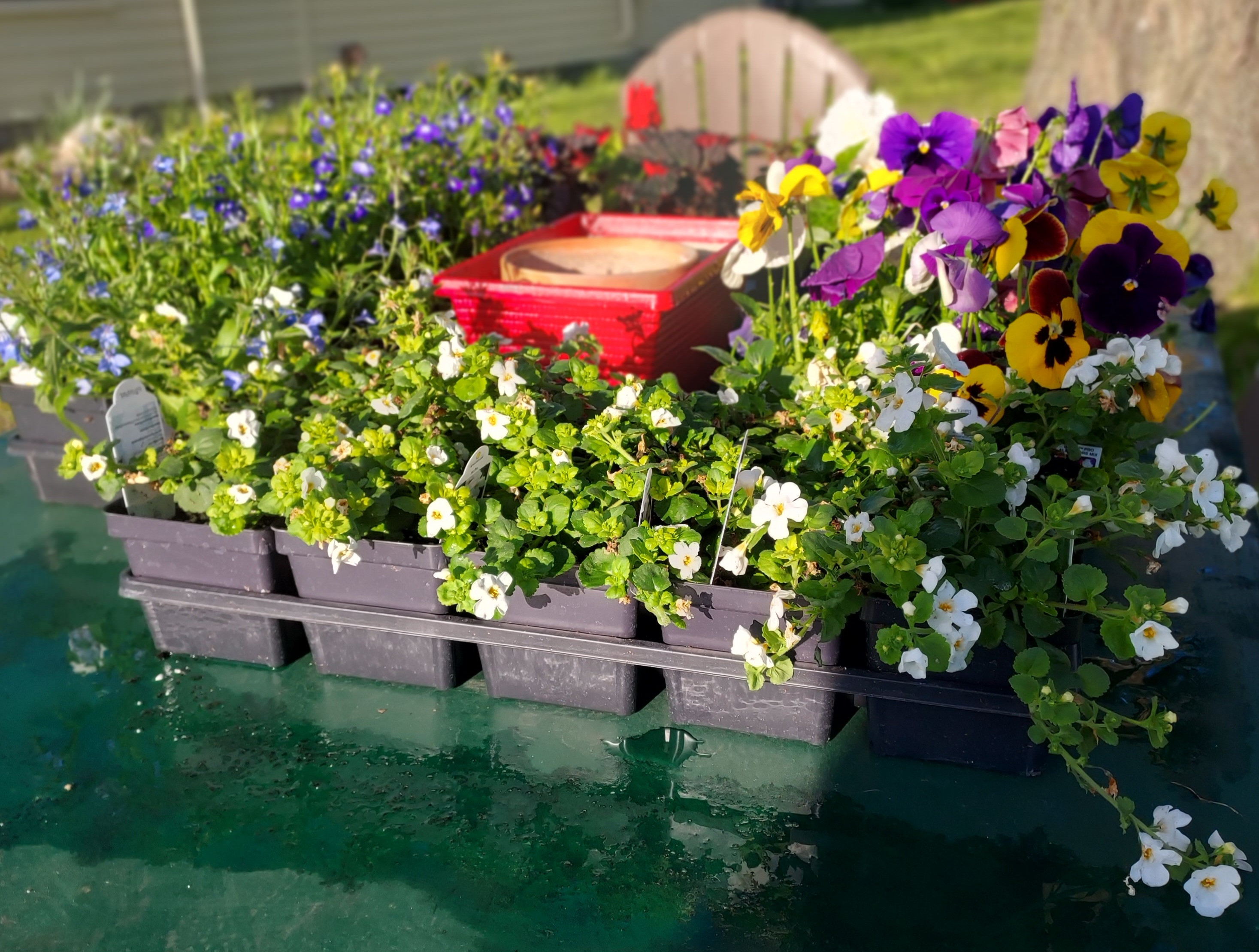
Annuals to add POP to perennial borders

One of the garden centers where I buy flowering annuals changed hands this past year, and when I asked one of the new owners how things were going he remarked—this was last Sunday morning—that people were biding their time, reluctant to plant with the weather as cool as it still was. I had risked bean seeds, and they came up, but then a chilly morning nipped part of a row. I filled in the row with new seeds. Does that take faith? I don’t know that I'm brimming with faith, but I plant and hope for the best and am delighted (by what seems a miracle!) when seedlings emerge from the soil.


Now—suddenly, it seems!—it is June, and there are no more slow days. Between sunrise and sunset we have more than 15 hours, so the days are long, but each one speeds by. As illustration and evidence, I offer below images of trees leafing out in late May. First, a roadside woods at that all-too-brief impressionist stage, the spring day when I always long for a ‘pause’ button so as to drink my greedy fill of this delicate, tender, fleeting time that is gone too soon. Then, our Leelanau woods only two days later. The first green of spring: Now you see it, now you don’t!

One spring day --

Two days later --

And THEN!  It's a jungle!

My personal and business life take on the speed of the season, which is why my recent trip to Kalamazoo was only an overnight turnaround. I could stay there for a month and still not have enough time with family and friends, but too much awaits my attention at home, so home I came the next day to tend to it all: planning for bookstore events with book orders and publicity, and planning for summer visitors to my home (and for my own stolen moments of leisure) by getting yard and gardens in shape for the season. Marilyn Zimmerman's book launch is next week!!!


Mark your calendar for June 10, Dog Ears Books, 5-7 p.m.!
 

In the midst of all this, the disappearance of my billfold, holding driver’s license and credit cards, was a minor crisis. Did I leave it somewhere? Drop it somewhere? Was it in the house “in plain sight” and I just couldn’t see it? Over and over I mentally retraced my steps ... called places I’d been on Friday and Saturday ... looked and looked and looked ... through every bag, under car seats, at home and in my shop. It is so maddeningly tedious, having to give over mental energy to such a boring, repetitive task, don’t you find? 


But on Monday morning my car had to go in for a brake job in Leland, and since I could make no progress on the search while the car was in the garage, I put the whole problem on the back burner, walking from Van's garage down Main Street to Trish’s Dishes to get a coffee to go, encountering a couple of friends along the way, and then making my leisurely way back to the river to find a perch on the dock of a shanty belonging to friends there in Fishtown. I'd texted Charlie that I would be there but hadn't had a reply, so I just made myself at home, as the Artist did so many times over the years.


Looking lake ward


A glorious morning! The sun was shining, and the breeze was alive with that wonderfully familiar, fresh-fishy aroma of the river. Men were at work on the dock opposite, where a few early morning tourists strolled. Passengers gathered to board the Mishe-Mokwa for a day trip to South Manitou Island. Gulls flew overhead, and song sparrows sang. Now and then a duck paddled about near the pilings. 


It was very near here, just south of the river mouth, that the Artist spent a night on the beach long ago and wandered into town the next morning to the Bluebird, where Grandma Telgard said immediately to a member of her kitchen staff, “This boy needs a cup of coffee!” That was years before we met, but in later years together we spent many, many hours in, around, and near Fishtown, only a pleasant walk from our old Leland home.


Back to the present. Now, in 2025, for weeks and weeks I have been carrying my sketchbook with me everywhere I’ve gone, along with a set of drawing pens sent to me by a friend for my birthday. The last serious sketches made in the book were from 2015. A whole decade ago! How is that possible? Finally, there on the dock, I took out sketchbook and pens and applied myself to the scene. The results were laughable, but results didn’t matter. I was there and nowhere else, practicing drawing as meditation. Perfectly content.


Life proceeds at a different pace on the river, I remembered then, whether one is working or relaxing. 


“I beg your pardon,” said the Mole, pulling himself together with an effort. “You must think me very rude; but all this is so new to me. So—this—is—a—River!”


The River,” corrected the Rat.


“And you really live by the river? What a jolly life!”


“By it and with it and on it and in it,” said the Rat. “It’s brother and sister to me, and aunts, and company and food and drink, and (naturally) washing. It’s my world, and I don’t want any other. What it hasn’t got is not worth having, and what it doesn’t know is not worth knowing.” 


-      Kenneth Grahame, Wind in the Willows


Illustration of Rat and Mole by E. H. Shepard

Since I’d seen no car, I thought Charlie and Sandy must be away, but it turned out that Sandy was home, and after a while she joined me outside on the dock with her own coffee mug, and the two of us caught up on each other’s lives in leisurely fashion. I showed her my sketchbook, and she showed me her tiny portable watercolor kit, small enough to fit in a handbag, and after a couple of hours we walked up to Main Street and over to the Cove, a restaurant on the north side of the river, to meet her visiting grandson and his wife and their almost-three-year-old son for lunch. 


I’d told Sandy about my missing billfold but was feeling no stress or panic. It would show up, or it wouldn’t. I had put a hold on the credit cards the day before, and although replacing cards and driver’s license would not be much fun, it was just one of those things. One foot in front of the other. Deal with it. That's life. 


Am I calmer because I’ve learned not to panic? Or is it simply a lessening of energy that comes with age? Or am I become so calm, so unlike my younger self, because after losing the love of my life nothing else that happens to me feels all that difficult? Maybe all are partial explanations.


Later, back home, I dared to plant seeds for tender annuals and vegetables. Launched tennis balls through the air for Sunny Juliet. Searched one more time through my car for the missing billfold and contemplated necessary next steps if it didn’t turn up. But the day was too beautiful for worry. I’d mowed grass on Sunday, and my yard, fresh and green, was orderly and inviting as I puttered about the perennial borders, grateful for my Michigan country life.


Sunny likes Michigan, too.

And the icing on the cake was that I found my billfold in the grass, right there at home! Now I don’t have to think about that any more! 


But have I been stingy with pictures of Sunny in this post? How about a recent scene at the dog park, Sunny and friends, with all dogs in happy motion. There! Satisfied?


Dogs having fun!

Monday, February 12, 2024

Back For More

February 9 seems early, even for hellebore.
 

(Always) More Garden Thoughts


Other than a few remnant patches here and there, our snow melted and evaporated, leaving bare, squashed grass, weeds, and last autumn’s fallen leaves, a tired palette not at all brightened by a string of grey, overcast days. Cold wind didn’t help, either. During an unseasonably warm spell, my sturdy hellebore dared to put forth blossoms. Will they survive, now that the temperature has gone back below freezing at night?


Friday was busy in the bookstore, Saturday not, but a cheery surprise awaited me at the post office: my seed order had arrived! 


Small packages hold big dreams.


It may not look like much, but my kitchen garden is small, so I tried not to get carried away, because besides these packets I’ll be starting tomatoes from seed and, as usual, buying other plants as my budget permits. Oh, frabjus joy! Another year of gardening! More planting and weeding and watering and pruning and moving things around in the endless search for the right placement for all -- the doing as rewarding as the results, if not more so.


Seeds to start indoors --

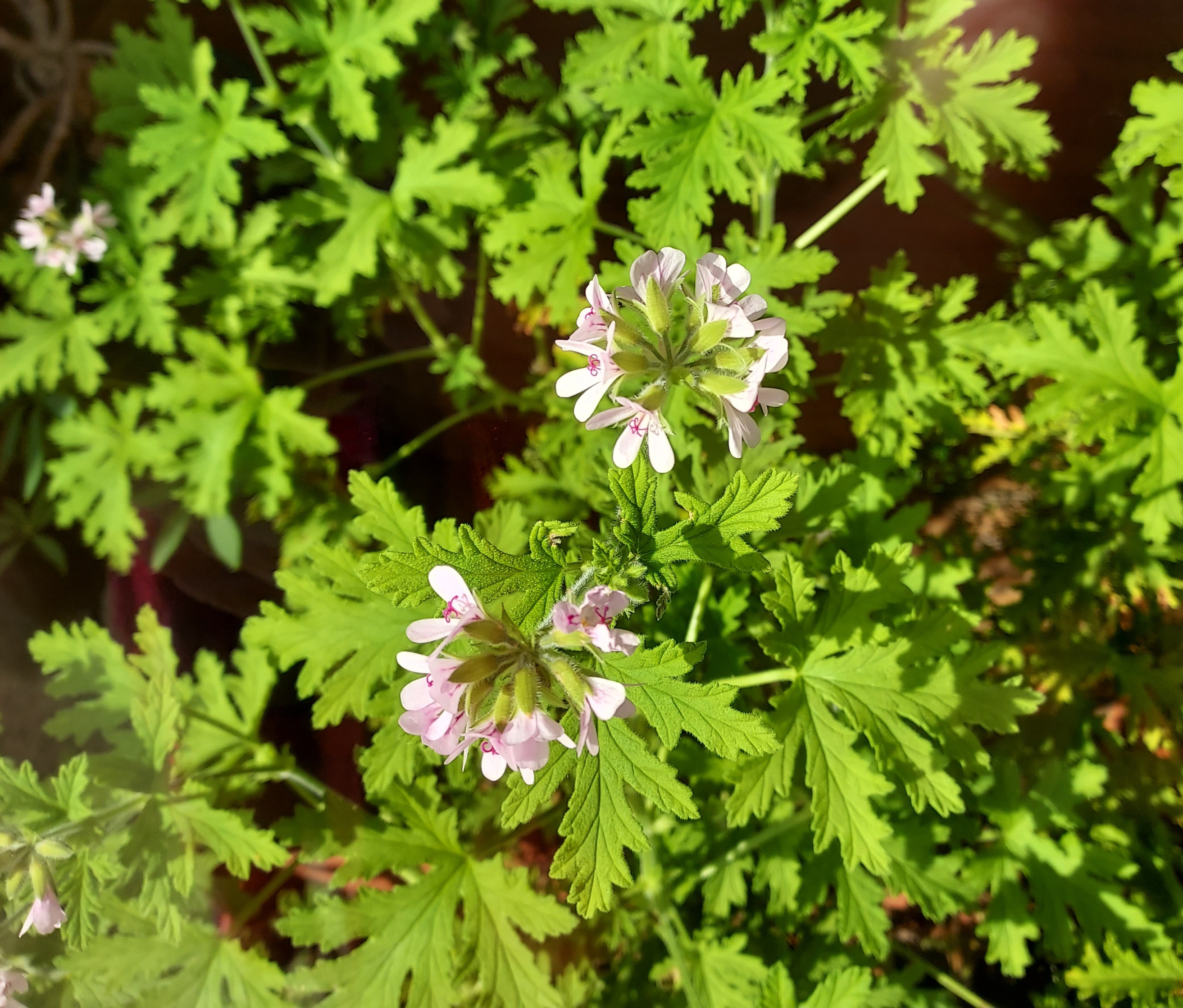
Six weeks from last frost date. As I see it, that means it will be mid-April when I’ll have to rearrange my home office to make way for seed trays and pots in the big south-facing window. Meanwhile, at the bookstore, the big pot of parsley continues to thrive, as do geraniums, asparagus fern, and citronella. Citronella has small pink blossoms! Not showy, but still, it’s cheery and encouraging at this time of year to see any kind of blooms. The citronella will go back outdoors for the summer, but perhaps I should break off some leaves now to take home and deploy as mouse repellant? Because a couple of those little devils made uninvited indoor appearances recently....


More Book Thoughts


Since my last blog post (which was shorter than usual, with not a single picture of my dog), I’ve continued to think about Bonnie Jo Campbell’s novel, The Waters, in connection with Tara Westover’s memoir, Educated. A novel is fiction, a memoir nonfiction, so that’s an important difference, not to be forgotten, and there are others. For example, The Waters puts a woman in the driver’s seat, as it were: Hermine Zook, the healer, dominates the island as well as the hearts and minds of her daughters and granddaughter. Westover, on the other hand, despite relationships with her mother and sisters, is ruled over (as are the mother and sisters and brothers) by her father in more ways than one. Her brothers play major roles in her life, as well -- for better or for worse.


As for similarities, here I’ll quote what I wrote a few days ago: “Yet in both stories, unlike as they are in so many ways, there is a family isolated from its own surrounding community, as well as from the larger world; a young girl, hungry to learn, who is kept out of school; a mother who knows herbs and how to take care of babies; and violence, an omnipresent threat, that breaks out from time to time without warning.”


Continuing to think about both stories, the fictional and the actual, has led me to watch several interviews each with authors Campbell and Westover. (I’ve linked two here, and you can find many others by searching online yourself.) One thought since my last post (this came from the linked interview with Campbell) is how important choice is to the women we meet in both stories. As in life, much happens that was not chosen by Tara or Hermine or Rose Thorn or Donkey, but in other moments and situations they did make choices, sometimes considered for a long while beforehand, but not always. Sometimes impulse gave voice to feelings that had been simmering unrecognized beneath the surface until the moment they burst through. 


Tara’s father made many choices for her before she became strong enough to know what she wanted for herself, and the same was true of Donkey, with her mother and grandmother deciding her fate for years. Is personal growth is a paradox or a feedback loop? It is only by making choices that we become ourselves, and at the same time we have to gain knowledge of ourselves in order to be strong enough to make choices that we need to make.


(Campbell seems to be having a wonderful time with her book tour travels and visits, and she has certainly earned every bit of the attention she’s getting. Also, as she herself notes, it doesn’t make sense to spend years working on a book and then not do everything possible to get it into readers’ hands. Westover’s memoir was a sensation when it first appeared in 2018, and she was a national phenomenon, appearing everywhere, so if she has chosen to disappear from the public eye for a while, as it seems is the case, one can hardly wonder at that decision.) 


The question of home, like that of choice, looms large for Tara in the memoir and for the women of M’sauga Island in the novel. Molly and Prim have left the island to live elsewhere, and Molly wants her mother and Donkey to move off the island, too, but Hermine would not be at home anywhere else, and the four adult women are “more themselves” when there, together, the author tells us, even when they are at odds with each other. For Hermine and Donkey, the relationship to the natural world in which they live is as important as Rose Cottage. But Donkey needs a larger world, one that includes school – and boys and men.


Tara Westover had to leave her mountain home to go to school, and she wanted to go much more than she wanted to stay, and yet the mountain pulled her back over and over again. In “the end” -- of the memoir, that is, which isn’t “the end” of her story, of course, since she and family members are all still alive -- she had to lose half her family, including both parents, in order to be true to herself. It was interesting, however, that in one of her appearances (on a podcast called “Mormon Stories”), two of her aunts and a cousin showed up to support the decisions she had made.


Q. If Tara Westover were to read The Waters (and I hope she will), would she think Campbell romanticized rural isolation and the life of a child kept out of school and away from doctors, despite the violent incidents that take place in the novel?


Q. If Bonnie Jo Campbell were to read Educated (and perhaps she has), I’m sure she would point out differences between the Westover family and the Zooks, but would she also see parallels in the strength that both Tara and Donkey needed to make their own way in a larger world?


I keep searching out interviews with both authors and will continue to think about their stories, I’m sure, for a long time to come.


More Dog Reports and Thoughts 


Two years ago I often called her "Tiny Girl."

Sunny and I have been to the dog park in Northport a couple times in the past weeks, and she has made some new friends, human and canine. The last time we were there, she was one of four dogs (about an ideal number, as far as I’m concerned, at one time), the others a hound named Gilbert (who chases soap bubbles) and two Labrador retrievers, but Sunny Juliet was the only one of the four with any interest in chasing tennis balls. I thought of my sister saying that their Labs have never been big on chasing balls, and for the first time it occurred to me that while Labs are “retrievers,” they are bird dogs, and the hunter does not throw a bird for the dog to bring back! Ah, but then I remember a friend’s golden retriever, who would chase and bring back tennis balls for as long as anyone could be persuaded to throw them, so – small sample, no conclusions here. Any thoughts on this burning question?


As for why a dog like Sunny, bred for herding, would care for tennis ball play, I have no explanation, and neither can I venture a guess why she behaves like a terrier – dig! dig! dig! -- whenever she senses a mouse or mole in a pile of brush or underground. 


Oh, and then there is her fascination with wild animals that take refuge in our old, ramshackle barn! Birds and feral cats and skunks, you name it. Sunday morning she had a mild skunking, what I call a "skunking-at-a-distance," i.e., not so strong as to bring tears to human eyes but still not a smell I would want on my bed, so out came the Dawn detergent (2 T), hydrogen peroxide (1 quart), and baking soda (1/4 cup) for a deskunking bath (need to renew those important supplies), plus a strip of bacon to lure her into the bathtub. She was not eager but didn’t make a big fuss, thank heaven. Important note: The deskunking mixture must not be mixed up ahead of time and/or ever stored in a closed container! But if you have a dog, it’s a good idea to have the ingredients and recipe on hand.


Afterward, she was full of smiles and wiggles and so much energy that I gave her three of the calming treats that would have been helpful, maybe, an hour earlier. Supplies have since been restocked, but I do have to hope that Sunny won't go back for more skunk experiences any time soon!


None the worse for her experiences!


Thursday, May 18, 2023

Feeding Body and Soul

Leelanau morning in May

Coming from one life back to another, from southeast Arizona to northern Michigan, or Cochise County to Leelanau County if you prefer (as I often do) -- however it's described, re-entry makes for a bumpy ride. That's especially true now since, like the drive of over 2,000 miles, it’s basically something I do alone. My dog Sunny seems undisturbed by change, though, as happy in her Michigan farmyard as she was in the high desert, and her equilibrium contributes to my own. 

Happy girl!

House and yard claimed my attention immediately. With the arrival of my lost wallet from Logan, New Mexico this week, where some anonymous good Samaritan turned it in to the police department, it was possible for me to take up once more some of the business aspects of life, earlier delayed.


Now my calendar bristles with appointments and dates (doctor, dentist, veterinarian, service calls, deadlines), while necessary spring cleaning goes forward inch by inch, it seems, a very gradual reclaiming of indoor living space, my progress all the more slow and gradual because our weather has been (except for cold nights and frosty mornings) idyllic for over a week now. Sunshine every day and blossoms all around contribute to my natural preference for outdoor work, and thus planting and moving plants (digging up volunteer violets for a border to keep down total costs of new plants for the summer), mowing grass, raking thatch away from an unmowed area I will seed with wildflowers, spreading compost and mulch, and not neglecting my always-ongoing battle against autumn olive makes for busy days and good sleep. Taking rugs and other indoor items outdoors to clean them in the open air is my way of doing as much housework as possible outdoors.


But I jumped the gun, and those little okra plants were frost-killed.


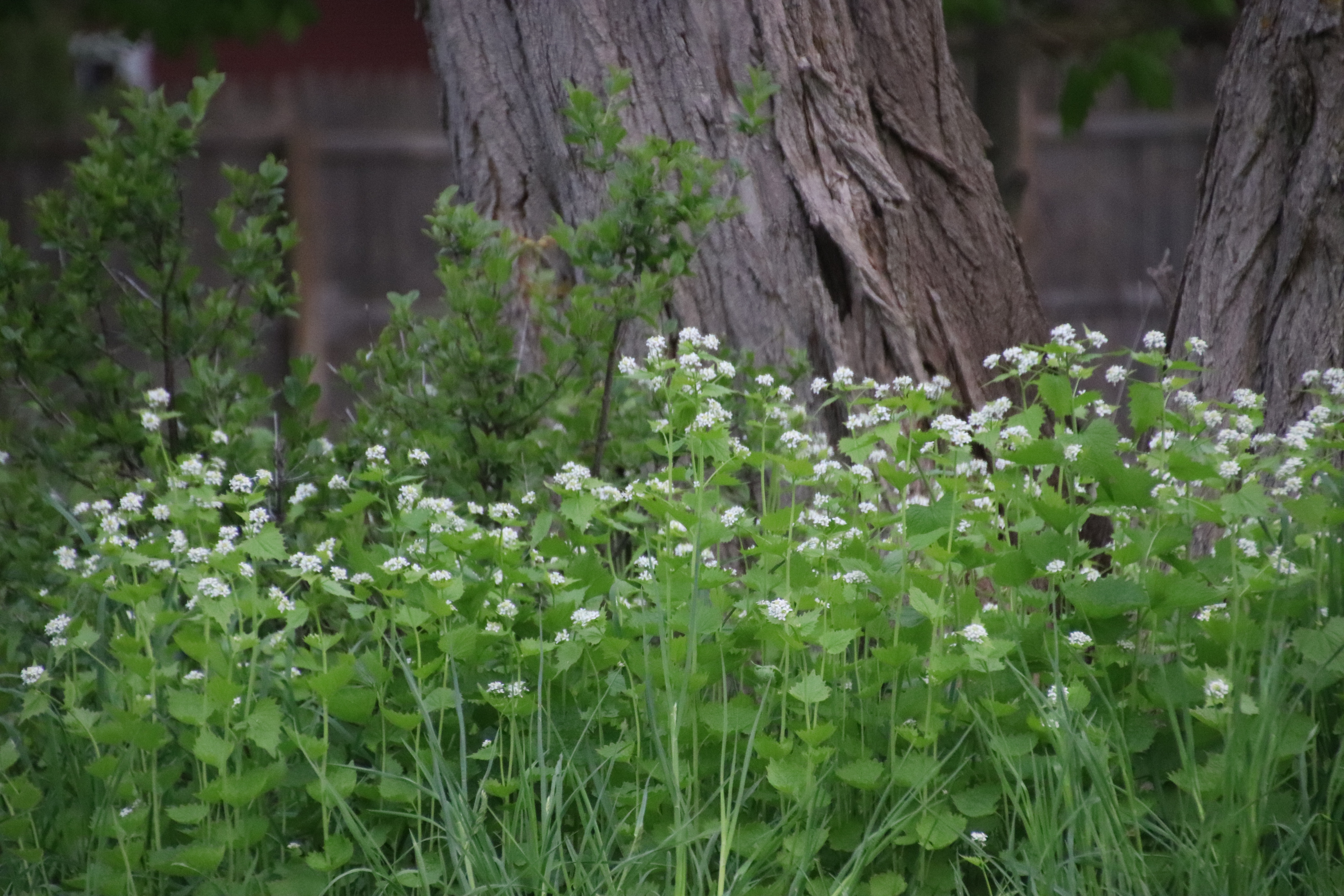
Attacking one very large autumn olive that somehow escaped last year’s professional clearing, I was horrified to find an advance platoon of the dreaded garlic mustard! Pulling up the invaders by their roots and hanging them on the severed branches of autumn olive (so as not to give them a chance to re-root) gave great satisfaction, because heaven forbid that garlic mustard gets a grip here on my watch! Look, below, at what it’s done on M-22 north of Leland. Either autumn olive or garlic mustard could take over the entire county if not checked, as each has done with smaller areas, so imagine what both together could do, laying waste to our native wildflowers and grasses.


Unwanted autumn olive festooned with unwanted garlic mustard

Garlic mustard unchecked along M-22. Horrors!

It crowds out everything else.

(And in the foregoing, I see once again my love for the present participle: coming, planting, mowing, cleaning, attacking, hanging, etc. Do you have a favorite part of speech?)


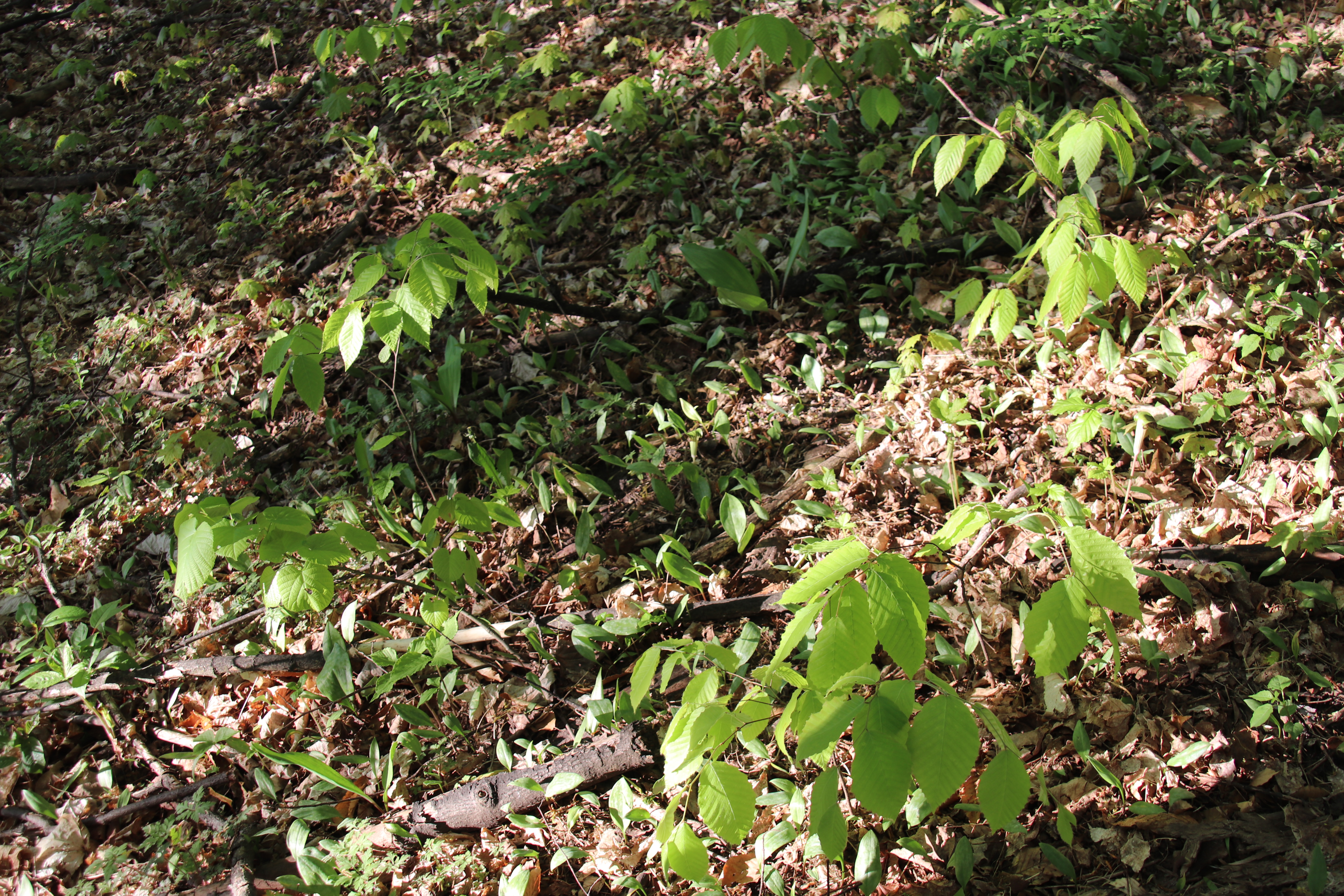
Dog responsibilities, too, are great outdoors time. Sunny needs to be outdoors, to exercise her body and mind and to explore -- physical and mental stimulation – and I need it, too, so a morning walk along the farm lane between orchard and woods leads us into the woods and eventually out again. Our country world is different every day, always with fresh wonders for me to see and for her to smell. Here is the sequence of one morning's walk, beginning with elderberry blossoming by the edge of the woods.


Into the woods --


-- and out the other end.

Next week I’ll begin at last to move toward a re-opening of my bookstore, with my goal to accomplish that re-opening before Memorial Day, fast approaching. Oh, why does the merry month of May have to speed by so relentlessly? Already the short-lived pointillist phase of the trees’ greening is past....


As was the case in my last post, when bedtime rolls around I am still taking up what to me are comfort books, the literary equivalent of comfort food. Most recently my choice was Harlan Hubbard’s Payne Hollow, his reflections on the life he and Anna made on the bank of the Ohio River after the years of drifting on their shantyboat down the Ohio and the Mississippi to Louisiana. Harlan saw their shore life as an extension and continuation of their shantyboat existence: 


…[W]e still regard ourselves as shantyboaters even though our home is a house on shore instead of a boat….


In the passage above, he is comparing his life with Anna to that lived by another shantyboater in the neighborhood, the last real “riverman” in the neighborhood, and he concludes that he and Anna “are closer to the river than Bill ever was,” because they chose the life rather than having been born into it. I pause there and want to say to Harlan that it doesn’t have to be a contest, that there are different ways to love and live in a place. Of course, he is gone now, and argument is beside the point, anyway, because he and Anna made a beautiful life together. 


On many days the work continues as long as the light lasts. On this summer evening, however, I am at rest, having done all the work that this day required, and some for which no demand is ever made. Withdrawal from all activity and a thoughtful looking about round out a day, as they do a life, in a manner which harmonizes with the sunset.


What was that work “for which no demand is ever made”? For me, it is gardening, work not imposed on me by life but which feeds my soul. Harlan gardened as I do, the quiet way, without power tools, and in winter he cut wood with hand tools, in no hurry, just enjoying the work. He also, however, made paintings and wrote books.


People are always curious about others’ ways of supporting a country life financially. I have my bookstore. Harlan and Anna had income (“passive income,” I’ve just learned that it’s called) from the rental of his late mother’s house. Harlan built the stone fireplace in that Kentucky house, and over the fireplace today hangs a David Grath painting. With all he and Harlan had in common, David was so happy about that!


Harlan & Anna's houseboat on the Ohio River, painted by HH

We all pay our rent in the universe differently. It makes me happy to think that the Artist was able to do so with work that fed his soul and that we were blessed to have so many years of life together.


David Grath's houseboat & rowing skiff, Leland River, Leland