Search This Blog

Showing posts with label marriage. Show all posts

Monday, July 7, 2025

Meeting Dogs vs. Being Married, Searching for God, and Building Community

The dogs are excited enough.

First, the dogs --


Whether you are meeting a dog for the first time or coming home to your own dog … whether the dog is reactive or simply exuberant or whatever … the rules of engagement as formulated by Cesar Milan are simple: No talk, no touch, no eye contact. Or as I tell friends coming to my house, “Ignore the dog.” What you’re doing is keeping your own energy calm. You don’t ignore the dog indefinitely, of course, but what you want to reward is calm behavior, not excitement, on the part of the dog. 


Calm is rewarded with play.

I am completely on board with Cesar’s advice and only wish more people would practice it. Even when directly instructed, too many find it difficult not to approach a dog head-on (an aggressive approach in the dog world) with big smiles (showing teeth) and/or cooing voices (inviting dominant behavior from the dog). Then when jumped on, many of those people assure the owner, “It’s all right.” No, it is not all right! You are working against the owner and not in the dog’s best interest! 


But that’s all I’m going to say today about dogs...


Then, marriage --


...because what I want to focus on today is a book by David Brooks, and I want to begin by saying that the way to approach a dog is not the way to make a good, strong, satisfying and lasting marriage. 


On Sunday morning I was writing to a friend, telling her about The Second Mountain, and admitting that I did not fully engage with the book until I came to the section on marriage. And then, as I was writing that to my friend, it occurred to me that what I miss most since my husband died is exactly what we should not do when meeting or reuniting with a dog! 


I miss the talk: the shorthand of “trivial” daily sharing (never trivial to the sharers of it) and the deeper conversations extending over hours or even years. 


I miss the touch: holding hands while walking, sitting side by side in a restaurant instead of across the table from one another, being in direct physical contact as much as possible. 


I miss the eye contact: seeing and being seen, not as two strangers glancing at one another on a sidewalk but as intimates, seeing each other’s hearts and minds and souls. “He saw you,” that same friend wrote to me once. 


"The first time ever" -- I saw him.

Here is the sentence from the section called “The Stages of Intimacy” that changed my casual, desultory reading of Brooks to total engagement:


When you choose to marry someone, you had better choose someone you’ll enjoy talking with for the rest of your life. 


That sentence stopped me in my tracks. Brooks continues:


It doesn’t work unless two people can fall into a state of fluid conversational flow. The phone calls can last hours. They can spend a fourteen-hour day together and the words don’t stop. Everything can eventually be said, and every topic can be discussed. This is what Martin Buber called ‘pure relation,’ when I-It becomes I-Thou. This is what it feels like to be known.


We saw each other.

I really appreciate how David Brooks does not set aside passion to focus on common interests and common values. Friendship is not enough to make the kind of “maximum marriage” he describes and most of us (those who wanted marriage) always wanted to find. A relationship can “make sense” without touching the depths of the soul. Couples who enjoy each other’s company and admire each other 


…may tell each other that they love each other, they may feel real love for each other, but somehow it’s not the kind of love that makes it painful to be away from the person, the kind of love that stirs up turmoils of fear that the other person might go away, the kind of love that produces enchantment and deep happiness when the two of you are just next to each other doing nothing, the kind of love that calls forth the everyday service and constant solicitude that marriage requires.


I can almost see some of my readers recoiling in disgust at this description of what they would call “codependence,” but my money is on the quite well-known woman whose name escapes me at present who said in one of her comedy routines (or in a book she wrote?) that what other people call codependence she simply calls the human condition. Well, but maybe not everyone wants enchantment. Someone once accused me of romanticizing my life, something the Artist and I certainly did, but if we didn’t, who would, and why would we want to stop? 


The Second Mountain is not a book about marriage alone but about commitment and transformation. (Or should I say transformation and commitment?) Brooks calls the first mountain the one on which we strive to measure up as adults.


On the first mountain, we all have to perform certain life tasks: establish an identity, separate from our parents, cultivate our talents, build a secure ego, and try to make a mark on the world….


The goals on that first mountain are the normal goals that our culture endorces….


Then something happens.


What happens varies from one person to another, but the result is the sense that there is another mountain to be climbed. There may be but is not necessarily a change in careers or marriages, but it is transformation that characterizes the second mountain, a move from acquisition to contribution. Topics such as intellectual commitments, spiritual seeking and/or conversion, and community building—these are reasons why I think everyone, not just romantics, should read this book. I loved the idea of community building focusing on possibilities rather than problems, especially the story of the Spartanburg (SC) Academic Movement


Basically, the story is about the joy of commitment, which reminds me of the answer Richard Leakey gave when asked if he was really willing to give his life to Kenyan politics. His response was, “What else does any of us have to give?” Where we give our attention and care and time is where we give our life. Something to ponder….


Thursday, May 18, 2023

Feeding Body and Soul

Leelanau morning in May

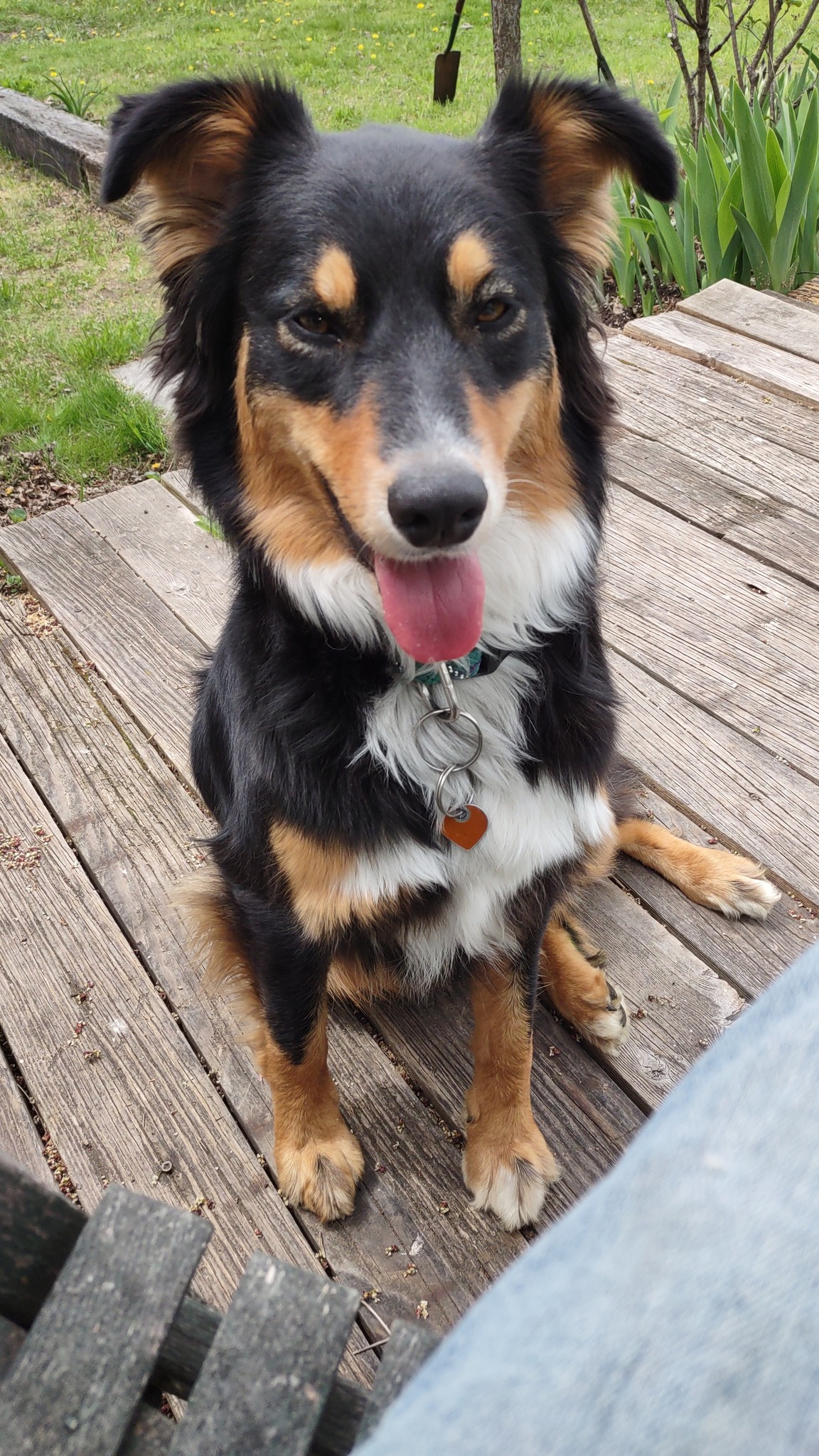
Coming from one life back to another, from southeast Arizona to northern Michigan, or Cochise County to Leelanau County if you prefer (as I often do) -- however it's described, re-entry makes for a bumpy ride. That's especially true now since, like the drive of over 2,000 miles, it’s basically something I do alone. My dog Sunny seems undisturbed by change, though, as happy in her Michigan farmyard as she was in the high desert, and her equilibrium contributes to my own. 

Happy girl!

House and yard claimed my attention immediately. With the arrival of my lost wallet from Logan, New Mexico this week, where some anonymous good Samaritan turned it in to the police department, it was possible for me to take up once more some of the business aspects of life, earlier delayed.


Now my calendar bristles with appointments and dates (doctor, dentist, veterinarian, service calls, deadlines), while necessary spring cleaning goes forward inch by inch, it seems, a very gradual reclaiming of indoor living space, my progress all the more slow and gradual because our weather has been (except for cold nights and frosty mornings) idyllic for over a week now. Sunshine every day and blossoms all around contribute to my natural preference for outdoor work, and thus planting and moving plants (digging up volunteer violets for a border to keep down total costs of new plants for the summer), mowing grass, raking thatch away from an unmowed area I will seed with wildflowers, spreading compost and mulch, and not neglecting my always-ongoing battle against autumn olive makes for busy days and good sleep. Taking rugs and other indoor items outdoors to clean them in the open air is my way of doing as much housework as possible outdoors.


But I jumped the gun, and those little okra plants were frost-killed.


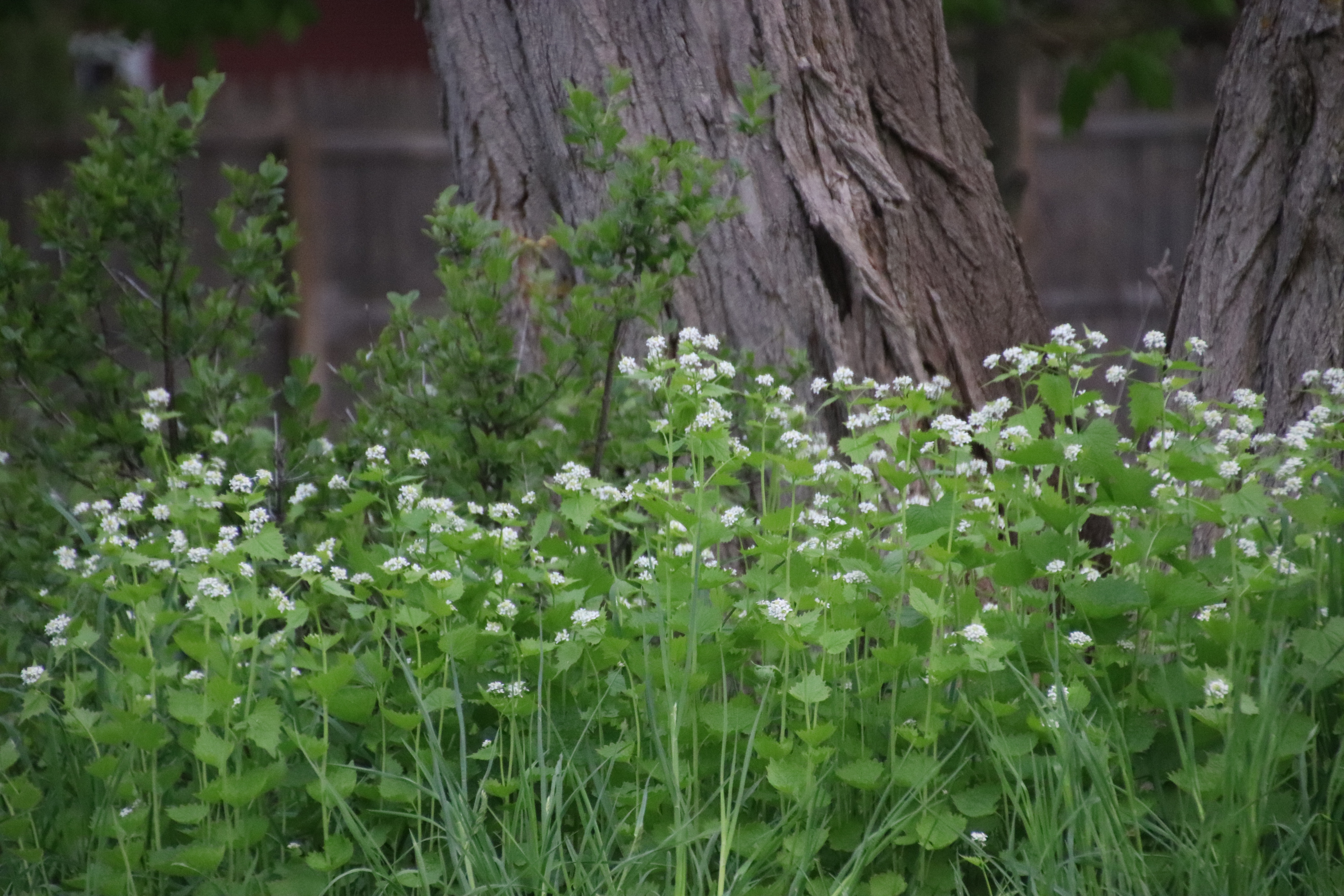
Attacking one very large autumn olive that somehow escaped last year’s professional clearing, I was horrified to find an advance platoon of the dreaded garlic mustard! Pulling up the invaders by their roots and hanging them on the severed branches of autumn olive (so as not to give them a chance to re-root) gave great satisfaction, because heaven forbid that garlic mustard gets a grip here on my watch! Look, below, at what it’s done on M-22 north of Leland. Either autumn olive or garlic mustard could take over the entire county if not checked, as each has done with smaller areas, so imagine what both together could do, laying waste to our native wildflowers and grasses.


Unwanted autumn olive festooned with unwanted garlic mustard

Garlic mustard unchecked along M-22. Horrors!

It crowds out everything else.

(And in the foregoing, I see once again my love for the present participle: coming, planting, mowing, cleaning, attacking, hanging, etc. Do you have a favorite part of speech?)


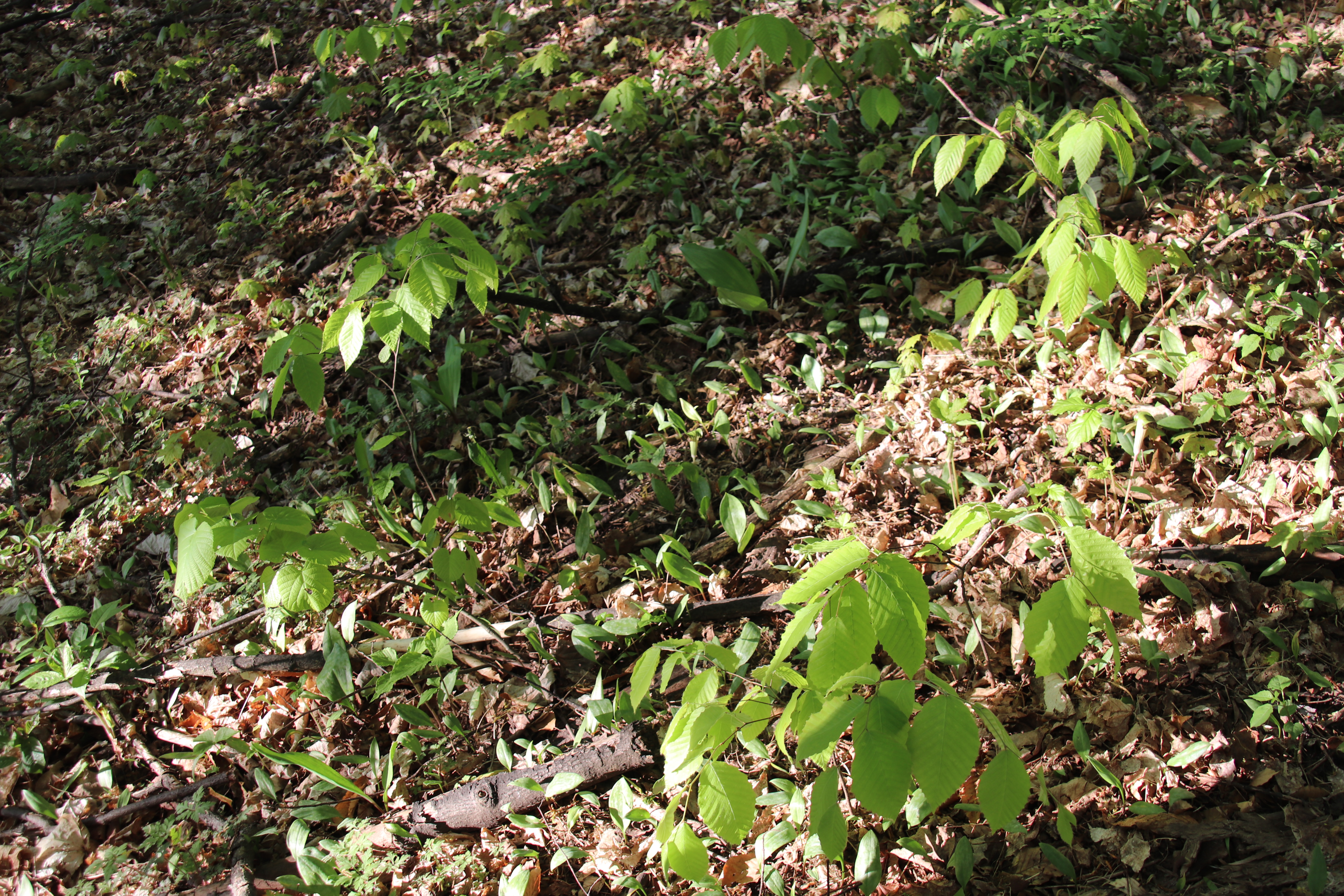
Dog responsibilities, too, are great outdoors time. Sunny needs to be outdoors, to exercise her body and mind and to explore -- physical and mental stimulation – and I need it, too, so a morning walk along the farm lane between orchard and woods leads us into the woods and eventually out again. Our country world is different every day, always with fresh wonders for me to see and for her to smell. Here is the sequence of one morning's walk, beginning with elderberry blossoming by the edge of the woods.


Into the woods --


-- and out the other end.

Next week I’ll begin at last to move toward a re-opening of my bookstore, with my goal to accomplish that re-opening before Memorial Day, fast approaching. Oh, why does the merry month of May have to speed by so relentlessly? Already the short-lived pointillist phase of the trees’ greening is past....


As was the case in my last post, when bedtime rolls around I am still taking up what to me are comfort books, the literary equivalent of comfort food. Most recently my choice was Harlan Hubbard’s Payne Hollow, his reflections on the life he and Anna made on the bank of the Ohio River after the years of drifting on their shantyboat down the Ohio and the Mississippi to Louisiana. Harlan saw their shore life as an extension and continuation of their shantyboat existence: 


…[W]e still regard ourselves as shantyboaters even though our home is a house on shore instead of a boat….


In the passage above, he is comparing his life with Anna to that lived by another shantyboater in the neighborhood, the last real “riverman” in the neighborhood, and he concludes that he and Anna “are closer to the river than Bill ever was,” because they chose the life rather than having been born into it. I pause there and want to say to Harlan that it doesn’t have to be a contest, that there are different ways to love and live in a place. Of course, he is gone now, and argument is beside the point, anyway, because he and Anna made a beautiful life together. 


On many days the work continues as long as the light lasts. On this summer evening, however, I am at rest, having done all the work that this day required, and some for which no demand is ever made. Withdrawal from all activity and a thoughtful looking about round out a day, as they do a life, in a manner which harmonizes with the sunset.


What was that work “for which no demand is ever made”? For me, it is gardening, work not imposed on me by life but which feeds my soul. Harlan gardened as I do, the quiet way, without power tools, and in winter he cut wood with hand tools, in no hurry, just enjoying the work. He also, however, made paintings and wrote books.


People are always curious about others’ ways of supporting a country life financially. I have my bookstore. Harlan and Anna had income (“passive income,” I’ve just learned that it’s called) from the rental of his late mother’s house. Harlan built the stone fireplace in that Kentucky house, and over the fireplace today hangs a David Grath painting. With all he and Harlan had in common, David was so happy about that!


Harlan & Anna's houseboat on the Ohio River, painted by HH

We all pay our rent in the universe differently. It makes me happy to think that the Artist was able to do so with work that fed his soul and that we were blessed to have so many years of life together.


David Grath's houseboat & rowing skiff, Leland River, Leland


Monday, October 17, 2022

The World of Men and Women

New-mown hayfield, Leelanau County, Michigan


The classic Scottish novel, Sunset Song, by Lewis Grassic Gibbon, is one I had never heard of before, so if I’d gone into a bookstore asking for some specific book, it wouldn’t have been this one, and if whatever book I’d asked for wasn’t in stock and I’d left without a serious browsing session, serendipity wouldn’t have had a chance. But as chance determines the large majority of books I read, good fortune had it that this one came into my hands. The cover was attractive. It was called on that cover “The Scottish Masterpiece.” The introduction by Nicola Sturgeon left me no alternative but to turn another page and begin to read the novel.


The story begins in 1911, with a prelude that introduces us to the fictional farming hamlet of Kinraddie and all its folk, a small place of nine households with land leased to farmers carved out of a larger estate. Not on a railroad line or very near a large town, its red clay soil not the easiest to farm, Kinraddie, surrounded by woods and guarded by the nearby Grampian Mountains, has honeysuckle and rabbits and birds, and its fields are worked with teams of horses, wagons of grain then taken to the local mill. The outside world seems so far away it might be on another planet. 


Young Chris Guthrie is the novel’s central character. The Guthrie family, John and Jean and their six children, leave the country up by Aberdeen when John loses the lease on his land due to an outbreak of temper against a member of “the gentry,” and the family comes to Blawearie in Kinraddie. Between John and Will, his eldest, whom he drives like a beast, there is no love lost. The girl Chris, Will’s sister (quean is the old Scottish word for girl, used throughout the novel, as a “full-grown, responsible male” is called a childe), discovers the world of books at school and for a while has ambitions to become a teacher and escape Kinraddie, but her dreamy side is also captured by her surroundings, the fields and woods and neighbors and the old standing stones, so that she feels herself two different people.


Though her mother's own life hardly seems enviable, Jean tells the girl there is more to life than books. The life the mother loved and misses, however, was the brief period of freedom between childhood and motherhood – “the countryside your own, you its, in the days when you’re neither bairn nor woman.” And so Chris Guthrie finds it, after first her mother dies and then her father and she hires a woman to do the indoor work while she herself works in the fields.


Then one New Year’s Eve she becomes Chris Tavendale, wife of Ewan.


So that was her marriage, not like waking from a dream was marrying, but like going into one, rather, she wasn’t sure, not for days, what things they had dreamt and what actually done—she and this farmer of Blawearie who could stir of a morning at the jangle of the clock and creep from bed, the great cat, and be down the stairs to light the fire and put on the kettle. She’d never be far behind him, though, she loved even the bitterness of those frozen mornings, and a bitter winter it was, every crack and joint of the old house played a spray of cold wind across the rooms. He’d be gone to the byre and stable as she came down and sought out the porridge meal and put it to boil, Blawearie’s own meal, fine rounded stuff that Ewan so liked. She’d leave it to hotter there on the fire and then bring the pails from the dairy and open the kitchen door on the close and gasp in the bite of the wind, seeing a grey world on the edge of morning, the bare stubble of the ley riding quick on the close, peering between the shapes of the stacks, the lights of the lanterns shining in byre and stable and barn as Ewan feeded and mucked and tended horses and kye.


-      Lewis Grassic Gibbon, Sunset Song


Contented and even joyous these two were, working side by side and making love besides.


The times, however, as always, bring change. More and more machines appear, on the roads and in the fields. The “Great War” comes, at first something far away that barely seems to concern Kinraddie, but then pushing and pulling on even their quiet rural lives and drawing men away to be killed in faraway France. Rumors of war atrocities and urgings to patriotism pit neighbor against neighbor. Even the appearance of the countryside changes, as to feed the war and the machines the woods are all cut down. New trees will be planted, but no one alive in the second decade of the twentieth century will live to see those trees as a two-hundred-year-old mature forest.


Alongside changes, though, some things stay the same, and one of the abiding facts of life is that lovemaking leads to babies. John Guthrie had ever loved his quean’s golden hair, and Ewan and Chris loved each other bodies, too, but without any means of contraception other than abstinence, men’s and women’s choices put them between a rock and a hard place – “nothing but a wife you hardly dared touch in case you put her in the family way….” And so Jean Guthrie ends her own life and that her of last-born, the twins, with poison … and John Guthrie is tempted by the body of his own daughter … and Ewan Tavendale, home on leave from the army and become a coarse stranger to Chris, tells her he might better have stayed in town and spent the night with a “tart.” Some of his anger and hatred came from the war, yes, but between Chris and Ewan also came the hardship of abstinence. It was not to abstain that they had married, after all!


Not work in the house or in the fields it was that starved these couples of love but the impossibility of limiting their families. This is not at all a “theme” of the novel or one of its overriding “messages,” so it’s nothing a literary critic would point out, but as a reader in 2022 when reproductive rights are being seriously challenged in the United States, as elsewhere, I see the tragedy of these couples’ lives standing out sharp and clear. 


Men and women. The marriage bond. Children can strengthen the bond, if children are desired. Children can also drive apart two people brought together by desire if those children come too fast or too many or before the lovers are ready for them or after they feel their family is complete. 


Both couples in this novel came together in love and began married life in love, but the facts of life conspired to make enemies of them. Alternatives were not available to them in the early twentieth century. Are we now to make alternatives once again unavailable and once again turn too many marriages to battlegrounds? My own happy life with the Artist would never have survived six children!


Of course there is much more to the novel than pregnancy vs. abstinence. There are the charming place names, Peesie’s Knapp one of my favorites. There are the eccentric locals, from the “dafties” that board with Mistress Munro to the philandering minister of the kirk to the atheist and pacifist, Rob of the Mill. And there is the countryside itself, the beauty of the land that Ewan and Chris both so love.


So she went down to the shore, the tide was out, thundering among the rocks, not a soul on the beach but herself, gulls flying and crying, the sun strong and warm. She sat on a seat in the glow of it and shut her eyes and was happy. Below her feet the ground drummed and tremled with reverberations from that far-off siege of the rocks that the sea was making out there by the point of the bay, it was strange to feel it and be of it, maybe folk there were who felt for the sea as last night she had felt in the rain-drenched fields of Kinraddie. But to her it seemed restless, awaiting and abiding nowither, not fine like the glens that nestled and listened high up in the coarse country, or the parks sun-heavy with clover that awaited your feet at evening.


Chance. Happenstance. Serendipity. My reading comes as much by these means as any others, and I am glad of it.


Wednesday, April 13, 2022

The Past Catches Up with Me (In Two Parts)


(If only!!! Could not resist this image.)


 “They never did anything with that degree. What a shame!” Oh, yeah?


Some people probably think I have always lived in the past: books printed on paper and bound between covers, handwritten correspondence, two-lane roads, and so on. Not to mention (but here I go, doing it) memories! And on that oh-so-postmodern platform called Facebook – Is this a paradox? Life is a paradox! -- I have reconnected with many friends from my graduate school days at the University of Illinois.


The latest reconnection, however, came from a surprising and unexpected quarter. A friend back in Leelanau County, Michigan, mentioned in a brief e-mail that he had been in contact with a “a philosophy prof and--as are so many--a professional magician,” Larry Hass. Larry Hass? Could it be the same Larry Hass who completed his Ph.D. work while I was in graduate school in the philosophy department at the University of Illinois? Larry, the Merleau-Ponty scholar, married to Margie, the logician, the couple who hosted the only Super Bowl party I have attended in my life? 


It was! Holy cow! Talk about a career change, Larry!


Magician Larry Hass onstage

Back in graduate school, we downtrodden students used to peruse the APA’s monthly “Jobs for Philosophers” bulletin every time it came out. At my already advanced age (old enough to have been the mother of a couple of my office-mates), I figured gloomily that the best I could ever hope for would be a series of one-year sabbatical replacements. Two of my cohort have remained in the academic world (Larry and Margie were a year or so ahead), but others in that group have taken diverse paths --one a lawyer, another with his own IT company, a third a prize-winning winemaker, and so on. Now, from the cohort ahead of us, a magician! I figure this gives new meaning to “Jobs for Philosophers”!


Actually, when I was still in graduate school I thought there would be an interesting book in real-life JFPs. Some of my early examples of people who studied philosophy for shorter or longer periods of time and ended up in very different fields included: filmmaker Errol Morris, who also worked for a while as a private detective, as you’ll see if you follow the link; warlord Charles Taylor of Liberia, not to be confused with the Canadian philosopher Charles Taylor, please; and comedian Steve MartinAnd, of course, not to be immodest, how about bookseller moi? My magician friend and I agree that neither of us regrets our time spent in graduate school or the degrees we earned. We feel fortunate to have had that experience, both the agony and the occasional ecstasy of it.


“There is no shortcut to a long relationship.” 


There. I have quoted myself. It’s what I said to someone long ago who expressed a wish to have a relationship like the one the Artist and I had. 


Our love affair, the Artist's and mine, spanned nearly 47 years, and there were many, many complications and difficulties along the way. It was certainly not all moonlight and roses, especially for the first decade and a half. There was a long stretch when we thought we had lost each other forever. And when we made the decision to give each other -- and ourselves! -- another chance, the issues that had brought us to grief before remained to be worked through, and the working-through was not always easy, let alone idyllic. That second honeymoon period was, however, because of our deep love for each other and because we were finally ready to start growing up, more heavenly than hellish, and the heavenly portion grew richer as the years went by. 


Growing up is something I’ve been thinking about in terms of long relationships, too. The Artist always said that living me was like living with a 10-year-old girl, and I would tell him that living with him was like living with a 14-year-old boy. Neither of us wanted to be, ourselves, or wanted the other to be, completely grown up. Where would the fun be in that? We both loved each other's (often unleashed) inner child, and it was lovely to act like kids together, singing silly songs in the car on road trips, for instance, and generally sharing our enthusiasms with each other. The aspects of being not grown-up that had been terrible pitfalls for us in our first decade together were what we had to leave behind in order to go on together.


One reason I’m dwelling these days on the subjects of long relationships and growing up, other than reliving my happy marriage and missing my husband, is that I have a very young puppy. And oh, the trials of puppyhood! This little girl is very lively, willful, and challenging, and there have been days when I have felt overwhelmed, even at times discouraged. But I keep renewing my personal pledge to guide her to maturity as a good dog, one with whom I can grow old, and in the past couple of days I have seen noticeable progress.


Thinking about giving me backtalk


One of Sunny Juliet’s most annoying habits and one that made me very sad was the way she would bark at strangers. Men, women, children – bark! bark! bark! So I’ve been working on that by taking her to different places and feeding her treats when anyone appeared, telling her “No barking” and “Good dog!” And I can now report that it is paying off at last. As of yesterday, I don’t even have to provide a steady stream of treats! She went into the office at the tire shop with me and didn’t bark when another customer came in. I took her into the library, and she did not bark at the librarian. Today at the coffee shop, she didn’t bark at all, at anyone, not even the delivery person carrying huge boxes up the sidewalk to the front door. I tell her “Sit,” and she sits, “Down,” and she lies down. She doesn’t stay seated or prone, but she’s only a puppy, and when I repeat the command, she obeys again. She is maturing, and we are both learning patience with each other. 


I know the road ahead in my relationship with Sunny will not be all moonlight and roses, any more than a marriage can be a honeymoon every day. I’m not that naïve! Sunny is getting through her toddler testing period, and then in a while will come her rebellious teen period. But it doesn’t matter. We are bonding, and we’re in it for the long haul. No shortcuts but enormous rewards. And fortunately, there is always an inner puppy remaining in the oldest dog.


A future of Sunny mornings


Friday, January 14, 2022

Much Too Much (Happening)

View from Paradise Valley to Four Peaks in the distance


A friend from Leelanau County, Michigan, called me a few days ago. I forget what day it was. She had been looking for a new post on this blog, and when nothing appeared she began to worry. What was going on? Were we all right? What a loyal blog reader! The thing is (I told her), I hadn’t wanted to put our family news out publicly until we were “out of the woods” and had answers to all the inevitable questions. In the midst of so much waiting and uncertainty, that was part of my way of dealing with things.


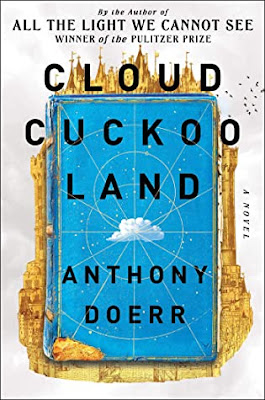
…Each morning comes along and you assume it will be similar enough to the previous one—that you will be safe, that your family will be alive, that you will be together, that life will remain mostly as it was. Then a moment arrives and everything changes.


-      Anthony Doerr, Cloud Cuckoo Land


So here is what happened in our lives.


The Ordeal (or, Life Throws Another Unexpected Curve Ball)


Exactly a week after we bid an emotional farewell to Peasy in the morning and then had a last conversation with a dear friend the same night -- Wednesday to Wednesday, that is -- Fate ambushed us again. The Artist, a.k.a. David, woke without feeling in his left hand, and when I asked if he could lift that arm over his head, he could not. So as soon as we could hastily pull our clothes on and get out to the car (he was able to walk to the car, which was a good sign), we were on the road to the emergency room of the little hospital in Willcox, Northern Cochise Community Hospital (NCCH). Before we even arrived, David was regaining feeling and use of his left hand and arm, and the first word to me out in the waiting room was further cause for relief. The relief was short-lived, however, as more tests that same day revealed a serious blockage in his right carotid artery, bad enough that the ER doctors did not want him leaving the hospital. 


Everyone knows hospitals are overcrowded these days (with COVID patients) as well as understaffed (partly for the same reason), so it was no surprise that he could not be moved to a regular room at NCCH. None was available. Nor was it a surprise that Tucson Medical Center (TMC), where the ER docs at NCCH wanted to send him, had no available beds, either. So he lay in the ER where he started from Wednesday morning until Friday night. The transfer then, by ambulance, was to St. Joseph Hospital in Phoenix – more specifically (and miraculously), to the world-class Barrow Neurological Institute, where on the following Monday morning he went into surgery for a carotid endarterectomy. 


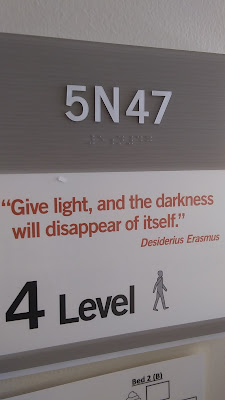
Good message!

At no time did David have any blurred vision or mental confusion. Speech was unaffected. His wicked sense of humor and quick thinking were and remain intact. When he was released on Wednesday, I was able to bring him back to the cousin’s house, where we could stay in the guest suite together. (Jim, the cousin, also has a wicked sense of humor.) So we were very, very fortunate in more ways than one, i.e., 


o  The stroke was a mild one.


o  We got him to the hospital within the hour.


o  Staff at NCCH were diligent in their testing, and the doctor there told us plainly that he should not leave to go home just because he was feeling better.


o  The next shift ER doctor at NCCH somehow managed to get David into St. Joseph in Phoenix – and not only St. Joe but the Barrow Neurological Institute, a world-class teaching and research hospital. 


o  I was able to stay with David’s relatives and eventually bring David back here, too.


o  The surgeon who performed the procedure was Dr. Michael Lawton, “head honcho” of Barrow. (David’s cousin and wife and their friends could hardly believe he was able to get into Barrow from Willcox – and so fast! – and to have Lawton as the surgeon had their heads spinning.)


o  I was able to be with David (no small matter in these COVID days!) in his double room over the weekend and in pre-op, recovery, and in the ICU Tuesday, in addition to his private room on Wednesday while we waited for his discharge (always a long drawn-out affair, as many of you know).


So all in all, if he had to have a stroke, this one may have been a blessing, revealing as it did a blockage that might well have caused a much more severe stroke if left untreated. And if he had to have major surgery so far from our Michigan home and friends, having it done in a world-class hospital, by a world-class surgeon, was a miraculous piece of good fortune. Finally, as if that weren’t enough good luck, he now has had the luxury of very comfortable recovery time here in Jim and Carol’s home before we undertake the long return drive to our ghost town cabin, which is a little over 15 miles from the little hospital in Willcox and over 200 miles from Phoenix.


The Different Week We Lived


Generally speaking, we are (to use the Artist’s phrase) “joined at the hip” all winter long during our seasonal retirement. It is rare that one of us goes somewhere without the other, and three hours is about the longest separation we experience even then.


This past week was completely different from our usual way of life, winter or summer. David was flat on his back for eight days, in two different hospitals and, between hospitals, in an ambulance. Meanwhile, I commuted between Dos Cabezas and Willcox, then trekked to Phoenix, and then commuted between Paradise Valley and St. Joseph Hospital. While I was by myself, navigating unfamiliar streets and heavy traffic in a strange big city, David was being asked his date of birth multiple times a day, subjected to sophisticated diagnostic tests, and monitored every minute. His attempts at sleep were fraught. My nighttime situation could not have been more comfortable, from a physical point of view. Of course we were in contact by cell phone and spent as much time together as possible, most of it waiting for one thing or another to happen.


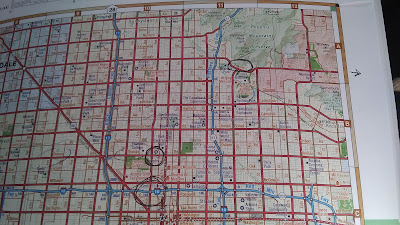
Strategizing my route

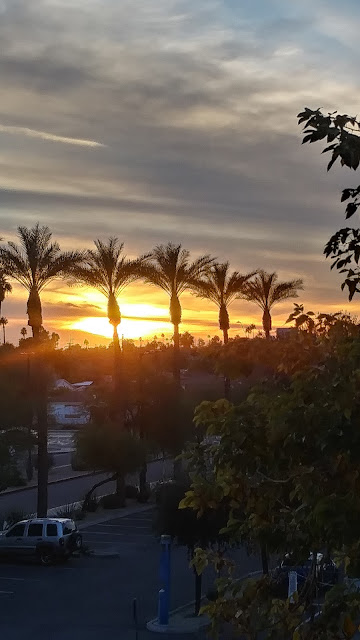
Another sunset from the hospital parking garage


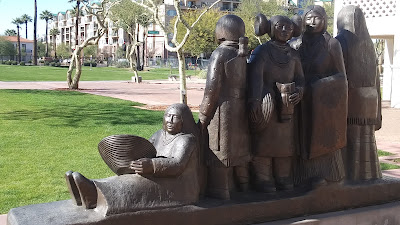
One thing about traveling separate daily roads was that we had a lot to tell each other when together. On Sunday (since nothing much was going to happen that day), I took an afternoon break from the hospital, giving David’s cousin Jim a chance to visit, and I went a short distance away to the Heard Museum, “world's preeminent museum for the presentation, interpretation and advancement of American Indian art….” What a fabulous place! The Art was beautifully displayed, and I didn’t even try to see everything. Sometimes I didn’t even read the information but only stood in front of a work and let its power move me.

Sculpture group outside Heard Museum, Phoenix

If the Artist and I were here in Phoenix for other reasons and both of us feeling tip-top, we would be visiting galleries and museums and bookstores galore, but such was not the case this trip.


Reading


The Artist’s cousin’s wife, Carol, is a champion reader, beside whom I feel like the rankest of amateurs. She not only keeps lists of all the books she reads but writes up an entire journal page for each book. (She is also a wonderful cook and gardener and sits on many civic boards and committees. A superwoman, in other words.) The first evening I was here, she brought an entire bag of books to my room that she had finished reading and was passing along to me, and by the next day four more books were stacked next to the bag, one being Cloud Cuckoo Land


It isn’t often that I am reading a book on the New York Times bestseller list, as I’m frequently years or even decades behind the rest of my fellow book-loving Americans, and in that context I have to admit that I have yet to read Anthony Doerr’s previous bestseller, All the Light We Cannot See. But Cloud Cuckoo Land has been the perfect book for me to lose myself in off and on during the past week. The time span of the story is incredible, and we are not simply flashing back and forward in a single country or family, but hopping from one country to another and even into a future far beyond our own, with a complicated cast of apparently unrelated “main” characters. The only link seems to be the Greek story of Ulysses. 


“Stranger, whoever you are, 

open this to learn what will amaze you.”


Will Zeno and Anna and Konstance and Seymour and Omeir all be somehow saved by books? By stories? At about the midway point in this 626-page novel, I cannot presume to guess, but I can tell you that these characters have been good company for me during a time of anxiety in my own life.