Search This Blog

Showing posts with label Harlan Hubbard. Show all posts

Thursday, June 19, 2025

Not Yet the Solstice, But—the Race Is On!


Reminder First, Right Up Front


Next Tuesday, June 24, at 4 p.m., Dog Ears Books in Northport will host a poetry reading featuring Jennifer Clark from Kalamazoo. Jennifer will read from her new book, Intercede: Saints for Concerning Occasions, and visit with audience members following her reading. She is the author of three previous poetry collections, author of a children’s book, and co-editor of the anthology, Immigration & Justice for Our Neighbors. She is so much fun that this is her third appearance at Dog Ears Books, so do yourself a favor and don't miss her!


Poet Jennifer Clark

Racing Season


Not a season of races, that is, but a season racing by, as summer always does. (Yes, even before it officially arrives!) Overnight, it seems, the rivers of gold that were the blooming cowslips (marsh marigolds) turn to wet-footed, narrow meadows of lacquer-yellow buttercups; sweeping white hills of woodland trillium fade and disappear; the tree canopy grows dense; and yellow-eyed white daisies (the happy days’ eyes) dance along roadsides in sun or in rain. Forget-me-nots have gone to seed for another year, and so has the first round of dandelion blossoms, but cheery little English daisies enliven otherwise monochrome green lawns, and now—coreopsis already!!!


Coreopsis here before the longest day!

Gardening


My fall bulb catalogs arrived in May, and I am determined to order early this year, because if I wait too long I will forget again … or decide not to bother … even knowing what pure delight those flowers that bloom in the spring (“tra-la!”) will give.


Meanwhile, there is always “just one more” trip to a garden center or nursery, “just one more” plant that my garden must have! Oh, yes, borage! 


Magical borage --


Books


Did you ever read this one?

Do you remember some of your favorite books from grade school? One of mine was Oliver Butterworth’s The Enormous Egg. I was reminded of that favorite story when a little boy visited my bookshop wearing a striped t-shirt with a line of Triceratops dinosaurs marching along every other stripe. In the book, young Nate Twitchell is almost as faithful as the family hen in taking care of the unusually large, leathery egg in hopes it will hatch—and it does! But the little dinosaur does not stay little for long. 


I didn’t remember the ending, so I had to order and reread the whole book. Thus I traveled with Nate and Dr. Ziemer and Uncle Beazley (the triceratops) from New Hampshire to Washington, D.C., and then right into the halls of Congress, where a United States senator proposed legislation that would outlaw Uncle B. and have him killed and stuffed! Given the expense of housing a dinosaur over the course of its lifetime, there is support in the Senate for the bill. Uh-oh! What hope does young Nate have of saving his rapidly growing pal? Wonderful story!


A much older book that went home with me for bedtime reading was a falling-apart copy of Rudyard Kipling’s Second Jungle Book, in which we meet again Mowgli and his animal friends. 


There are also other stories in the book, including one that takes place in the high Arctic, but Mowgli and friends are the center. As captivating as the stories, once I stopped to look at them more closely, are illustrations by the author’s father, John Lockwood Kipling, the smallest seeming at first glance only decorative. But no! Each one clearly depicts something in that particular story.


John Lockwood Kipling deserves a new paragraph. Although his career was overshadowed by that of his famous son, Lockwood was an astonishingly accomplished polymathic artist in his own right, producing drawings, furniture, sculpture, pottery, and more. During his 25 years in India, as teacher and later museum curator in Lahore, he was also active in a revival of traditional Indian arts and crafts.


And let me say right here that wonderful as much of Walt Disney’s work was (and his "Jungle Book" film was the last for Walt), Disney’s Mowgli is not Kipling’s Mowgli, and people need to read the books to learn the Law of the Jungle as the man-cub learned it. 


Alongside these deep and deeper dives into the past, I read also a novel published only two years ago, inspired because the author came to Northport. Mary Kay Zuravleff gave a reading and presentation following the business portion of the annual meeting of the Friends of Leelanau Township Library (FOLTL) on Saturday, June 14. When she and local author Karen Mulvahill stopped by the bookstore ahead of her FOLTL appearance, they took a couple extra books from my stock, in case they ran short. And they would have! Note: I am ordering more and will be restocked by this Friday.


The title of Zuravleff’s novek, American Ending, comes from the fictional narrator’s mother, a Russian immigrant. When telling her children bedtime stories, she would ask, “Russian ending or American ending?” In the Russian ending of a fairy tale, the wolf eats the bride who wanted a ride on his back to her wedding, while the American ending has the groom slicing open the wolf’s belly and the bride leaping out unharmed.  But even as a child Yeleni doesn’t fully trust American endings, suspecting that good luck isn’t necessarily permanent and that life can take sorrowful turns. 


The setting is a coal-mining town in Pennsylvania, and the story opens in 1908. It is a complicated family saga, with a large cast of characters, but American-born Yeleni’s voice, steadily throughout the book, keeps us oriented. This is a world where girls are married as early as 13 years old to grooms chosen by their parents, young boys taken from school and sentenced to dangerous lives underground, and adults too often seek solace from poverty’s troubles in alcohol. Yet, for all that, it is also a life of tradition and memory and feasting and celebration. When Yeleni’s mother invites the schoolteacher to Thanksgiving dinner, the whole neighborhood contributes.


It was a miracle the way people pitched in when they weren’t even invited, and not with a shriveled turnip or the stringy end of a roast either. Here came a sturgeon turnover to fatten up the schoolteacher, poppyseed bubliks for the single men, cherries in a jar if Lethia wanted to bake pie. Lethia collected candle stubs at church and polished the table with beeswax and beef tallow, another miracle. Robert and Pa captured two wild turkeys. Really, Kostia did. The birds were always in the meadow nipping at him, and Kostia led them into a trap….


-      Mary Kay Zuravleff, American Ending


Despite being a story set in the America of over a century ago, the novel is also very much a story of today. Late in the novel, when Yeleni urges her husband to apply for U.S. citizenship, he answers, 


“I’ll need a witness willing to swear I’m not a phut.”


“English, please,” I said, “or they’ll send you back on the next boat, crook or not.” 


It was one of my fears, though Erie Russians scoffed at the idea of anyone being sent back. Who would make the town’s streetcars, engines, or boilers; their boots and buttons; their paint, paper, or pickles? Who would slaughter the meat or tan the leather if Russians were sent back?


Sound familiar? Since summer is my heaviest work season, both at home and in my bookshop, reading time is at a premium, but I still manage to squeeze it in. (Not having TV helps!) American Ending is Mary Kay Zuravleff’s fourth novel and the first of her work I have read, but it certainly will not be the last.


And then one night I turn to an old favorite, Harlan Hubbard’s Payne Hollow: Life on the Fringe of Society, a sequel to Shantyboat, the story of Harlan and Anna’s river adventure years. 


I love Harlan's sketches in the book


Returning at last to the Ohio River as to an old friend, the Hubbards settled down and built a house on the river bank (shades of Rat and Mole), put in a garden, raised goats, and continued their evening practice of reading aloud to each other and playing duets. Their “bijou riverside residence” (as the Mole called Rat’s hole in the bank) was larger than their old shantyboat but, like it, lit by fireplace and oil lamps and complete with cunning cupboards for the storage of food and a bed that slid away out of sight when morning came. Harlan and Anna kept to old, simple ways. 


…So many times have the advantages of a garden tractor or tiller been pointed ot to me that I half believe the argument myself…. My strength returns when I am alone in the garden, working with some beloved tool, the birds whistling overhead. Even on a sultry July morning, when not a breath of air stirs, when the sun’s heat is magnified by the encircling trees, and weeds are sprouting everywhere, not even then could I welcome one of those nondescript, unlovable gadgets, brightly painted and streamlined, which make an intolerable noise and smell bad. They get the work done, you say? I say they are expensive and insidiously destructive. I will get the work done in my own way. Save time? The best use of time is to enjoy it, as I do when working in peaceful silence. 


-      Harlan Hubbard, Payne Hollow


Oh, that is exactly how I feel about working outdoors! No string trimmers or leaf blowers for me, please!


How economically he captures chickadee and woodpecker!


Agility work


Sunny Juliet and I had our first session of the year with Coach Mike, who is very enthusiastic and encouraging and genuinely loves the sport and all his doggie pupils. He is an excellent teacher!


Agility work is as challenging—maybe even more so—for the human member of the team as it is for the dog. The sport was inspired by equestrian show jumpingand more and more I realize the strong parallels between work with horses (which I must admit, sadly, I know about almost exclusively from reading) and work with dogs. We humans are a talky species, and we are usually so busy talking and listening to each other and thinking about what we want to say next that we lack awareness of what our bodies are telling us and telling others. 


Anyone knows that riders “tell horses what to do” by applying reins and knee pressure, but horses also respond to much more subtle signals, whether or not the rider intends the signaling. How one sits and every little shift of the seat is information to the horse. A well-trained dog responds to voice commands, but any dog is also, and much more continually, paying attention to physical cues. 


In our agility work Sunny is aware of every little move or gesture I make, intentional or inadvertent, although I am not physically in contact with her. If I shift my shoulders slightly or vary the height of my hand from the ground or speed up or slow down or merely glance off to the side—all that is telling her something, which means that I too have to be aware of my body in order to give her the proper signals. 


And have you ever thought about the difference in peripheral vision between humans and canines? (Don’t feel bad. I never had.) We see about 180 degrees, or half of the circle of which we are the center, but dogs’ eyes are spaced more widely apart than ours, so their peripheral vision is much wider, 250 to 270 degrees (depending, I guess, on the shape of a particular dog’s head, which would vary from one breed to another), which means Sunny is still seeing me after she runs past, so if I stop and turn around, she thinks she needs to do that, too! 


It’s a lot to think about. It’s also impossible, as you can imagine, for me to get video or even still footage in the middle of our demanding work!


But now—oh, dear! Sunny has developed a limp that seems to come and go, as if maybe she pulled a muscle or something (it started with that porcupine chase), so for now my girl needs to rest from strenuous activity. She’s to be on-leash for a week, with aspirin or Tylenol twice a day, the vet says. Poor Sunshine! She thinks “taking it easy” is a great big bore!


Tenting Tonight


My birth family went on our first camping trip when I was 12 years old, five of us sleeping in a borrowed tent, a heavy canvas umbrella tent. It rained all week. And we all wanted to do it again! 


Jack and his crew

Now grandson Jack from St. Paul, Minnesota, a newly graduated art student from Kalamazoo College, is here this week, rain and/or shine, with his ten senior-year classmate/housemates, the whole crew camping in the yard and eagerly exploring Leelanau. (I know the kids would love to play Frisbee with Sunny, and ordinarily I’d have been all for it, but not right now, as she needs to rest her jumping muscles. If only she would rest her barking muscles, too!) What a happy scene the tents and hammocks and everything else make in our usually empty yard! At last it felt as if there had been a point to all that grass mowing! 


Fog rolled in, but the campers are happy.

While all of the young people are delightful, naturally grandson Jack is very special to me. When I look at a closeup of Jackson examining a camera I found for him, I see his grandfather, alive and young again.


Thursday, May 18, 2023

Feeding Body and Soul

Leelanau morning in May

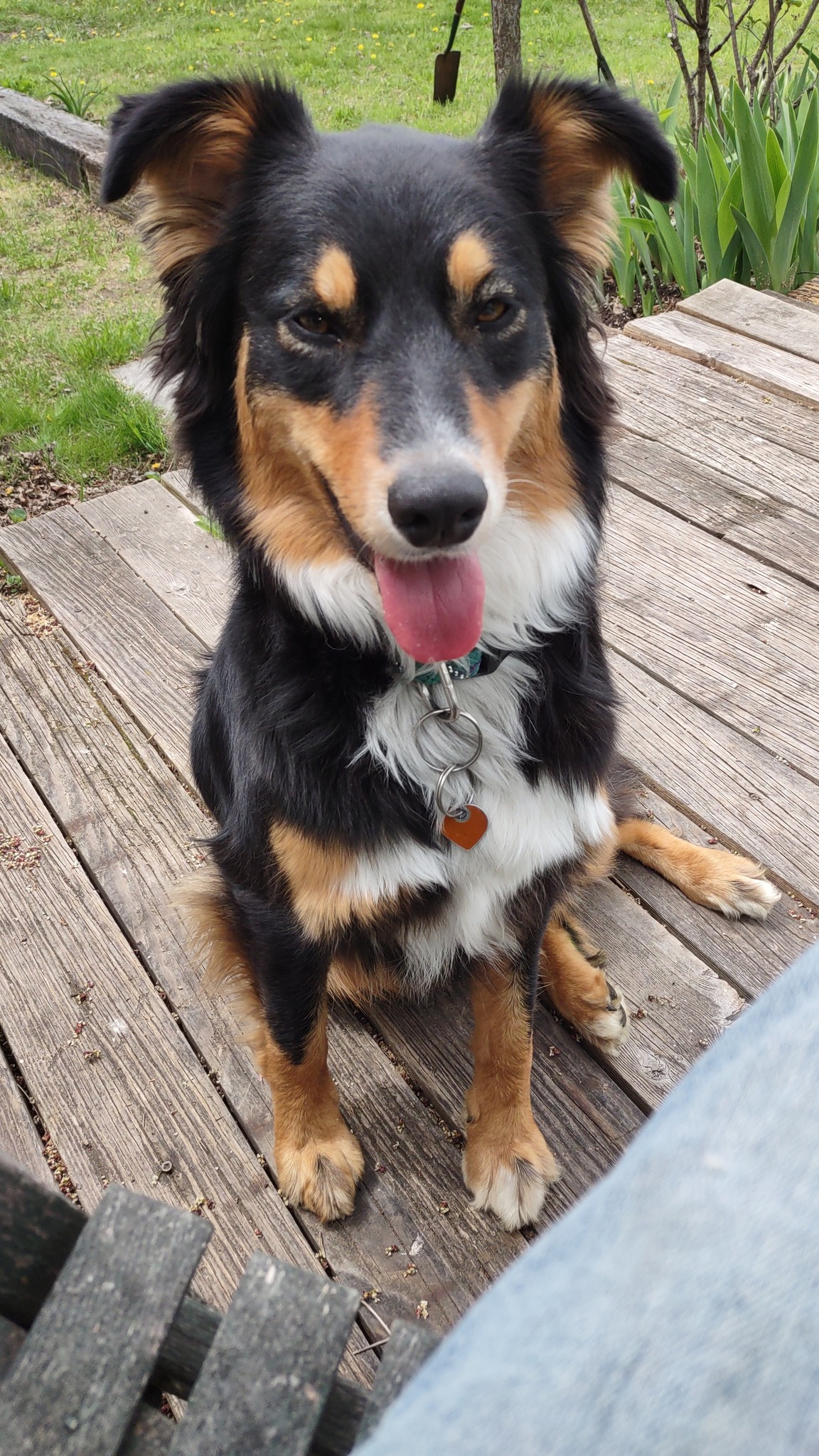
Coming from one life back to another, from southeast Arizona to northern Michigan, or Cochise County to Leelanau County if you prefer (as I often do) -- however it's described, re-entry makes for a bumpy ride. That's especially true now since, like the drive of over 2,000 miles, it’s basically something I do alone. My dog Sunny seems undisturbed by change, though, as happy in her Michigan farmyard as she was in the high desert, and her equilibrium contributes to my own. 

Happy girl!

House and yard claimed my attention immediately. With the arrival of my lost wallet from Logan, New Mexico this week, where some anonymous good Samaritan turned it in to the police department, it was possible for me to take up once more some of the business aspects of life, earlier delayed.


Now my calendar bristles with appointments and dates (doctor, dentist, veterinarian, service calls, deadlines), while necessary spring cleaning goes forward inch by inch, it seems, a very gradual reclaiming of indoor living space, my progress all the more slow and gradual because our weather has been (except for cold nights and frosty mornings) idyllic for over a week now. Sunshine every day and blossoms all around contribute to my natural preference for outdoor work, and thus planting and moving plants (digging up volunteer violets for a border to keep down total costs of new plants for the summer), mowing grass, raking thatch away from an unmowed area I will seed with wildflowers, spreading compost and mulch, and not neglecting my always-ongoing battle against autumn olive makes for busy days and good sleep. Taking rugs and other indoor items outdoors to clean them in the open air is my way of doing as much housework as possible outdoors.


But I jumped the gun, and those little okra plants were frost-killed.


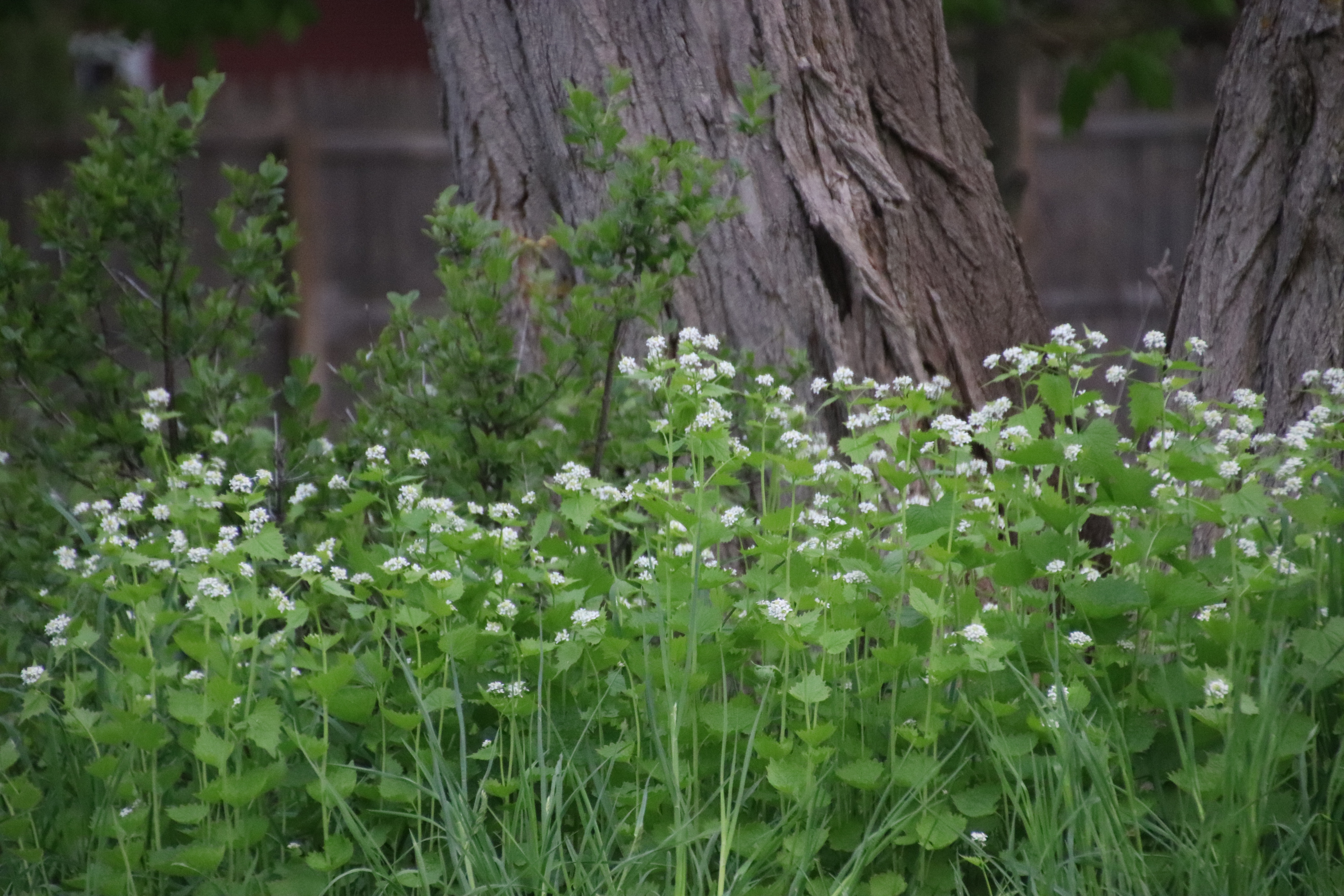
Attacking one very large autumn olive that somehow escaped last year’s professional clearing, I was horrified to find an advance platoon of the dreaded garlic mustard! Pulling up the invaders by their roots and hanging them on the severed branches of autumn olive (so as not to give them a chance to re-root) gave great satisfaction, because heaven forbid that garlic mustard gets a grip here on my watch! Look, below, at what it’s done on M-22 north of Leland. Either autumn olive or garlic mustard could take over the entire county if not checked, as each has done with smaller areas, so imagine what both together could do, laying waste to our native wildflowers and grasses.


Unwanted autumn olive festooned with unwanted garlic mustard

Garlic mustard unchecked along M-22. Horrors!

It crowds out everything else.

(And in the foregoing, I see once again my love for the present participle: coming, planting, mowing, cleaning, attacking, hanging, etc. Do you have a favorite part of speech?)


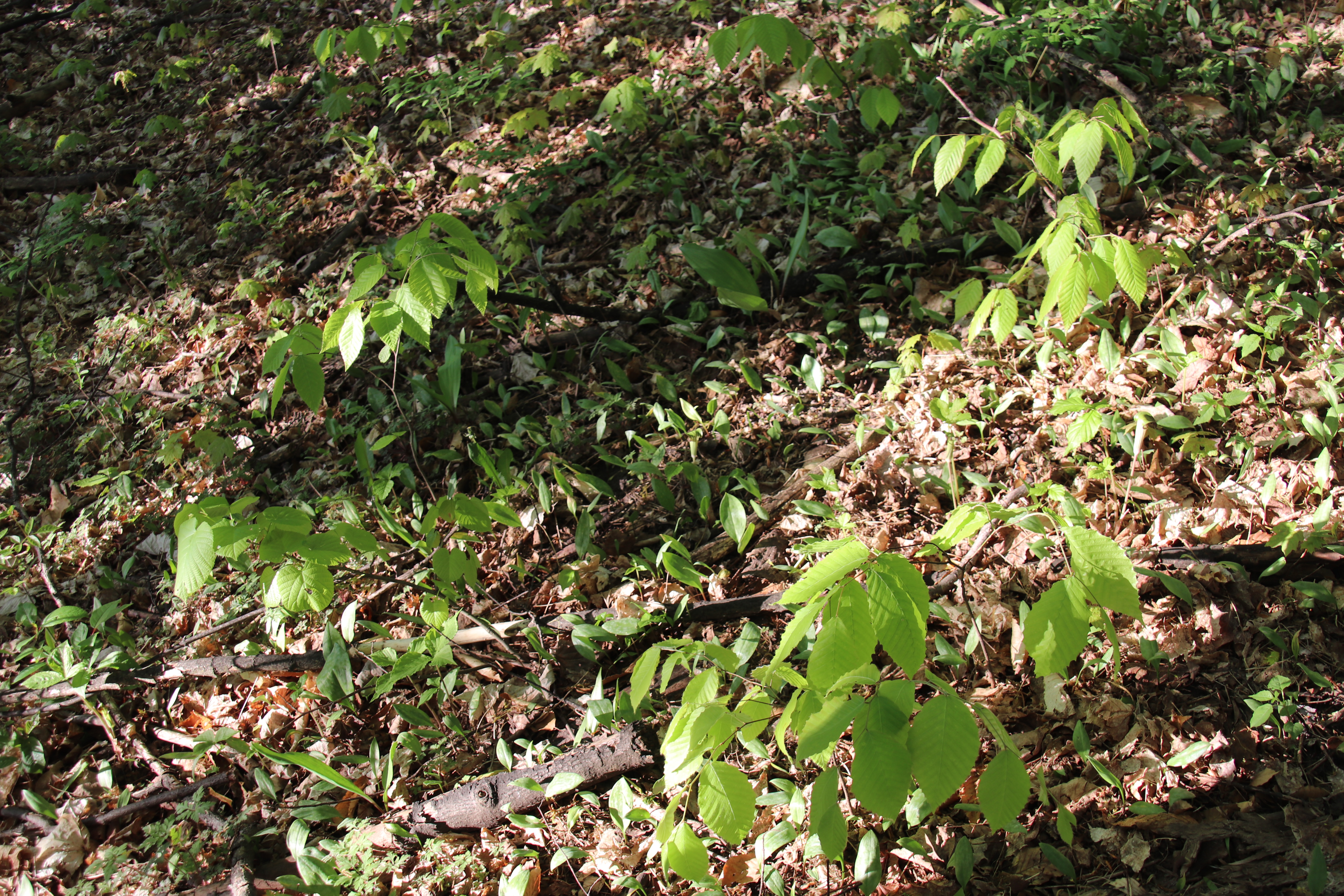
Dog responsibilities, too, are great outdoors time. Sunny needs to be outdoors, to exercise her body and mind and to explore -- physical and mental stimulation – and I need it, too, so a morning walk along the farm lane between orchard and woods leads us into the woods and eventually out again. Our country world is different every day, always with fresh wonders for me to see and for her to smell. Here is the sequence of one morning's walk, beginning with elderberry blossoming by the edge of the woods.


Into the woods --


-- and out the other end.

Next week I’ll begin at last to move toward a re-opening of my bookstore, with my goal to accomplish that re-opening before Memorial Day, fast approaching. Oh, why does the merry month of May have to speed by so relentlessly? Already the short-lived pointillist phase of the trees’ greening is past....


As was the case in my last post, when bedtime rolls around I am still taking up what to me are comfort books, the literary equivalent of comfort food. Most recently my choice was Harlan Hubbard’s Payne Hollow, his reflections on the life he and Anna made on the bank of the Ohio River after the years of drifting on their shantyboat down the Ohio and the Mississippi to Louisiana. Harlan saw their shore life as an extension and continuation of their shantyboat existence: 


…[W]e still regard ourselves as shantyboaters even though our home is a house on shore instead of a boat….


In the passage above, he is comparing his life with Anna to that lived by another shantyboater in the neighborhood, the last real “riverman” in the neighborhood, and he concludes that he and Anna “are closer to the river than Bill ever was,” because they chose the life rather than having been born into it. I pause there and want to say to Harlan that it doesn’t have to be a contest, that there are different ways to love and live in a place. Of course, he is gone now, and argument is beside the point, anyway, because he and Anna made a beautiful life together. 


On many days the work continues as long as the light lasts. On this summer evening, however, I am at rest, having done all the work that this day required, and some for which no demand is ever made. Withdrawal from all activity and a thoughtful looking about round out a day, as they do a life, in a manner which harmonizes with the sunset.


What was that work “for which no demand is ever made”? For me, it is gardening, work not imposed on me by life but which feeds my soul. Harlan gardened as I do, the quiet way, without power tools, and in winter he cut wood with hand tools, in no hurry, just enjoying the work. He also, however, made paintings and wrote books.


People are always curious about others’ ways of supporting a country life financially. I have my bookstore. Harlan and Anna had income (“passive income,” I’ve just learned that it’s called) from the rental of his late mother’s house. Harlan built the stone fireplace in that Kentucky house, and over the fireplace today hangs a David Grath painting. With all he and Harlan had in common, David was so happy about that!


Harlan & Anna's houseboat on the Ohio River, painted by HH

We all pay our rent in the universe differently. It makes me happy to think that the Artist was able to do so with work that fed his soul and that we were blessed to have so many years of life together.


David Grath's houseboat & rowing skiff, Leland River, Leland


Thursday, September 29, 2016

River Rats


Houseboat & rowing skiff, Leland

When I first met David, he was engaged in building a houseboat. We were both enamored of Wind in the Willows, so I was happy to join in, painting iron window trim while he nailed on shingles. Once launched, the houseboat was his Leland summer home and our shared vacation cottage for many years, just upstream from the Riverside Inn before you get to Stander’s Marina. Don't look for it now, though, because it is no longer there. Time, like the river, moves on.
“I beg your pardon,” said the Mole, pulling himself together with an effort. You must think me very rude; but all this is so new to me. So – this – is – a – River!” 
 The River,” corrected the Rat.
  
-      Kenneth Grahame, The Wind in the Willows
The introduction to at least one edition of WITW suggests that the book is a test of character one reader gives to another potential reader, but if we hadn’t both already known and loved the book, I’m sure whoever introduced the other to it would not have been disappointed by the response.

Hubbard shantyboat across Ohio from Cincinnati shore

Not long into our own all-absorbing romance, we found a copy (the first of many purchased over the years) of Harlan Hubbard’s Shantyboat at the Bicentennial Bookshop in Kalamazoo. We thrilled while reading aloud to each other from its pages, identifying with Harlan and Anna’s middle-aged love affair, their love of the Ohio River, and their determination to take to the houseboating life.
...[The town of Brent] had long been familiar ground to us. We had kept a canoe there, and spent many days on the river. Yet when we came to live on the river ourselves, a change took place in our relation to Brent and the people who lived there. ...At the time, we did not grasp the meaning of all this, but it was the beginning of a deep and permanent alteration in us. The river would leave its mark. 
-      Harlan Hubbard, Shantyboat
In those days, when we lived in Kalamazoo, our own river of choice was a smaller stream, the seldom-frequented (by others), easily overlooked Paw Paw River in Van Buren County.
Sometimes we’d have that whole river to ourselves for the longest time. Yonder was the bank and the islands, across the water, and maybe a spark – and sometimes on the water you could see a spark or two – on a raft or a scow, you know, and maybe you could hear a fiddle or a song coming over from one of them crafts. It’s lovely to live on a river. 
 -      Mark Twain, Huckleberry Finn
We did not have the Paw Paw to ourselves “sometimes” but every time we ventured upon another wild stretch, twisting and turning and winding through woodland and wetland, with numerous deadfalls impeding our way. Again and again we would climb out of canoe, or inflatable rubber boat, or the ugly old $5 styrofoam boat snapped up at a flea market (easy to cram into the back of the car and nothing that required careful handling, that indestructible little craft took us on the river oftener than any other) and clamber over fallen branches or entire trees blocking our downstream way, dragging the boat over the obstacle after us. It was worth the effort to have a river adventure all to ourselves. Ourselves and huge turtles, stalking blue herons, watchful kingfishers, butterflies, banks tumbling with wild roses, boggy places filled with prehistoric ferns, and certain deep, sandy pools perfect for a refreshing skinny-dip.

A recent overnight trip away from home took us along the Au Sable River, its tempting bends and islands and rippling waters glinting in the sunlight making me long to be on rather than above those currents.

Sunshine on swiftly flowing water

She loaded up The River Rose, tossed in an army sleeping bag, two life vests, a vinyl tarp, a gallon jug of water, and her daddy's best fishing pole. She climbed in, fixed her oars, and pushed off. 
- Bonnie Jo Campbell, Once Upon a River 

Recently our reading circle convened to discuss Huckleberry Finn. Different readers had very different favorite sections and aspects of the book, but for my part, in the early chapters, I was impatient for Huck and Jim to take to the river, and later, after they left the river, I was impatient with subsequent chapters. I am also, I confess, impatient with the idea that this is a book only for boys (and men). Such a claim makes me eager to re-read one of my favorite Michigan novels of the twenty-first century.
The Stark River flowed around the oxbow at Murrayville the way blood flowed through Margo Crane’s heart. She rowed upstream to see wood ducks, canvasbacks, and ospreys and to search for tiger salamanders in the ferns. She drifted downstream to find painted turtles sunning on fallen trees and to count the herons in the heronry beside the Murrayville cemetery. She tied up her boat and followed shallow feeder streams to collect crayfish, watercress, and tiny wild strawberries. Her feet were toughened against sharp stones and broken glass. When Margo swam, she swallowed minnows alive and felt the Stark River move inside her. 
 - Bonnie Jo Campbell, Once Upon a River

At an Au Sable overlook
Campbell's fictional Stark River carries me back to those happy days on the Paw Paw, as did my favorite parts of Huckleberry FinnOpen oceans, even the wide-open waters of the Great Lakes, take a different kind of sensibility, different skills, as well as very different kinds of boats. One is intimate with the water of a river, no matter the river’s size, and there is life to be seen along its banks. Not to mention the intimacy of two people together on a river....

Margo saw no evidence of rats, but she knew that wherever there were people, there were rats, especially on the river. Nobody wanted the skins or meat, but Margo did not despise them the way everybody else seemed to. Rats were just creatures getting by on the river as best they could.
Sea dogs and river rats – two different breeds. It is important to recognize one’s own kind, and that much about myself, at least, I do know.