Search This Blog

Showing posts with label cherry orchards. Show all posts

Wednesday, May 6, 2026

Really, Really Here

Cinco de Mayo in the cherry orchard

The Most Beautiful, Most Uncertain Month of the Year?


May has arrived, right on time, and never have I watched the buds of fruit trees as closely as I’m watching them this year. My interest is personal, social, and community-minded. 

My two little apple trees, after several years of bountiful harvest, succumbed to codling moths in 2024 and a late freeze in 2025. I’ve taken proactive measures against the codling moths but can do nothing about the weather. That’s personal. Fingers crossed!

Will there be apples this year?


The social aspect of my interest has to do with friends and neighbors who want to get together when the orchard is in bloom. When will that be? they ask. Twenty days from Stage 2, an online guru says, and yet what looks like Stage 2 to me seems as if it’s been going on for a week already. Please tell me the buds have not been killed by cold overnight temperatures, as so many were last year!

As for community, in a farming neighborhood such as mine it matters to most of us that our farmer neighbors have good harvests. Few of us are invested financially, but we want their success. 

Of course, you know I’ve been keeping track of wildflowers in the woods, too. For such a long time, it seemed that Dutchman’s breeches were the only ephemerals daring to bloom. Spring beauties, usually the season’s first, had popped above the forest litter but were hesitant to open their faces to grey skies and cold winds. (I had similar feelings.) Trillium, like the spring beauties, kept their flowers shut up tight, waiting. Then finally I spotted a bellwort, one of my favorite spring flowers with its shy, gracefully drooping habit, and two days later, after warmer temperatures and sunshine, there were crowds of trillium and bellwort, along with bracken fern fiddleheads, and spring seemed truly to have arrived at last. One day, a single trout lily, a.k.a. dogtooth violet! 


Defense of John Steinbeck

Everyone, it seems, wants to “reassess” the last published book of John Steinbeck’s career, his bestseller Travels with Charley: In Search of America. I'll begin with the AI overview served up by Google, because it's the first thing most people will see when they do an online search: 

Travels with Charley: In Search of America (1962) is not a strictly true story and is considered a heavily fabricated or "fictionalized" non-fiction book. While John Steinbeck did take a road trip with his dog in 1960, he created fake characters, invented conversations, and falsified where he slept.

Other critics are more specific, sniffing haughtily that he may have driven a truck with a camper but that he stayed in motor courts. Well, sometimes he did, and he says so right in the book, at least three times that I recall without looking for citations. Or that it wasn’t a completely solo trip, as his wife met him on more than one occasion, times together in Chicago and with her relatives in Texas that he also recounted in the book itself. Did these critics read Steinbeck's book at all? 

A more general criticism (see above) is that he invented characters and conversations. I wonder how they would know. Right at the outset he said that he was not a note-taker. And Travels with Charley was not a diary, after all, not a day-by-day, hour-by-hour account. That the author came to no very definite conclusions is something else he admitted himself, more than once. He could not distill the United States down to a single personality with universal coast-to-coast characteristics. I should hope not! 

I wonder what Steinbeck would think if he could take his cross-country trip again in 2026. He wrote this of the Monterey Peninsula, a place he had known well in earlier years:

…The beaches are clean where once they festered with fish guts and flies. The canneries which once put up a sickening stench are gone, their places filled with restaurants, antique shops, and the like. They fish for tourists now, not pilchards, and that species they are not likely to wipe out. And Carmel, begun by starveling writers and unwanted painters, is now a community of the well-to-do and the retired. If Carmel’s founders should return, they could not afford to live there….
The place of my origin had changed, and having gone away I had not changed with it. In my memory it stood as it once did and its outward appearance confused and angered me.

- John Steinbeck, Travels with Charley: In Search of America


That was in 1960, when the population explosion he saw, staggering as it seemed at the time, in retrospect has nothing on today’s California crowded and expensive real estate.

I was disappointed that Steinbeck hurried through Arizona in a single paragraph, but it was his trip, not mine, and he admitted he was tired of traveling by then and headed for the barn, planning immersions only in Texas and the South farther east, focusing on New Orleans. That South in his time was the South of early forced desegregation, angry, bullying local crowds, and what he calls “the breath of fear” everywhere. No wonder he felt his trip was over by the time he reached Abingdon, Virginia. 

As for fabrications, however, according to Steinbeck,

Up to Abingdon, Virginia, I can reel back the trip like film. I have almost total recall, every face is there, every hill and tree and color, and sound of speech and small scenes ready to replay themselves in my memory.

Well, then, are some of the people in this book fictional characters? I am willing to accept that the author may have presented composites and that his “almost total recall” would not have been word-for-word of every conversation, but I’m also willing to believe that his trip was basically the trip he recounts in his book. He could have invented more dramatic scenes and more outrageous characters, had he wanted to do so. He was, after all, John Steinbeck.


The Girl Who Doesn't Read

Every morning's companion

Not fair to say that of Sunny Juliet, is it? She reads me pretty well, and I don't do too badly reading her, either. We were happy to see her dog friends two days in a row on Sunday and Monday, and we're happy every day to spend time out in our yard at home and in the meadow and in the woods. 

Reading her dog momma's face


Bookstore Schedule for May

In general, hours for May will be Tuesday through Saturday, 11 a.m. to 4 p.m.; however, the shop will be closed Tuesday, Wednesday, Thursday, May 19, 20, 21 while I’m out of town, then open again Friday and Saturday of Memorial Day weekend. 

Memorial Day! At last or already? How do you feel about it? Are you ready?

We are happy to be into porch season at last.

Friday, July 11, 2025

Do you wanna be Up North? Are you here already?

Sandhill cranes return every year.
 

Everyone wants to be here! Is that a problem?


Bear with me while I start far from Michigan....


Wilma Dykeman, in the volume of the “Rivers of America” series entitled The French Broad, which gives the history of a river region that encompassed western Tennessee and eastern North Carolina, writes in one chapter of a boom in tourism set off initially by “lowlanders” on the coast seeking to escape heat and malaria by summering in the mountains. At first conditions were rustic, but as time went on more and more elaborate hotels and resorts were built. The boom did not last forever—as transportation alternatives came along that allowed greater distances to be covered, the lowlanders were able to vacation much farther from home than Appalachia—but while it was on, it was definitely on, enticing foreigners from England, Scotland, and Germany as well as residents of North Carolina’s seacoast. In the 19th century, the region of the French Broad River saw “a mingling of Northern wealth and Southern abandon.” 


Everyone, it seemed, wanted to be there. 


It was the peak of the boom for the watering places in the French Broad country. To these springs and hotels came people who at a later date would be gasping over the canyon of the Yellowstone rather than the canyons of the French Broad. The ‘Lowlanders,’ who set out from their malarial flatlands with a caravan of carriages and trekked up through the foothills and into the mountains on a journey that cost at least two weeks every year, were looking for the same things many of the tourists who hurry through so rapidly today are seeking: A combination of comfort and ruggedness, the uneasy balance between a luxurious personal surrounding and an untamed natural background. They simultaneously sought new experiences yet managed to establish many of their old ways of life in the country they visited. 


-      The French Broad, by Wilma Dykeman, from the Rivers of America series, edited by Carl Carmer, as planned and started by Constance Lindsay Skinner


The French Broad was published in 1955, that post-World War II era when Americans began vacationing in automobiles, when motels began to replace earlier “tourist resort” campgrounds, but are Americans who leave home today, whether for two weeks or permanently, much different? Don't most still want new places to offer both comfort and ruggedness, nature and luxury, the excitement of new experiences along with the familiarity of their old ways of life?


My bookstore is in Leelanau County, Michigan, and these days it sometimes seems to locals as if everyone wants to be here. Or in Grand Traverse or Benzie County or Antrim or Charlevoix or – well, a bookseller friend in the U.P. feels as if everyone wants to live on her road! But the other side of the coin is that businesses rely on customers, whether locals or weekenders or new residents. Then, too, not all of us who live here were born here, by a long shot. I was born in South Dakota myself, of an Ohio-born father and a California-born mother!

***

Who wouldn't want to be here?

[PLEASE NOTE: I was still reading the two books discussed below, i.e., had not finished either one, when I put this post out into the world, because I could not wait!]


Tim Mulherin’s This Magnetic Book: Candid Conversations on a Changing Northern Michigan explores the “relocation phenomenon” that is swelling the population of places like Traverse City. Northern Michigan, of course, is not the only destination of people fleeing crowds and climate disasters. Arizona and New Mexico and Idaho and Montana are all getting their share of well-to-do “climate refugees” from California. Some people are still moving to the South for warmer winters and sunshine, but others are moving away from the South. 


Americans on the move! Pulled by magnetic forces away from home to new homes!


Mulherin begins with his own migration story, but then in Chapter 2 ups the ante seriously with “An Indigenous Perspective,” interviewing several members of the Grand Traverse Band, whose people were here long before Europeans “discovered” North America. In fact, a list of chapters will tell you a lot about the scope of Tim’s book: 


Chapter 1. “A Migration Story”

Chapter 2. “Indigenous Perspectives”

Chapter 3. “Welcome Wagon”

Chapter 4. “Settlers”

Chapter 5. “A Taste of Northern Michigan”

Chapter 6. “Invasive Species”

Chapter 7. “America’s Most Beautiful Place”

Chapter 8. “Protecting Paradise”

Chapter 9. “Eyes to the Sky”

Chapteer 10. “Every Day is Earth Day”


Mulherin interviewed over 75 Northerners from various walks of life and a multitude of backgrounds. Pandemic & climate refugees or lifestyle migrants? Which label fits better as you see it? If you came here from downstate or farther away, does either label seem to fit your move to Leelanau or the greater Grand Traverse area? If you’ve lived here all your life, how do you view newcomers and change? 


One fruit grower Mulherin interviews points out that the very places seen as most desirable for new houses are also the most advantageous locations for orchards.


Growing specialty fruit crops in northern Michigan calls for being close to Lake Michigan, within several miles, and on sloping ground. This, of course, also makes for perfect view property. ‘Our desirable fruit-growing land is getting turned into golf courses and subdivisions and wonderful view mansions that can see Grand Traverse Bay,’ King McAvoy explains with a tinge of cynicism.


The lake offers protection, cooling the land in summer and keeping it warmer in winter, but property prices keep going up, while farming remains a gamble from year to year.


Mulherin, who still maintains a home in Indiana, does not presume to have answers or give prescriptions, but it’s clear that no one he talked to wants change and growth to destroy what makes this part of the country such a magnet for vacationers and relocators alike. Unfortunately, where some see destruction, others see improvement. 


I admit that part of my pleasure in reading Mulherin's book is encountering so many old friends, but anyone who loves our area and cares about its future will want to read This Magnetic North.


***


Now, can work be a vacation? Maybe that depends on where you are.


When Robert “Carlos” Fuentes introduced himself and his book to me recently, my enthusiasm was immediate. The Vacation: A Teenage Migrant Farmworker’s Experience Picking Cherries in Michigan is a personal account of what it was like to work in a Leelanau cherry orchard a few decades ago. Robert’s family were not year-round farm workers—his father had a floor cleaning business—but the summer he was 14 Robert was told by his father that the family was going to Lake Leelanau for vacation. The only catch was that they would be picking cherries from 8 a.m. to 5 p.m. on weekdays and for a few hours on Saturday mornings. 


The day before they left home, when Robert tells his friend Luis that he’s going to Lake Leelanau for a cherry-picking vacation, Luis scoffs at the idea of picking cherries as a “vacation.” 


He tells me it is hard, dirty, thankless, and physically strenuous work. His family is still partly in the migrant farmworker stream. All Mexican American families in our neighborhood were from Texas and came to Michigan as migrant farmworkers. Luis tells me that he and his family have already done two weeks of hoeing at some local fields and will soon be heading up north to pick cherries at a farm on Old Mission Peninsula.


Robert was grateful he didn’t have to move around the country harvesting different crops. He liked having a settled home in Alma, Michigan. But he was excited about the “vacation” his father had planned for the family on the Esch Farm in Leelanau County, where his grandfather had first come (from Texas) to pick cherries in 1946 and, in later summers, had led church services in Spanish in the barn for the migrant workers.


Before mechanical shakers came along, cherries, like apples, were picked by hand. The author writes in his brief introduction that when machines came to the orchard,


…the backbreaking tradition of handpicking gave way to mechanized efficiency. In a matter of years, the thousands of workers who had once filled the orchards, their laughter and voices rising with the rustling leaves, were no longer needed. A way of life was disappearing. 


With these few, spare introductory lines, Fuentes reminds us that change is nothing new in northern Michigan


Robert’s cherry-picking vacation was in 1969, just a year before I moved to Traverse City from Lansing, and I remember the era well: “muscle” cars, Wolfman Jack, the miniature model Traverse City and the zoo in Clinch Park. I don’t remember ice cream at NJ’s. The Twister for ice cream (where Fiddleheads is now) must have come along much later.


But whether you knew the area in 1969 or not, the author will take you back in time, as he seamlessly weaves facts about the cherry industry with personal experience (Robert could pick enough to fill an average of 22 lugs in eight and a half hours; the best pickers could fill 25-30 lugs a day but worked longer hours; growers were paying 80 cents a lug in 1969; and growers were paid by the pound, varying from seven to 15 cents in those days), and his story includes not only facts and sights but also sounds and tastes and smells of those days, as well as descriptions of his own thoughts and moods. 


As we read, we hear the whine of mosquitoes and the strains of Tejano music from car and truck radios, taste a special lakeside supper of grilled hot dogs with catsup and mustard (a change from the family’s customary and probably more delicious Mexican fare), smell the Zest soap in the cold shower, and see the roadside daylilies that catch Robert’s eye. He is nervous about talking to a girl he finds attractive, but when she smiles at him all the world is bright.


On a typical day, he and his siblings would have cereal for breakfast, pick fruit until stopping for a half-hour picnic lunch, pick again until quitting time, and then enjoy a trip to a Lake Leelanau beach for another picnic meal, maybe later to NJ’s for ice cream, winding up, for Robert, with an evening gathering of teen boys in their “clubhouse” in the barn, where they would trade baseball cards and have farting contests, which he acknowledges was totally a guy thing. Outside the clubhouse, however, his sensitive nature responded to northern Michigan.


Walking back to the tent through dew-covered grass, I take in my surroundings. I gaze at the sky, marveling at the stars and planets. The wind rustles the leaves, their sound blending with the chorus of crickets and katydids…. This place feels so peaceful right now….


***


I am reading Mulherin and Fuentes almost simultaneously--toggling back and forth between them, that is. I’m enjoying the experience, immersed in how life was then compared to how it is now in the same region, and I recommend you do the same. 


The big question is, of course, what do we want this part of Michigan to be in the future, and what can we do about it? Your thoughts?


P.S. Current summer bookstore hours here

Tuesday, June 3, 2025

My Unexpected Vacation Day

Orchard road

[In China] I took deep interest … in the farming problems of our neighbors, the difficulties of raising crops…. I watched the turn of seasons and was anxious with the farmers when there was no rain and yearned with them in their prayer processions and was grateful when sometimes the rain did fall.


-      Pearl S. Buck, My Several Worlds: A Personal Record


Up North, when days finally grow long and bright again, the question asked between people meeting for the first time in this new year is always the same: “How was your winter?” 


My answer this year: “In retrospect, it went fast.” 


I admit that individual days sometimes felt long, and yet, each week, as I looked back on it, seemed to have flown by. Spring’s arrival, however, seemed reluctant as back and forth it went, a yo-yo season, giving us hope only to dash our optimism the following day. Yet difficult as were those days of March and April, they were cold spring days, January now only a memory.


Cherry blossom was unspectacular this year in my immediate neighborhood. We had ice and rain and wind, and though trees bloomed, I missed the usual rolling acres of brilliantly white flowering trees in the spring sun. Either I missed it, or the wind and rain tore the blossoms untimely from the boughs. If I'm correct about there having been a shorter flowering time, will it affect the harvest? Farmers need a lot of faith to keep going, it seems.


Annuals to add POP to perennial borders

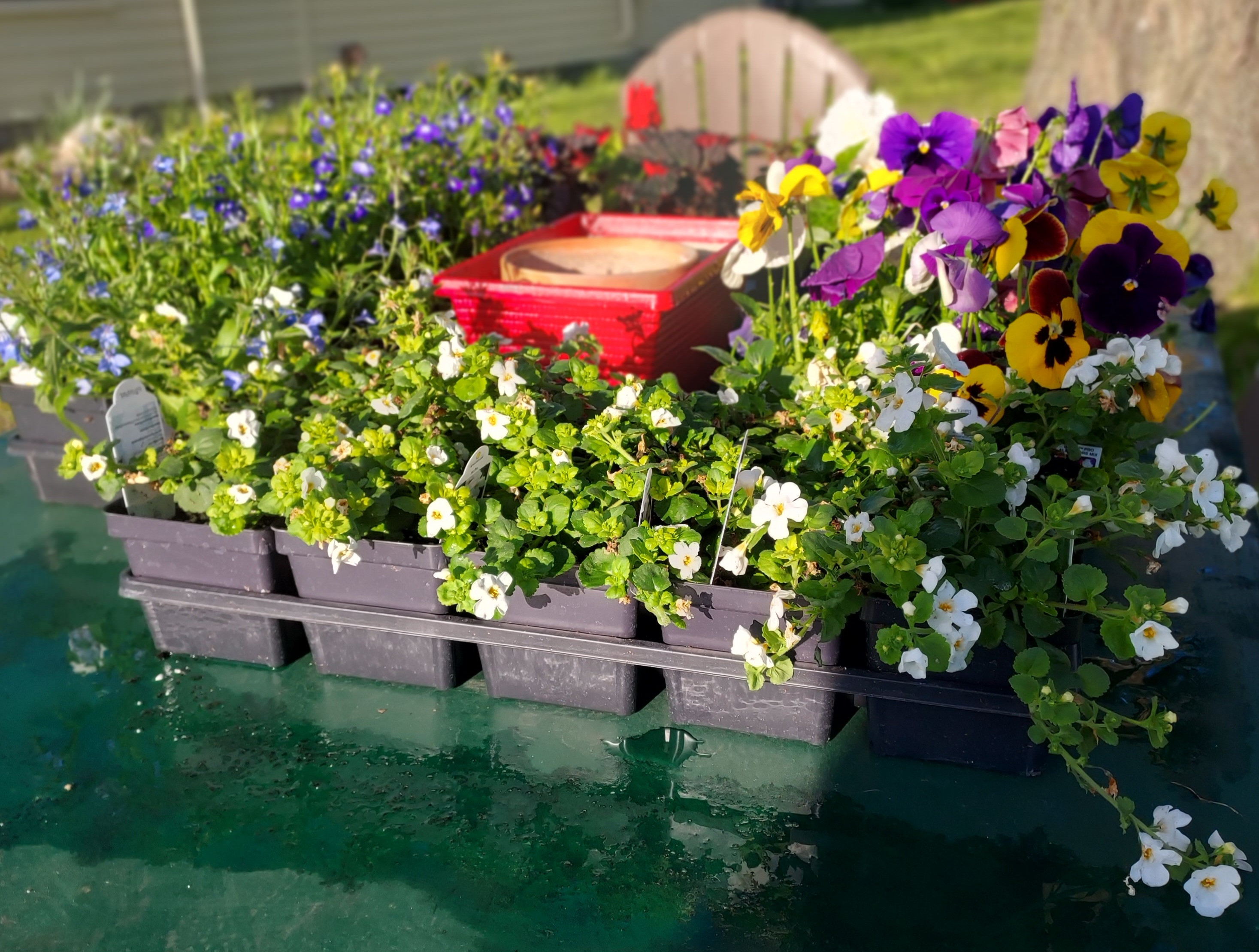
One of the garden centers where I buy flowering annuals changed hands this past year, and when I asked one of the new owners how things were going he remarked—this was last Sunday morning—that people were biding their time, reluctant to plant with the weather as cool as it still was. I had risked bean seeds, and they came up, but then a chilly morning nipped part of a row. I filled in the row with new seeds. Does that take faith? I don’t know that I'm brimming with faith, but I plant and hope for the best and am delighted (by what seems a miracle!) when seedlings emerge from the soil.


Now—suddenly, it seems!—it is June, and there are no more slow days. Between sunrise and sunset we have more than 15 hours, so the days are long, but each one speeds by. As illustration and evidence, I offer below images of trees leafing out in late May. First, a roadside woods at that all-too-brief impressionist stage, the spring day when I always long for a ‘pause’ button so as to drink my greedy fill of this delicate, tender, fleeting time that is gone too soon. Then, our Leelanau woods only two days later. The first green of spring: Now you see it, now you don’t!

One spring day --

Two days later --

And THEN!  It's a jungle!

My personal and business life take on the speed of the season, which is why my recent trip to Kalamazoo was only an overnight turnaround. I could stay there for a month and still not have enough time with family and friends, but too much awaits my attention at home, so home I came the next day to tend to it all: planning for bookstore events with book orders and publicity, and planning for summer visitors to my home (and for my own stolen moments of leisure) by getting yard and gardens in shape for the season. Marilyn Zimmerman's book launch is next week!!!


Mark your calendar for June 10, Dog Ears Books, 5-7 p.m.!
 

In the midst of all this, the disappearance of my billfold, holding driver’s license and credit cards, was a minor crisis. Did I leave it somewhere? Drop it somewhere? Was it in the house “in plain sight” and I just couldn’t see it? Over and over I mentally retraced my steps ... called places I’d been on Friday and Saturday ... looked and looked and looked ... through every bag, under car seats, at home and in my shop. It is so maddeningly tedious, having to give over mental energy to such a boring, repetitive task, don’t you find? 


But on Monday morning my car had to go in for a brake job in Leland, and since I could make no progress on the search while the car was in the garage, I put the whole problem on the back burner, walking from Van's garage down Main Street to Trish’s Dishes to get a coffee to go, encountering a couple of friends along the way, and then making my leisurely way back to the river to find a perch on the dock of a shanty belonging to friends there in Fishtown. I'd texted Charlie that I would be there but hadn't had a reply, so I just made myself at home, as the Artist did so many times over the years.


Looking lake ward


A glorious morning! The sun was shining, and the breeze was alive with that wonderfully familiar, fresh-fishy aroma of the river. Men were at work on the dock opposite, where a few early morning tourists strolled. Passengers gathered to board the Mishe-Mokwa for a day trip to South Manitou Island. Gulls flew overhead, and song sparrows sang. Now and then a duck paddled about near the pilings. 


It was very near here, just south of the river mouth, that the Artist spent a night on the beach long ago and wandered into town the next morning to the Bluebird, where Grandma Telgard said immediately to a member of her kitchen staff, “This boy needs a cup of coffee!” That was years before we met, but in later years together we spent many, many hours in, around, and near Fishtown, only a pleasant walk from our old Leland home.


Back to the present. Now, in 2025, for weeks and weeks I have been carrying my sketchbook with me everywhere I’ve gone, along with a set of drawing pens sent to me by a friend for my birthday. The last serious sketches made in the book were from 2015. A whole decade ago! How is that possible? Finally, there on the dock, I took out sketchbook and pens and applied myself to the scene. The results were laughable, but results didn’t matter. I was there and nowhere else, practicing drawing as meditation. Perfectly content.


Life proceeds at a different pace on the river, I remembered then, whether one is working or relaxing. 


“I beg your pardon,” said the Mole, pulling himself together with an effort. “You must think me very rude; but all this is so new to me. So—this—is—a—River!”


The River,” corrected the Rat.


“And you really live by the river? What a jolly life!”


“By it and with it and on it and in it,” said the Rat. “It’s brother and sister to me, and aunts, and company and food and drink, and (naturally) washing. It’s my world, and I don’t want any other. What it hasn’t got is not worth having, and what it doesn’t know is not worth knowing.” 


-      Kenneth Grahame, Wind in the Willows


Illustration of Rat and Mole by E. H. Shepard

Since I’d seen no car, I thought Charlie and Sandy must be away, but it turned out that Sandy was home, and after a while she joined me outside on the dock with her own coffee mug, and the two of us caught up on each other’s lives in leisurely fashion. I showed her my sketchbook, and she showed me her tiny portable watercolor kit, small enough to fit in a handbag, and after a couple of hours we walked up to Main Street and over to the Cove, a restaurant on the north side of the river, to meet her visiting grandson and his wife and their almost-three-year-old son for lunch. 


I’d told Sandy about my missing billfold but was feeling no stress or panic. It would show up, or it wouldn’t. I had put a hold on the credit cards the day before, and although replacing cards and driver’s license would not be much fun, it was just one of those things. One foot in front of the other. Deal with it. That's life. 


Am I calmer because I’ve learned not to panic? Or is it simply a lessening of energy that comes with age? Or am I become so calm, so unlike my younger self, because after losing the love of my life nothing else that happens to me feels all that difficult? Maybe all are partial explanations.


Later, back home, I dared to plant seeds for tender annuals and vegetables. Launched tennis balls through the air for Sunny Juliet. Searched one more time through my car for the missing billfold and contemplated necessary next steps if it didn’t turn up. But the day was too beautiful for worry. I’d mowed grass on Sunday, and my yard, fresh and green, was orderly and inviting as I puttered about the perennial borders, grateful for my Michigan country life.


Sunny likes Michigan, too.

And the icing on the cake was that I found my billfold in the grass, right there at home! Now I don’t have to think about that any more! 


But have I been stingy with pictures of Sunny in this post? How about a recent scene at the dog park, Sunny and friends, with all dogs in happy motion. There! Satisfied?


Dogs having fun!

Wednesday, May 18, 2022

Day By Day

A new day dawns...


My “New Normal” Life


There were a couple of big songs with the title "Day By Day," very different in nature. Sarah Vaughn sings the first one, a love song, here. For the song from “Godspell,” sung by the Fifth Dimension, visit this video


My own “day by day” life is something else right now: the challenge of another 24 hours without the love of my life but with a challenging little puppy for a companion. If I’d been offered the trade – cute as the puppy is -- I would not have taken it. This is, however, what life has given me, and having Sunny Juliet as companion is better than being all alone. Also, everything is beautiful these days in Leelanau County, orchards full of bloom along nearly every road. “We live in a beautiful place,” the Artist so often remarked. I mustn’t lose sight of that truth.


When SJ and I arrived home from our cross-country odyssey a week ago Saturday, and she was introduced to her Michigan house and yard for the first time, the air felt like June, at least. It cooled down to an April kind of evening, but those first spring days back in Leelanau were followed by others that felt way too much like summer. “If May is this warm, what will July be like?” everyone wondered. Kind of worrying.


Then my puppy didn’t feel well the following weekend. (Of course, the weekend! When the vet’s office was closed!) Her little head and tummy felt unnaturally warm, feverish. She was lethargic and had no appetite. That was very worrying! Her behavior and demeanor were so unlike her that I yearned for her usual maddening naughtiness. Please, let my puppy not be sick!


Not herself

Monday I took her to see the vet, and by that evening, after IV fluids and antibiotics, she was ready for a good dinner. The furnace came on that night, also, and Tuesday morning was so chilly I had to layer up to go outside, with Sunny so much herself again that I could hardly get my socks on, what with her wanting to make a game out of pulling them off my feet before they were all the way on. Cool weather, challenging puppy. Back to normal. 


"Mine!" She has recovered!


And so we go forward, Sunny and I, day by day. 


...and comes to an end.


My Recent Reading


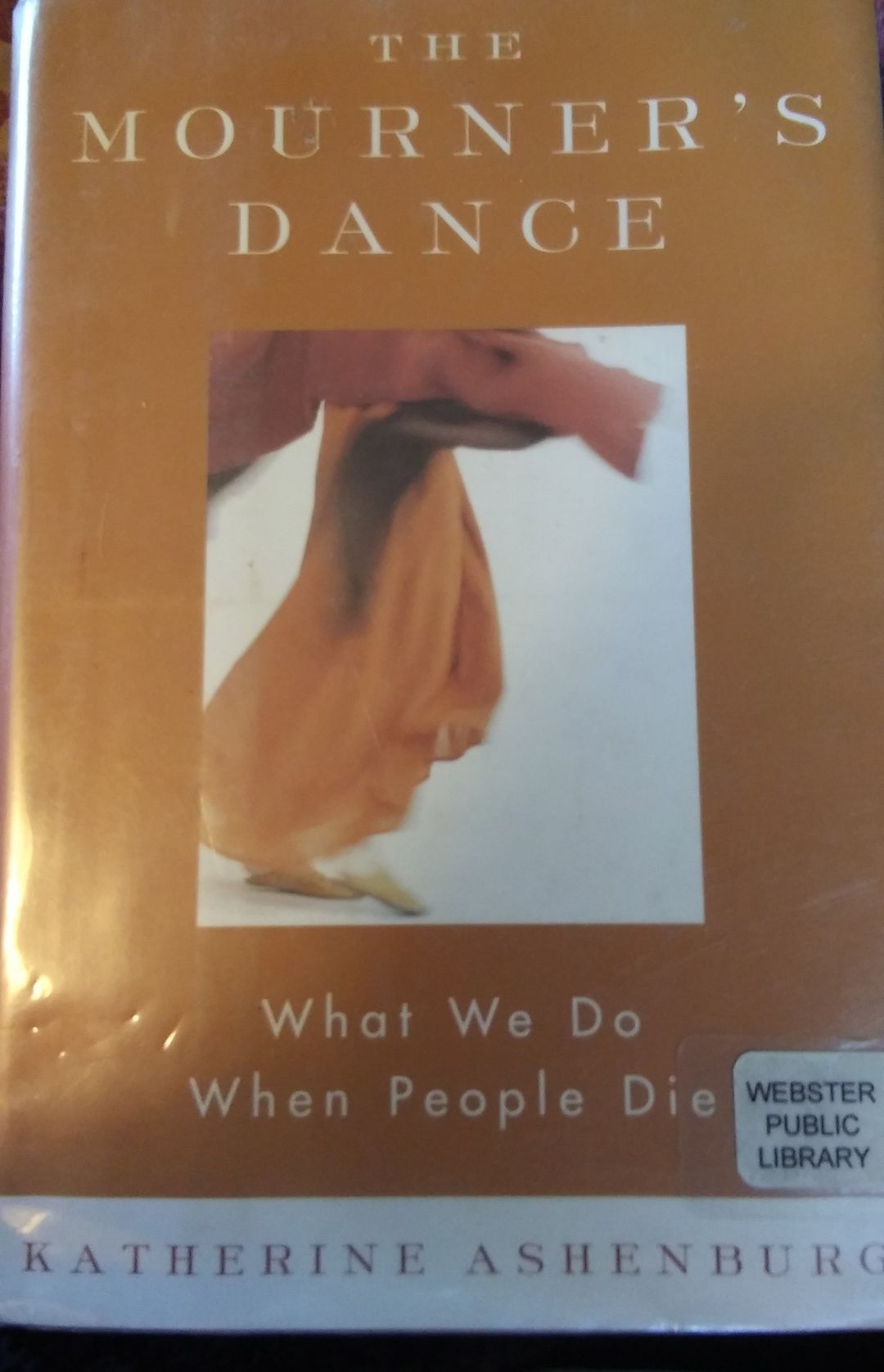
Last night I finally finished a nonfiction I began reading while still out in Cochise County, Arizona. The Mourner’s Dance: What We Do When People Die, by Katherine Ashenburg, was inspired by research she undertook after her daughter’s fiancé was killed in a road accident, so that, instead of the wedding she had been planning, Hannah found herself participating in a funeral for the young man she had planned to marry. Ashenburg reviews mourning customs around the world and historically in Western culture but comes back again and again to mourning rituals that Hannah devised for herself, since in today’s United States there are no universally prescribed and accepted forms. 


At first, I was interested in how naturally Hannah’s homegrown practices had welled up in her, and how similar they were to age-old ways. More and more, as I thought about mourning customs, many of them made psychological sense to me. 


This is an unusual book, both personal and general survey, but the two aspects join well. For example, in the chapter entitled “Sad Clothes,” a history of mourning dress (with Queen Victoria centrally featured), the author reports that she asked her daughter --


…if she wished she lived in a world where she could wear a universally understood mourning sytmbol, like an armband, and she said simply, “I would love that.” …Other mourners corroborate Hannah’s feeling. A few months after her father died, the writer Barbara Gowdy was walking down the street, missing him. A stranger in the opposite direction took note of her woebegone face and jokingly ordered, “Smile!” Months later, she was still angry as she remembered the episode: “That never would have happened if I had been able to show by my clothes that I was in mourning.”


Hannah’s personal mourning garb was a “vivid orange vest made of padded parachute silk,” a Christmas gift from her fiancé. My own widow’s weeds are an old, faded t-shirt of the Artist’s, and I also wear his watch and, almost every day, with jeans, one of his belts. 


The author mentions more than once that during gatherings of mourners, Hannah was offended by social conversations having nothing to do with Scott, her deceased fiancé. It is all too true that "life goes on" and that people have many personal concerns of their own besides the loss of a friend or acquaintance. But grief is unavoidably self-centered. Regardless of how many friends and relatives I lost prior to losing the love of my life, with the loss of him I felt like -- knowing full well that it was not at all the case -- the first widow in the world and the most deeply bereaved lover of all time. So when someone says helplessly, "I don't know what to say," I am not offended in the least; when they utter stock phrases, such as "I'm sorry for your loss," I appreciate the effort; and any time someone has a story or a personal reflection on my husband to share with me, I am grateful. When no reference is made to his death, however, I feel as Hannah did, resentful and aggrieved. One world has vanished, and another, left behind, has been shattered. How can that be ignored?


Another nonfiction book I read in the past week concerned the last days of the author Marcel Proust. Proust at the Majestic: The Last Days of the Author Whose Book Changed Paris, by Richard Davenport-Hines, started off slowly for me, with far too many facts and names crammed into the first chapter, and there were many repetitions through the work, but it held my interest and kept me company and lulled me to sleep for my first week back in Michigan. The detailed report would be meaningless to anyone not familiar with Proust’s work, but for those in love with A la recherche du temps perdu it is fascinating to see the concentrated effort needed for the writer to finish his work, as well as to learn that all Paris, from titled nobility to cab drivers, came to a shocked standstill when they heard of his death. 


County in Bloom


Cherry blossom time!

I was only home a week before the cherry orchards burst into full bloom, along with all the wild cherries, and now my little apple trees, too, are flowering, and I find myself telling Sunny frequently what David so often exclaimed to me, “We live in a beautiful place.” I imagine Sunny appreciating the landscape with her nose, taking deep draughts of orchard tree and dandelion perfume. Lilacs will open soon. Orioles are passing through! (See more blooms here.)


And I will be opening the bookstore soon, though "regular" hours may be elusive for a few more weeks, as my life remains in disarray, regardless of how many tasks I check off the list of things to do.