Search This Blog

Showing posts with label cookbooks. Show all posts

Monday, July 22, 2024

Any Day Now…

"Cherry-ripe," wrote poet Robert Herrick of Julia's lips.

Trees are full of cherries, and equipment is in place (shaker, truck, vats) for tart cherry harvest in the orchard around my old farmhouse. My guess is that the farmer is only waiting for the Brix reading to be right where he wants it. 


Meanwhile, trees so full of cherries are not so full of leaves, so there’s another question, and my tentative answer is tied to the fact that my black walnut tree (not sprayed with anything) is also dropping a lot of leaves. I think the trees are hedging their bets. In the economy of a plant, it’s the seeds that matter for the future: leaves are there to take in needed nutrition, and when that work is done, and as we come into hotter, drier weather, the tree’s economy is best served with fewer expenditures of moisture – a sparser population to provide for, in other words. That is the explanation of a bookseller, not a scientist, you realize.


Yes, summer is hurrying along, and on Sunday morning I saw the season’s first goldenrod in bloom. In July!


Sneaky little devils!

I have monarda and tall phlox blooming now in my garden. Black raspberries keep on coming, too, and I finally have two batches of my patented (not really, but it is my specialty) ‘blackstraw’ jam made, with no end in sight. I use twice to three times the amount of raspberries to the smaller amount of Bardenhagen (local) strawberries, and mine is cooked, not freezer jam, because I don’t want to worry about losing all my work in the event of a winter power outage. For the same reason, when fall arrives I will be drying and saucing my apples. Let’s not have fall arrive too soon, though! That goldenrod makes me nervous….


Jammin'!


Time flies by because these are busy days, and the coming week will be an endurance test for this old bookseller. I will be closing at 3 p.m. on both Tuesday and Thursday this week, selling books at events at the Willowbrook Inn both evenings. Tuesday is the third of four FOLTL Summer Writers Series evenings, with Abra Berens as guest author. Northport claims Abra for her eight years at Bare Knuckle Farm and Friday farmers market. Her three cookbooks are Grist (grains), Ruffage (vegetables), and the latest, Pulp (fruit). Doors for her presentation open at 6:30 (with cash bar), and the event will begin at 7 p.m. It's free, and the public is cordially invited.


Showcasing Abra's books today in Northport --

Abra will be doing a special chef’s dinner on Thursday, but if you don’t have tickets already for that, you're too late. Not surprisingly, tickets to the dinner sold out early. Here is an interesting, if slightly outdated, interview where you can learn more about author/farmer/chef Abra Berens.


Is it any wonder my reading is suffering these days for lack of time? Between customers at the bookstore, slowly I make my way through Antifragile, by Nassim Nicholas Taleb, but at home there seems to be very little reading time at all, what with (Sunday, for example) hanging laundry out in the sun, watering gardens when it doesn’t rain, mowing grass, making jam, and, on all-too-rare occasions, vacuuming floors and catching up on recording and filing business expenses and decluttering (which means picking up things I dropped on chairs rather than putting them away throughout the week, because the majority of my time at home, when not sleeping, is spent outdoors). Every morning lately has also held a stint of editing, rather than the reading in bed with morning coffee that I did all winter and spring. But soon I will make time to read new books, and then I will report to you on some of them.


Part of every single day, of course, involves outdoor time with Sunny Juliet. We take long walks, work on agility practice, and have agility sessions with Coach Mike. I throw tennis balls for her, and there are frequent though unscheduled romps with her new friend and neighbor, Griffin. Below are Griffin and Sunny at rest (rather than running like crazy or wrestling and rolling around, which allowed me to get a halfway decent photograph of them for a change), although they are “resting” in this shot only because Sunny had retreated from the field of play, determined to keep possession of one of her precious tennis balls. 


Griffin and Sunny take a little break.

Do you think life is going to slow down? Any day now? Ha! Not a chance! Yet I recall, dimly, the long summer days of girlhood, when hours barely seemed to move at all, and if we try we can still find a few moments like that now and then. Make them, I should say. 


My little heaven on earth --


Another point of view --

Friday, October 30, 2020

The Last Hurrah – with Comfort and Kid Stuff


I’ll start with what I call comfort books. Above is pictured a little stack put together today of books that I consider as falling into that category.


Cheaper By the Dozen (1948), by Frank B. Gilbreth, Jr., & Ernestine Gilbreth Carey, illustrated by Donald McKay, is a story about growing up in a household of twelve children (written by two of the twelve) of parents who were the first “efficiency experts,” otherwise known as industrial engineers, the first to undertake professional motion studies of people at work. Having a dozen children, it was inevitable that their quest for efficiency would spill over into their home life. Read it once, and remember it forever. Belles on their Toes is a sequel.


Life with Father, by Clarence Day, Jr. is an American humor classic set earlier in American life than the Gilbreth titles. The mere chapter titles call up scenes in my memory and make me smile. Father keeps a carriage horses and is skeptical of “letting in” the telephone. I wouldn’t have wanted to live with him, but I love reading the stories.


The I Hate to Cook Book, by Peg Bracken, was certainly a classic of its time and launched its author’s writing career, and yes, there are recipes, but that’s only the beginning. Peg Bracken offered comfort to novice homemakers, and she is still comforting today.


…I’ve often thought it’s pretty presumptuous of cookbooks to tell me to make Individual Baked Alaskas when I am already up to my hips in Chicken Pilaff and Brussels Sprouts Calypso. I am not about to do it, either, because I. know something easier and just as good, like that lovely orange-cream sherbet at the fancy-food store, and the brownies I made two days ago. Or a rare, fine, immortal glass of Irish Coffee.


All of the above qualify as what I consider “comfort books.” Something comforting in an entirely different way is Katsura: A Princely Retreat. I’ve written about it before (and you'll find more pictures if you follow that link), but here’s the cover, in case you’ve forgotten. Sitting quietly, turning the pages, immersing yourself in the images is a calming meditation. And the book has its own slipcase, which it richly deserves.


Which (the slipcase) prompts me to go back to cookbook land to tell you about a two-volume, slipcased set of books, The Horizon Cookbook and Illustrated History of Eating and Drinking through the Ages. But there – the title tells you all you need to know, that there is a lot more to read here than mere recipes. 


I’ve been showing off lots of new books recently, for children and for grownups, but recently I acquired quite a few “new” old children’s books. No doubt many will bring back memories for my older readers. Not only individual classic novels and old-fashioned series books and readers from bygone decades, but also beautiful things like My Book House, Live Dolls in Wonderland, and – yes! – a couple more illustrated versions of A Child’s Garden of Verses. 


You will be surprised, you will be amazed, you will be delighted! We have the ordinary, and we have the unexpected. So come in this Saturday, October 31, or you’ll have to wait until spring to tour my treasure island of – Books in Northport!


Tuesday, November 7, 2017

Late Fall Harvest


This year’s long, extended summery autumn has given way at last to what Edgar Allan Poe justifiably called “bleak November.” Two weeks ago friends (a few brave souls) were swimming in Lake Michigan under blue sky. Since then cold winds and rains have moved in – heavy wet snow one morning, but it didn’t last long this close to the lakeshore – so that, on Sunday morning, with temperatures in the 40s rather than 30s and the wind died down for a few hours, I hurried out in the quiet stillness to harvest the remaining apples from my two little trees. Good, big, lovely red apples they are, and I’m peeling and slicing and drying fruit for winter but will keep cold apples in their skins, too. Paradigmatic fruit of temperate climates, apples keep well in any form.

In the kitchen I fall back on familiar, cold weather favorites: hearty oatmeal with apples and raisins for breakfast, muffins to go with afternoon tea, thick bean soup, polenta, and stews for lunches and suppers. At the end of the day I set aside my no-sugar resolution and chase the damp chill of outdoors away with thick mugs of dark cocoa. I leaf through cookbooks, contemplate replacing turkey with rabbit for Thanksgiving dinner, and wonder if there’s the slightest chance I could get away with it.

Time cannot be saved and stored in the pantry like apples. Still, with yard work season coming to an end, along with porch living, the edges of my world after each day’s light fades draw in closer to the fire. No more bookstore events to plan, no more summer visitors. Drying laundry with electricity instead of sun and wind gains in time what it loses in delight. I stockpile books and jealously hoard reading time. Two Norwegian women authors are on my table this month – but more of those books another time.

It can be difficult to muster up energy for a trip to town when home is so cozy and evenings so dark, but we resolutely made a recent expedition for a concert of Cajun music by BeauSoleil, led by the incomparable Michael Doucet. We had front row center seats, and I was in heaven! All these years I’ve wanted to see and hear this group, since at least as far back as the late 1980s, and as I had the wonderful good fortune of speaking to Michael Doucet himself after the performance, I told him I had not been disappointed.  Pas déçue! It was more than worth the wait.

Heading back out into the wet dark, on the way to the parking lot, we were not the only audience members exclaiming over the band’s energy. Energized was another word I kept hearing: it’s what we all felt. And here’s something else I loved about the evening: the sound was not ear-shatteringly loud, and there was nothing of spectacle in the staging or in the musicians’ dress. It was all about the music. My face hurt from smiling helplessly, and I am still humming the songs, days later.

Together for over 40 years, those musicians shared their harvest of work with all of us on Saturday night. Merci mille fois, BeauSoleil! Je vous salue!


Saturday, November 23, 2013

November, Indoors and Out


C’est la neige qui nous arrive! La neve in Italian, la nieve in Spanish. Oh, those Romance languages and their kissing cousin words! Our English word originates further north: Snaw, snie, sne, Schnee, snö, snjór. Whatever you call it, it’s beautiful – and can be treacherous. 

Friday morning roads were slippery in Leelanau Township, and in the village of Northport pedestrians were stepping cautiously. By afternoon streets and sidewalks were clear, but the cold, so different from yesterday’s balmy air, remained. Is it winter? Is it here? Were the deer hunters happy this morning with snow on the ground? Will there be a reprieve before Thanksgiving for the rest of us? There was no reprieve on Saturday. The snow was not heavy (yet!), but the wind was sharp and bitterly cold. That early morning customer stocking up on Steve Hamilton mystery novels had the right idea for the weekend.


(Picture for Dawn P., who requested it)
Another good idea
Once autumn leaves have fallen and days are dwindling down toward that day in December that will be the shortest one of the year, the indoor world beckons. It’s time to find all those containers of frozen summer berries and juice and turn them into jam and jelly and maybe try out a new recipe, like cranberry chutney, before this year’s supply of fresh Michigan cranberries is all sold out. Don’t use raisins in that chutney, though. Michigan dried cherries are the Up North choice. Won't it go well with Thanksgiving turkey?

A particular kind of reading seems to go with these first snowy days. I can’t resist pulling out cookbooks and dreaming over recipes of slowly simmered soups and stews, eggy-rich cakes drenched in honey and dusted with powdered sugar, astounding pickles (we are addicted to pickled okra; now if only I could succeed in growing it in my garden!), anything at all involving apples, or any noodle recipe whatsoever. Could a sweet noodle kugel, I wonder, be served with homemade spiced applesauce? Why not? Imagination feeds on cookbook dreams as the weather turns cold.


But those tidy volumes, new and old, I must admit, are in my bookstore. At home, the shelves are not as well arranged (though much better than before we did a massive rearranging), and some of the volumes, taken from the shelves, reveal themselves to be downright disreputable.


Cold weather that tempts us to the fireside is great weather for any kind of reading. I really, really did read recently (despite my earlier protestations of lack of interest) The Adventures of Sherlock Holmes, “complete and unabridged,” and enjoyed the stories very much. This morning I started in on Algerian Chronicles, a collection of essays by Albert Camus, many translated into English for the first time, the rest re-translated, by Arthur Goldhammer. At the bookstore this cold Saturday afternoon I fell into Cathy Johnson's On Becoming Lost: A Naturalist's Search for Meaning, and was exclaiming out loud over the first page of the introduction, "This is me! I was just writing about this!" Here are some of the sentences from Johnson that so resonated with me:
Being lost is not a negative concept. Like the earth-shadowed moon, like night and day, being lost carries within itself its opposite: being found. Being lost simply means we are wandering; is that so bad? 
... 
The loveliest lost of all is that I choose myself -- lost in the crowd, lost to the world, lost, perhaps, to my own incessant self-awareness and able to see what's beyond the end of my own nose. I am forced to look elsewhere for answers and I love it. Being in possession of all the answers holds no appeal at all, but owning a good pocketful of unanswered questions is to me like bread to the starving.
This is a book I will devour hungrily. It has already given me an appetite.

Our Intrepid Ulysses Group will discuss Lorraine Hansberry’s A Raisin in the Sun in December and then – just maybe – we’ll take on the first volume of Proust’s Remembrance of Things past as winter really sets in. As one member of the group said with a nonchalant shrug, “If we got through Ulysses, we can get through anything.” Another person said, “It’s going to be a long winter. We need a long book.”

Here’s the big question: Will the first volume, Swann’s Way, be long enough to last the winter, or will we bold and happy readers be led further and further down the course of the narrator’s life, until finally he recaptures the past he thought was lost to him forever?

Full disclosure: In the past I cheated on Proust, reading the first volume and half of the second before skipping ahead to the last. 

More questions: And now? How short is life? How fast fly the winter days? Is there time to read all of Proust?

Stay tuned in -- or tune in later in the winter -- for the answer to these burning questions.


Wednesday, July 18, 2012

Cook Gone, Fish Coming


That’s the headline that popped into my head this morning, although it makes little sense. Well, it makes a very little sense, for what I was thinking was that the appearance of Mario Batali yesterday evening at the library was over, with the Fishtown book author coming up at the bookstore this afternoon.

Mario was splendid! He and Bob Sloan, another cookbook author, entertained and enlightened the audience with food advice and opinions and humor. Audience for the 7:30 event was already assembling well before 7 o’clock, and more and more chairs kept coming out of the township hall to accommodate those who had not gotten the message to bring lawn chairs, and the grey clouds overhead raised some minor anxiety—but not, it seemed, with the FOL folks, whose remarks ranged from a confident “It won’t rain” to a philosophical “If this is what it takes to bring rain, great!” A few drops fell, and a handful of people put up umbrellas, but no one had to scurry for shelter. I sold books afterward, which Mario graciously signed with a big orange pen, and that’s when I noticed he was not wearing his signature orange Crocs. What I’d realized much earlier, to my great chagrin, was that I had forgotten my camera! Many other people did have cameras, and many fans had their pictures taken with Mario, and the entire event was well documented for Northport history—just not for this blog, and I can only apologize and hope there will be another chance in the future. Meanwhile, introduce yourself to Mario here.

But now it’s another new day, and besides my 8:30 a.m. meeting (ah, yes, I knew there was a reason I was up at 6 o’clock!), this afternoon will bring Laurie Kay Sommers to Dog Ears Books with Fishtown, Leland. That’s a book whose time had come, and I’m pleased to introduce its author to Northport. With design by Dan Stewart, concept from Amanda Holmes, and photographs and documentation from many, Fishtown, Leland is a real keepsake, for natives, newcomers, and visitors. One of my customers has already reserved multiple copies, and I’m sure others will follow. It’s that kind of book.

Will the days ahead be quieter? Somehow I doubt it. It is, after all, "high season" Up North. 

Sunday, July 15, 2012

Authors, Books, Birds, Bookmarks, Dogs and the NORTHPORT DOG PARADE!


Author and book-loving fan
Thursday was great fun with the Chickadee Man! Bill Smith, author of Chickadees at Night (northern Michigan’s current best-selling hardcover book, the paperback bestsellers being “shades” of some dull color...), did a recitation of his “fun” verse about chickadees (defending "funner" as "more fun than 'more fun'") and also gave his audience an insider view on how an illustrated book comes together, crediting his illustrator, Charles R. Murphy, and graphic book designer, Jenifer Thomas, for their contributions. There’s no doubt about the quality of the collaboration--the book speaks for itself—but the magic that happens between author and audience adds a dimension all its own, which is what bookstore events are all about, so here’s a little more of the flavor of Dog Ears Books on Thursday, for those who couldn’t be with us:

Imitating chickadee doing WHAT?

Explaining how the book illustrations evolved
Bill left behind a copy of his petition to make the chickadee Michigan’s new state bird, replacing the robin. Signatures welcome! Thanks to him, I have realized that the bird I heard on my first day sitting still in the woods in January was undoubtedly a chickadee, so of course I signed the petition. How about you?

Birds! On the back roads and close to home, one of my new bird friends this year is the Eastern kingbird, Tyrannus tyrannus. (Isn’t that a name? Wow!) All the guidebooks say the kingbird is “common and conspicuous.” Well, what can I say, as one who only learned to see it this year? All previous summers I was looking for a much smaller bird, and so I missed it altogether. Now I spot a kingbird and greet it as a friend and neighbor.

Kingbird, my new friend
We are also honored to have bluebirds nesting in a dead popple, close enough to our outdoor dining table that we can watch the parents feed their young while we ourselves are feeding. Saturday evening I could see (but was not quick enough to photograph) two gaping baby beaks at the nest hole entrance when the father bird returned with a grasshopper almost as big as his own head. One baby got that giant insect, and the other had to wait for their mother to arrive with a smaller tasty treat.

Papa at nest tree
Still on the subject of natural species, but switching from fauna to flora, I was intrigued to run across a couple stands of fireweed in northern Leelanau Township recently, up on the way to Christmas Cove. To me, fireweed is a U.P. wildflower, past blossoming by the time I get to Lake Superior for a visit in September, but here it was, close to home, and somehow that pleased me greatly.

Fireweed here in Leelanau Township

Cookbooks!
The third week of July will be busy for me. Mario Batali is the guest author on Tuesday evening, July 17, 7:30 p.m., at the Friends of the Leelanau Township Library’s Suzanne Rose Kraynik summer author series, and I’ll be there with a few of Mario’s cookbooks (four different titles) for those who want to purchase and get his signature and personal inscription after the formal presentation. (FOL president Suzanne Landes asks that everyone coming to the event bring a lawn chair, as the crowd is expected to be large, necessitating an outdoor evening!) Then the very next day, Wednesday, July 18, the author of the new Fishtown, Leland book, Laurie Kay Sommers, will be at Dog Ears Books from 4 to 6 p.m. to sign that exciting regional offering!

Bookmarks are a natural complement to bound books printed on paper, and a new addition to my bookstore inventory is a selection of beautiful, colorful, scenic (and laminated) bookmarks by local photographer Karen Casebeer. Karen urged me to carry “just the ones you like,” but there were none I didn’t like, and so my customers can choose wildlife, scenery, or sailboats on Grand Traverse Bay. There is only one photograph that was not taken here in Leelanau Township, and it will be up to you to determine which one that is, if you want to guess, when you make your choices. And yes, there is a snowy owl....

Last but hardly least important, let’s not forget the Northport Dog Parade. This year the parade will be a week earlier, taking place on Saturday, July 11--which is also the date of the Leelanau Township wine festival here in Northport, but let’s not get sidetracked. Dog Parade, Dog Parade. The theme this year, a nod to the marina improvements, is “Old Un-Salty Dog.” If any of you are going “Huh?” please recall that “salty dogs” are sailors and that Lake Michigan is “unsalted.” Now, start thinking about a costume or a float.

Dog Parade registration forms are available at Dog Ears Books, the Pennington Collection, and the Northport Bay Dog and Cat Company. Registration is $5/dog before August 11 and $10 on parade day. Parade day registration runs from 11:30 a.m. to 12:45 p.m., with the parade beginning at 1:00 p.m., and JUDGING BEGINS AT THE MILL POND on 3rd Street at 11:30 a.m., so be there early, in costume!


Tuesday, November 15, 2011

New Path for the Pack

I should qualify that headline. Our dog, Sarah, continues on her old path, except for plaintive, questioning looks that say, “Where are the pork chops?” as she gazes up at our dinner table. The new path has been taken, the big change made, at David’s request (that’s the really astonishing part of the story), and it is—that he and I have recently embarked on a plant-based diet!

So far the change has not been at all painful. I haven’t photographed our exciting new meals, despite the fact that many of dishes have been very attractive visually, as well as tasty, but here’s the run-down so far:

Wednesday: collard soup, mixed wild rice, acorn squash with golden raisins and maple syrup, sauteed leeks

Thursday: sauteed mushroom caps, rice/collard/mushroom “pancakes,” baked yam, cold tofu salad with scallions, toasted sesame seeds and peanut dressing

Friday: red quinoa w/ golden raisins & green leek tops, chopped mango and red pepper with fresh ginger and Balsamic vinegar, steamed broccoli, cottage cheese

Saturday: pureed chestnut soup (no cream), veggie burgers (tofu, chopped walnuts, chopped parsley and scallions, egg white, bran flakes), mixed wild rice, tart cranberry-tangerine-mango relish

Sunday: leftovers from Saturday, along with leeks and red pepper sauteed in sauterne and Balsamic vinegar

Monday: French onion soup, steamed collards with garlic and sesame oil, baked acorn squash

My sister asked if the onions were cooked in butter. They were not. They were cooked, slowly, with many turnings, in olive oil, and the broth was made with Better Than Bouillon vegetable base (comes in jars in soup section of supermarket) and Worcestershire. The house smelled delicious. (The collards were like candy, too.) So you see we are not rabidly pure vegans, but we are tending toward that end of the vegetarian spectrum.

An odd coincidence is part of the story. A week ago Monday one of my customers e-mailed to ask me to order two books for her, Veganomicon: the ultimate vegan cookbook, by Isa Chandra Moskowitz & Terry Hope Romero, and The Joy of Vegan Baking: the compassionate cooks' traditional treats and sinful sweets, by Colleen Patricdk-Goudreau. My customer and her husband had just read The China Study, by T. Colin Campbell, and they had been converted by the book to veganism. “Never say never,” she remarked in her e-mail. I’d made a joke only the evening before, saying ostensibly to Sarah while she eyed our grilled ham and cheese sandwiches, “You better hope your dad never decides to become a vegan.” “Fat chance!” was David’s response.

But then fast forward to Tuesday evening. David had brought home from the library a documentary called “Forks Over Knives,” not knowing anything about the film, which we watched it after dinner, and as the final credits rolled he announced, “I’m ready!” Campbell’s cancer research was presented in the film, along with clinical results achieved heart patients changing to plant-based diets under the supervision of Dr. Caldwell B. Esselstyn.

Research results are not “noncontroversial.” (What is?) You can read the evidence pro and con for yourself. For now, we’ve decided to give this path a chance. We’re finding our meals very satisfying and at the same time not overly filling (no “stuffed” feeling afterward), and I imagine this is the way I might be eating at a health spa, except that someone else would be doing the planning, shopping, preparing and cleanup--I’m not complaining about the work involved, though. It’s actually pretty interesting and challenging, being “whacked” out of our old, dull routines, paying more attention to colors and textures.

As for which cookbooks I’m using, I’ve been consulting many, both at home and here at the bookstore, and including but not limited to vegan and vegetarian books. That gives me an idea: I should write a post sometime on my personal cookbook library. I keep it under control by having one small bookcase dedicated to cookbooks (and French dictionaries—don’t ask why!), so if I want to add a new one, an old one has to go. Yes, that will make an interesting post sometime this winter.

Meanwhile, we will be having a visit this coming weekend from my son, who is a Paleolitic Man in terms of diet. Meat and fat. Avoids grains and sweets. Well, we are avoiding sugars, too, so that’s not a problem, but does my son eat vegetables and fruits these days? There may be a lot of accommodation for a few days in the old farmhouse kitchen.

Saturday, February 26, 2011

Gumbo Stuff

What a lot of nerve I have, blogging about gumbo when I’ve never lived in Louisiana or Texas and have not a drop (as far as I know) of Cajun or Creole blood! But gumbo is what I wanted to make for David and Michael’s combined birthday dinner the night before Phase 2 of the kitchen remodeling project was kicked into high gear. Only after making my own chicken-sausage-shrimp gumbo, very slightly modified from Bubba Gump Shrimp Co. Cookbook, did I seek out other versions.

When it comes to recipes for gumbo, the variety is infinite, but two themes are always present: (1) The roux made with browned flour is essential, as are (2) celery, onion and green pepper. The rest, as far as I can see, is up for grabs.

Paul Prudhomme, in his Louisiana Kitchen cookbook, starts by coating chicken pieces in flour, salt, garlic powder and red pepper and frying the chicken, adding more flour and oil to the bits left in the pan to make his roux. He recommends high heat and constant whisking. The lower the heat, the longer the cooking time.

If you brown the flour in the oven (as I did, the night before making the gumbo), how long should it brown? Different cooks’ opinions and experience call for anywhere from 35 minutes to 2 hours. Some say to stir; others say “Don’t touch it!” But however you brown the flour, attention à la roux! “If the roux is underdone, the gumbo will have a kind of floury taste and texture, whereas if you burn the oil, it will taste like burnt oil.” The site giving this important advice looks very authentic and has recipes for catfish gumbo and crawfish gumbo, too.

Some people use tomatoes, others omit them. If you’re using sausage in your gumbo, what kind of sausage should it be? Andouille is held in high regard. Smoked sausage, in general, gets big votes. I had (organic) chorizo in the freezer but then, at the last minute, worried that its spiciness would overpower the chicken and shrimp I had set my heart on. Turned out it was not a good day for sausage shopping at our local grocery store, and I didn’t have time to go anywhere else, so summer sausage got the nod.

Then—well, I’ll give you some links to a few recipes I found online, then tell you how I made mine, which as I say started from a cookbook, one on my shelf at home. If you have a good cookbook library, see what you can find. As for online recipes, there are many, and what I’m giving here is only the tip of the iceberg. Gumbo is good eatin’ on an Up North winter evening.

Let’s start with a recipe from south Louisiana. Looks good. In another, the flour is not browned. Can it be for real? I’m dubious.

From New Jersey comes a recipe that instructs the cook to brown the flour in pot. Many recipes use this method. The ingredient list from this Texas recipe leaves out the okra, with this note: “And while the word gumbo stems from the Bantu term for okra, kingombo, I didn’t add that as well even though it’s quite common to include it for both flavor and its thickening power.” Personally, I cannot conceive of gumbo without okra. But then, I am only a damn Yankee, doin’ the best I can. Anyway, I’ll be trying variations in future, but here’s what I did this February:

Chicken, Sausage and Shrimp Gumbo

First, the night before, I browned flour in the oven in a shallow pan, "roasting" it for 45 minutes and stirring 15 and 30 minutes along. The aroma is strange. I was glad I got that smell out of the way the night before.

Late Friday afternoon, I cooked chicken pieces in a big cast iron pot with lots of water for 45 minutes to create a good, rich broth and then removed the chicken pieces to cool in a colander.

I chopped celery, chopped green pepper (excuse me, bell pepper), chopped onion and garlic and sliced green onions (scallions) and tossed these into a second big pot with olive oil and sauteed the vegetables, turning often with a spatula as they cooked.

To the sauteed vegetable mixture I added the browned flour and, a bit at a time, some of the chicken broth, stirring as it thickened.

Skinning chicken pieces, I took meat off the bones, cut it into small pieces, and added chicken pieces and sauteed vegetables with flour thickener to the broth, along with a can of diced tomatoes oregano, salt and pepper. Unfortunately I was out of bay leaves (at least, I couldn't find them in the confusion of the kitchen project, with boxes of ingredients and piles of dishes all over the house), so I added a very small amount of chopped sage (three small leaves, chopped fine), harvested from outdoors at the last minute. Summer sausage, diced large, was added at this point, also, and then everything simmered for another 45 minutes. While this was simmering and smelling better and better, I had plenty of time to shell and devein the shrimp.


About 20 minutes before dinner I added a bag of chopped okra, and, ten minutes later, the shrimp.

At the very end, I added the filé gumbo powder (which is ground thyme and powdered sassafras leaves).

I served the gumbo in big flat bowls with a pile of steaming rice on top (some people ladle the gumbo over the rice), with hot sauce on the side, an option for diners. Delicious, if I do say so myself!

Sorry I didn’t photograph the gumbo and rice in the bowls. It was beautiful, but we were very focused on digging in.

The next morning, the kitchen was half-gutted again (not the sink and new countertop side), old flooring taken up so new tile could go down. It will be a couple of days before we’ll be cooking in the kitchen again, but--lunch for the remodeling crew? Where’s that pot of gumbo?

Thursday, February 10, 2011

Grand Marais; Seed Time; Mark Twain; Reading and Gender

Grand Marais, Michigan

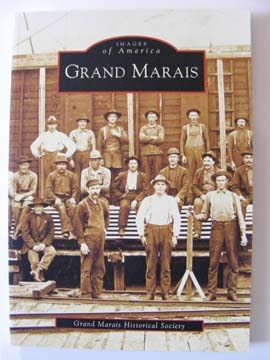
Yes, it’s another day of potpourri rather than an extended theme, and I’ll open with the news that Grand Marais, Michigan, our favorite little town in the Upper Peninsula, is the winner of a Reader’s Digest contest in which anyone could vote, and anyone could vote any number of times. Given that latitude and the monetary incentive, little Grand Marais turned up the heat and beat the drums and managed to accumulate 1,281,724 votes--not bad for a town with a population of 350, eh? The good news is that the town will receive $40,000 for the civic project of their choice. The not-quite-as-good news is that estimated costs for needed work on the harbor run into the millions. Anyone have grant money available for a good Up North cause? Harbors of refuge are few and far between on Lake Superior. A book on Grand Marais published by Arcadia in their “Images of America” service is available at Dog Ears Books, for those who want to explore from the comfort of an easy chair until snowmobile season gives way to black fly season. GM, you know I’m teasing! You know I love you dearly!


Seeds of Dreams

Indeed, it is that time of year, the time when a northern gardener’s thoughts turn to spring and the planting of this year’s garden. It will be many weeks until the soil is clear of snow and ready to be turned, and I never plant anything “tender,” such as tomato plants, outside until Memorial Day, no matter how warm the weather in May, but gardens are made as much of faith and hope as of sweat and toil, and before the time for hard labor arrives it’s glorious to revel in seed catalogs like these gorgeous beauties!

When I take a break from the catalogs, I turn to books, and one I’m discovering for the first time this year (a “classic” in its field, I’m told by those who are way ahead of me) is Suzanne Ashworth’s Seed to Seed: Seed Saving and Growing Techniques for Vegetable Gardeners. General chapters begin the book: “Botanical Classifications”; “Pollination and Flower Structure”; “Maintaining Varietal Purity”; “Seed Cleaning Methods”; and “Seed Storage Techniques.” I should say, perhaps, though the subtitle already said as much, that this book is not a technical treatise for botanists but is a truly practical guide. Where in your home will you find a spot that provides “constant warmth at a specific temperature”? Ashworth suggests the top of a refrigerator, warning against trying to germinate seeds from the Solanaceae family (tomatoes, eggplants, peppers) near a gas stove or water heater, as natural gas can inhibit germination. Who would have known or guessed that? Germination rates over years of storage for different vegetable seeds is another example of a handy tip. For example, half of the onion seeds you save, if properly dried and stored, will be viable two years later.

The bulk of the pages of Seed to Seed deal not with generalities but with specifics—families and species of vegetables, the families arranged alphabetically, beginning with Amaryllidaceae, the onions, leeks and chives, and proceeding through Valerianaceae, Indian corn salad, with all your common favorites in between and a few you might never have tried before. For instance, I’m keen on attempting to grow okra this year (“Okra seeds will maintain 50% germination for five years when stored under ideal conditions”), and while I knew the plant came from West Africa, I am surprised and oddly delighted to see that it is a member of the Malvacea family, a relative of the humble and lovely old-fashioned farm hollyhock.

Supplementing my garden, whatever I end up planting and growing, will be the summer farm market in Northport, and a book to help me with new ideas for the tables will be Fast, Fresh & Green: More than 90 Delicious Recipes for Veggie Lovers, by Susie Middleton. Oh, boy, sweet potato fries!!!

Mark Twain’s Meanderings

First, my confession: I’m not a huge fan of Mark Twain. When I finally got around to reading Huckleberry Finn, I was astounded and dismayed by the last few chapters of the book and the way the whole story fell apart. It reminded me of movies where the people making them started with a good idea and then didn’t know how to wrap it up. I mentioned here in the blog a while back that David and I were reading Life on the Mississippi at bedtime. For quite a while we were thoroughly engrossed and entertained; disappointment came when the narrative (to use the word loosely) jumped a large chunk of years, skipping from the author’s days as a pilot to a later pleasure trip he made down the river with a friend. Those later chapters weren’t nearly as good as the ones that had gone before.

Now a review by Andrew Delbanco in the New York Review of Books of the new Twain autobiography (the first of three volumes came out this winter) confirms my feeling about Twain’s writing, while offering the reviewer’s positive assessment of what he calls “incoherence” in Twain’s books. Delbanco quotes from a 1895 essay by Twain, “How to Tell a Story,” in which the author admits (boasts?) that “to string incongruities and absurdities together in a wandering and purposeless way” is his way of going about the task. Well, that explains that, doesn’t it? (Does it?)

I was particularly struck by Twain’s complaints about writing, as opposed to talking, which was his real talent. Another passage quoting the famous story-teller was this:
“With pen in the hand,” he said, “the narrative stream is a canal: it moves slowly, smoothly, decorously, sleepily, it has no blemish except that it is all blemish. It is a little too literary, too prim, too nice.”

What would Mark Twain have to say about writing on a laptop computer, with AutoFormat and spelling and grammar checking programs second-guessing the writer at every turn, all this in addition to the neatness of typeface on a screen, which seems to shout at the writer to produce finished, blemish-free prose or poetry? On the other hand, the speed of typing on a keyboard (as evidenced by sloppy and/or fiery, spontaneous e-mails from friends who hit “Send” in the heat of emotion without saving to a “Draft” folder for later, calmer revision) would seem to bring writing closer to speech, and thus closer to the “wandering and purposeless” style, the unpolished spontaneity favored by Twain.

So here’s one question for today: Is the computer keyboard or the yellow pad and pen more likely to prime the writing pump and make a story flow?

Did Reading Change Her Life? Yours? Mine?

Going through boxes under my desk at home (same place I found the treasure box of postcards), I ran across a book loaned to me by a friend with a “Please return” Post-It note inside. The book was How Reading Changed My Life, by Anna Quindlen. It’s a very small book, and I enjoyed reading it but commented to David that I didn’t see how reading had changed the author’s life at all: She began as a reader and has remained a reader, to the extent that she prefers reading to all other activities, including travel and outdoor recreation. (Hmmm, always? I’m a book-lover but can’t go that far.) What I want to get into today, however briefly, is Quindlen’s speculation that women read differently from men, men for information and women for “connection,” and this, she thinks, explains why so many women are in book clubs, while so few men are. Do women more often than men share books with friends? Is reading more often part of a basis for friendship between women than it is constitutive of friendship between men? My own experience is that we readers, male or female, often form relationships with other readers, and these relationships often involve the sharing of books, but I don’t see the gender difference Quindlen finds. How do you see it? Sarah awaits your comments!