Search This Blog

Showing posts with label Mark Twain. Show all posts

Saturday, May 2, 2020

What Twain and Jefferson Never Said


A Michigan friend left a comment today on one of my Facebook posts, his comment purportedly a quotation from Thomas Jefferson: “When the government fears the people, there is liberty, when the people fear the government, there is tyranny.” I replied that I would be interested in the context and date, but when I hadn’t heard back in an hour (and that’s no big deal; I sometimes take a whole day myself to get back to someone on Facebook, not being plugged in 24//7) my curiosity sent me digging online. What a surprise! In fact, it was none other than the official Thomas Jefferson Foundation site that provided the answer. 

Spurious quotation! Misattribution! Jefferson never wrote those words at all!

Well, I’d actually had no suspicion that the quotation was not Jefferson until I hunted it down, so I wasn't trying to show up my friend. And I was doubly thankful I had not rubbed his nose in the error when, within the same hour, two other friends caught me in a misattributed quote! 

I had posted a sentence that a book I’m reading (a really good book, despite this slip) attributed to Mark Twain, but it turns out the words were not Twain’s at all! That  wrongly attributed quote (and I really like it) is this:

“Kindness is language the deaf can hear and the blind can see.” 

On this site we learn that --

The aphorism originates from Christian Nestell Bovee. In his Thoughts, Feelings, & Fancies (1857), Bovee wrote “Kindness is a language the dumb can speak and the deaf can hear and understand.” 

So there we are. I corrected one person, and two other people corrected me, all in the same afternoon. Friends, we really do have to keep a close eye on each other! It’s easy to doubt those with whom we disagree but just as important to double-check the facts of those with whom we agree. 

Thursday, September 29, 2016

River Rats


Houseboat & rowing skiff, Leland

When I first met David, he was engaged in building a houseboat. We were both enamored of Wind in the Willows, so I was happy to join in, painting iron window trim while he nailed on shingles. Once launched, the houseboat was his Leland summer home and our shared vacation cottage for many years, just upstream from the Riverside Inn before you get to Stander’s Marina. Don't look for it now, though, because it is no longer there. Time, like the river, moves on.
“I beg your pardon,” said the Mole, pulling himself together with an effort. You must think me very rude; but all this is so new to me. So – this – is – a – River!” 
 The River,” corrected the Rat.
  
-      Kenneth Grahame, The Wind in the Willows
The introduction to at least one edition of WITW suggests that the book is a test of character one reader gives to another potential reader, but if we hadn’t both already known and loved the book, I’m sure whoever introduced the other to it would not have been disappointed by the response.

Hubbard shantyboat across Ohio from Cincinnati shore

Not long into our own all-absorbing romance, we found a copy (the first of many purchased over the years) of Harlan Hubbard’s Shantyboat at the Bicentennial Bookshop in Kalamazoo. We thrilled while reading aloud to each other from its pages, identifying with Harlan and Anna’s middle-aged love affair, their love of the Ohio River, and their determination to take to the houseboating life.
...[The town of Brent] had long been familiar ground to us. We had kept a canoe there, and spent many days on the river. Yet when we came to live on the river ourselves, a change took place in our relation to Brent and the people who lived there. ...At the time, we did not grasp the meaning of all this, but it was the beginning of a deep and permanent alteration in us. The river would leave its mark. 
-      Harlan Hubbard, Shantyboat
In those days, when we lived in Kalamazoo, our own river of choice was a smaller stream, the seldom-frequented (by others), easily overlooked Paw Paw River in Van Buren County.
Sometimes we’d have that whole river to ourselves for the longest time. Yonder was the bank and the islands, across the water, and maybe a spark – and sometimes on the water you could see a spark or two – on a raft or a scow, you know, and maybe you could hear a fiddle or a song coming over from one of them crafts. It’s lovely to live on a river. 
 -      Mark Twain, Huckleberry Finn
We did not have the Paw Paw to ourselves “sometimes” but every time we ventured upon another wild stretch, twisting and turning and winding through woodland and wetland, with numerous deadfalls impeding our way. Again and again we would climb out of canoe, or inflatable rubber boat, or the ugly old $5 styrofoam boat snapped up at a flea market (easy to cram into the back of the car and nothing that required careful handling, that indestructible little craft took us on the river oftener than any other) and clamber over fallen branches or entire trees blocking our downstream way, dragging the boat over the obstacle after us. It was worth the effort to have a river adventure all to ourselves. Ourselves and huge turtles, stalking blue herons, watchful kingfishers, butterflies, banks tumbling with wild roses, boggy places filled with prehistoric ferns, and certain deep, sandy pools perfect for a refreshing skinny-dip.

A recent overnight trip away from home took us along the Au Sable River, its tempting bends and islands and rippling waters glinting in the sunlight making me long to be on rather than above those currents.

Sunshine on swiftly flowing water

She loaded up The River Rose, tossed in an army sleeping bag, two life vests, a vinyl tarp, a gallon jug of water, and her daddy's best fishing pole. She climbed in, fixed her oars, and pushed off. 
- Bonnie Jo Campbell, Once Upon a River 

Recently our reading circle convened to discuss Huckleberry Finn. Different readers had very different favorite sections and aspects of the book, but for my part, in the early chapters, I was impatient for Huck and Jim to take to the river, and later, after they left the river, I was impatient with subsequent chapters. I am also, I confess, impatient with the idea that this is a book only for boys (and men). Such a claim makes me eager to re-read one of my favorite Michigan novels of the twenty-first century.
The Stark River flowed around the oxbow at Murrayville the way blood flowed through Margo Crane’s heart. She rowed upstream to see wood ducks, canvasbacks, and ospreys and to search for tiger salamanders in the ferns. She drifted downstream to find painted turtles sunning on fallen trees and to count the herons in the heronry beside the Murrayville cemetery. She tied up her boat and followed shallow feeder streams to collect crayfish, watercress, and tiny wild strawberries. Her feet were toughened against sharp stones and broken glass. When Margo swam, she swallowed minnows alive and felt the Stark River move inside her. 
 - Bonnie Jo Campbell, Once Upon a River

At an Au Sable overlook
Campbell's fictional Stark River carries me back to those happy days on the Paw Paw, as did my favorite parts of Huckleberry FinnOpen oceans, even the wide-open waters of the Great Lakes, take a different kind of sensibility, different skills, as well as very different kinds of boats. One is intimate with the water of a river, no matter the river’s size, and there is life to be seen along its banks. Not to mention the intimacy of two people together on a river....

Margo saw no evidence of rats, but she knew that wherever there were people, there were rats, especially on the river. Nobody wanted the skins or meat, but Margo did not despise them the way everybody else seemed to. Rats were just creatures getting by on the river as best they could.
Sea dogs and river rats – two different breeds. It is important to recognize one’s own kind, and that much about myself, at least, I do know.


Monday, April 20, 2015

Looking for Coffee and Finding Oz


On Interstate highways, I feel my age. By contrast, the old U.S. routes carry me back to the 1950s.

Two-lane roads through small Midwestern farm towns, where the tallest buildings are water towers and grain elevators, surrounded by wide fields stretching to the horizon, remind me of trips back to Ohio every summer to visit grandparents. My mother would pack a meal for us to enjoy somewhere along the way: balogna and cheese sandwiches, fresh fruit, lemonade, a packet of crunchy corn chips (Fritos), and homemade cookies, usually chocolate chip. We would stop at a little roadside rest area and have lunch at a picnic table. I was telling David about this as we drove through Kansas, and he in turn recalled a cross-country trip with his parents one summer, from Michigan to Colorado, when daytime temperatures were so high that dozens of cars would stop to let passengers take refuge in the shade of a single tree. Naturally, from there it was a short step to comparing our childhood cowboy/cowgirl fantasies. What with new sights and old memories, one never runs out of conversation on the road....

Roadside park, somewhere in Kansas
Thursday, I think it was, we left Liberal, Kansas, having driven there the day before from Santa Rosa, New Mexico, cutting off a little corner of Texas and slicing through the panhandle of Oklahoma on the way, making an unusual (for us) four-state day. Liberal bills itself as the Land of Oz, and down the road from our motel was Dorothy’s House and the Coronado Museum, although what the two have in common we did not find out, because, making an uncharacteristically early start east the next morning, we continued on U.S. 54 with my questions about Liberal unanswered. Is it really? That is, liberal? Or is it the Land of Oz?

Business closed along the old road
Eastward lay a series of small towns, sometimes on the left and sometimes on the right of the road, occasionally (my favorite) the highway going right down the main street. Plains, KS, had a town hall, post office, library – but no cafe, other than the gas station. Meade’s claim to fame was that the Dalton Gang had hung out there, and Crooked Creek looked pretty. Again, however, no cafe. Unfortunately for us, open cafes were in short supply. So all I was expecting and hoping to find in Greensburg was a town large enough to support a place to get a good cup of coffee. 

Greensburg is that and much more.

The first striking feature is the age of the buildings. It’s like seeing a brand-new business district set down in the middle of farm country or a modern-looking suburb with no adjacent city. Is this, perhaps, the true Kansas Land of Oz?


The obvious explanation is the correct one. In May of 2007, an EF5 tornado hit Greensburg and hit it hard. Every downtown building but one was destroyed. Eleven or twelve people were killed. (Town brochure says 12; online fact sheet says 11.)

Naturally, the community rebuilt, because that’s the American way of things, but what’s different and fascinating about this story is the way they went about it -- by deciding to live up to their name, by going greenGreensburg now leads the world in the number of certified LEED buildings per capita. That’s Leadership in Energy Environmental Design.

We found a cafe with great coffee, and it was almost noon by then, so we shared a big, fabulous Reuben sandwich, too, as good as you'd expect in New York. Then we took a walk down Main Street to check out the single downtown building not destroyed by the tornado. The Robinett Building houses an antique store and is still owned – the building renovated since the storm – by the couple who had it back then. 


Erica Goodman showed us a photograph of the building the day after the tornado (having been through one in Kalamazoo in 1980, we have some idea of the trauma, although Kalamazoo was not practically wiped off the map like Greensburg), and David visited with her while I put together a stack of old books to buy. You can see from these photos the beauty of Erica’s store. She's there behind the counter, too, if you look real hard at the photo below.


Greensburg and its history were an eye-opening surprise along the old road. Ad astra per aspera, the town’s newly adopted motto, is most appropriate, and we vowed to return another time to tour Greensburg in depth, because there is so much to explore in this valiant little community, starting with the Big Well historical museum.

The next day, from Emporia, Kansas, to the Illinois state line, we did a lot of steady turnpike and expressway driving, except for one scenic dodge off the main road onto old U.S. 40. We took this side road because I was worried we wouldn’t see much of the Missouri River from the expressway, and that’s really all I had in mind – seeing the river. As with merely looking for a cafe the day before, however, what we found along the river was much more than anticipated.

Visitor Center

The origin of the name of the “Boonslick” region is not Boon-slick, as I first thought, but Boone’s Lick, from the place name in the old days as the Eastern terminus of the Santa Fe Trail. Boonville is also an important historic railroad town. At one time 50 passenger trains a day coming through? Is that possible? So we were told. 


And did you know this? I’m quoting from a historical marker in front of the visitor center:
Caboose is a nautical term of Dutch origin that means “ship’s galley.” This “galley,” with its makeshift crow’s nest (called a cupola), was an essential part of trains as early as the 1840s. Modern technology began to replace the duties of the brakeman and watchman in the 1980s, and today, cabooses are rarely used for more than exhibitions.
The origin of the term ‘caboose’ was new to me; the disappearance of the caboose, sadly, was not. All winter we saw miles and miles of trains crossing the Southwest, and instead of a caboose on the end, there would be one or two or three extra engines. I’m still not used to that, but my railroad background and thoughts about and images of trains are a story for another day.

Future planned Boonville Historical Museum building

On the advice of a pleasant, very informative woman at the visitor center in the old train depot, we sought out Hartley Park to enjoy beautiful Missouri River vistas and to read the historic markers about Lewis and Clark. (Sarah enjoyed her walk in the park, too.) There were delightful little colonies of mayapples and foot-high chestnut trees on the cleared slope down to the river. Very satisfying! That is what I call seeing the river, not just passing over it in under a minute, with barely a glimpse!

Missouri River and flood plain

The town is interesting in itself, and we saw just enough to realize we did not have time to see anywhere near enough. Like Cincinnati, it features many old German-style brick buildings, everything overall much older than towns in the same region farther from the river. The Missouri, like the Ohio, an old river town, is an American Midwestern “borderland,” neither North nor South but with a character all its own. Small wonder that Smithsonian Magazine chose Boonville as one of its top ten small towns to visit in the whole United States. (Traverse City is on the list this year, too.)


But I’ve saved what is perhaps the biggest surprise for the last: The Boonville area is also home of the Budweiser Clydesdales breeding farm! Need I say more about the town’s attractions? We did not get to see the horses – no time, and tours are booked up way into the future – but just knowing they were there was exciting to me. So, another time! We shall return!


Kansas and Missouri are full of fascinating and beautiful sights, scenes and stories. “What a country!” David had been exclaiming, all the way from Arizona. He commented at one point that it would be so much easier to “hop on a plane" (would that air travel were that simple!) and fly from Chicago to Tucson in a matter of hours, “but then we would have missed all this!” At the same time, we knew we were seeing only bits along one thin west-east corridor and not even that in depth. How much more lies to the north and south of what we saw! Thinking about how much more there is naturally led us to thoughts of reincarnation. Neither of us could imagine any better place to have an “afterlife” than right here on beautiful Earth -- but maybe, we agreed, in the past rather than the future. The past, after all, would not be entirely unfamiliar: from history and art, biography, painting, photography, one would have some handholds on life if transported into the past, while the future could only be full of strangers.

How about you? If you could travel through time, “Back to the Future,” that is, which direction would you take?


Thursday, February 10, 2011

Grand Marais; Seed Time; Mark Twain; Reading and Gender

Grand Marais, Michigan

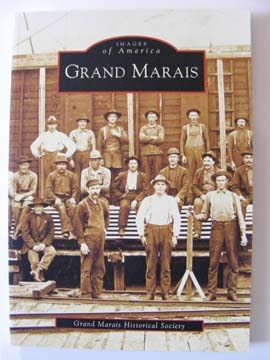
Yes, it’s another day of potpourri rather than an extended theme, and I’ll open with the news that Grand Marais, Michigan, our favorite little town in the Upper Peninsula, is the winner of a Reader’s Digest contest in which anyone could vote, and anyone could vote any number of times. Given that latitude and the monetary incentive, little Grand Marais turned up the heat and beat the drums and managed to accumulate 1,281,724 votes--not bad for a town with a population of 350, eh? The good news is that the town will receive $40,000 for the civic project of their choice. The not-quite-as-good news is that estimated costs for needed work on the harbor run into the millions. Anyone have grant money available for a good Up North cause? Harbors of refuge are few and far between on Lake Superior. A book on Grand Marais published by Arcadia in their “Images of America” service is available at Dog Ears Books, for those who want to explore from the comfort of an easy chair until snowmobile season gives way to black fly season. GM, you know I’m teasing! You know I love you dearly!


Seeds of Dreams

Indeed, it is that time of year, the time when a northern gardener’s thoughts turn to spring and the planting of this year’s garden. It will be many weeks until the soil is clear of snow and ready to be turned, and I never plant anything “tender,” such as tomato plants, outside until Memorial Day, no matter how warm the weather in May, but gardens are made as much of faith and hope as of sweat and toil, and before the time for hard labor arrives it’s glorious to revel in seed catalogs like these gorgeous beauties!

When I take a break from the catalogs, I turn to books, and one I’m discovering for the first time this year (a “classic” in its field, I’m told by those who are way ahead of me) is Suzanne Ashworth’s Seed to Seed: Seed Saving and Growing Techniques for Vegetable Gardeners. General chapters begin the book: “Botanical Classifications”; “Pollination and Flower Structure”; “Maintaining Varietal Purity”; “Seed Cleaning Methods”; and “Seed Storage Techniques.” I should say, perhaps, though the subtitle already said as much, that this book is not a technical treatise for botanists but is a truly practical guide. Where in your home will you find a spot that provides “constant warmth at a specific temperature”? Ashworth suggests the top of a refrigerator, warning against trying to germinate seeds from the Solanaceae family (tomatoes, eggplants, peppers) near a gas stove or water heater, as natural gas can inhibit germination. Who would have known or guessed that? Germination rates over years of storage for different vegetable seeds is another example of a handy tip. For example, half of the onion seeds you save, if properly dried and stored, will be viable two years later.

The bulk of the pages of Seed to Seed deal not with generalities but with specifics—families and species of vegetables, the families arranged alphabetically, beginning with Amaryllidaceae, the onions, leeks and chives, and proceeding through Valerianaceae, Indian corn salad, with all your common favorites in between and a few you might never have tried before. For instance, I’m keen on attempting to grow okra this year (“Okra seeds will maintain 50% germination for five years when stored under ideal conditions”), and while I knew the plant came from West Africa, I am surprised and oddly delighted to see that it is a member of the Malvacea family, a relative of the humble and lovely old-fashioned farm hollyhock.

Supplementing my garden, whatever I end up planting and growing, will be the summer farm market in Northport, and a book to help me with new ideas for the tables will be Fast, Fresh & Green: More than 90 Delicious Recipes for Veggie Lovers, by Susie Middleton. Oh, boy, sweet potato fries!!!

Mark Twain’s Meanderings

First, my confession: I’m not a huge fan of Mark Twain. When I finally got around to reading Huckleberry Finn, I was astounded and dismayed by the last few chapters of the book and the way the whole story fell apart. It reminded me of movies where the people making them started with a good idea and then didn’t know how to wrap it up. I mentioned here in the blog a while back that David and I were reading Life on the Mississippi at bedtime. For quite a while we were thoroughly engrossed and entertained; disappointment came when the narrative (to use the word loosely) jumped a large chunk of years, skipping from the author’s days as a pilot to a later pleasure trip he made down the river with a friend. Those later chapters weren’t nearly as good as the ones that had gone before.

Now a review by Andrew Delbanco in the New York Review of Books of the new Twain autobiography (the first of three volumes came out this winter) confirms my feeling about Twain’s writing, while offering the reviewer’s positive assessment of what he calls “incoherence” in Twain’s books. Delbanco quotes from a 1895 essay by Twain, “How to Tell a Story,” in which the author admits (boasts?) that “to string incongruities and absurdities together in a wandering and purposeless way” is his way of going about the task. Well, that explains that, doesn’t it? (Does it?)

I was particularly struck by Twain’s complaints about writing, as opposed to talking, which was his real talent. Another passage quoting the famous story-teller was this:
“With pen in the hand,” he said, “the narrative stream is a canal: it moves slowly, smoothly, decorously, sleepily, it has no blemish except that it is all blemish. It is a little too literary, too prim, too nice.”

What would Mark Twain have to say about writing on a laptop computer, with AutoFormat and spelling and grammar checking programs second-guessing the writer at every turn, all this in addition to the neatness of typeface on a screen, which seems to shout at the writer to produce finished, blemish-free prose or poetry? On the other hand, the speed of typing on a keyboard (as evidenced by sloppy and/or fiery, spontaneous e-mails from friends who hit “Send” in the heat of emotion without saving to a “Draft” folder for later, calmer revision) would seem to bring writing closer to speech, and thus closer to the “wandering and purposeless” style, the unpolished spontaneity favored by Twain.

So here’s one question for today: Is the computer keyboard or the yellow pad and pen more likely to prime the writing pump and make a story flow?

Did Reading Change Her Life? Yours? Mine?

Going through boxes under my desk at home (same place I found the treasure box of postcards), I ran across a book loaned to me by a friend with a “Please return” Post-It note inside. The book was How Reading Changed My Life, by Anna Quindlen. It’s a very small book, and I enjoyed reading it but commented to David that I didn’t see how reading had changed the author’s life at all: She began as a reader and has remained a reader, to the extent that she prefers reading to all other activities, including travel and outdoor recreation. (Hmmm, always? I’m a book-lover but can’t go that far.) What I want to get into today, however briefly, is Quindlen’s speculation that women read differently from men, men for information and women for “connection,” and this, she thinks, explains why so many women are in book clubs, while so few men are. Do women more often than men share books with friends? Is reading more often part of a basis for friendship between women than it is constitutive of friendship between men? My own experience is that we readers, male or female, often form relationships with other readers, and these relationships often involve the sharing of books, but I don’t see the gender difference Quindlen finds. How do you see it? Sarah awaits your comments!