Search This Blog

Showing posts with label gender. Show all posts

Saturday, August 28, 2021

Interim Thoughts: The Eyes and Hearts of Women

With women writer friends at our annual luncheon
 

[I’m calling today’s post “Interim Thoughts” because it’s only been four days, not a full week or more, since I last posted, this summer having settled down into a once-a-week blogging routine.]


Only on the morning of August 27, very early, with the sky still dark outside my window, did I learn that August 23 had been the official Mari Sandoz Day and that, in my ignorance, I had completely missed it. Four days late already, and 67 years after Nebraska’s governor first proclaimed the day, I read about the date in a chronology of the author’s life at the end of a University of Nebraska edition of Sandhill Sundays and Other Recollections, by Mari Sandoz, memoir essays reaching back to her childhood days in the sandhills before she learned English (although born in Nebraska, her immigrant parents still spoke the French and English of their native Switzerland) and extending to the apartment she rented in Greenwich Village and occupied periodically for a number of years, beginning at a time when the Village was still occupied primarily by Italian immigrants.


Of the many volumes of fiction and history written over her lifetime, the two books for which Mari Sandoz is best known today are biographies, Crazy Horse: The Strange Man of the Oglalas and Old Jules, the story of her father’s life. Of the latter biography, she later wrote that


…it gradually dawned on me that here was a character who embodied not only his own strengths and weaknesses but those of all humanity – that his struggles were universal struggles and his defeats at the hands of his environment and his own insufficiencies were those of mankind; his tenacious clinging to his dream the symbol of man’s undying hope that over the next hill he will find the green pastures of his desire.

        - Mari Sandoz 


I read her Crazy Horse biography only last year but need to read it again now to answer my new question, which is if Sandoz also saw the struggles and defeats, hopes and insufficiencies of Crazy Horse as “universal.” How could he have pursued his desire – which would not have been his alone but that of his people – “over the next hill”? And after all, Old Jules was not one of those restless Westerners continually on the move, leaving one region for the next until stopped by the Pacific Ocean. He put down roots. I probably need to read Old Jules again, too.


Another, more general but personal realization came to me on Friday morning: without intentionally seeking out books by women for my reading pleasure this year, I have been discovering books by women, a dizzying variety of fiction and nonfiction, that seem to have sought me out: novels and a memoir by Penelope Lively; Barbara Olenyk Morrow’s book about the life and work of Gene Stratton-Porter; murder mysteries set in Cochise County, Arizona, by J. A. Jance; a re-reading of Zora Neale Hurston’s Their Eyes Were Watching God; Soon-Young Yoon’s experiences working with poor and indigenous women around the world; and numerous other books of both fiction and nonfiction.


So now I have another question, more general than Mari Sandoz and Crazy Horse, and it harks back to Mary Helen Washington’s study, The Other Blacklist, in which she notes that Black artists, writers, poets in the 1950s were encouraged to stop writing of their experience as Black men and women and write instead from a “universal” perspective, leaving race aside. My question is this: where is the “universal” to be found, other than in the particular? Each of us has only our own experience. Zora Neale Hurston could only write as a Black American woman, because that is what she was. Mari Sandoz could only tell her life stories from her own experience, that of a child of immigrants growing up during pioneer days on the Great Plains, and her interest in historical subjects was also shaped by her living in that place and at that time. So do these women’s writings fail somehow to be “universal”? Surely they are not writings only for women readers!


Shakespeare, Henry James, Ernest Hemingway, Langston Hughes, Marcel Proust – all of them, too, had the experiences they had because of where they were born, the era in which they lived, and how they were seen and treated by others. Their experiences were particular to them, and their writings were thus saturated by that particularity, whether or not it is obvious to all their readers. I am not saying these men failed to discover and write of universal truths – hardly! -- only that the universal is always and only to be found, as they found it themselves, in particulars, in the infinite variety of our endlessly repetitive human experiences. 


From the foregoing you may correctly conclude that I am not a Platonist. Peasy is not a Platonist, either. For him, life is all about discovering the ephemeral universe of smells, about making the most of each fleeting moment. 


Would you disagree? And if you say we need larger goals, that we should work to better our world, I ask you, what time do you have to work for those goals except right now? The present moment is the time we have, even as it continually slips away from us.


Sunday, May 9, 2021

Is This a "Man’s World"?


What is it about the book business, anyway, Moon wonders. Sometimes it seems like nobody on any level of it makes any money. Maybe if you’re Random House and you can figure out how to publish nobody but James A. Michener, you can make a little money. Everybody else picks up peanuts.


Why do they do it? he wonders. But he knows why.


-      John Dunning, The Bookman’s Wake


Only fitting, I reflected, to find myself reading a mystery starring a rare book dealer in a copy I scored from a ten-cent table of used books. Not a signed copy, not even a first printing, but quite a clean, decent later printing of the hardcover edition, a volume I’m sure Cliff Janeway, fictional former cop-turned-bookman, would have picked up himself for resale. Janeway is also a reader, and the quotes and references to works of literature in the stories' dialogue are part of the fun of this series.


I was about halfway through reading The Bookman's Wake when, as I turned a page, a slip of paper fell out. No, it was not a $100 bill. Not even a dollar bill. Twenty-eight years a bookseller come this summer, I have yet to find money in any book that has come my way, which seems ironic, considering how often I used to hide five-dollar bills in my own books back in a previous (pre-graduate school) life. I would move my hidden cash around so often -- in my concern that the book holding the money was far too attractive and obvious, certainly the first item a book-loving burglar (in my vivid imagination) would pull off the shelf to inspect! -- that I would lose track of it, which made a subsequent accidental finding seem like manna from heaven, an unexpected gift. A harmless eccentricity left behind but occasionally fondly recalled when I find random bits of paper other people have left behind in used books I buy. -- Are you curious? Do you wonder? Grocery lists and airline boarding passes are a couple of the most common such items. 


The slip of paper from the Dunning book made me smile as I read the lines on it made by an old dot matrix printer, words that indicated a purchase made by Mary Ann, of the former Mary Ann’s Mostly Books in Benson, Arizona, the book ordered directly from the publisher when new, its cover price $21. Two Benson bookstores we loved to visit in former years are both gone now. We found retired bookseller Lenore volunteering at the Friends of the Library bookstore, however, and learned from her that Mary Ann had moved her base of operations to Apache Junction, at the urging of (and, I hope, with a lot of help from) her children. In any case, I remember both shops fondly and enjoy my reading all the more, knowing the book came by way of Mary Ann.


- B O O K M A N -


The word ‘bookman’ (from the Dunning’s title) is interesting. Merriam-Webster defines it broadly as “a person who has a love of books and especially of reading” or “a person who is involved in the writing, publishing, and selling of books.” Dictionary.com says a bookman is “a studious or learned man; a scholar” or “a person whose occupation is selling or publishing books.” (Parenthetical note: note ‘person,’ no gender specified three times, ‘man’ once.) In the world of John Dunning and Cliff Janeway, an actual, real-life world inhabited by many world-wide, ‘bookman’ is understood more narrowly. It implies a person (man or woman) working in the secondhand book trade, especially one specializing in rare books, a dealer (occasionally a bookstore employee) with an emphasis on and knowledge of contents as well as physical attributes, as well as a deep love of same


Anyone can be a bookseller. To be called a bookman, especially by a bookman, is a compliment, an acknowledgement. When a bookman friend – another woman – told me I was a “real bookman,” I glowed!


‘Bookwoman’ is heard now and then but somehow seems to imply more what the dictionaries give as the definition rather than what we in the trade understand by ‘bookman.’ A big reader. Why is that? Is it the way 'poet' sounds serious and 'poetess' brings to mind a wannabe? No wonder women in theatre and film want to be called, simply, actorsI usually call myself simply a bookseller and leave questions of expertise and gender to others. Today, though, I’m thinking about those questions.


In The Postmistress, a novel that was one focus of my most recent post, the woman in charge of the little post office is actually called the postmaster. The character notes at one point in the novel, and the author reiterates in her afterword, that U.S. postal regulations give the position title always and only as postmaster. This fact points silently to a time in American history when having a woman in the position was unthinkable and perhaps not even recognized as legal. One female postmaster in Dos Cabezas, Arizona, did the work of the job while her husband held the official title, I have read. That’s just how it was. I wonder if the husband, the nominal postmaster, ever made an appearance behind the counter.


No post office here any more


If either my artist husband or my bookstore volunteer is in the shop at the same time I am there, and someone comes in for the first time with a question for the owner, the question is invariably directed to the man. It doesn’t matter who is sitting at the desk. It doesn’t matter what we are wearing. One dear friend of mine who suffered this indignity for years finally began to do a slow burn when her husband, jokingly, would say to the questioner, “Perhaps my assistant can help you,” the assistant being the actually bookseller – and, in her case, definitely a bookman!


But I’ve had to learn to let that stuff slide. It will never end, and there’s no point in spending the precious days of my life resenting ignorant, thoughtless assumptions over and over. 


In MY bookstore!


Whether or not ours is objectively a “man’s world” (and who in the world could take an objective position on the question?), I try to live as much as possible in my own world. I was quite entertained one time when a male friend was telling me about how he could “lose himself” in nature, on a river or in the woods, and added for my benefit that he didn’t think women ever had such experiences! "And you know that by comparing your experiences as a man with the experiences you’ve had as a woman?” I prodded gently, whereupon he had the good grace to laugh.


My darlings when they were only yearlings


Here are a few aspects of my world. The actual owners of a pair of two-year-old horses, half-brother and -sister, have no idea that I think of those horses on the edge of Willcox, Arizona, as mine. People driving back and forth on I-10 certainly do not recognize the tree I call my tree as mine. Back in northern Michigan, there are many little rural corners and stretches for which I feel what I must admit is a proprietary kind of love. But this is not a sense of ownership as the law would understand it. These are things that have become parts of my soul. I lose myself in them.


And so yes, when I am lost in a book quest or examination of an exciting book find, just as when I am out exploring the morning world with my dog, I am not doing it as a woman but simply as myself. This is one of the glories of being lost in one’s work or in the natural world: other people’s presumptions, assumptions, expectations, and judgments fall out of consciousness. Self-consciousness evaporates.


Michigan insolite!

Off-road Arizona


Why, though, do I not call myself a ‘bookman’? Out of modesty? In part. But also out of honesty. Whatever the field of my various life endeavors – music, philosophy, books – I have never been drawn to specialization. It is the old question of depth vs. breadth, and time and time again I have chosen the latter, content to be one of life’s generalists.


As for whose world ours is, each of us is the center of our experience, and our experiences and emotions come to us subjectively, not comparatively. So I make no apology for living and working and feeling and writing out of my own little world. I say, anyone who claims to be doing otherwise is self-deluded or seeking to delude.


Outdoors with dog or indoors with books? I could not choose one over the other. Fortunately, the two come together in me. Moreover – and miraculously -- my world and the Artist’s world exist side by side and overlap! Lucky, lucky, lucky both of us!


Saturday, February 28, 2015

The Ongoing Motor Home Debate: Man vs. Woman!


[Note to those looking for action and adventure: This post is all talk. For A&A, click here for a very exciting day in Willcox and here for sandhill cranes and my first trip to Mexico.]

David is attracted to the big American vehicles known as motor homes. I am not. He dreams of traveling in one, and his dream is my nightmare. He is drawn -- and I pull back as he tries to pull me forward. This struggle has been going on for years.

Almost every long-married couple (if your experience is different, please share it with me!) has recurrent, never-resolved debates, and some of them make no difference whatsoever. An example of such a trivial debate is ours over spotted horses: I love an Apaloosa, and David wouldn’t have one as a gift. To him, only a solid color (preferably black but definitely dark) is acceptable in a horse. I love a dapple myself. I also love a buckskin. I like black horses, too – just not exclusively. The bottom line, however, is that it is highly unlikely we are going to become horse owners at this stage in our lives. Nothing is riding on a decision. No decision is called for.

I wish I could say the same about the motor home debate, but I fear it could be otherwise.

Recently I had a couple of new insights into our different opinions. The insights hardly promise to resolve the differences, but they’re interesting, nonetheless – at least to me.

Last summer David spotted a motor home he considered an ideal size (which I saw as alarmingly, dismayingly enormous), and he began dreaming out loud about how wonderful it would be to take on the road. My reaction was: “It’s so big we would never be able to explore dirt roads or two-tracks. We’d be on expressways all the time (and I hate expressways). Furthermore, it’s so complicated, like hauling a house around, that you would be completely absorbed in driving and worrying about every aspect of the vehicle, and you wouldn’t pay any attention to me at all.” I summed up my view by telling him, “It would be, literally, hell on wheels!” He laughed and was unconvinced, but he did see, I think, where I was coming from. Whenever a car we’re in starts making a strange noise, forget conversation! How would it be, then, with all the potential for problems in a motor home?

Okay, now forward to this winter. A friend who came to visit us here in southeast Arizona is traveling this season in a small motor home. Her husband is back home in Michigan. She’s traveling with her two cats – and having the time of her life! David saw her vehicle as too small for us, and she admitted that when her husband joins her on the road from time to time, a larger motor home would suit them better.

She and David got into a long discussion on the merits of motor home travel, in general. He asked what it cost to stay places overnight. She prefers state parks to RV “campgrounds” (the scare quotes are mine, as you could probably guess; most people use the term with no irony intended) because the state parks are cheaper, but they’re still not cheap. David asked about mileage. Not great. My observation then was that considering the overnight fees and gas consumption, traveling in a motor home wasn’t much cheaper than staying in motels.

“But you can make your own meals in your motor home, instead of eating in restaurants,” my friend pointed out. She and David also raved about the convenience of being to “pull over and take a nap” whenever they got tired.

“A man convinced against his will/is of the same opinion still,” wrote Ogden Nash, and the same is true of a woman. But I was not even convinced. When I travel, I like eating in restaurants and not having to shop, cook, and do dishes! I like staying in a motel where clean sheets and towels are provided, and the bed is immaculately made and the bathroom has been cleaned by someone other than me!

The next day I accompanied our friend, in her vehicle, to a big truck stop out by the expressway, where she could “dump.” Need I say more? Offsetting all the “conveniences” of taking a home with you on the road, as I see it, is that you also take along all the concerns of having a home with you on the road. Locking such a vehicle involves much more than a click. Powering and fueling and monitoring all its systems is quite a job.

I would never want to be responsible for all the complex systems of such a mode of travel -- and, of course, I would not be if David were the driver and expedition leader, but then, neither would I have a relatively carefree travel companion, because, as I pointed out to him last winter, he would be constantly monitoring the house we were hauling around behind us. It’s no simple turtle shell! If it were not making some strange noise, he would be listening to make sure there was no strange noise. The concerns of traveling in a car would be multiplied and supersized.

Size – that's another issue.

Whenever my attention is called to a motor home, my first response is to its size. I tell David I would be embarrassed to be a passenger in one of the behemoths we see on the road. Besides the fuel expense and the mental energy one of those things would demand (detracting from my enjoyment of new scenery and regional culture), the sheer look of excess repels me. Our friend’s current vehicle is not like that. It’s modest in size and looks like something I could drive (if I had to). But David considers it “too small,” and Karen agrees that it’s too small when she and her husband are living in it together. But if it’s something I might have to drive, a pickup with topper or van with rear extension is as much as I want to consider.

We’re still stuck, aren’t we? Why? Is there any possible resolution? Maybe not, but that’s probably because we are trying to compare apples and oranges, and maybe recognizing that will at least shed some light on the debate.

Brian Wansink, a researcher into eating habits, writes in his book Mindless Eating: Why We Eat More Than We Think about the differences between what men and women consider “comfort food.” For men, a warm, home-cooked casserole or meat-and-potatoes meal is “comfort food,” while the phrase conjures up in a woman’s mind images of ice cream, candy, and snacks. Why? Because they have different associations with the word “comfort” and with the foods they put in the category. The foods men put in the comfort food category are those that make them feel taken care of. Is it any surprise that they imagine a woman taking care of them? And that where they see “comfort,” the woman sees “work”? Women’s comfort foods are those that don’t require work: they are “hassle-free.”

Men’s comfort: Be waited on!

Women’s comfort: Put your feet up and relax!

In the motor home debate, the key issue might be defined as “freedom,” and here again, what David sees as freedom, I see as work. Someone would be fixing those meals, doing that laundry, cleaning that vehicle. Not to mention that someone elsehe – would be focused on the smooth running of the vehicle rather than on his companion and the world around. This, of course, is my perspective. The “freedom” touted by advocates, my husband included, looks to me like the complete opposite for both of us.

Can’t we stop and take naps in the car? I could relax pretty well with my feet up on the dashboard. How about you?

Thursday, February 10, 2011

Grand Marais; Seed Time; Mark Twain; Reading and Gender

Grand Marais, Michigan

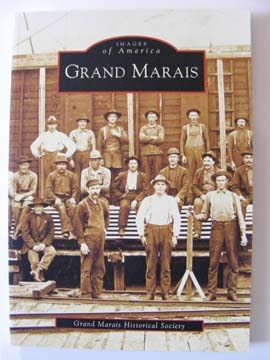
Yes, it’s another day of potpourri rather than an extended theme, and I’ll open with the news that Grand Marais, Michigan, our favorite little town in the Upper Peninsula, is the winner of a Reader’s Digest contest in which anyone could vote, and anyone could vote any number of times. Given that latitude and the monetary incentive, little Grand Marais turned up the heat and beat the drums and managed to accumulate 1,281,724 votes--not bad for a town with a population of 350, eh? The good news is that the town will receive $40,000 for the civic project of their choice. The not-quite-as-good news is that estimated costs for needed work on the harbor run into the millions. Anyone have grant money available for a good Up North cause? Harbors of refuge are few and far between on Lake Superior. A book on Grand Marais published by Arcadia in their “Images of America” service is available at Dog Ears Books, for those who want to explore from the comfort of an easy chair until snowmobile season gives way to black fly season. GM, you know I’m teasing! You know I love you dearly!


Seeds of Dreams

Indeed, it is that time of year, the time when a northern gardener’s thoughts turn to spring and the planting of this year’s garden. It will be many weeks until the soil is clear of snow and ready to be turned, and I never plant anything “tender,” such as tomato plants, outside until Memorial Day, no matter how warm the weather in May, but gardens are made as much of faith and hope as of sweat and toil, and before the time for hard labor arrives it’s glorious to revel in seed catalogs like these gorgeous beauties!

When I take a break from the catalogs, I turn to books, and one I’m discovering for the first time this year (a “classic” in its field, I’m told by those who are way ahead of me) is Suzanne Ashworth’s Seed to Seed: Seed Saving and Growing Techniques for Vegetable Gardeners. General chapters begin the book: “Botanical Classifications”; “Pollination and Flower Structure”; “Maintaining Varietal Purity”; “Seed Cleaning Methods”; and “Seed Storage Techniques.” I should say, perhaps, though the subtitle already said as much, that this book is not a technical treatise for botanists but is a truly practical guide. Where in your home will you find a spot that provides “constant warmth at a specific temperature”? Ashworth suggests the top of a refrigerator, warning against trying to germinate seeds from the Solanaceae family (tomatoes, eggplants, peppers) near a gas stove or water heater, as natural gas can inhibit germination. Who would have known or guessed that? Germination rates over years of storage for different vegetable seeds is another example of a handy tip. For example, half of the onion seeds you save, if properly dried and stored, will be viable two years later.

The bulk of the pages of Seed to Seed deal not with generalities but with specifics—families and species of vegetables, the families arranged alphabetically, beginning with Amaryllidaceae, the onions, leeks and chives, and proceeding through Valerianaceae, Indian corn salad, with all your common favorites in between and a few you might never have tried before. For instance, I’m keen on attempting to grow okra this year (“Okra seeds will maintain 50% germination for five years when stored under ideal conditions”), and while I knew the plant came from West Africa, I am surprised and oddly delighted to see that it is a member of the Malvacea family, a relative of the humble and lovely old-fashioned farm hollyhock.

Supplementing my garden, whatever I end up planting and growing, will be the summer farm market in Northport, and a book to help me with new ideas for the tables will be Fast, Fresh & Green: More than 90 Delicious Recipes for Veggie Lovers, by Susie Middleton. Oh, boy, sweet potato fries!!!

Mark Twain’s Meanderings

First, my confession: I’m not a huge fan of Mark Twain. When I finally got around to reading Huckleberry Finn, I was astounded and dismayed by the last few chapters of the book and the way the whole story fell apart. It reminded me of movies where the people making them started with a good idea and then didn’t know how to wrap it up. I mentioned here in the blog a while back that David and I were reading Life on the Mississippi at bedtime. For quite a while we were thoroughly engrossed and entertained; disappointment came when the narrative (to use the word loosely) jumped a large chunk of years, skipping from the author’s days as a pilot to a later pleasure trip he made down the river with a friend. Those later chapters weren’t nearly as good as the ones that had gone before.

Now a review by Andrew Delbanco in the New York Review of Books of the new Twain autobiography (the first of three volumes came out this winter) confirms my feeling about Twain’s writing, while offering the reviewer’s positive assessment of what he calls “incoherence” in Twain’s books. Delbanco quotes from a 1895 essay by Twain, “How to Tell a Story,” in which the author admits (boasts?) that “to string incongruities and absurdities together in a wandering and purposeless way” is his way of going about the task. Well, that explains that, doesn’t it? (Does it?)

I was particularly struck by Twain’s complaints about writing, as opposed to talking, which was his real talent. Another passage quoting the famous story-teller was this:
“With pen in the hand,” he said, “the narrative stream is a canal: it moves slowly, smoothly, decorously, sleepily, it has no blemish except that it is all blemish. It is a little too literary, too prim, too nice.”

What would Mark Twain have to say about writing on a laptop computer, with AutoFormat and spelling and grammar checking programs second-guessing the writer at every turn, all this in addition to the neatness of typeface on a screen, which seems to shout at the writer to produce finished, blemish-free prose or poetry? On the other hand, the speed of typing on a keyboard (as evidenced by sloppy and/or fiery, spontaneous e-mails from friends who hit “Send” in the heat of emotion without saving to a “Draft” folder for later, calmer revision) would seem to bring writing closer to speech, and thus closer to the “wandering and purposeless” style, the unpolished spontaneity favored by Twain.

So here’s one question for today: Is the computer keyboard or the yellow pad and pen more likely to prime the writing pump and make a story flow?

Did Reading Change Her Life? Yours? Mine?

Going through boxes under my desk at home (same place I found the treasure box of postcards), I ran across a book loaned to me by a friend with a “Please return” Post-It note inside. The book was How Reading Changed My Life, by Anna Quindlen. It’s a very small book, and I enjoyed reading it but commented to David that I didn’t see how reading had changed the author’s life at all: She began as a reader and has remained a reader, to the extent that she prefers reading to all other activities, including travel and outdoor recreation. (Hmmm, always? I’m a book-lover but can’t go that far.) What I want to get into today, however briefly, is Quindlen’s speculation that women read differently from men, men for information and women for “connection,” and this, she thinks, explains why so many women are in book clubs, while so few men are. Do women more often than men share books with friends? Is reading more often part of a basis for friendship between women than it is constitutive of friendship between men? My own experience is that we readers, male or female, often form relationships with other readers, and these relationships often involve the sharing of books, but I don’t see the gender difference Quindlen finds. How do you see it? Sarah awaits your comments!