Search This Blog

Wednesday, September 4, 2019

The Perfect Moment Is a Soap Bubble

A year has gone by already!
Our little great-grandsons are normal, healthy, active children and love to run after soap bubbles floating on the breeze. This photo, though, is over a year old. The bubbles in the picture are long gone, the boys much grown, talking up a storm, running even faster this year.


Like the realization of happiness, the experience of perfection is ephemeral but no less precious for its will-o’-the-wisp nature. I started thinking about this in the wee hours of the morning, lying awake listening to my partner, the Artist, breathing regularly in his sleep beside me and our dog, our darling old Sarah, breathing quietly on the floor next to our bed, all of us alive and safe and together in the dark. We are aging, all three of us but Sarah fastest of all (although we assume she is oblivious to the fact), and so awareness of our time together is a frequent topic of conversation these days. On Labor Day, I gave Sarah a bath, then washed my hair, and afterward the two of us (dog and I) spent much of the remaining afternoon outdoors, relaxing in the sun while the Artist worked nearby and came and went. The warmth and light of the day were like a benediction. Later the whole pack rode in the car up to Christmas Cove to watch Lake Michigan waves crash against the shore. 

Day arrives
Waves crash

Day departs
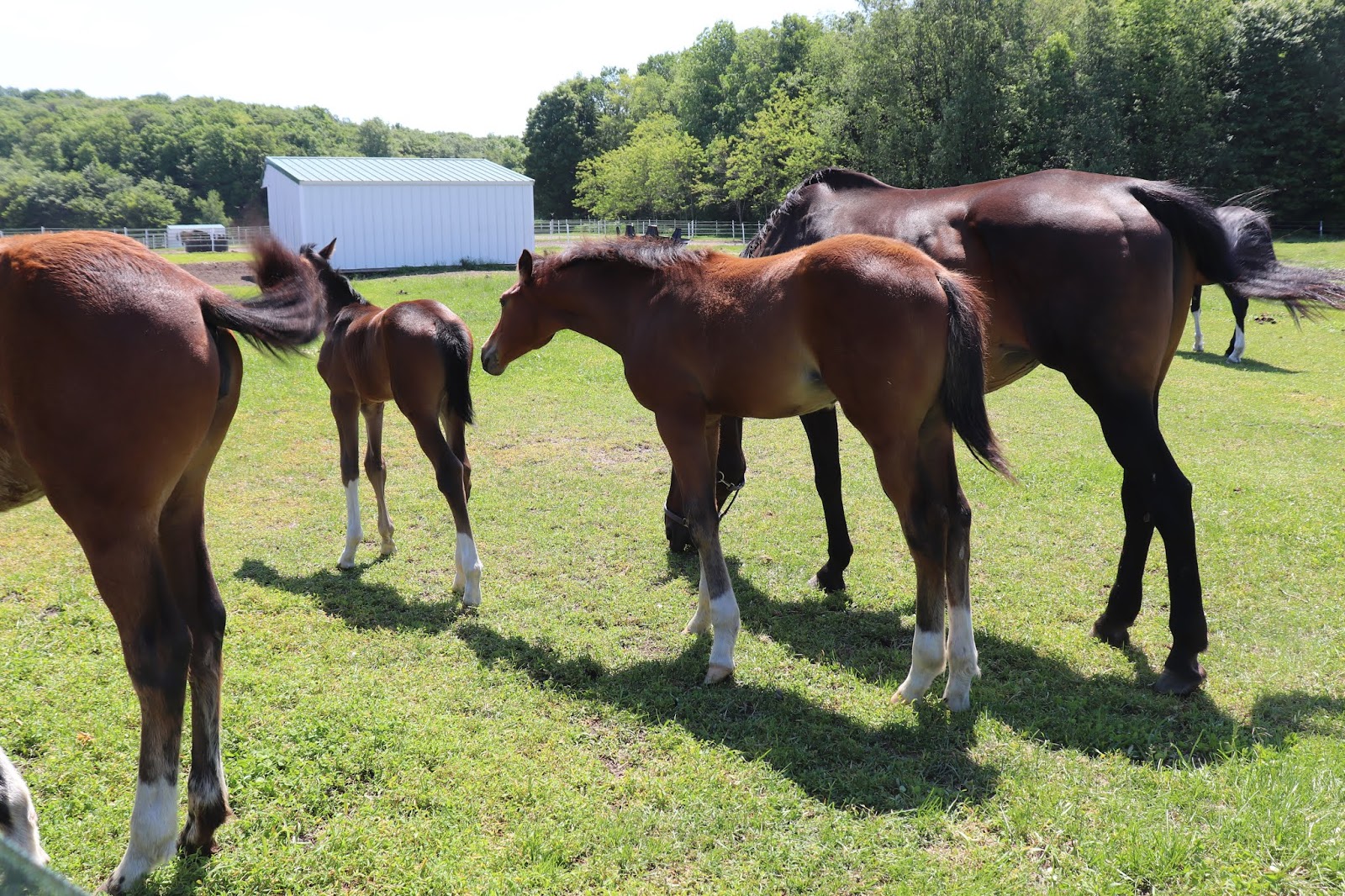
There have been many lovely moments in recent months, many light-filled, memorable, heart-stopping scenes along life’s way. There was that sandhill crane on the back road one morning and what was probably a once-in-a-lifetime sighting of a fisher right in my own yard. There were wonderful hours of wandering back roads of woods and waters in Barry County with my son last spring. The annual but never dull parade of flowers from trillium and marsh marigold to Joe-Pyeweed and goldenrod. Sunrises, sunsets, clouds, precious visits to mares with this year’s adorable foals, peaceful evenings on the porch, and the sight of a late friend’s face in her daughter’s smile. 


Whenever I’m driving to Northport or home at the end of the day, my mind is usually perusing a mental calendar and working down a lengthy to-do list. When I stop, however, and turn off the engine and get out of the car, if only long enough to frame one particular photograph but especially when Sarah and I can take our time, if only for ten minutes of rambling, then my breath slows and deepens, my mind clears, and my senses awake to the nuances of my surroundings. 

Nothing lasts forever
As I reflect on moments of awareness and happiness, I continue to think also of the nature of the soap bubble. The way it drifts and wobbles and catches the light and lets us see the world through it. The way we can sometimes let one alight on our skin for a moment or two. The inevitable pop! If you are the kind of person who wants all the scientific facts, you may want to follow this link and read about evaporation and surface tension. If you’re more like me and see metaphors everywhere you look, you will simply rejoice in the fragile, momentary loveliness, maybe sigh over its disappearance but, still, be glad you were there to see it, very glad you had your eyes open.


Tuesday, September 3, 2019

Taking Stock — and Putting Stock in Truth and Books


Although winter is still far in the future, there is a rich, fecund aroma of autumn in the September air, and the inevitable lull following the Labor Day weekend seems like a good time to take stock (before "going forward," as it seems we must say these days, adding that phrase to anything having to do with the future). So here is my very general report on the 2019 season for my life, my bookstore, my authors, and for bookstores in general in the United States. How’s that for biting off more than anyone will feel like chewing on a rainy Tuesday morning?


Our pack of three got through the busy summer without catastrophes of any kind. We kept up (if barely) with laundry and mowing grass and got enough sleep most nights that morning’s arrival did not bring excessive dismay. June, you may recall, was cool and wet (that’s when the grass grew at jungle speed), July and August more summery but only rarely too warm. It was a beautiful summer, really. 


Old Sarah, now 84 in dog years, staggers a bit from time to time but can also still run like the wind and jump like a steeplechase champion. Her dog mom and dad — that’s me and the Artist — have slowed down, too, but then we don’t even try to keep up with the pace of former years. Visits from family and friends are less strenuous, because our plans for the time are less ambitious. Being together is enough.

It was a good season in the bookstore. Being closed on Sundays was a good decision, and opening at 10 a.m. most days, instead of the officially stated 11 a.m., worked out well, too. (No one minds when a business opens early.) Having TEA events (Thursday Evening Authors) every other week, for a total of five, was a manageable and successful plan that I’ll repeat in 2020. And taking credit and debit cards for the second year in a row was a life-saver both for my business and my customers.


My authors! I would be nowhere and nothing without them! Here are the nine top-selling titles for August at Dog Ears Books:
  1. From the Place of the Gathering Light, by Kathleen Stocking
  2. Beautiful Music, by Michael Zadoorian
  3. Downstream From Here, by Charles Eisendrath
  4. The Leisure Seeker, by Michael Zadoorian
  5. Letters from the Leelanau, by Kathleen Stocking
(Do you see some repetition of author names in the list so far? And we’re not done yet.)

6.  Dune Dragons, by Gretchen Rose, tied with Lost Tiki Palaces of Detroit, by Michael Zadoorian
7.  The Marsh King’s Daughter, by Karen Dionne
8.  Lake Michigan Rock Picker’s Guide, by Bruce Mueller and Kevin Gauthier
9.  And in a 5-way tie for ninth place we have:
Even in Darkness, by Barbara Stark-Nemon
Jim Harrison: The Essential Poems
Leelanau by Kayak, by Jon R. Constant
Long Arc of the Universe, by Kathleen Stocking
and
Trails of M-22, BY Jim DuFresne

I’ll not continue to tenth place, because there are far too many in that position to list.


And now for the general state of indie bookstores across the United States, for those readers who may be interested. 

I had to do some digging on the question, and what prompted my quest was yet another wanderer one day last week bemoaning the disappearance of bookstores. His wife had given him a time limit of 10 minutes to look at books. He proclaimed that time constraint as he entered, along with his love of bookstores -- but then, instead of using his precious time to peruse the shelves, he came and planted himself in front of my desk and demanded to know: “How do you stay in business?” 

I really hate questions about business from curiosity-seekers! I love questions about books! I even welcome questions about other bookstores! But inquiring about the health of my business is like asking a cattleman how many cows he runs or querying an investor about the returns on her stock portfolio. (NYOB!) You’re here, in a bookstore! It’s open! The shelves are filled with books! I want to say, “If you truly love books, you won’t be able to keep your hands off them, and if you’re not interested in books, why did you come in at all?”

But back to his question: “How do you stay in business?”

My answer was brief and to the point: “I sell books.”

He then starts into a long “yes, but” routine about bookstores closing right and left, and I ask him where he lives, if he visits bookstores there, and if he buys books in those bookstores. He says he does. “Well, that’s how they stay in business,” I tell him.

Unfortunately for me, though, he happened in during a quiet afternoon lull and could not let go of his curiosity, so fixated on what he was convinced is the sad, sorry state of American bricks-and-mortar bookselling that he was blind to my treasure-filled shelves. Sigh! If my business were in decline — which it is not — he and his ilk would not be the cure!

But what how much evidence does he have for his belief? And what is the truth of this widespread belief, anyway, the claim I have heard so many times over the years and, yes, this past summer, also, that bookstores are vanishing from the American scene?

Each issue of my daily e-mail “Shelf Awareness” newsletter brings me news of various independent bookstores opening, moving, offered for sale, bought by new owners, and closing across the country. If I look beyond the newsletter, it’s fairly simple to find statistics on how many bookstores have closed during a certain time period, but I don’t find similar stats for the new bookstores that opened. What is the bottom line? Are we indie booksellers an endangered species, like the hawksbill sea turtle, and I just haven’t gotten word yet of my imminent demise? 

Here’s a surprise: There are more bookstores in the United States today than there were in the 1930s. When you stop to think about how much closer to home in general people shopped back then, that seems counterintuitive, which goes to show once again that what “makes sense” to us isn’t always how things are or ever were.

Next surprise: Between 2000 and 2007, over a thousand American bookstores closed their doors, for one reason or another. But between 2009 and 2015, the number of indies rose by 35%! 

Another surprise: Sales rose 9% in indie bookstores from 2017 to 2018. Who expected that back in 2007?

My view from the bookstore counter goes back now 26 years, and during the very first summer,1993, in the little shed right down Waukazoo Street (long gone now) from where I sit this morning, over and over I heard visitors to my little treasure island lament upon entry, “No one reads books any more!” Mind you, they were not referring to themselves but to people they took to be the majority of Americans. They, of course, did read, and that's why they were delighted to find a bookstore while on vacation. Some had very extensive private libraries  at home that held many more volumes than my then-tiny shop had on offer. But time and time again I heard the mournful refrain: “No one reads books any more!” 

Well, if that had been true in 1993 or if it had become true in any of the intervening years since, I would not still be a bookseller, because my business is not a hobby. There’s no secret trust fund behind it, paying expenses and buying inventory. What I told last week’s curiosity-seeker was my bottom-line truth: I stay in business by selling books.


Maybe we readers are tempted to think of bookstores as endangered and of books as disappearing because it seems to add value to what we love and allow us, as readers, to feel more special, perhaps even elite. I can kind of understand that, but at the same time I want to push back against it and object, albeit gently and lovingly, as follows: 

Dear friends, 

Personally written and illustrated, printed-on-paper, well-produced books are special, but it is not their scarcity that makes them precious. Books are part of our common human heritage, the earth’s history and cultures that have made us and continue to make us who we are. The more of us who share in that wealth, the richer we all are! Is that a paradox? Nonetheless, I believe it to be true. And you, my readers, my bookstore customers, are very special people, every single one of you! Thank you for another wonderful summer of books in Northport!
Love,
Pamela


Wednesday, August 28, 2019

Time, Youth, and Beauty


Young people seem not to know that they are going to get old, but older people know that they are not going to become young again. 
- Jim Harrison, Off to the Side: A Memoir
“Oh, to slow it all down!” writes a friend — but of course we can’t. Recent babies are already toddlers, schoolchildren are out of college and getting married and moving to Chicago, New York, Austin, and L.A. Sometimes we lose track of which acquaintances are still among the living, whereas close friends lost to the Reaper — always too soon! — remain in our everyday thoughts. 

If ever I did earlier in life (I can’t remember now), I certainly don’t envy the young any longer. The second half of the twentieth century strikes me as a satisfying time to have been alive in midwestern America, which is lucky, as I’ve never had a yen for time travel. One thing I think about often lately, though, is how my response to beauty has changed. In the presence of beauty I feel now, at the same time, both more detached and more joyful. There is no longer much of anything like desire in it and certainly nothing of envy. A beautiful young woman or handsome young man, like the wise face of an elder or a baby’s happy smile, simply makes me happy. And if in a particular face I catch glimpses of a beloved generation past, my cup overfloweth.

Our reading circle will be meeting next week to talk about Virginia Woolf’s Mrs. Dalloway and Michael Cunningham’s The Hours. One thing that struck me most forcibly about Woolf’s novel was that she seemed to present suicide as a response not to the unbearable pain of life but to its unbearable beauty. I’ll find out, I guess, if others read the book as I did. For the present, anyway, I cannot wish for a single moment’s lessening of beauty, nor can I imagine hurrying to take leave of it. Instead my heart cries out with my friend, “Oh, to slow it all down!”


Saturday, August 24, 2019

One Season Follows Another....


Canada geese are a-gathering already in flocks, though heaven knows most of them won’t be starting south any time soon. Do wild geese and turkeys seek the company of other adults once their season’s young are raised? Does the empty nest give them freedom to socialize with their own age group again, or is it simply preparation for the togetherness of those long flights to warmer climes?


Is it still summer now, as the end of August approaches? Mornings and evenings are crisp and cool, and every day, it seems, someone comes to say good-by, to urge us to have a “good winter,” and to assure us that they will see us again next summer. Some exclaim, “Oh, no!” when they hear the word “September” uttered, but the truth is that September can be summer-warm, just as June can be spring-cool or August fall-nippy. Not only do Michigan seasons interpenetrate (making it impossible to fix a particular, precise day when one ends and another begins), but they frequently vacillate, also, with uncertain inching or lurching back and forth. 

We see the passage of time more clearly when we focus on the length of light each day (diminishing now) and mark the progress of the seasons by where the sun appears and disappears each day on our eastern and western horizons. And our community social calendars are clearcut, also. The 4th of July, fly-in at Woolsey Airport, Northport Dog Parade, wine festivals in various venues, and Peshawbestown Pow-wow — all are behind us for 2019. Leelanau Uncaged, Northport’s wonderful street fair of art, dance, food, crafts, and music — that still lies ahead, of course. And between events past and events to come is Labor Day weekend, the latterday traditional bookend of summer, signaling the end of what began with Memorial Day, whatever the weather or calendar try to persuade us to believe.


Summer for this Northport bookseller, my 26th bookstore summer, was a good one. For the first time, I decided to keep the bookstore “dark” on Sundays, even in July. It was hard at first not to keep second-guessing the decision, haunted as I was at first by visions of disappointed tourists outside the shop, but the other side of the coin was the wonderful holiday feeling of carefree summer Sundays. Even if the Artist and I spent a good part of the day doing laundry and mowing grass, it felt good to be off the clock. On Sundays, we were on vacation!


Another good decision from the standpoint of sanity was to limit my Thursday Evening Author events to five and to schedule them every other week. Compared to having TEA every week for 11 consecutive weeks, as I did in 2018 for my bookstore’s 25th anniversary year — a frantic pace! — this year, with an off-week between every two events, I was much better able to relax and enjoy more fully each author’s visit, from Kalamazoo poet Jennifer Clark to Leelanau essayist and seer Kathleen Stocking, on to fiction with Detroit writers Dorene O’Brien and Michael Zadoorian, and wrapping up with former journalist and university prof Charles Eisendrath.

And now, with only one week of August remaining, even my reading has taken on a more relaxed feel. Our little reading circle, convened lo these many years ago now to wrestle together through James Joyce’s Ulysses, will get together post-Labor Day to discuss Virginia Woolf’s Mrs. Dalloway. Not altogether, I’m thinking as I read, a complete departure from Ulysses, both the unwinding of both stories limited to a single day, with characters’ stream-of-consciousness thoughts enriching the passing hours and swelling them to a fullness most of us experience in our own lives only infrequently. 


Saturday, August 17, 2019

Back From the Brink of Extinction

Schafer illustrations of "vanished" Michigan mammals
The fisher, also called pekan, is remarkable for its size — length about two feet, plus another foot of tail.
The quote above is from Michigan Wildlife Sketches: The Native Mammals of Michigan’s Forests, Fields and Marshes, with text by G.W. Bradt and illustrations by Charles E. Schafer, published in September 1972 by the Michigan Department of Natural Resources. It goes on to describe the fisher (Martes pennanti) as “just a big marten, living more on the ground than in the trees,” and weighing from eight up to eighteen pounds. Reading on, we learn that a fisher can and will attack a porcupine — successfully! That is impressive! But next, for someone seeking to make a positive identification of the stranger chased by her dog on an otherwise calm and quiet Sunday morning, come more discouraging words: 
Fishers formerly were found over most of Michigan, retreating before the axe and trap until they probably disappeared entirely, although there was the possibility a few stragglers might still be present in remote parts of the Upper Peninsula. 
In fact, however, a few fishers were imported from Minnesota and released in Ontonagon County in 1961, so might some have reached the lower peninsula by now? That is, are they "vanished," or aren't they? I asked around among friends, and several reported fisher sightings here in northern Leelanau Township in the last few years.

I consulted another reference, Michigan Mammals, by Rollin H. Baker, published in 1983 by Michigan State University. Baker notes that the fisher was reported in the late 1920s by the Michigan Department of Conservation as “nearly exterminated, with no chance to make a ‘comeback,” then as “practically extinct” in the department's 1933-34 report. Both trapping and habitat destruction combined to bring about the devastation of the Michigan fisher population until the U.S. Forest Service helped in the rehabilitation of their populations, desirable as a check on porcupine numbers.

Baker calls the fisher’s life “rather antisocial,” the males solitary except during courtship and mating. (Is the fisher’s life also “brutish and short”? One wonders.) “There is some evidence that fisher may associate with gray wolves” (scavenging wolf kills is the extent of their “associating”), but the fisher seems to have found interesting primarily for its role as a killer of porcupines:
Most noteworthy is the predator-prey association developed between the fisher and the porcupine. In fact, Powell and Brander (1977) suggest that their adaptive relationships have been environmentally selected in order that successful coexistence occurs, with depressed porcupine populations causing fisher to depend on other food sources….
Meat forms most of the diet of this “formidable … woodland carnivore.” And any mammal that can tackle and kill a porcupine definitely deserves to be called “formidable,” we can probably all agree.

Schafer shows fisher with its eye on a porcupine

My fisher sighting was startling, as the large, dark grey mammal streaked across open ground with my old dog in hot pursuit. (Luckily, Sarah obeys very well the “Leave it!” command. I would not want her tangling with a fisher! ) I didn’t get a good look at the stranger’s face but had time to take in the size of the animal and its beautiful coat — “thick, luxuriant, glossy but fairly coarse compared to that of the marten,” according to Baker. But no photograph! I was sitting quietly with morning coffee and book when fisher and dog hove into view. 

So there it was — my first and possibly only lifetime sighting of a fisher in the wild, exciting enough that a coyote in the driveway six days later seems barely worth mentioning. But now the Artist proposes a name for a character, one I envision as a meat-eating loner detective: Martin Fischer. I mean, we have to disguise the name a little bit, don’t we?

As for my old reference books, they may underestimate today's fisher population, but they still offer a wealth of information. 


Wednesday, August 14, 2019

Who Is Regional, and Who Is American?


She swung her horse about and cantered him to where Johnny waited. When she came up, he grinned at her. “What do you think?” 
“I think,” she said, “you would either die miserably in this place or learn to love it very much.” 
His face sobered and he searched her eyes. Then he smiled. “You won’t die.” 
She smiled back at him. “No, I won’t die.”
The lines above come near the end of Voyage to Santa Fe, by Janice Holt Giles, published in 1962. How have I missed this wonderful American novelist for so long, only now stumbling on her (serendipity again!) and looking forward eagerly to reading much more of her work? The headstone on her grave reads “Kentucky Writer,” although three of her novels have the great American West as their setting, and others are set in her native Arkansas. 

It’s odd, I think, that her Western novels did not break Giles out of the “regional” category. They did it for Jim Harrison. As long as his stories had Michigan for their setting, his work was considered regional, but when Jim and his novels moved out to Montana he became “American.” Is Montana more American than Michigan? The West more American than the Midwest? But even if the West is so all-American, so much more American than the Midwest (which I deny accept momentarily for the sake of argument), why did Voyage to Santa Fe, the story of an epic wagon train traveling from Three Forks in the Arkansas Territory to Santa Fe, a city in Mexico only just freed from Spanish dominion, not establish an already popular novelist as an American writer?

(Is it more difficult for a woman than a man to break out of the regional category? Knowing male writers who have chafed being geographically segregated, I’m not sure. The question was raised by one of my bookstore customers, who cited the case of Willa Cather, but we agreed that in recent decades that writer’s work has become much more highly regarded and widely known.) 

New York, Boston, Baltimore … Los Angeles, San Francisco, Seattle … New Orleans, Savannah — among American cities, these have their shining places in national literature, while the Midwest and Great Plains seem, with the exception of Chicago, to present themselves to literary criticism as one large, blank expanse, with here and there a small regional twinkle. Ah, yes, Detroit! St. Louis! Kansas City! But the small towns, the woods and farms and lakes and prairies? Where are they? Are they not as much America as places fronting Atlantic, Pacific, or Gulf of Mexico?

Nor is the question of literary regionalism limited to fiction. Essayists — whether working in large themes or small; with nature, human nature, or the inevitable combination  of the two — are also hampered not by a glass ceiling but by glass walls that keep them within their own geographical regions. Eastern, Western, and Southern writers seem to break through. No one would think Wendell Berry’s work applicable only to Kentucky or that of Edward Abbey only to Utah. Kathleen Norris has brought Dakota to national awareness, and Terry Tempest Williams has done the same for the Great Salt Lake. But of all the Great Lakes writers, fiction and nonfiction, writing here today in America’s heartland, how many names are recognized on the East and West coasts? 

It is baffling (and frustrating) to me. Does not the best writing take us out of ourselves and usher us into a different world, and to do this must it not provide all manner of sensual detail — sights, sounds, tastes, smells, and textures? In other words, is not the specific place where a story is set as important as the characters living there? After all, we are shaped as much by the places we inhabit as by our times.

What do you think?

Saturday, August 10, 2019

The Speeding Blur That Is Summer


When I reply to the “How’s summer” question with my standard answer — “It’s a blur!” — many of my friends nod in ready agreement. Business owners, workers, locals entertaining family visitors, and hosts of volunteers staging events are all feeling the pressure as the second week of August nips at our heels.

My next-to-last Thursday Evening Author event was an absolute delight. We had an excellent turnout for Michael Zadoorian, and he won over the audience completely, including the Artist, who is immersed at present in Second Hand (Zadoorian’s first novel) and eager to read all of the author’s work. Now, only one more TEA to go this season, Charles Eisendrath on August 22nd. Seems only yesterday I was lining up the season's guest list of authors….

Spring and early summer rains have dried up, and thirsty gardens are panting in the sun. Cherry festival is a month past, tart cherry harvest finally underway. Very late this year. Ah, the relentless festival season! It sometimes seems that everything is happening at once, but the Northport Wine and Craft Beverage Festival, formerly (as Leelanau Food and Wine Festival) held the same Saturday as Northport’s dog parade, has been moved to the following week. Seems like a good idea — one weekend much more family-oriented than the other. See township event calendar for dates. 

Even in the most blurred, most swiftly flying days of late summer, by neglecting certain household and yard chores I am managing to carve out some morning and evening reading time. Top of the stack at present is the late Toni Morrison’s Song of Solomon: “He closed his eyes and threw his arm over his face to keep the light from overexposing his thoughts.” How did she do it? Genius.

And oh, yes, don't forget to look for meteors in the sky this coming Sunday and Monday nights. 

Saturday, August 3, 2019

Lines From Life and Lines From Fiction


The sandhill crane stalks, strides, runs, flies. Fawns are dropped and, granted good fortune, grow. Garden delphinium blooms, goes to seed; bee balm flowers and fades. Coreopsis gives way to black-eyed Susans. August is here. “Summer’s almost over!” a cashier in town exclaims. During the midafternoon lull at the bookstore, I pick up a novel and begin to read.
…[A]nd the two occupants of the subdued little room managed the slight grimace of politeness that Canadians reserve for moments when they cannot, realistically, go on pretending they are not in the company of another human being.

Day after summer day, keys, glasses, and phones are each in their turn misplaced and eventually rediscovered, right where they were left. The grass grows, we mow the grass.

He wondered idly, as he had always idly wondered at Sunday school, what Abraham and Isaac could have talked about on their way home. 

People ask, “How is your summer going?” I tell them, It’s a blur. But once in a while there are quiet, still, sunlit moments. A moment in which to watch a chipmunk that is watching back with shining, bright-dark eyes.

It wasn’t the objects. It wasn’t Northern style. It was the way memory curved back through time, the way hope reached forward, that made summer seem enduring. It was the steady accumulation of summers past and summers yet to come that saved the present from being over as soon as it began.

The lines in black are from my life. Those in blue are from Summer Gone, a novel by David MacFarlane. 


Thursday, August 1, 2019

Who Doesn't Love a Bestseller?

A poet and fiction writer in the Upper Peninsula, Ron Riekki, collects from Michigan booksellers every month their lists of top-selling titles by Michigan authors and then puts it all together for the state as a whole. It’s been interesting for me over the past three years to keep track of and contribute, month by month, my bestselling titles from Dog Ears Books in Northport. So it occurred to me this morning that other people might find it interesting, too, and here's the result -- July's hot books out here at the tip of the Leelanau peninsula!

Note: Not all books are pictured because they are on re-order.


Leading the pack once again — no surprise — is Kathleen Stocking’s From the Place of the Gathering Light: Leelanau Pieces. Gathering Light is Stocking’s fourth book but the first since her Letters From the Leelanau (1990) that stays right here at home, with the people and places of our home county. Themes of geologic time and democracy on the ground are the threads with which these pieces are woven. I’ve sold 37 copies of this book in July, almost 70 since May 15, and there’s no end in sight, which makes sense because — truly — if you haven’t read Kathleen Stocking, you don’t know Leelanau.

It’s no surprise, either, to find Hard Cider, by Barbara Stark-Nemon, in the #2 position on my July list. The numbers for this title would have been higher still if we hadn’t sold out of available copies at her library event and if the book hadn’t been out of stock at my distributor’s warehouse. (I hope to have more copies soon.) This book seems to be catching fire elsewhere, too (hence the wait for restocking!), but it’s especially popular here because Northport and Leelanau Township are the setting. Locals and visitors alike will recognize familiar places (and a few people, e.g., Sally at Dolls and More) in this engaging novel featuring a mature woman reinventing herself as a cider maker in northern Michigan. Family complications and secrets add suspense to the plot.

The Trails of M-22, by Jim DuFresne, certainly deserves its third-place position on my July bestseller list in Northport. As I’ve mentioned before when writing about this book, the author did not simply loop around the highway south of Northport but made it clear to the tip of Leelanau Township (M-22 and Beyond?). Each trail in the book is shown with a detailed map, with level of difficulty clearly indicated, so beginning hikers can enjoy choosing their first trails, while I’ve heard a couple of avid and dedicated couples say they plan to hike every trail in the book. 

And fourth place goes to Dorene O’Brien, my Thursday Evening Author from July 25, with her short story collection, What It Might Feel Like to Hope. I’ve often remarked that most short stories seem darker in tone than most novels, and that was the case with O’Brien’s first collection, but this new book, while still introducing us to characters with difficult lives, does seem to offer hope on the horizon. Dorene’s bookstore presentation was delightful, too, giving us what one audience member later called “a magical evening.” More people should try reading short stories. I enjoyed this collection so much I've already read it twice this year!

Fifth place was a tie between Stark-Nemon’s Even in Darkness and Jim Harrison: The Essential Poems. I’m happy that Barbara’s first novel continues to find new readers and that the lovely small new Harrison anthology of poetry (posthumous) by the late Jim Harrison is also selling well. Since many of the early collections from which these poems have been selected are now out of print, Jim Harrison: The Essential Poems belongs in the library of long-time Harrison aficionados, as well as with readers only now discovering his work. A few of Jim’s novels were made into movies, his essays on food were published widely during his lifetime, but at heart Jim was always, first and foremost, a poet, and I believe his poetry will be his most enduring legacy. 

Finally, another tie for sixth place: The Marsh King’s Daughter, by Karen Dionne, and Beautiful Music, by Michael Zadoorian. Translated into twenty-five foreign languages, with a movie now in development, The Marsh King’s Daughter, set in Michigan’s wild Upper Peninsula, has taken the world by storm. Who would have predicted it? The author’s deep knowledge of northern natural terrain is what drew me to the novel. Readers unfamiliar with Michigan, off in Sweden or Korea, may read it more simply for the thrilling suspense. And I anticipate Zadoorian’s Beautiful Music to soar this month, with the author’s guest appearance as my Thursday Evening Author on August 8. A coming-of-age novel set in 1970s Detroit, Beautiful Music tells a story of a loner adolescent who finds salvation in rock-n-roll. Yeah!!! I have also restocked Zadoorian’s previous novel, The Leisure Seeker (made into a movie with Donald Sutherland and Helen Mirren) as well as his dynamite collection of short stories, The Lost Tiki Palaces of Detroit. 


And there you have it — just a few of the “must” reads of summer 2019 in Northport, Michigan. Time to get started, if you haven’t already! And please join us on Thursday, August 8, 7 p.m. to hear and meet Michael Zadoorian!