Search This Blog

Showing posts with label work. Show all posts

Thursday, July 9, 2026

Of Farms and Books


The days were long and fine and very warm. They practically abandoned the house. They worked together, all three of them in the hay-field.

- Adrian Bell, Shepherd’s Farm

If Shepherd’s Farm is, as I suspect, typical of Adrian Bell’s fiction, many readers I know would not care for it. I can easily imagine some literary critics calling it a weak novel, if a novel at all. There is little drama; what there is of conflict never boils over. Our main characters work hard and strive patiently and gradually achieve their goals, and while they ultimately lose, in a material sense, all they have gained, it is not through tragic flaws of their own or wickedness on the part of some antagonistic force or other character in the narrative, and they are not driven to despair or madness by their losses. Simply, life goes on.

Since I don’t believe Shepherd’s Farm has ever been published in the U.S. (Bell's stories are set in England), I'll give here what would be ‘spoilers’ if I expected any of my blog readers to be picking up the novel: 

We fear initially that Miriam will choose the wrong man and create tragedy for three people. She does not. When the wrong man marries elsewhere, it seems he may go frightfully more wrong and lose himself entirely. Nothing like that ensues, and his life goes on as it was expected to go on, in conformity with his family values. When Miriam’s uncle, who is her guardian, opposes her marriage to Luke, threatening to have Luke's dear-won farm bought out from under him if she persists in wedding plans, she and Luke quietly agree to wait, not seeing each other at all for the time being. Eventually the uncle dies, and they marry. Again, quietly. Everything is done quietly, without, as I say, drama. The gypsy girl does not seduce Luke. The horse does not trample the child. There are no murders, no suicides, no hatred-fueled feuds. 

I loved the book and only wish it had been three times as long and three times fuller of agricultural and environmental detail, all those descriptive passages that readers longing for action find tedious. 

All summer, market day at Winslowe was desultory and unsatisfactory. People would run in for half an hour and then hurry back to their hay-carting. There was a sense that the centre of gravity was elsewhere. But now winter bore in; the town was cheery; farmers came early and left late. Down the street pigs and cattle went in droves; barley, wheat and oats lay spilled about the steps of the Corn Exchange, where farmers appraised each other’s samples.

Or --

…It was a bad time with the ewes. The weather had been so wet that they had strained themselves heaving their heavy bodies through the mud from the field to the yard, and several lambs were born dead. In the living room of the farmhouse there were always one or two new-born lambs before the fire hand their bleating sounded loud indoors.

On the shepherd’s farm, horses are of prime importance. It’s horses that make or break a farm, and it’s best to have a pair that pull well together, plus a third that can do other jobs when the pair are harnessed together. Feeding the horses is Luke’s first job every morning. Miriam will make the fire, milk the cow, and churn butter. Luke loves the feel of the horses’ oats running through his fingers. Miriam pitches into the hay-making from the start of the book to the end.


A dear, loyal bookstore customer and reader of this blog once mused that perhaps I romanticize farming life, which is in reality dirty, hard, repetitive work, but I don’t see the contradiction. A career in fashion design or event planning would never have suited me, but if I had married differently and had farm work all my life, I don’t think I would have been discontented. Outdoor work that challenges physical strength and perseverance is much more to my liking than housework, although without livestock or poultry and with no field crops, my work life outdoors is limited to mowing grass, planting and tending gardens, pruning my apple trees once a year, picking fruit in season (soon, black raspberries; later, apples), and keeping the dread autumn olive at bay—that last a never-ending chore but one I keep at, year after year, because I will not give over my small piece of land to the invader. There is satisfaction both in the work and in surveying the results, temporary (the grass grows back, and the autumn olive rears its head in new corners) though they will always be. 

The other day I was thinking of books I love and feel are not well enough known, and I realized how many of them have agricultural or at least outdoor themes: Mary Webb’s Precious Bane; Louis Bromfield’s Malabar Farm; Conrad Richter’s The Trees and The Fields. Richter was awarded the Pulitzer for The Town, the third book of his “Awakening Land” trilogy, but it’s the first two that I love. Even in Mary Norton’s series of children’s books about the little people called borrowers, it’s the second in the series, The Borrowers Afield, that is my favorite, the time in the little family’s life when they live out-of-doors and must live off the land. 

Why would anyone think life has to be easy to be good? Where is the pleasure in not working? In my winters of seasonal retirement with the Artist, our seasons in the Arizona ghost town cabin, my days were filled with hiking, learning the desert vegetation, feeding wild birds, cooking and baking and writing and studying Spanish, all that indoor activity with sun flooding through the windows and, whenever possible, doors open to the air, so that—not in the middle of winter but as winter segued into spring—indoors and outdoors became one.

Indoors and outdoors as a seamless whole, going from one to the other without putting on or shedding extra clothing—that is another glory of summer, along with the outdoor work. “They practically abandoned the house,” writes Adrian Bell, and I smile happily at that sentence, although I certainly do love my porch!


For now, the grass in my yard is mowed (hours of satisfying work for me, my exercise, lots of “steps,” as people say) and Sunny’s jumps set up again so we can keep at our agility teamwork, also. She and I did well at last Monday's session after a winter away from the sport.


Getting there --

Black raspberries are beginning to ripen, and I have warned Tree Guy that soon we will be harvesting berries morning and evening, day after day, filling the freezer against the time of jam-making. In the orchard surrounding me, many varieties of grasses grow tall, and there is alfalfa blooming now, its flowers from deep purple to pale lavender and even a light yellow. Alfalfa is so lovely! Farmers Tom and Kathleen Koch down on South Lake Leelanau (he also has the Polish food truck in Cedar, behind his wife’s wonderful shop of Polish wares) feeds his animals on barley, not corn. It was good to enjoy Polish food and farming talk one evening with Tom. I'll bring photos from Cedar the next time we go.

Grasses in morning rain

Alfalfa, coming back year after year --

Adrian Bell again --
Hill Field was the best of it: this field would grow the finest malting barley, with that delicate almost silky look to the skin and pale golden. And when one cracked a grain it was not steely inside like that which grew on the light land, but white and mealy.

Meanwhile, of course, for me, my bookshop life continues, and lest I grow melancholy over reminders that I am not a farmer and don’t have time left in my life to become one, I thank my lucky stars ever day that I am a bookseller. (Especially, yes, a bookseller lucky enough to live in the country!) Schlepping heavy boxes of books, I think of my graduate school friend James, who when we were graduate assistants to professors called us “donkeys for philosophy” and then of the Artist, who, loving James’s phrase, when joining me in a big book move (such as Tree Guy and I undertook last week), called himself a “donkey for literature.” Bookselling is a much more physical line of work than many casual shoppers might imagine! 


Just as many people claim affiliations to larger groups, groups so large they can never know all the members personally, some political, and others consider themselves related by a sports team or a university (and of course there are many other possibilities), thinking it over I realize that book people are my tribe. 

Ah, yes, book people are my tribe, farmers are my neighbors, and I am a lucky woman!

In the shop

Outdoors

Visual fruits of my labors

P.S. To see some cool barn stuff, visit here.

P.P.S. I come back to add a few lines from Delacroix’s journals written in the 1850s, a page I opened to only because it was a July entry. He notes that man can often take comfort in misfortune, thinking himself so much better than his situation —

...but it far more frequently happens that man is bored in the midst of prosperity, that he even considers himself unfortunate while possessing. LaFontaine’s shepherd, when he had become prime minister and was surrounded in his elevated position by jealousy and intrigue, must have been an object of pity and must have felt himself to be one; he must have experienced a vivid moment of happiness, when he had donned his simple shepherd clothes and when they gave him his standing in the eyes of all men, so that he could return to the scenes and the life where, with this costume, he had tasted the happiness the most genuinely suited to man, that of a simple life devoted to work.

- Eugène Delacroix, Journal, the Walter Pach translation with a new introduction by Robert Motherwell

Thursday, July 11, 2024

Diving Into July

A different day: June image

Without a literal dive, I submerged myself in the silky waters of Lake Michigan for the second time this summer when I took Sunday off to go to the beach with my two younger sisters visiting from Illinois. There was a haze in the air and families clustered in temporary vacation-day encampments on the beach where Bohemian Road (C.R. 669) ends at Good Harbor. Despite all the people, however, there was enough space between groups that the beach didn’t feel crowded. No one was loud, the few dogs with their families were well behaved, and the whole vibe of the day was happy and peaceful. 


After time in the water, I stretched out on a beach towel between my sisters, the three of us chatting idly on and off, sometimes entirely quiet. I had left both my dog and my phone at home. So peaceful! 


Beyond the crowds, from my sister's phone...

Every once in a while my mind wanted to zip back to work or ahead to check the calendar, and each time I took a deep breath and told myself, Don’t move. Be here now. I didn’t even have a book with me on the beach (although one of those big umbrellas would make reading on the beach feasible, if someone had more than a couple hours of summer vacation). Later I realized that Sunday's beach interlude was probably the most relaxed I’ve been since Christmas Day 2021 in Dos Cabezas with the Artist and our dog, eating and napping and watching movies all day, just the three of us….


With possible rain in Monday's forecast and a morning that began with heavily overcast skies, I decided not to take a second day off. My sisters voiced no objections. They always enjoy exploring in my bookstore, as well as going farther afield in Northport (the Pennington Collection is one of their favorite shopping stops), and this year they had lunch at Around the Corner, bringing me a quinoa burger that I was still enjoying, bite by tasty bite, at noon on Wednesday.


Until we meet again!

It was too bad my sisters had to start back to Illinois Tuesday morning, because that evening was the first of four Tuesday evenings in July at the Willowbrook featuring Michigan authors, a series put together by the Leelanau Township Friends of the Library and named for its initiator, the late Suzanne Rose Kraynak. For this first 2024 event, a presentation in memory of Nancy Giles, I was not only selling books for author Don Lystra but also interviewing him about writing in general and about his new novel, Searching for Van Gogh. We enjoyed our onstage conversation, and the audience seemed to enjoy it, also. I must say I love having other people do all the setup, so different from events in my bookstore, and everyone does a beautiful job at the Willowbrook.


These days at my bookstore on Waukazoo Street, I’m gradually digging out from under the latest tsunami of used books to land in my shop and trying not to think about the thousands yet to be moved before summer’s end. It’s only July, after all, so right now my focus is on books already in Northport -- although many terrific new books are coming out, too, these days -- every week, it seems -- and I am eagerly awaiting delivery of more copies of Jim Olson's People of the Dune, so popular I had to back-order when my supply ran out.


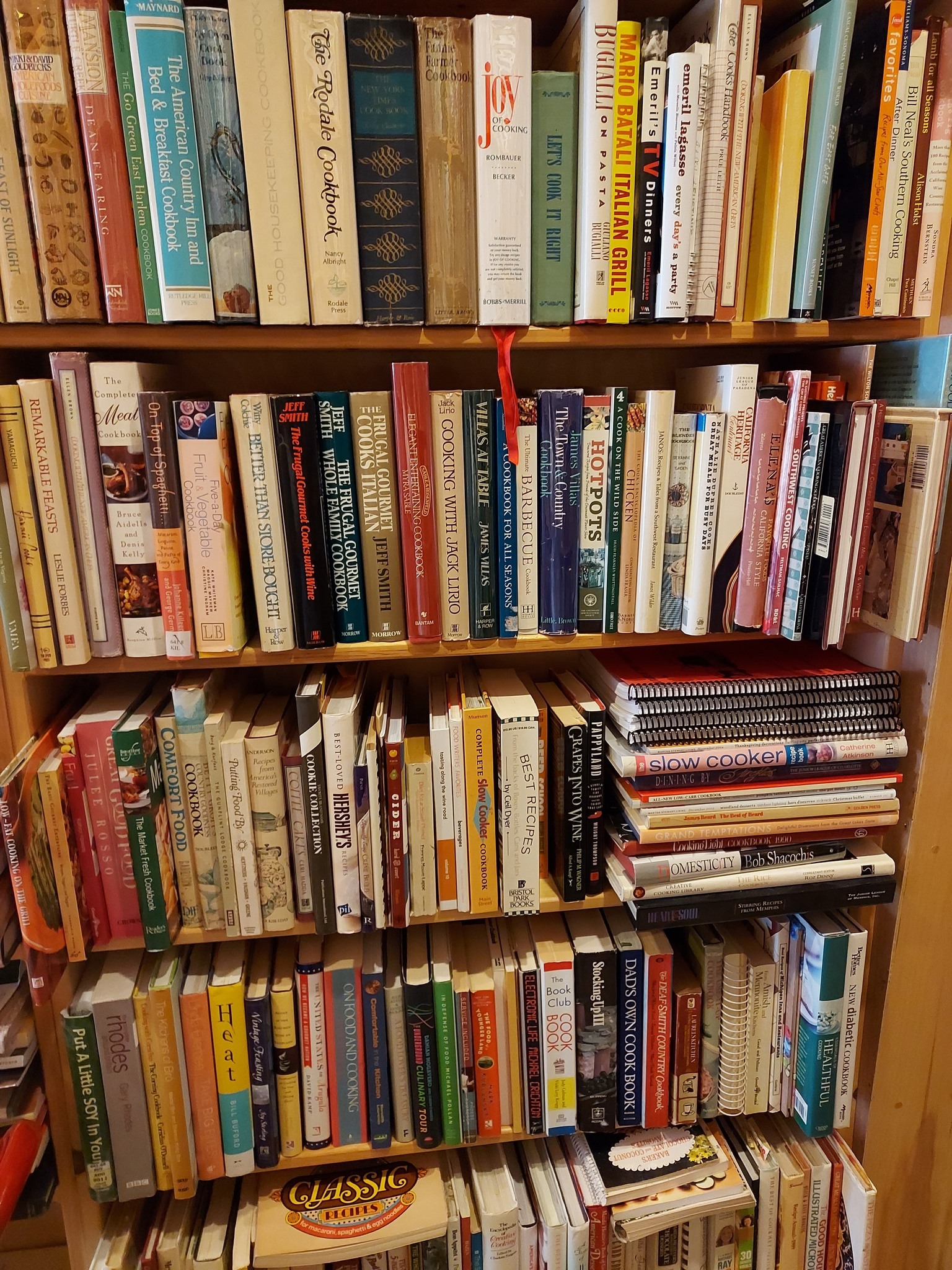
Used cookbook section is FULL!

And, surprise! Classic Isaac Asimov paperbacks --

Fiction, poetry,

and books for your outdoor adventures.


At home, with all the rain we’ve had, grass is ready to be mowed again, gardens need weeding and edging, and always there are those pesky, invading autumn olives to be checked and rooted out. Sunny and I will restart our agility sessions with Coach Mike on Monday. I’ve had a couple of new editing jobs, too, so life is busy. It's a good thing that summer days are long.


These raspberries don't pick themselves, either!

Monday, December 18, 2023

Someone Is Two Years Old Today

First picture I saw of her


First time I met her

Sunny Juliet is two years old today, Monday, the 18th day of December, and she is not suffering from the “terrible twos” at all -- that is, I am not suffering terrible twos with her. The little crybaby puppy (“Tiny Girl”) and teen barker (“Naughty Girl”) has settled down considerably. She still barks on occasion (often public occasions I would rather did not include barking), but in general the challenging, demanding, willful, opinionated puppy has become a pretty grownup dog girl and a delightful companion.

Naughtiest thing she ever did (when about a year old) 

Summer tennis ball play in the yard


(Does that video work???)


Sunny and I are staying in Michigan all winter this year -- quite possibly from now on; time will tell -- and that’s fine. Although without canine encouragement, it’s unlikely that I would be going out for early morning walks every cold winter day, starting before the sun has crested the wooded horizon and regardless of how hard the wind is blowing, she needs it, so we do it, and it’s good for both of us. Fresh air! Exercise! Cold doesn’t faze the little girl, and she loves snow!


Last year in Arizona snow

First big Michigan snow for Sunny

Sunny is accustomed to my daily routine, always ready for more time outdoors when afternoon brings us back together after my work day. She will never learn to read books, and I will never have her keen nose for invisible trails in the grass, but Sunny is patient with my morning and evening reading, and I make sure we have ample time outdoors. Learning to be patient has been good for Sunny, and time outdoors is always good for me. VoilĂ ! We both gain and enjoy each other more when we give each other time and space to indulge our respective gifts and loves.


Happy birthday, little girl! The momma loves you!


Sunny wants more snow!


Wednesday, November 22, 2023

From the Fringes -- Grateful


At some point in the life of this blog – and I can’t tell you the exact date when it began – I began to refer to him as “the Artist” rather than as “my husband” or by name, following a kind of minor tradition among bloggers, who often use first-letter capitalized common nouns to stand in for the names of steady partners who play a part in their stories. My point today is that until he died in early March 2022, I was married to an artist whom I called the Artist, because in my life he was the one who counted.


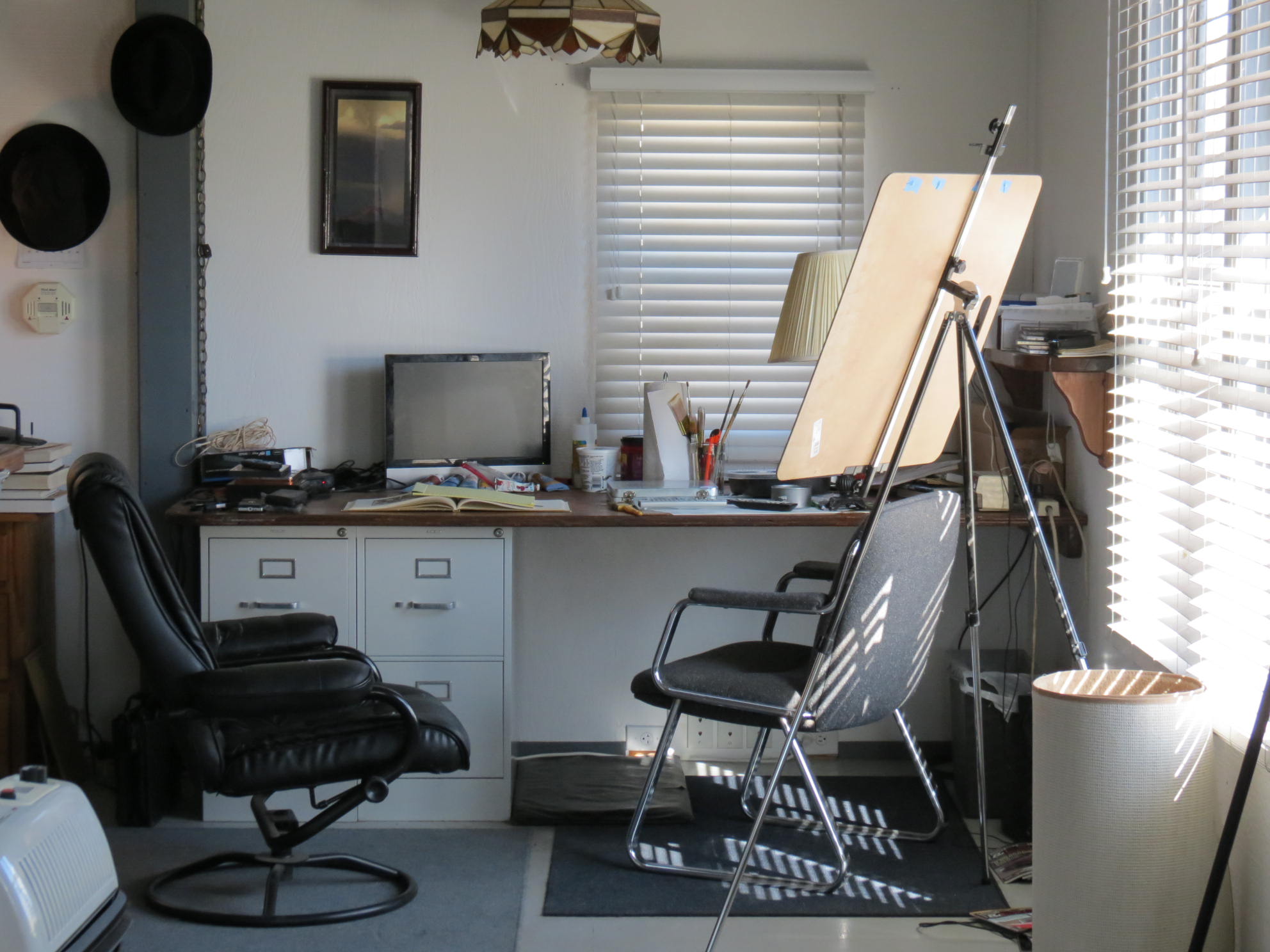
His studio and gallery, in the same building as my bookstore, had a separate entrance, but a doorless doorway connected my bookstore to his space. Nevertheless, on busy summer days, with people coming and going for hours through our respective domains, both of us living days brimful of talk and laughter with friends and strangers, along with sales of books and paintings, we might not see each other until day’s end, when at last we had time to share accounts of what had transpired in our side-by-side but separate realms. Both in those physical spaces and in our lives beyond Waukazoo Street, his art world and my book world intersected and overlapped and enriched our life together year after year. In this bookstore blog I called him the Artist. His name was David Grath.


The late years of our winter life (“seasonal retirement”), from 2016 to 2021, were different from summers in a Michigan tourist region. In a small rental cabin in a ghost town in the mountains of southeast Arizona we lived, as he described it to friends, “joined at the hip,” or, “in each other’s pockets.” Each of us had a corner of the cabin for reading and writing and thinking. Beyond that, the kitchen area was pretty much mine to arrange and reign over, while he was guardian and ruler of the television (with an antenna on the roof, several stations came in clearly) and DVD player, their remote controls a complete mystery to me, but we were within physical reach of each other more often than not. 


Early days in Arizona ...


... when our spaces were yet spare.

Summers, we drove separate cars to work. Having me on hand next door to answer questions of visitors to his gallery, he was free to take leave whenever the spirit moved him – to visit artist friends in their studios; to take the slow “county cruises” he loved, soaking in the landscape for future work; to attend to little jobs that needed doing back at home. My summer days were spent on Waukazoo Street; his were there and elsewhere. 


Out on the town -- Willcox, AZ

Again, Arizona winters were different. With a single car between us, it was a rare day when one left the cabin without the other. Instead, almost always, after I returned from a long morning ramble on foot with one dog or the other (we only ever had one at a time, but two figured in those years of cabin life), he and I, usually with dog, would set out on the road, armed with water and snacks, books and notebooks and sketchpads. We might have a destination in mind when we left home base, but those days were always revisable, each one an improvisation. There were forays up to Tucson or into Santa Cruz County to see friends, as well as expeditions north to Safford on a favorite mountain road; the majority of our explorations, however, took place in Cochise County, our home base. The second year I worried that it would be old hat for the Artist, no longer an adventure, that he--not in love with Cochise County as I was--would find our surroundings boring. One winter after another went by, though, and we never exhausted the possibilities. Never got to Ramsey Canyon or King Ranch, for instance. Besides revisiting favorite places more than once (Faraway Ranch, for instance, in the Chiricahua National Monument; Turkey Creek Road; Whitewater Draw), we kept discovering unfamiliar and exciting places easily reached on day trips: a shortcut across the Sulphur Springs Valley or a back road to Bisbee, a new coffee house or junk shop or shady stretches of the San Pedro River that held running water.


Of course, our life together had not always been divided between Michigan and Arizona. Years earlier, before and following a spate of Florida winters (Weeki Wachee first, then Aripeka), we had stayed put, first in Leland, later in our old farmhouse between Leland and Northport. One year, snowed in for a week in Leland, we would walk “downtown” every day: Main Street, only two blocks from our house, had everything we needed--post office, bank, the Early Bird for coffee, the Merc for groceries, and the library on the other side of the bridge. Earlier still had been the Kalamazoo years. After we moved to the Leelanau Township farmhouse in 2001, winter was more challenging, but we still managed even when the power was out – once for four days. Our stove and fireplace worked on propane, and we had candles and oil lamps. “This is how old Joe and his wife lived,” he observed one of those cold, snowy evenings. Winters meant adventure at home.


But life with the Artist had always been an adventure. Short on money in Kalamazoo (“I’m tired of being poor,” my son complained, and my husband told him, “We’re not poor, we’re just broke”), we visited flea markets and thrift shops and had wonderful, far-ranging conversations over endless cups of coffee, our untethered imaginations reaching far beyond our physical surroundings. For every day of life constrained by finances, we had years of dream lives in which we created a combination tea shop and bookstore in Kalamazoo; raised shallots and rabbits in Leelanau County; lived part-time in Montreal; and furnished a pied-Ă -terre in Paris with finds from the MarchĂ© aux Puces de St.-Ouen. We never stayed in the cheapest U.P. or Wisconsin motel room without redesigning and refurnishing it in our combined imaginations, in case we were ever “on the lam” (don’t ask me for what!) and had to live in that one room. We “wrote” screenplays during car trips or, again, over coffee – that is, talked our way through the films as we invented them, committing nothing to paper but having a wonderful time envisioning the development of our stories on the big screen.


The artist’s life is not an easy one, nor is the bookseller’s life a road to riches, but the two of us were never in it for the money. For years I carried in my purse a tiny strip of paper from a fortune cookie (opened in spring of 1987) that read, “Your path is arduous but will be amply rewarded.” A forecast fulfilled: My path has been amply rewarded. (And yes, there were also arduous times.) My love and I made a rich life together, and my life alone continues to be enriched by what he brought to it, as chance encounters reveal more and more memorable stories people share with me about conversations they remember having with David. He had a gift for making memorable moments and hours.


Harlan Hubbard wrote of his life with Anna that they lived “on the fringe of society.” While Grath life cannot be compared to Hubbard life, in many ways ours also was lived on the fringes. Michigan, after all, is not either Coast. (“By the time an idea gets here from one of the Coasts, it’s worn so thin you can see right through it.” Someone I know quoted that to me. I have no idea who said it first.) My artist husband was not shy about saying that he wanted to create beautiful work. (To make art that shocked was never his aim.) I have written no books but have been faithful to this modest blog since fall of 2007. Far from the world’s power centers of art and commerce, we pursued work that felt valuable to us.


Well, now comes an unexpected postscript to the Artist’s life: The French translator of Jim Harrison’s work has unearthed two screenplay treatments, written in 1977, by David Grath & Jim Harrison, and the English pages have been translated and will appear in a new “omnibus” edition of Jim’s work from an imprint of Éditions Gallimard in Paris, the tentative release date November 2024. How thrilled the Artist would be! He had such a good time writing those treatments with Jim (neither ever sold, let alone produced), and to think they will be in a book published in Paris – he would be over the moon!


So that’s my news from Northport today. – No, one more piece of news, this one very local: Not only on the Saturday after Thanksgiving, but every Saturday in December, from 3 to 6 p.m., there will be horse-drawn wagon rides through the village. The horses are Clydesdales, the wagon bright red and festively decorated, so December Saturdays in Northport will be wonderful days for residents and visitors alike.


And yet one more (last?) note. I’ve been writing Books in Northport since September 2007. If you enjoyed this post and have friends who might appreciate it, also, please share a link. Comments here are always welcome, too. Thank you for your support – for my blog and for my bookstore!


And Happy Thanksgiving!!!


Window on Waukazoo Street


Wednesday, May 24, 2023

Now, WHAT was that new subject I had in mind? (Ah, yes! “Work and Play”!!!)

Smoke from distant fires --

A few disparate items had been tumbling around in my head, and for a few moments they seemed to come together under a topic heading. What was that heading, though, and what were the thoughts I hoped to connect? I’ll just start tapping away while waiting for a return phone call or e-mail and see if anything thoughts fly back….


-- I’ve got it! I’ve got it! (So I went back and added it into today’s post’s subject heading.) Work and Play!!! That will, I hope, tie together some thoughts on dogs, art, me, women in general, jobs, and business. The return e-mail came, too, so everything is back on track for the moment. Remember, though, that the moment is always fleeting....


Work and Play: Dogs


Sunny Juliet is an Australian shepherd, and many friends assumed (and still do) that her breed is the only explanation needed for her demanding puppyhood, but Sunny was something else! Yet, “She needs a job,” people kept telling me. 


The idea that herding dogs “need a job” has entered the general American consciousness and is wisdom now repeated even by people who have no dogs of any breed. But practically perfect Sarah, hybrid border-Aussie, was “something else” in the opposite direction of Sunny, laid back and easy going almost from the day she came home with us at four months of age. Peasy, that beautiful Aussie boy with his tragic issues, learned quickly and was compliant in ordinary matters; his problems flashed out as unforeseeable exceptions. Sunny Juliet? I have never had such an opinionated dog in my life! She has settled down hugely in the past year, however, and we now live together in harmony most of the time.


Sunny loves to be outdoors. She loves to go rambling with me, exploring the world, and she loves to play, chasing tennis balls or a Frisbee or a stick or anything else I throw for her. We have yet to get back to the agility lessons, but she remembers “Jump!” and “Tunnel!” and does them beautifully on command. 


The question is, does Sunny need a job? That is, does she need sheep or cattle or, at the very least, a flock of ducks to move around? 


Here’s my answer: What Sunny needs -- probably what any herding dog needs and no doubt what most dogs need – is mental stimulation combined with physical exertion. 


It doesn’t matter at all to Sunny if she “accomplishes" anything or not by chasing a tennis ball (or jumping a hurdle). Her little mind goes on high alert when she sees me preparing to launch the ball, and she readies her muscles to spring, run, and catch -- or run, chase, and retrieve. Which way will the ball go? Where can she interrupt its trajectory? Will there be a bounce first, or will she catch it in flight? This is more than a game to her. It is an opportunity to use her skills, and she loves it. Her eyes tell the story. If she were herding sheep, the same mental calculations and decisions about speed and direction would come into play. “Into play” = working. 


You see my point? I absolutely believe that herding dogs do not differentiate work from play. They love activity and problem-solving, and they seem to love doing things with their humans. Right now Sunny is lying at my feet, waiting patiently for something to happen, some move on my part that gives her a reason to follow me curiously wherever I might go next. 


Work and Play: Art


Marsh marigolds, just because.


Many years ago, a guitarist in my life noted, “Other people work. Musicians play.” We do use those words. (“I have to go to work in the morning.” “Our band is playing at Music in the Park.”) And yet a musician, every bit as much as a carpenter or a nurse, has to learn and practice to acquire skills and keep them sharp. 


Is it society’s failure to value musicians and other artists sufficiently that their work is seen as play? Or is seeing art as play a good thing, reminding the rest of us to find joy in our daily lives?


“How long did it take you to paint that?” someone would ask the Artist from time to time, and he would answer, “My whole life,” and when we were in the car, slowly driving our favorite county back roads, he was always “working,” in that he was taking in the colors and lines and shapes and richness of the land. When sitting quietly, he might be thinking through an idea for a painting, but when standing at the easel, he would tell me, “You can talk to me. I’m painting, not thinking.”


Photograph of David Grath by David Brigham


Work and Play: Me


Someone at the recycling center north of Northport saw me the other day and asked, “What are you doing now that you’re not doing?” I was nonplussed. “Not doing”? It’s true that I took six months of seasonal retirement (maybe for the last time!), but I’m certainly doing plenty now! Cleaning and organizing my house after having to empty out the Artist’s studio last fall before I left; getting my yard and gardens in order; preparing to open my bookstore for the season – and that’s only a general outline, with none of the myriad details. 


And now we have a couple more cold nights coming....


Do I differentiate between work and play, or am I more like a herding dog, needing physical and mental activity but not separating it into work/play categories? That’s my question here.


Cleaning is definitely work. I won’t say that no thought and planning goes into it or that there’s no satisfaction in seeing the fruits of my labor, but I only engage in it as a necessity. Yard and garden tasks are different. Definitely work (my muscles make sure I get that straight!), but my outdoor projects are ones I choose, not burdens imposed on me, and even mowing grass is work I enjoy. 


I will be open as soon as possible -- but when? When the Fates allow!


My bookstore is chosen work, too (though not the cleaning part: that’s imposed by entropy, a fact of life). No one would start a bookstore and run it for thirty years without a love of books, and my bookstore is a world I have created over time, but it’s certainly more than play. I’m not “playing store.” Bookselling is my livelihood. 


Robert Gray wrote a piece recently in the e-mailed book business newsletter, “Shelf Awareness,” about how annoyed he gets when anyone thinks booksellers just sit around and play with their cats all day. You can follow this link and look for the last article in the issue if you’re interested in what what else he had to say. 


Work and Play: Women


I’ve often noticed that women tend to characterize their experiments and trials in the fields of arts and crafts or gardening as “playing around,” in situations where a man would never use such language. Do women (in general) take their activities less seriously than men? Are men (in general) more concerned with having their activities respected? Is “playing around” – with ideas, concepts, designs, arrangements – a belittling and overly modest way of speaking, or does it connote a joyful, playful, open approach to life?


Just because I love them!


Work and Play: Jobs and Business


A job, even when a necessity, can be chosen work, and a business had better be chosen if the business owner is going to be happy in it!


While either jobs or business can involve pleasure and even love, though, they generally need to be taken seriously, and I’d say this is especially true of a business. A job you can quit. Give notice, turn in your keys, and hit the road. Closing and then dismantling or selling a business isn’t so simple. It's more like giving up a home. – And before I am besieged with questions, No, I am not thinking of closing or selling my bookstore! I’m just thinking of ways that a starting a business and keeping it going are a pretty serious commitment.


So what is my ‘play’?


If my business is my work, and this blog is related to my work (sometimes very peripherally, I admit), and if the outdoor jobs I love are work (albeit happily chosen), and since I don’t play bridge or softball, do I not play at all? That would be pretty pitiful, wouldn’t it? 


Walking in the woods with Sunny, exploring and observing the natural world, my country drives and photography –all those I experience as play, so much so that I often feel as if I’m “playing hooky” from all work that awaits me in my house and my bookstore. 


But no – you know what? Learning and appreciating the natural world is something I feel a joyful obligation to do -- as if it is, more than anything else, my life’s most important work. My way of practicing gratitude for the gift of the world. So I guess, in the way I approach life, I’m quite a bit like Sunny Juliet!


Informational Postscript: You wouldn’t guess from the foregoing that I am in the middle of an infrastructure disaster at home, a combination electrical/plumbing crisis. If my bookstore isn’t open on Friday, as I’d hoped, this is the reason. Wish me luck, send good vibes, don’t ask questions! My plate is full enough as it is! Thanks --


Fleeting May! These blossoms are already gone!