Search This Blog

Showing posts with label poems. Show all posts

Tuesday, November 24, 2020

I am Pierre’s dog.

Another dawn, another day

David, a.k.a. the Artist, took me to a new coffee house in Willcox, and we sat out on the front porch on Haskell Street (Business I-10) with our drinks. When I was in graduate school and reading Sartre, I wrote a paper called “Consciousness of Self and Pierre’s Dog.” Or maybe it was “Pierre’s Dog and Consciousness of Self.” The first line, anyway, was “Consider the dog in this café,” my variation on Sartre’s famous “Consider the waiter in this café.” In my version, Pierre’s dog was called that because, while Pierre did not own the dog, he and the dog had fixed morning routines in the café every day. Then comes a morning when Pierre does not appear, and everywhere the dog looks, all he sees is Pierre’s absence. 


As for reading, I haven’t finished a book since we were in Michigan, and that last book I read was Rinker Buck’s The Oregon Trail, which I left in Illinois (our second night out on the road) for my sister and brother-in-law to read. I tried to finish Absalom, Absalom! for a Zoom meeting with the reading circle but couldn’t manage to lock myself for long enough into that depressing, claustrophobic atmosphere to get through the last third of the book. Instead, while traveling and during our first days and nights here in the cabin, I read now and then a few pages of SPQR: A History of Ancient Rome, but my progress in it was slow, my attention repeatedly drawn away from the book to our dog’s unaccustomed demeanor. 


Then Sarah had a good day on Sunday, and I felt briefly optimistic that she would “recover from the trip,” as the Artist put it, and that we would have – not long hikes, but at least one more short walk with our neighborhood adventure pack before I had to leave her home on mornings I went off into the mountains with them. So on Monday and Tuesday of last week, which is to say during Sarah’s last days, I started into my winter writing project.


The following Tuesday, on what turned out to be her last day of life, I only “left” her briefly (we were scant feet apart and could look into each other’s faces whenever either of us had the desire) to sit with the handwritten diary that a young man in Pennsylvania began in 1854, a diary I will be transcribing this winter, putting his entries together with my own journal entries and other thoughts and reflections on his time and mine. 


Now that she is gone, I still read myself to sleep after an evening movie but have set aside SPQR for a comfort book, one of Alexander McCall Smith’s novels set in Botswana and featuring Mma Ramotswe. When we wake up in the middle of the night, as we do every night, the Artist and I may talk quietly or lie together in silence, but sometimes then too I turn on my bedside light to escape to Botswana. The cows in the book are comforting. I wish the cows of Dos Cabezas would pay us a visit, but they seem to be grazing and foraging somewhere out of sight.


The comfort of cows....


While I was lying on the floor with Sarah on Tuesday, stroking her head and fondling her ears, a Motown song by Gladys Knight and the Pips came into my head and would not go away, and it has been there ever since. “Neither One of Us Wants to Be the First to Say Goodbye” is a song about a couple postponing a breakup they realize is inevitable. For me, it was about my dog – about Sarah hanging on and about my world having shrunk to wherever she was lying at any given moment. She never did “go to sleep” but kept following us with her eyes whenever we moved from one part of the room to another. She and I did not want to say goodbye to each other – and the Artist and I did not want to say goodbye to her.


Night lingers as day begins


My sisters mentioned another song, one called “Sara,” by Jefferson Starship. I put off listening to that one for days after Sarah’s death, and when I finally called it up, the Artist and I could hardly bear the lyrics: “I’ll never find another girl like you…. No time is a good time for goodbye.” 


Then the other day I picked up a small collection of poetry, ten poems by ten different poets, put together in a book by Roger Housden called Ten Poems to Say Goodbye. This may be the book I will finally finish and be able to add to my “Books Read 2020” list.


I am thankful


But life goes on, as it always does, and Thanksgiving will be here in two days. The Artist and I have each other! We have priceless family and friends! And we have received a flood of touching and very meaningful sympathy messages from a couple hundred people, many who knew Sarah for years and others in distant places who knew her only through my blog posts. We were unbelievably fortunate to have found puppy Sarah in the first place and then to have had her in our lives for so many years -- the best traveler, the best bookstore dog, and the best companion imaginable. 


I am very well aware of how blessed I am, what a wonderful life I have, and there are moments already when the Artist and I can make each other laugh, even over shared memories of Sarah. At the same time, for now, Sarah is my Pierre, and I am her dog: Everywhere I look, I see her absence.


Monday, September 30, 2019

“Nor Iron Bars a Cage”


The sky was overcast at first as I walked around Northport on Saturday morning, but well before the official beginning of Leelanau UnCaged (11 a.m.) the sun broke through — Hooray! — and spirits that were already high with anticipation took flight all over town. The idea for Leelanau UnCaged came years ago from Andy Thomas, a John Cage fan, which I admit I have never been, in general — not a fan of his art, at any rate, but there is room in the world for all kinds of art, and the Cage quotes around town speak encouragement to all:
Just learned that Susan Ager painted this sign. Thank you!
Getting ready!
Then it began in earnest, and throughout the village there was music, dancing, and drumming, and there were artists and craftspeople and vendors of all manner of food and beverage. I was in my bookstore all day, from 10 a.m. to nearly 9 p.m., but happy to be there, where the day’s first excitement came when UPS delivered an extraordinary flower lei all the way from Hawaii for my author guest of the day. Next Nancy Peterson’s son and one of her daughters delivered Nancy’s book, which began selling even before the author’s stated signing time began and continued throughout the day. 

Nancy Peterson and daughter Nina Muller

Nancy visiting with customers for her memoir
Nancy herself was lovely and gracious and smiling and photogenic, as always, and it was a joy to see the enormous turnout for her event and the gratifying number of people buying her book.

And that, in general, is how I spent the entire day: selling books and visiting with customers and friends. Through the big front windows I could watch vendors and strolling fair-goers, and I could see the light change hour by hour. That is to say that I did not feel in the least “caged” on my little treasure island. “Nuns fret not,” after all. I am living my chosen life, and it was absolutely lovely to see and feel and share the happiness that filled our little village on Saturday.


Thank you to all the organizers and volunteers and participants for yet another fabulous Leelanau Uncaged! It just gets better and better every year! 

Friday was rainy. Sunday was rainy. Saturday was a beautiful window of sunshine for Northport's annual festival of the arts and of life in general, and on Monday morning I caught a glimpse of something I hadn't seen two days before. Who is responsible for this wonderful little sand castle on the lot of the old restaurant, the lot awaiting its next incarnation? The castle promises future delights, and Northport will be ready.


Postscript: For the Richard Lovelace poem from which today's title is taken, see here. For another work expressing similar thoughts and from which I took the phrase "Nuns fret not," see William Wordsworth's poem here. 

Saturday, June 23, 2018

Deep Breath, First Tea -- and Maybe Riddles?

Talking to Myself

You’re here now. Take a deep breath.

I’m talking to myself. Yes, I often talk to myself, though sometimes under the pretense of talking to the dog, which somehow is not seen as quite so eccentric, although a bookseller, as I told my mother once, is supposed to be eccentric, especially a bookseller whose shop specializes in used books, so since the stereotype already exists, I might as well play it to my advantage. “What will people think?” They’ll think I fit the stereotype, of course. That I’m typical. — Or is ‘typical eccentric’ anything a contradiction in terms? Well, there I go, down a rabbit hole of pointless digression, but so what? It’s early morning … or was when I began writing this, hours and hours ago.

On the morning after my first TEA event — Thursday Evening Authors, my summer literary series celebrating 25 years of Dog Ears Books — while in the backyard watering my straw bale garden in the early sunlight, with birds singing their hearts out all around me, I told myself, Take a deep breath. You’re here now. That is my mantra: You’re here now. Or, more prescriptively, Be here now. Summer is a busy time, but it’s important to stop and look around and listen to the birds and take those deep breaths.

Getting ready for first TEA

The First Dog Ears Books TEA of the Season

Rachel May

One reason I felt I could afford to relax a bit on Friday morning was that Thursday evening at the bookstore had gone so beautifully. Author Rachel May was so natural in her presentation, honest and forthright and well prepared, and the passages she read from her book were so full of detail that we in the audience had no trouble picturing the surroundings she described. Our audience was great, too — attentive, engaged, receptive — and the author appreciated their questions and clearly enjoyed answering. The house was full! We sold out of books! A great start to the series and to the season! And I'm still hearing from people who loved the evening and are loving the book.

Next Thursday (all Thursday events begin at 7 p.m.) is poet and essayist Fleda Brown, and on July 5 we’ll have travel writer Kim Schneider, and we’ll just keep going on from there, all through July and August.

Thoughts on Emily

I had to miss a discussion with friends Wednesday evening on the poetry of Emily Dickinson and ask forgiveness of the woman who would have been my hostess for the evening. But now, how many of my readers are Dickinson readers and/or fans? Some of her poems are well known and quite simple, but I was surprised (not ever having been an “English major”) by how difficult I found many of the unfamiliar pieces. A couple incomplete, random notions on the subject of her work are bouncing around in my head, though, and here they are: 

One friend e-mailed me last week or so that she needed a break from Emily, that there was just too much death and mourning in the poems, and there is a lot, which led me to thinking that death, always a major topic for poets, was particularly so in the 19th century. It was the poetic fashion, one might say. For example, one of my mother’s favorite poems was William Cullen Bryant’s “Thanatopsis,” written when the poet was only 17 years old. “So live, that when thy summons comes to join/The innumerable caravan which moves/To that mysterious realm where each shall take/His chamber in the silent halls of death….” Read the entire poem and see what you think of it. Is it depressing? Morbid? It doesn’t seem so to me. Rather, immersion in nature, along with thoughts of life’s brevity and death’s inevitability, seem both prescriptive and consolatory. And I see the same themes working out in Emily Dickinson’s poetry. People in that age lived closer to death on a daily basis than most Americans do today. We keep it at arm's length. But maybe we are the ones who have the morbid attitude?

My other thought — and this might be a bit far out — is that many of Dickinson’s poems remind me of the literary riddles so popular among the educated classes in the 18th and 19th centuries -- not the simple question riddles but those in the form of verse. In truth however, it is my compulsive re-reading of Jane Austen that brought the riddle idea to my mind when reading Dickinson. In Jane Austen’s Emma, one of the plot lines rests in part on the collection of “charades” that Emma encourages her young protegée, Harriet Smith, to put together. Could some of Emily Dickinson’s poems be riddles? Or is this a very naive and unliterary question to ask?

Anyway, I quite like all the flowers and bees in Emily’s poems. Lots of bees! Full of life, bees and flowers.

And now, Saturday morning, time to take to the road but also, I'm happy to realize, sufficient time to take the slow back roads to town, on my way to errands and another day in my bookstore. The world is lush and green and overflowing with life and death. It is a plenitude. We're here now. And today -- tonight -- is St. John's Eve.


Monday, November 27, 2017

The Enduring Nature of the Written Word


My son came up from Kalamazoo for a five-day visit over the Thanksgiving weekend, and somehow on Sunday morning we found ourselves pawing through an old trunk I had not opened for years. Oh, the treasures that emerged from that archive! 

There were letters he had written me from camp when he was a kid and a little stash of hand-made “coupons” he’d given me as a gift, coupons I could redeem for various chores he would do around the house. “And you didn’t use any of them,” he noted. “I didn’t want to give them up!” I told him. “They were too cute!” Another gem was a handwritten note from a girl in his grade school class, asking me for a copy of a snapshot I’d taken of the two of them at Ian’s birthday party. “I want to see how romantic we look,” she wrote. Or rather, she printed. They must have been in third grade then, not yet learning cursive writing. 

Copies of letters my grandmother had written to my mother were there, along with a copy of a letter one of my aunts had written to my mother, all of this fascinating correspondence concerning the revelation of an old family secret. I read the letters aloud to my son, refreshing my own memory with the details. I’ll keep in mind this winter the fact that my mother’s parents were married in February of 1918, making it a century ago three months from now. 


I found a box of color slides from photographs I took during my two years in Cincinnati (1987-88) and will have those made into prints and also stored on DVD very soon. (The architecture of Cincinnati fascinated me, as did the hilly terrain. It was rich territory to explore with a camera.) I also found handful after handful of photographic prints, some dating back fifty years or more. The color was not always the best, but everyone in the pictures was recognizable.


A very modest collection of receipts and tissue wrappings from purchases (e.g., cheese) made in Paris appeared. I could never bear to throw away any scrap of paper that came my way in France, with words printed in French and sometimes a reproduced line drawing of a shop front or of the Eiffel Tower. You must understand that I shivered with pleasure over the phrase “vêtements d’hiver” (winter clothes) scrawled on a box in the closet of the apartment where I first stayed in Paris. Four years of high school French and the smattering I’d picked up before that from my father had not fully prepared me for the wonder of being in a foreign country and actually managing to make my way around in another language, one I felt I’d learned in a way somewhat similar to the way I had learned to read music, another mysterious, magic, “other” language. It worked! I felt like a gifted code-cracker!

But there is plenty of magic in English, and I was thrilled to discover in the trunk a couple of irreplaceable family items I had been afraid I’d lost forever. Before they married, before they had even met, my father and my mother, each separately, collected into little books their favorite poems. In 1974 the two books were given to me. With the exception of one verse my father composed with his high school French, my parents did not themselves write any of the works in their books, but their selections are windows into their youthful sensibilities. 

What did these two young people have in common? What aspects of their personalities were very different? Some overlap between the two collections gives clues, as do the majority of items found in one book but not in another. 


Neither book has either table of contents or index, but my father’s, titled “Favora Quotation Gilberti,” dated1941, begins with an “Indication of general trend…” listing eight attributes: amusing; slightly risqué; cynical philosophy; toward celibacy; satire; truism; good phrasing; and romantic: beautiful and healthy sentiment. Not everything in his book is a poem. Many entries are simply pithy sayings, and many verses and pithy sayings are attributed to “Anon,” for example this ironic observation that gives the lie to my entire thesis today:

Lives of great men all remind us 
As their pages o’er we turn, 
That we’re apt to leave behind us 
Letters that we ought to burn. 

There is no indication which heading he would have assigned here. Cynical, probably. There was more of cynicism and satire in my father’s collection than in my mothers, but both had generous helpings of romantic choices. And both include pieces by Edna St. Vincent Millay and Elizabeth Barrett Browning, though I note that my father attributes the latter’s words to “Elizabeth Browning,” omitting the poet’s family name, while my mother invariably used all three names.

My mother’s collection includes Sara Teasdale, Eugene Field, and Oliver Wendell Holmes. I don’t find as many entries from “Anon.” as my father had, but a few, such as the two lists “Helps for Daily Living” and “Married Wisdom” have no attribution. (Actually, the latter, which is the first piece in her book, says “Author Unknown.” Could it be that favorite of my father, “Anon.”?!) My mother’s collection also has more entries from women, the names often unfamiliar to me. There are also fewer humorous pieces in my mother’s book, so Richard’s Armour’s “A Thousand Times No” stands out: 

Some take great pride in saying No, 
They scorn an easy Yes. 
Assent is sign of weakness, so 
To none will they confess. 

For utterance of No they live,
 

Nor would they have you doubt it.
 

They’re very, very negative
 

And positive about it!

At the end of my mother’s collection, following Robert Herrick’s “To the Virgins, to Make Use of Time” and Sarah Dunnings’s “These Things I Love,” comes a list of dated topics for what looks like a music class, “Hints for Song Leaders,” “How to Present a New Song,” and finally a recipe for Helen’s Peanut Butter Cookies, but my mother’s name appears nowhere in her book.  

Besides family memorabilia, I found in the trunk many bundles of letters from friends, a few with literary associations. There were two letters from Jim Harrison, one from Joyce, Jim’s assistant, three from Guy de la Valdene, and one from poet Dan Gerber, all these resulting from typing, proof-reading, and editing I’d done for him and Guy and Dan back in the old days. 

Then there was a xeroxed copy of the wonderful handwritten journal my sister kept on her first trip (with now-husband Bob) to the Boundary Waters, up from Minnesota into Canada, her first wilderness experience, with canoe portages and camp coffee and losing her camera to a black bear! I read aloud from the pages to my son (with David listening from the next room) and especially loved the full page listing of all the sounds of the wilderness, none having anything to do with traffic or phones.

All these memories are priceless to me, despite the mustiness of a trunk that had been closed for years. 

As I held color slides up to the light, exclaiming over the images, my son made a comment about digitizing old media files, and that’s well and good, I suppose. But if hard copies are not kept, if only digital files remain, I worry that those files could become unopenable black boxes to future generations. They are not, after all, human-readable, and as the technology to read digital files advances as breakneck speed, earlier readers become so much junk. There is also the question of “where” the files will be stored. In a “cloud”? As my son noted, “A cloud is just someone else’s computer.” 

I’ve never liked the idea of keeping my photographs or books in a cloud, anyway, and I wouldn’t want to reduce precious old letters from friends and family and photographs of same to someone else's storage black box. My old black trunk has served me well. And I have always been in love with paper and with holding physical objects in my hands. 

Sliding sheets of handwriting from envelopes (first appreciating the beautiful postage stamps), turning pages, shuffling and stacking snapshots and slides are pleasures I have no intention of foregoing, as long as they are available to me, and I hope that will be for the rest of my life.

Monday, June 26, 2017

Nature, Art, and Artifact


Last Sunday was what will have been my last Sunday away from the bookstore for the next two months. I used to begin my 7-day-a-week schedule with Memorial Day weekend, but June Sundays in Northport are quiet, (this was true even last year, when the post-Memorial Day dropoff in visitors did not occur, for the first time in my memory), and I decided I needed the time at home. Grass will not be growing as fast in July and August. 

Okay, decision taken. But on my last Sunday at home I didn’t stay home all day.

We had to attend the annual St. Wenceslaus rummage sale, for one thing, and I found several things I really needed – pint canning jars, wooden clothespins (one never has too many), and a nice, big laundry basket. I also bought five or six books, for us and for the shop. Then there were the indulgences – two (yes, two) cheese graters (sturdier than the ones I had at home), an irresistible set of four table napkins, and some other small item that escapes my mind at the moment. (Oh, a steamer basket.)


After the sale, we continued to Lake Leelanau for coffee and so I could pick up a bag of sugar at NJ’s. But then, home ... for lunch outdoors ... and to hang laundry on the line. I’d made a commitment, though, to attend the artist-in-residence lecture at 1:30 in Leland, so down the highway I went. Indoors. On a beautiful, sunny June Sunday. And I was glad to be there.

Holly Wren Spaulding is the first nonvisual artist to be awarded the artist-in-residency at Leland’s Old Art School since the program’s inception. My husband was the first artist-in-residence a decade ago, and most of those selected have been painters. But Holly Wren Spaulding is a poet. Words are her medium. Spaulding’s exhibit at the Old Art Building is a group of poems, the whole entitled “Lost Lexicon.”

Her inspiration for these poems was learning that roughly fifty words were to be cut from the Oxford Junior Dictionary, largely words having to do with nature and the outdoors, to make room for words children hear more frequently, many having to do with new technologies. It is in this context that Spaulding sees her work as a poet to be one of conservation.


The poet knew she wanted these poems done on letterpress, and initially she thought to hire someone to do the printing.
The letterpress artist (‘operator’ as a noun felt all wrong there!) contacted, however, offered instead to teach the poet her craft. And so Holly composed lines of type – actual, physical letters of poured lead – and impressed her words on sheets of handmade paper. The paper used is no longer available, the company that made it out of business. There was a display with a few lines of type and a little sign saying, “Please touch.” I did -- and felt suddenly near tears. Am I overly attached to words? To the physical world? Perhaps both, but I wouldn’t have it any other way.

Holly’s chosen words were names of plants and animals. On the walls where paintings are usually shown, small poems on sheets of handmade paper were presented to visitors. It was all (as an acquaintance said years ago when she became the mother of twins) very physical – natural objects, physical artifacts, material art.

The “Lost Lexicon” poem cycle may be available in future as a book. For now we still have Pilgrim, Spaulding’s 2014 work published by Alice Green & Co., and in that small, sweet book you will find the same poetic sensibility and feel the same gratitude at being able to hold the poet’s work in your hands, the book a physical object. 

Wednesday, June 14, 2017

Managing My Blood Pressure


Warning: My post today may be like a confusing tennis match, back and forth between economics and poetry, my blood pressure rising perilously and being brought back to the level. But if you can't be dragged kicking and screaming into a discussion on economics, just scroll past those parts and take in the poetry breaks. They are the real meat, anyway.

The Perils of Economic Realism

Not for the world would I give up reading serious nonfiction, but sometimes the difficulty is as much -- or more -- in the effect of the reading on my nerves, shall we say, as in comprehending the ideas. For instance, recently I’ve been reading a book that sends my blood pressure soaring. It was published in 2012, and I can only imagine what the author, Hedrick Smith, would say if he were writing Who Stole the American Dream today. What do YOU think is responsible for the enormous and widening chasm between the growing pool of Americans in poverty and the hyper-rich at the top of the heap? Is it simply the result of technological growth and “progress,” the “Invisible Hand” of classical economics at work? Do differences in education across socioeconomic strata account for the gap? How about financial irresponsibility at the bottom and deep wisdom at the apex of the social pyramid?

Hedrick Smith believes it’s none of the above. He points to 1978 as the turning point, for it was then, he says, that large corporations across America joined forces and began their own very interested political activism, pouring money into campaigns and subsequently, with their successes, reversing the growth of the middle class seen in the previous three decades. A secondary cause, in Hedrick’s view, was a new corporate ethos. No longer were business and workers seen as having common interests. Now a CEO was focused (and continues to focus) almost exclusively on short-term gains for shareholders. In the glorification of predatory capitalism, ruthlessness is admired as strength, and it pays off in CEO pay, bonuses, and “golden parachutes.”

It makes sense that a CEO would be compensated at a higher rate than a worker on the line. Of course. The boss gets paid the most. Who would argue? From 1978 to 2013, however, inflation-adjusted compensation for CEOs increased 937 percent, double the gains in the stock market for the same period and in marked contrast to wages, which gained only 10.2 percent. Contrast this to 1965, when the CEO to worker pay ratio stood at 20:1.

The standard argument for colossal CEO compensation packages is that a CEO is responsible for the growth and success of his or her (usually his) corporation. Nonsense, says Hedrick Smith. First of all, they receive the same compensation whether they succeed or fail to enhance the price of stock. Second, compensation packages are awarded by boards generally composed of other CEOs and former CEOs. Third, every company wants to look good, and if their CEO’s pay is below average, they believe their company image will suffer, so for corporate image’s sake a CEO must be richly rewarded. Cutting jobs, closing plants, shipping those jobs and facilities overseas where costs are lower – all cut costs in the short term and fuel the vicious cycle of increased unemployment and poverty at the bottom of the pyramid at the same time that the apex ascends ever higher.

Take a Break for Poetry!

But I can only read a few pages at a time and take some sketchy notes before I need a break. It is just so discouraging, the power of money to pound everyone else into the ground! I spent Sunday like an invalid, relaxing with a couple of totally “fluffy” novels (between yard work sessions) but began the new week stronger, with poems and essays of Philip Levine, Detroit native and U.S. poet laureate in 2011. Oh, heaven, this Michigan voice! I stretch out on the front porch after supper with The Last Shift and read and breathe. And it is enough.

Nose Back to the Grindstone

Okay, but what about tax cuts for the wealthy? What do you make of the claim that such tax cuts will translate into business investment and new startups, creating jobs and lifting all boats? Experience, history, and numerous economic studies fail to support the claim. More money left in the pockets of the rich does not trickle down. Hedrick cites analysts who agree that “high concentrations of wealth correlate with poor economic performance in the long run,” and he writes of the years “2009 to 2012 as evidence that offering low tax rates to promote investment did not work.”
Even former Fed chairman Alan Greenspan was moved to comment in 2011 that Corporate America was sitting on nearly $2 trillion in idle capital. Greenspan asserted that the reluctance of business leaders to spend on new plants and equipment and on hiring more workers “accounted for almost all of the rise in unemployment” from 2007 to 2011.
Go back and re-read that quote above, after reminding yourself that Alan Greenspan was the darling economist of Ayn Rand, hardly a friend to taxes on wealth. There is a radio announcement these days for a firm specializing in “wealth management.” The firm promises to keep and grow your family wealth, and whenever I hear it, I think of the old ads for Stop-Leak. Know what I mean? Why would the wealthy want their fortunes trickling down?

A Poet’s Life

Time for another cooling-down period. Reading an entire volume of Philip Levine’s poetry, cover to cover, I knew I would be coming back to it in quiet moments and savoring more slowly the individual poems, but for now, my busy season of the year heating up faster than expected (and my blood pressure soaring from that economics reading), I turn to Levine’s memoir essays, My Lost Poets: A Life in Poetry. The first line of the title essay, for me, instantly stops the rush of time. “I composed my first poems in the dark.” Isn’t that wonderful? That sentence is a poem. I smile and breathe and continue.

The poet-to-be was fourteen years old, a Detroit boy, son of immigrants, and he did not yet know poetry, but it had already found him.
In truth I never thought of these early compositions as poems: I never thought of them as anything but what they were: secret little speeches addressed to the moon when the moon was visible and when the moon was not visible to all those parts of creation that crowded around and above me as well as those parts that eluded me, the parts I had no name for, no notion of except for the fact they were listening.
What Levine writes of his first attempts at writing poetry, without having a name to give to his “speeches addressed to the moon,” instantly made me think of another Michigan poet, Diane Seuss. She too – and this was years ago, long before My Lost Poets would be published – said that she didn’t know, when young, that the pieces she was writing were poems. She had no name for them, either. It’s a different way of coming to poetry, very different from growing up in a home filled with serious literature and wanting to do what the writers in those books did.

A high school teacher introduced Philip Levine to “Arms and the Boy,” by Wilfrid Owen and loaned him a collection of Owen’s work.
I could lie and say those poems changed my attitude toward and my understanding of the importance of poetry. No, what it changed was my attitude toward myself.
And isn’t that a great and important gift to receive from poetry, a gift from a poet who had more to give than his own reflection?

At the first poetry reading young Philip Levine attended, in Webster Hall at Wayne University [not yet called Wayne State], he was bowled over by the first line read by a fellow student, Bernard Strempek. Strempek was one of Levine’s “lost poets” in that he died young, leaving only “enough poetry for one tiny, posthumous collection of satiric, hard-edged poems....”The line that so dazzled Levine on that first reading, “When in a mirror love redeems my eyes,” did not appear in the posthumous volume and may “live now only in this essay.” Stop and think what that means: a young, aspiring poet reads his work to a small audience, and another young, aspiring poet is so struck by the first line that he never forgets it, and later, in an essay, he shares the line with the world, crediting the friend of his youth, now deceased, whose name we would not otherwise know.

Shakespeare wrote, “So long lives this, and this gives life to thee.” How much more fitting for a poet than a graveyard tombstone, to be immortalized in the written word!

Gathering Up My Courage Again...

The picture of a CEO sending manufacturing jobs overseas (while his own personal wealth skyrockets) is already a somewhat old-fashioned figure, because today’s American economy is not all that focused on making anything. Financial markets are the big thing now, finance overtaking manufacturing in the late 1980s, its profits accounting for 46 percent of total U.S. corporate profits in 2005. And this making of money is built on – can you guess? Debt. There are huge profits to be made by servicing debt, as we are all becoming more and more aware. Glass-Steagall (the Banking Act of 1933, inspired by the Crash of 1929) was repealed in 1999. We all know what happened in 2008. Now Congress is poised to repeal the Dodd-Frank Wall Street Reform and Consumer Protection Act of 2010. It seems our memories grow ever shorter as time goes on....

Better Late Than Never to Meet a Poet

My husband knew poet Philip Levine slightly. I wish I’d known him. From what little I’ve read, he sounds like a wonderful guy. A Michigan poet, Detroit native, poet laureate (2011), and David knew – how could I have missed reading him for so long, only to “discover” him now, after his death?

It’s all right. Many a reader is unknown to a poet whose works the reader loves, and many a time it is just that, the time, when a poet’s work enters one’s life that matters deeply. And poetry, my friends, is the real world, too. The money runs out, the poets and the financiers die, but the poems live on.


Wednesday, April 13, 2016

I Wish It Were Every Day and Every Week and Every Month


April is Poetry Month. Have you read your poem today? One of the Friends of the Leelanau Township Library, Ed Lefson, came around and, with my enthusiastic permission and support, chalked one on the sidewalk by the bookstore door. He was glad the snow had cleared off and that we have sunshine instead of rain but told me he had learned many lessons already about chalk on sidewalks. One has to do with colors. We observed his first transcription of “Risk,” by Anais Nin, and realized that the paler color of chalk made a stronger contrast against the cement and showed up better than the brighter color, so he came back and outlined the first letters in the second color.

This has been National Library Week, and local librarians and their Friends have been pulling out all the stops. I should have taken pictures in Leland, where cookies and other snacks greeted morning patrons. In Northport, the Leelanau Township Library began planning weeks in advance for their poetry month.


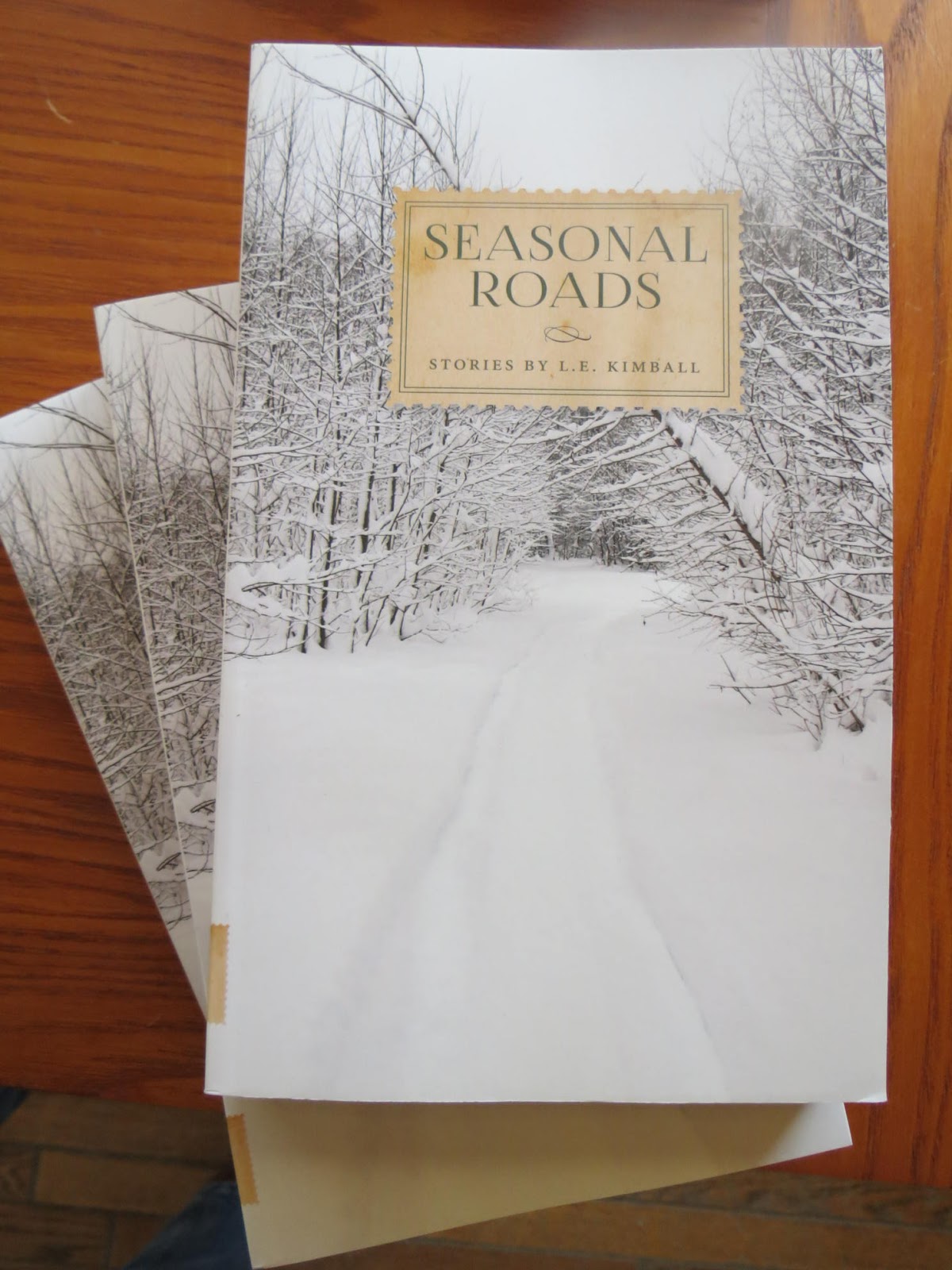
Saturday, April 30, will be the second annual Independent Bookstore Day. Dog Ears Books will definitely have books of poetry available, as we always do. We are also featuring the two last Jim Harrison books, Dead Man’s Float (poems) and The Ancient Minstrel (three novellas); the new book of Michigan-inspired fiction by L.E. Kimball, Seasonal Roads; and a selection of new titles your Northport bookseller thought worthy of attention.


You don’t have to wait until April 30 to come visit and shop our new book titles, and you’ll also want to check out our newly arrived used books section, too (see below). 

I wish every day were bookstore day, every week library week, and every month poetry month. Why not?