Search This Blog

Wednesday, December 15, 2021

We Really “Go to Town!”

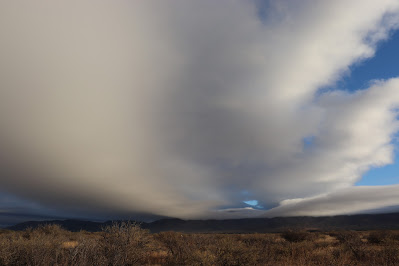
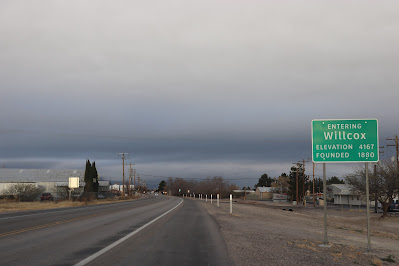
A rare cloudy day in southeast Arizona


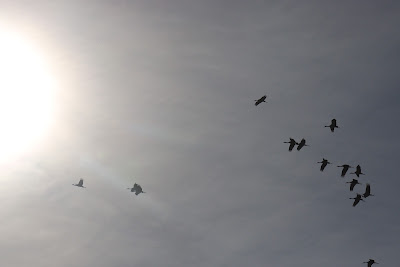
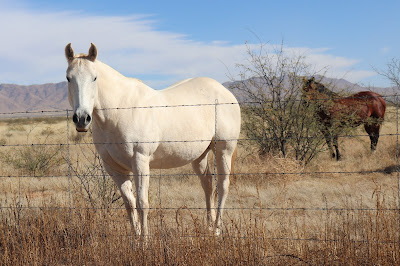
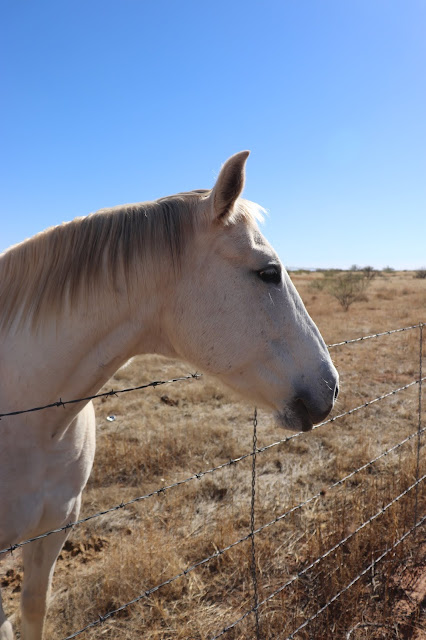
And it’s a rare day that we don’t go to town -- “town” for us, Willcox, only fourteen official miles from our winter ghost town digs in Dos Cabezas, though I think of it as fifteen miles, since we don’t do a lot on the outskirts. Well, other than stop at “the ponds,”  as we call them (Twin Lakes is the official name), to look for sandhill cranes or take the unpaved back road in to look for horses or stop at the animal shelter, where I hope to be volunteering when my background check is completed. 
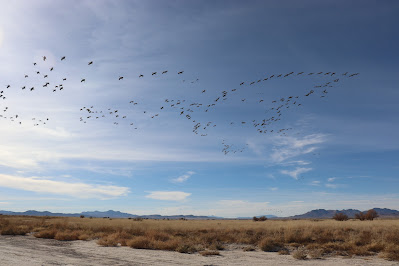


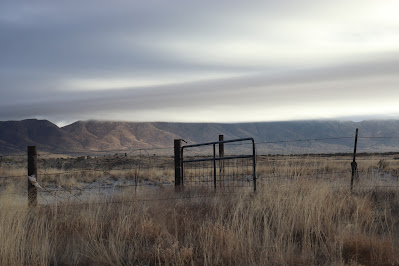
Sometimes we even take a much longer detour, just for the pleasure of the wilder scenery closer to the mountains. 
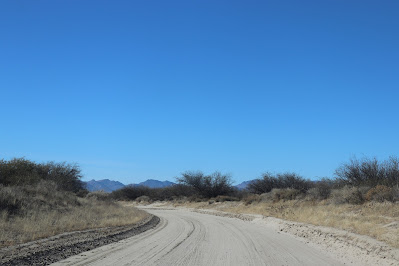


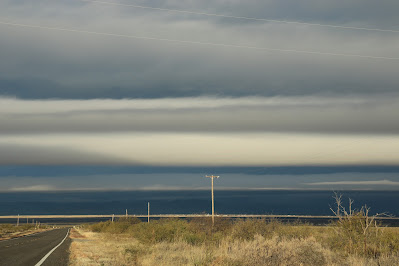
But either way, the 14-15 miles to town are never boring. Every day, every hour of the day, the scene is different, light and clouds making magic in the sky. It occurs to me that perhaps the clouds are so captivating here in the West not only because the sky is wide and uninterrupted by either forests or skyscrapers but also because the clouds look so soft, in contrast to the dry desert full of prickly plants and the sharp rocks of the mountains. 


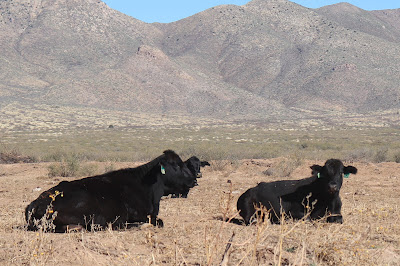
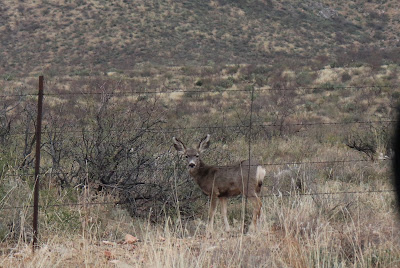
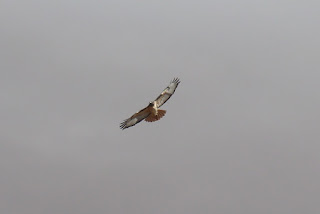
Hawks are a daily sight on the way to town, as are cattle. We don’t see horses every time (although I look for them every single time), and it’s exciting to sight a deer or coyote or javelina. The little deer below stood stock-still in the middle of the highway after its companion bounded across, and we stopped, also, gazing into its eyes before it wisely moved off the road. 


Another day, after a good night’s rain, we saw a young javelina drinking rainwater from the indentations of the rumble strip on the edge of the highway. 


The outskirts of Willcox are not, I’m happy to tell you, miles of malls and fast food joints. In fact, I usually refer to the area outside the city limits on the Dos Cabezas side affectionately as “man’s world.” There are well drilling businesses, body shops, sand and gravel and fertilizer dealers, stock watering tanks for sale, etc. To me, all this says that Willcox is a real place, where people work real jobs. One has a very different impression coming into town from one of the expressway exits (though only one of those has a couple of fast food outlets), and I feel sorry for and a bit impatient with people who think they have “seen Willcox” because they’ve stopped for gas just off the expressway. My particular favorite stop before we cross the railroad tracks from the Dos Cabezas side is the feed store. The eastmost expressway exit would bring you into town past the Willcox Livestock Auction, though, and that’s wonderful, also.


There are two feed stores and two grocery stores, two drugstores (one in the larger grocery store) and two barber shops, and a couple of thrift shops. There are maybe three banks, plus a credit union, although the bank I use (because it’s also in Traverse City,  Michigan) no longer has an open lobby but only an ATM. (For service from live human beings, it’s necessary to drive north to Safford in Graham County.) There are a couple of bars, but we haven’t been in either of them. Several wine-tasting rooms, but again, we have not imbibed. We have been to the Rex Allen Museum, and I recommend it highly! Naturally, there are motels, restaurants, and gas stations, as well as RV parks, but since we are not simply passing through but living here, more important to us are the laundromat, the library, and the post office.
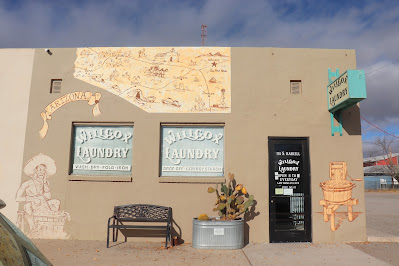

"Cowboy starch" a regional specialty


There are a couple of large, well-stocked hardware stores and a little local hospital with ambulance or, if necessary, helicopter service to Tucson.


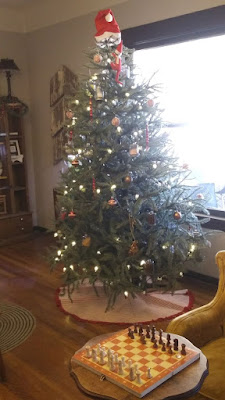
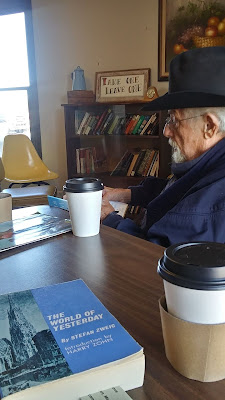
Last year there was an important addition to the town (and to our town visits) in the form of a new coffee house. On sunny, warm days we enjoy sitting out on the wide front porch, and when the wind turns cools it’s cozy inside. People meet to play chess, and there are shelves of books (to which we have contributed), where “Take one, leave one” is the policy. There is a little fish tank and, at present, a Christmas tree. Some very elaborate coffee drinks are available, though I get no fancier than a latte (just the flavor of coffee, thanks, no syrup added) or a double espresso, and there are cupcakes, “apple bites," and what I can’t help calling (in my mind, if nowhere else) pain au chocolat. –which reminds me that there is also a new bakery in town, and I need to try that soon!



Willcox has a movie theatre, and we’ve seen some great shows there in past years. Right now I’m watching the marquee on a daily basis, eager for an evening show that would let us out into the magic of holiday lights strung on the trees of Railroad Park.
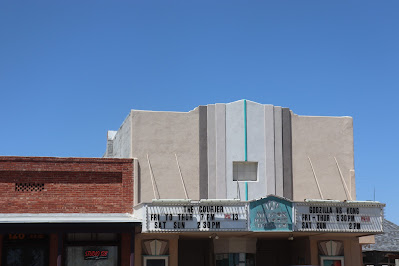


In short, the town of Willcox is a lot like Ralph’s Pretty Good Grocery in the fictional Lake Woebegone: if they don’t have what you want, you probably didn’t need it in the first place. Because believe me, I've left out quite a bit.


Books Read Since Last Listed


164. King, Thomas. A Matter of Malice: A DreadfulWater Mystery (fiction)

165. Thody, Philip & Howard Read. Introducing Sartre (nonfiction)

166. Samuels, Solomon K. A Life in Three Acts: My Journey From Wartime Burma to America (nonfiction)

167. Zweig, Stefan. The World of Yesterday (nonfiction)

168. Taylor, Rosemary. Ghost Town Bonanza (fiction)


To write an autobiography, it helps to have had an interesting life. Whatever the events of your life, however, telling your story in an interesting, readable manner is essential, and while bogus autobiographies and memoirs appear from time to time, the best are the stories honestly told by writers modest about their successes and not afraid to reveal their weaknesses. 


Is it more than coincidence that a good friend’s husband, Solomon K. Samuels, and a famous 20th-century author, Stefan Zweig, both saw their lives as divided into three parts? Samuels calls his book A Life in Three Acts, and Zweig’s working title for the story of his life, published posthumously, was Three Lives. In both cases, I thought it would take me a long time to get through these life stories, but in both cases, again, I sped through the chapters, thoroughly engrossed. There are personal achievements, as well as the horrors of war, in both books. The resolutions are very different. But both books are well worth reading, and I recommend them highly.


Peasy Tales (Briefly)


The dog without a tail, the dog with issues, our little Peasy, continues to enjoy life in Cochise County, Arizona, with his seasonally retired human folks and his neighborhood pack friends. 


Thursday, December 9, 2021

Yes, We Have No Saguaro


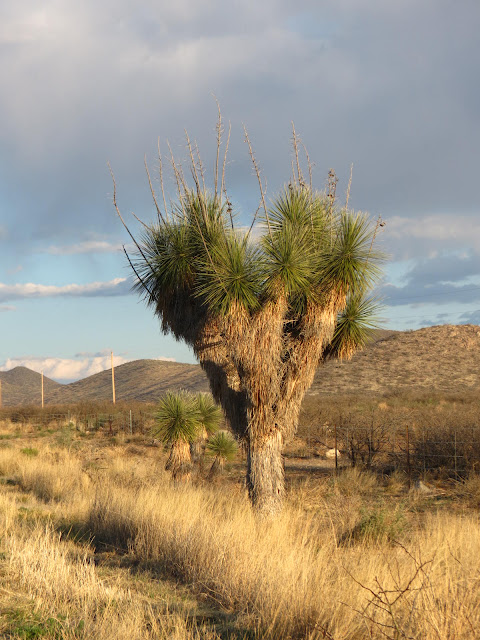
Soaptree yucca

My title today may give a chuckle to the few who remember the old song about bananas. I did not see the original cartoon when it came out in 1930 (not that long in the tooth!), but it replayed on 1950s television and was still amusing then. All of which has nothing to do with plants of the high desert, my topic of the day -- .

Prickly pear

cholla 


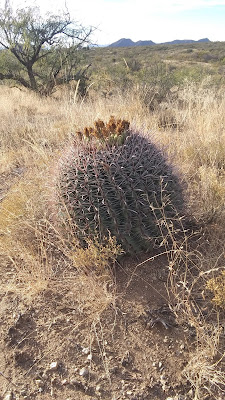
A friend back in northern Michigan asked about plants here in the high desert, speculating that we “don’t have cactus” here. Well, we have a lot of cholla (though not the full range of varieties), and there is prickly pear, too, more often on higher slopes than down on the range, and also here and there a squat barrel cactus, though these last are not as plentiful here as they are in the low desert. Along our Cochise County roadsides, soaptree yucca is ubiquitous, and down the road apiece from our ghost town are rocky foothills stuck all over like giant pincushions with sotol and century plant (the latter a kind of agave), as well as the striking ocotillo (more common around Benson and Bisbee than here in Dos Cabezas). During our first winter here, it took me a while to sort out yucca, agave, and sotol. But yes, we have no saguaro. That, along with "teddy bear" cholla, grows down in the lower elevation of Tucson, 100 miles away.


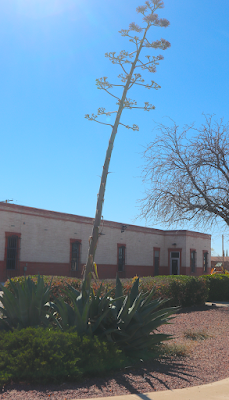
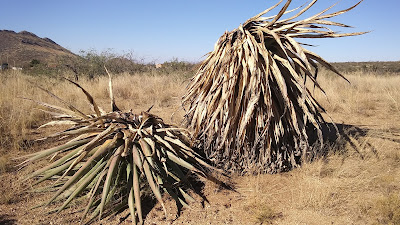
The life cycle of the century plant is interesting, though. It doesn’t really take 100 years to come into bloom (for the one and only time in its life), but it is a long wait. Meanwhile, however, the plant grows larger and larger, making a nice focal point for desert landscaping. 


When it reaches maturity, it sends up an immense, asparagus-like stalk (this plant and asparagus are in the same family), and after flowering the plant dies. 


Where did the stalks go?


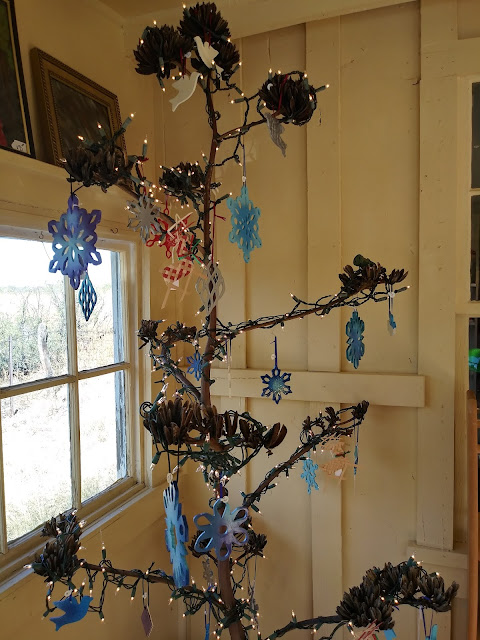
But that is not the end. From the plant's seeds will come a new generation, while the impressive, sculptural dry stalk is favored by desert dwellers for a Christmas “tree.”


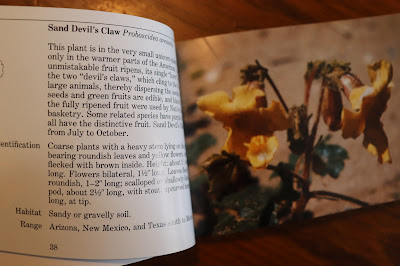
Also, along with cactus and other plants with spines, are many thorny deciduous plants, primarily (around Dos Cabezas) but not limited to the mesquites. One that looks a lot like a mesquite is in the same family (leguminacae, though some botanists break the family down further into subfamilies) but is a different genus. Mesquite genus is Prosopis, catclaw is Acacia. Even that can be confusing, however, as catclaw acacia or Gregg’s acacia, formerly Acacia greggii, now classified as Senegalia greggii, sometimes goes by the common name devilsclaw, but more often “devil’s claw” refers to a different plant altogether, Proboscidea arenaria, from (I kid you not) the unicorn-plant family! 


Chain of devil's claw (unicorn-plant family) pods

book showing flowers of that devil's claw


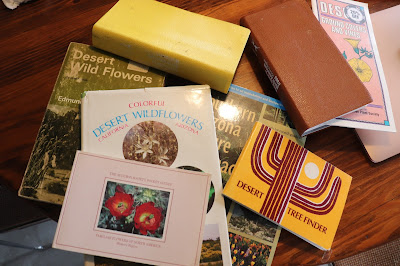
And this, as my friend Ellen would remind you, is why the Latin names of plants are so crucial to identification: What your grandmother in Ohio knew and taught you as “devil’s paintbrush” is not the “devil’s paintbrush” of the American Southwest. What I’ll remind you is that this is a reason for not relying on one plant guide but having access to several.


some of my printed resources

Back to those thorny shrubs --


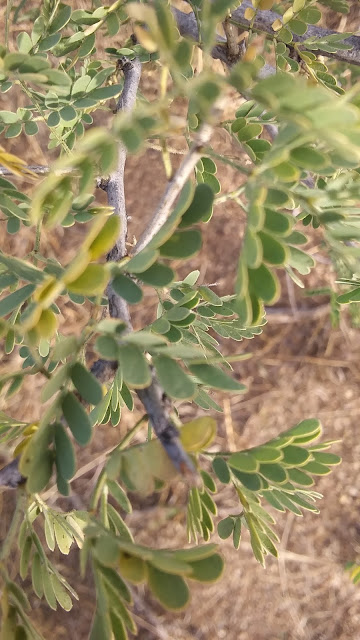
mesquite leaves

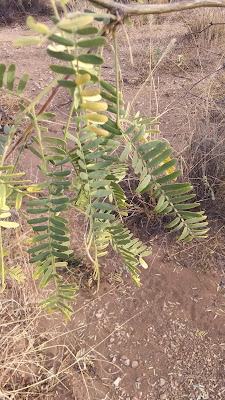
catclaw acacia leaves


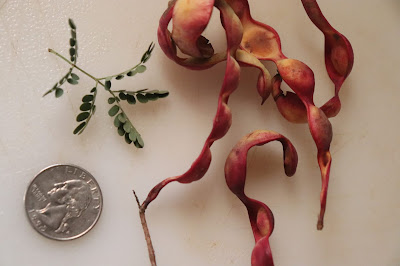
And back to identifying catclaw acacia. Its bipinnately compound leaves are much smaller than the leaves of mesquite, and its thorns are curved like a cat’s claws. Hence the name. Once you note the difference between the two shrubs, it’s obvious, even when they are growing all tangled up in each other, as they sometimes do. I found some catclaw pods the other day, too. They curve and twist, and while The Audubon Society Field Guide to North American Plants, Western Region, authored by Elbert L. Little, calls them brown, the ones I gathered the other day are more reddish to my eye.


catclaw pods


Mr. Little is no fan of catclaw; nor are many hikers or others: “one of the most despised southwestern shrubs,” the Little-authored Audubon guide says of it. And yet, besides the region’s delicious catclaw honey and the plant’s useful hardwood (for fuel and tool-making), catclaw beans are a native food, ground when dry to make pinole, which now seems to be making a comeback as foodies rediscover ancient local foods. Interesting that another common name for catclaw acacia is wait-a-minute bush. Your shirt gets caught on a thorn, and you have to stop to free yourself. Get it? 


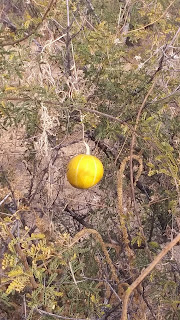
Whether thorns grab your clothes or you have, as I do, the perfect thorn-shedding jacket, it’s always worth stopping to look more closely at what the high desert has to offer. Coyote gourds are not considered edible (except by wildlife) but were used by Native Americans to make soap.


And here in December, when the morning sun comes through mesquite draped with dry vines of the summer’s vanished morning glories, don’t they look like strings of Christmas lights? Look at them with your imagination turned on.


Postscript 12/11/21: A friend's comment about this post being "comprehensive" made me think of all that I had left out -- and I'm not going to try to put everything here, but it seemed wrong to have left out the netleaf hackberry trees, so numerous in the wash and still holding onto their green leaves this December. Though when we first met (one January in maybe 2015?), I was not terribly impressed, I have since then become very fond of this species. Like a U.P. Finn, it has sisu. 


Monday, December 6, 2021

Golden Valleys


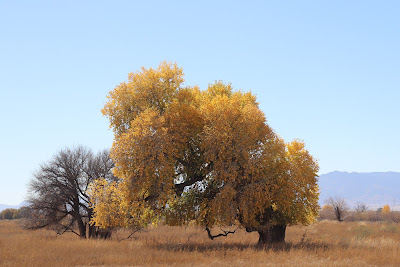
Back in Michigan, not all that long ago, we had a beautiful, mild autumn, with September stretching through October and leaves remaining on trees into November. Here in southeast Arizona now in early December, fall lingers in a similar way. There are no flaming red and orange maples here, none of the purples of green ash, but there is gold in abundance. I think of prospectors violating the mountains for metal, while all around them nature clothed the valleys in bright leaves. 


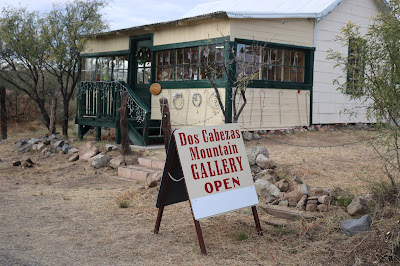
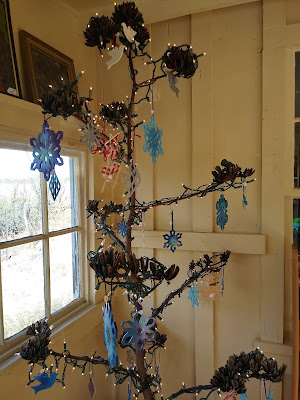
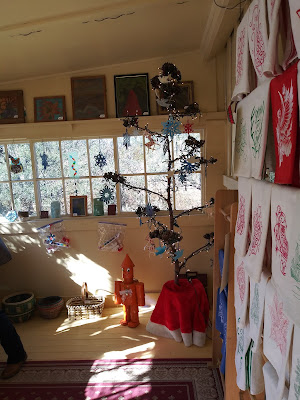
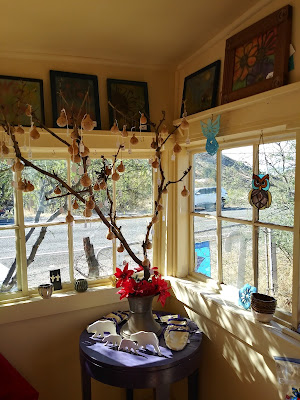
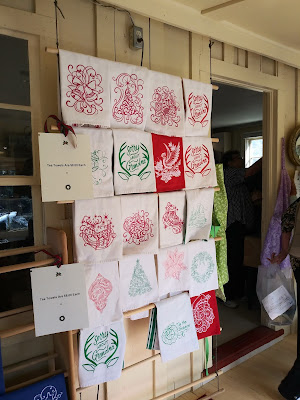
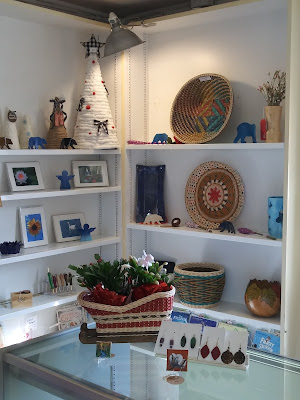
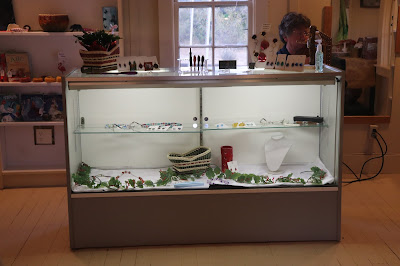
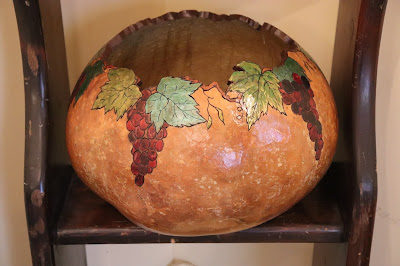
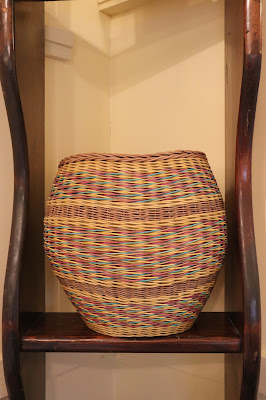
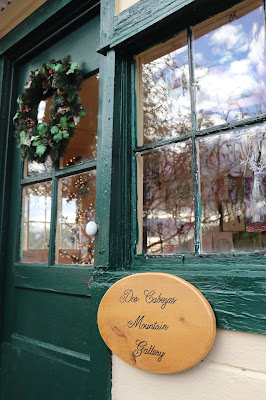
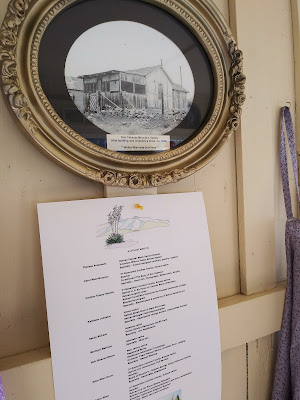
This past weekend the Dos Cabezas Mountain Gallery resumed its annual holiday show and sale, interrupted last year by COVID-19. It was my privilege and joy earlier in the week to help set up the “tree” on the porch – and then to see the entire house transformed by unimaginable hours of work by the local artists and craftspeople. 


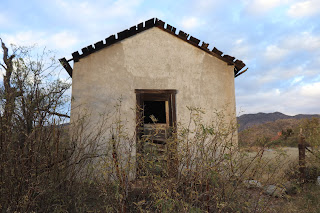
On Saturday a basket maker from Pearce demonstrated his craft in the sun-warm side yard, while indoors visitors shopped for Christmas in a mellow, festive atmosphere of happy conversations, sparkling lights, bright colors, and soft music. When Carol on her autoharp and her brother Walter on his harmonica gave their rendition of “Red River Valley,” the favorite song of one of my grandfathers, I had that exquisite feeling of a perfect moment and knew there was nowhere else I’d rather be. The Christmas spirit came to me at last, as it has in the past in Northport at concerts of the Leelanau Children’s Choir or the downtown tree lighting on a snowy evening.  Added knowledge here is that Walter was born in this same little house where we all were gathered, next door to what used to be the town post office.


Next door...

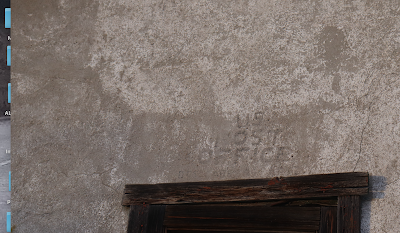
Look closely to see the building's identification.


The husband of my long-time friend Juleen (we worked together in Kalamazoo back in the 1970s) has written his autobiography, A Life in Three Acts: My Journey from Wartime Burma to America, by Solomon K. Samuels, and that book is my current reading. As was true of the World War II experience of families in eastern Europe (Unbreakable revealed a Czechoslovakian family story to me; see book report section of this previous post), what people in Burma suffered during and after the war is largely unknown to Westerners. Sam’s youth in British-ruled Rangoon as the son of an Indian civil servant was a comfortable middle-class existence before the war, but then came food shortages, bombings, Japanese occupation, flight from the city, return, his father’s death, and years of hardship. Maps aid the author in his developing the story of the wartime troop movements. He also details the history of political divisions and strife among Burmese revolutionaries and failure of so many to prepare for a future of independence. 


But I am struck, as well, by small, personal notes. The family, hiding during dark evenings from bombing raids, often kept their spirits up by singing. As Christians, many of the songs they sang were traditional hymns, such as “Abide with Me” and “Nearer My God To Thee,” but they also sang American “cowboy songs,” and when Samuels notes one particular favorite, “Red River Valley,” he cites its lyrics as particularly poignant to his family. That same song my grandfather loved (my mother's stepfather, he was, a north Florida "cracker"), the same song sister and brother Carol and Walter played so beautifully on Saturday here in Dos Cabezas.


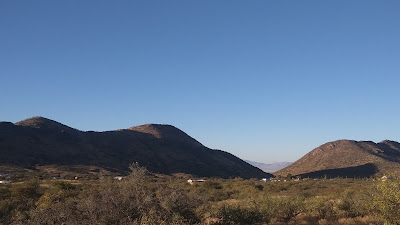
All of this – the gallery scene, tales of wartime decades ago, my surroundings here in the ghost town – bring to my mind thoughts of mountains and valleys. As human beings, we know numerous metaphorical valleys in our lives, some of despair, others of delight, and we also know metaphorical mountains. A mountain can push us to our limits, sometimes even threaten death, while others – or maybe the very same, those of arduous climb! – are exhilarating in the effort required and the clarity of the air, the summit’s view its own reward.


Are these my "golden years"? Here in the mountains, looking down into the valley, I only know that today I feel at home and as fortunate to be here, now, as I am to be at home in Leelanau when I am there -- these two little places filled with loving-hearted friends.


Wednesday, December 1, 2021

Peasy Tales: Dog of the High Desert


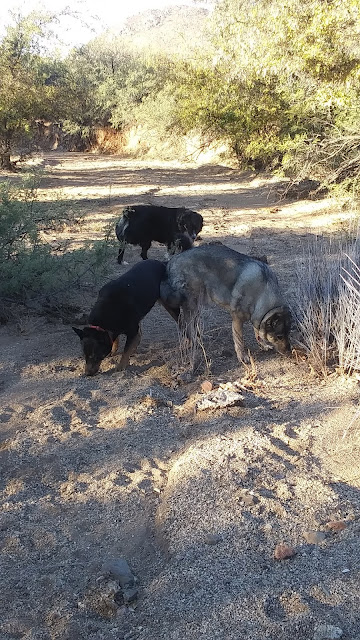
Peasy (in back) with Molly (left) & Buddy (right)

Peasy report


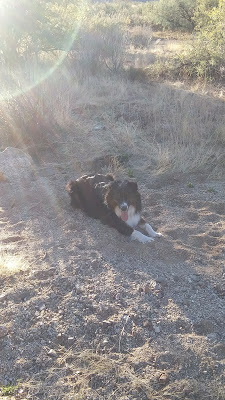
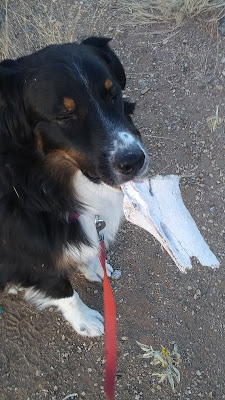
To say that Peasy is happy in his morning adventures with our neighborhood desert dog pack (me, Therese, Peasy, Molly, Buddy) would be understating the case. He is delirious! He is also a supremely calm and contented animal when his dog parents invite him up on the bed for a little pack time before we all go to sleep (dog on the floor). He has a good life, that little sweet Pea! He loves having a family! Staff at the Graham County animal control pound would doubtless be amazed to see this “unadoptable” dog still alive and thriving.


Another lovely morning!

It must have been confusing and unbelievable to him at first here in Dos Cabezas, after being in "prison" for so long and, before that, a homeless stray. Then, a few months after getting used to our winter desert cabin came a week of cross-country car travel to another strange new home in Michigan, where he spent long days home alone while his dog folks worked to bring home his dinner (and theirs). And just when he’s settled in there, back across the country again to Arizona! I wonder if the little guy  half-expected to be abandoned along the road (again) any day. We never considered abandonment, but there were certainly times in the past year when his future with us hung in the balance…. 


How is he here and now? We have not seen his Mr. Hyde personality for quite a while now. (Maybe his anti-anxiety meds are starting to kick in. Maybe, too, time has been working its slow magic in what is now almost a year since he came to be our dog, even if it was two steps forward and one step back for what seemed forever.) Clearly, he remembered the cabin, and he certainly remembered our neighbor, Therese, and her dogs, greeting all three with trust and enthusiasm and readiness for fun! The only other neighbor he met last year was Cheryl, and I'm pretty sure he remembered her, too, because when she drove up to the cabin, he didn’t bark. A very big deal! He also let her come inside and took treats from her hand -- a little nervously, but immediately and without the slightest hostility – and when he had had enough treats (all she’d brought!), and I told him to lie down on his rug and stay, he did it! Good dog!


Treasures outdoors on the range!

(He is on-leash in the above photo because we were out before sunrise so I could get to a social gathering in town, i.e., Willcox, by 8 a.m.) 


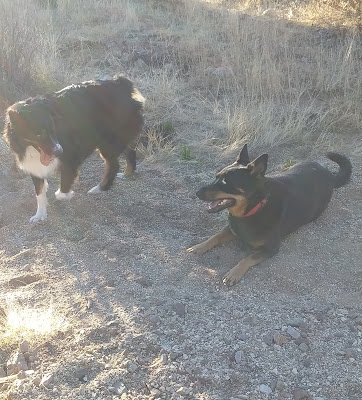
We don’t have outdoor pack fun every single morning but it happens many mornings, and Peasy and Molly have learned to look for each other. Molly is definitely boss dog. When she doesn’t want to be messed with, she makes it known. I wouldn’t mess with her, would you? Anyway, I think it’s good for little Pea to play second fiddle to Molly, too. Keeps him toeing the mark.


Molly lays down the law!


Book report


Unbreakable, by Richard Askwith, is the story of a Czechoslovakian countess but decidedly not – at all! – a tale of extreme riches, international travel and intrigue, flamboyant affairs, or social status games. Lata Brandisová’s family was pretty much on the bottom rung of the nobility and, for nobility (and unlike their wealthier relatives), lived a fairly simple farm life. Lata did grow up with horses, however, and that was the making of her. 
 

Steeplechase is probably horse racing’s most brutally dangerous form, for humans and horses alike, and the Velka Pardubická quickly became famous, right from the first, as the world’s most brutally dangerous steeplechase, intentionally designed to be so by hell-raising Count Oktavian Kinský, Lata’s great-uncle. Small wonder that women were barred from competition until Lata Brandisová broke that barrier. On her first attempt, she managed to complete the course – in itself, a triumph in a race that ended many lives, human and equine, over the years. One year not a single horse and rider finished. Falls, pile-ups, broken necks were an expected part of every annual event.


The story of Lata Brandisová involves politics almost as much as horses, and her 1937 win of the Velka Pardubická, following a year in which German Nazi officers swept the top places, made the formerly unwelcome and at first publicly ridiculed female jockey, briefly, a national heroine of Czechoslovakia. Friend of neither her country’s Nazi occupiers, however, nor their successors, the Russian Communist regime, Lata found her fame short-lived. For that one day, everyone in her country had loved her, but soon she was an “enemy of the people,” too dangerous to befriend closely.


The thing about Lata, though, as her biographer describes her, is that while she loved freedom and hated injustice, nothing was more important to her than God and horses.


Anyone interested in how the succession of shifting 20th-century political regimes affected life in rural central Europe find these aspects of Lata's story fascinating. Readers who love horses will be on the edges of their seats, as one exciting race after another is told. Feminists will find a new and inspiring model in this intrepid horsewoman. I loved the book for all these reasons and only hope that the author’s attempt to bring Lata Brandisová out of obscurity with this biography will be successful. 


Because life is not all about dogs. It’s about horses, too. And commitment. And staying the course.


Falling in love again --

What am I to do?


Read since last post:


Askwith, Richard. Unbreakable: The Woman Who Defied the Nazis in the World's Most Dangerous Horse Race. NY: Pegasus Books, 2019.