Search This Blog

Tuesday, October 25, 2022

"We're living on borrowed time." Those were his very words.

Glorious Sunday morning sunlight!

That’s what the cashier at the little grocery store observed to a tourist during their short exchange about our glorious weather of the past weekend, when the “gales of November” that arrived in October backed off for three days, and the sun shone as if there would be no tomorrow. But there was a tomorrow, and then another – Friday, Saturday, Sunday, all glorious with balmy air, glowing fall colors, and clear blue skies. “Locals’ summer,” a phrase I learned only this year, might be expected more reliably in September, but for three consecutive days this month locals and visitors alike gleefully shrugged off jackets and sweaters.


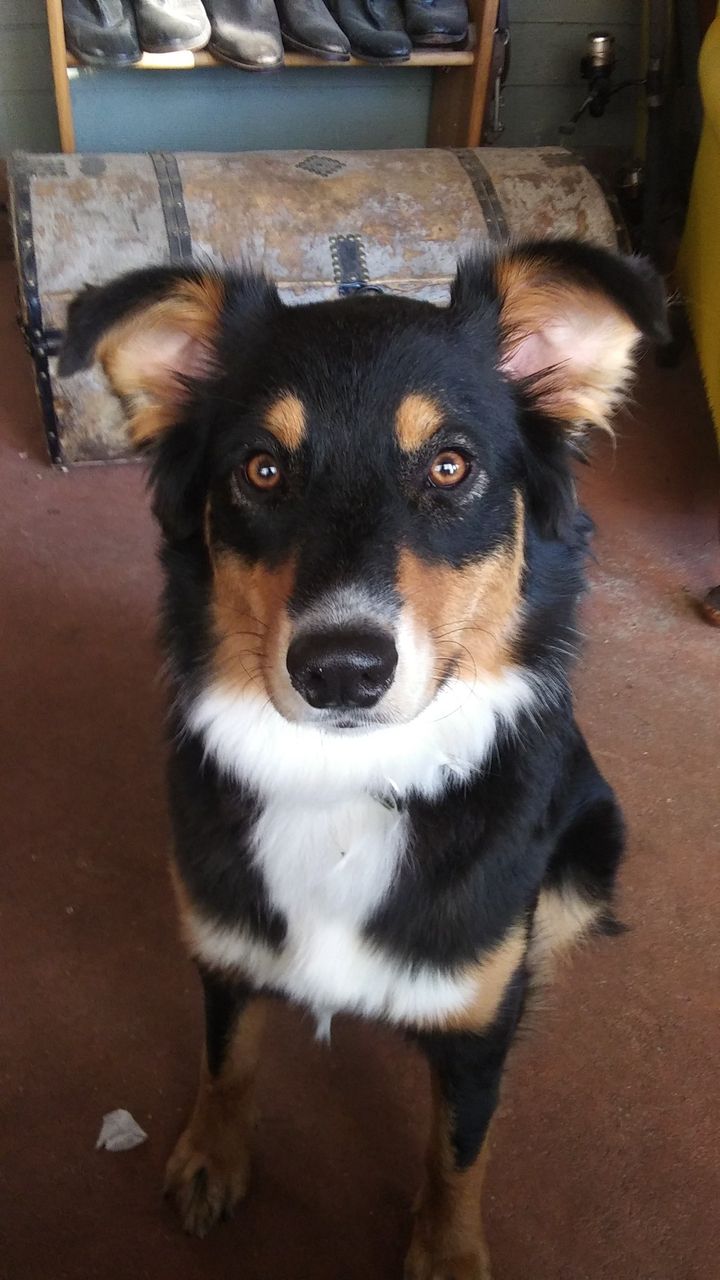
“Bother fall housekeeping!” I said aloud impatiently (well, I might have, you know), translating the Mole’s utterance (WITW) from spring to autumn, because when life gives us heavenly days on earth, it would be wrong to spend all those hours indoors. I enjoyed a long walk with my dog, then a bit of botanizing in the meadow with downstate visitors,  and continued my now almost-finished apple harvest. Finally, reluctantly, after putting away some of summer's outdoor furniture, I spent some “indoor” time, preparing apples for applesauce, but spent it on the front porch with the door open, after which Sunny and I had a play session in the yard with tennis balls. 


Come late afternoon, I was ready to collapse on the porch with a book when I saw a text on my phone from good friend Laura, inviting me to enjoy the sunset at Good Harbor with her! I was so tired! But there is never enough time with friends, and “locals’ summer” could end any day now. Besides, how many times have I been on the beach at Lake Michigan this year? (Only once!) So of course I was up for a picnic supper and sunset!


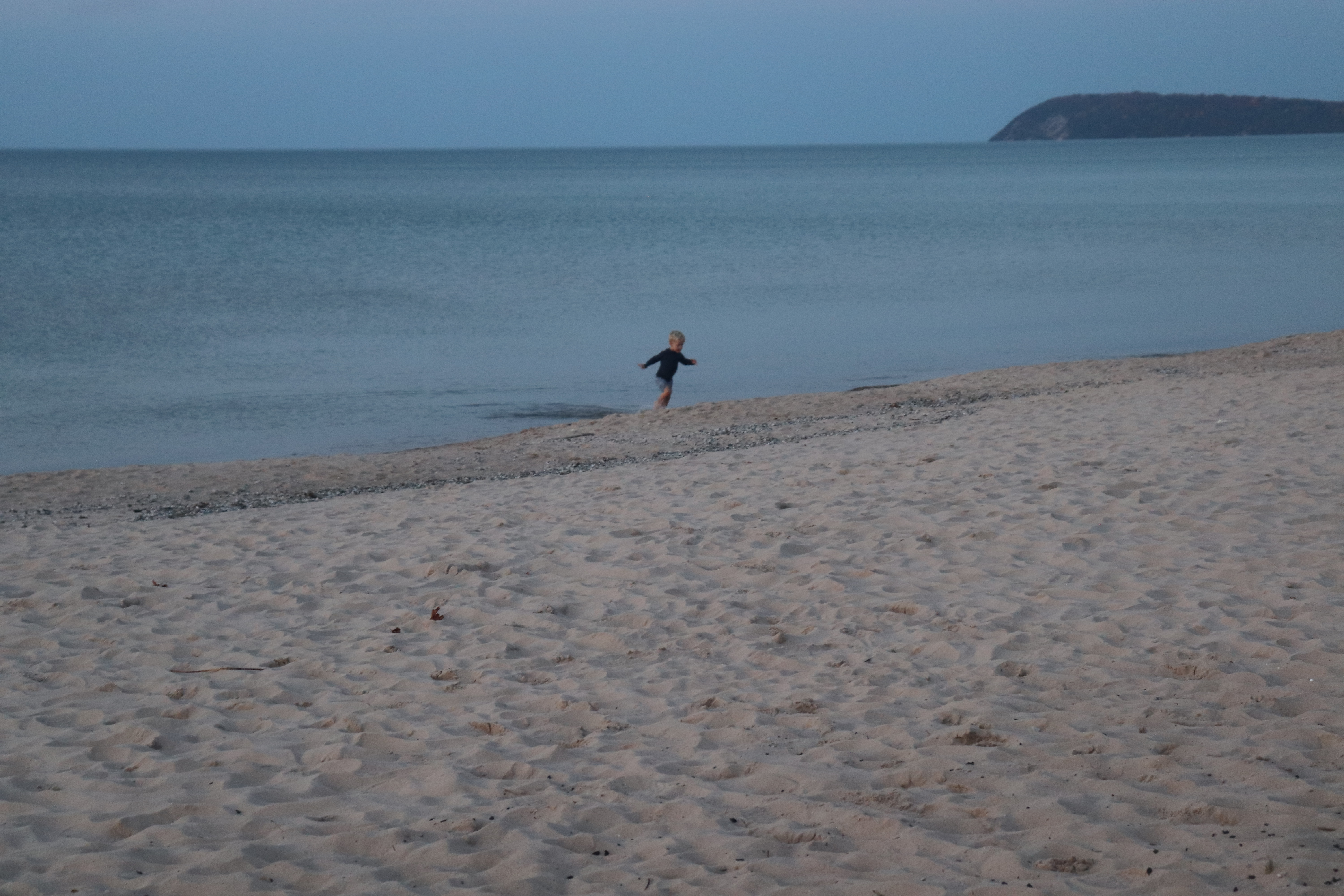
A couple of Northport neighbors had walked farther down the beach for sunset, and as sky colors faded they walked back our way, and we visited a while, luxuriating in the softness of the breeze. Nearby a couple of small children ran in and out of the water. Lake Michigan! After sunset! In late October! Can you believe it?


Monday was an early morning for Sunny and me, our last agility session together until spring, and the day was cloudy, but the colors went on singing, and they sang again in the Tuesday's rain, also, a poignant tune, that, in which I imagined wailing Parisian accordion notes between the falling leaves.


Books Read Since Last Posted List


105.  Cozzens, James Gould. The Just and the Unjust (fiction)

106. Kresge Foundation (various authors). The Culture Keeper: Olayami Dables’ Grand Vision (nonfiction)

107. Wheeler, Jacob. Angel of the Garbage Dump: How Hanley Denning Changed the World One Child at a Time (nonfiction)

108. Gibbon, Lewis Grassic. Sunset Song (fiction)

109. Jance, J.A. Partner in Crime (fiction)

110. Gwynne, S.C. Empire of the Summer Moon: Quanah Parker and the Rise and Fall of the Comanches, the Most Powerful Indian Tribe in American History(nonfiction)

111. Fuselier, David. A Fog on Spirit Island (fiction)


And now --


Sing, colors, leaves, friends, rain or shine! Borrowed time is all we ever have, so let’s make the most of it!


Singin' in the rain


Wednesday, October 19, 2022

Reflections and Shadows

Our world of light and shadow --


-- and reflections in autumn pond


Is a shadow the opposite of a reflection? Can reflections bring on shadows? Can a shadow generate a reflection? Think of these questions as pertaining to metaphors, rather than inquiries into the physics of light. And yet, there are memories that bring light, just as there are those that cast shadows.


Shadows on the side of the house


When a bookstore customer on Saturday bought Grief’s Country, by Gail Griffin, I wondered if the book had special meaning for her. (The meaning I found in it appears in this post.) With an untroubled smile, at least as I read her face, she said she had read a bit of it and found the language poetic, and it was that which appealed to her. Grief’s Country is memoir, but Griffin is a poet, also, and has a new book of poetry due out in spring of 2023, which I look forward to with a sense of confident anticipation. For me, though, the memoir was essential reading, and not for its language alone.


Since grief-stricken myself early in the present year, I have, with little or no effort on my part, received confidences from others struggling with grief, and their reflections on the subject bear witness once again to the truth that we all experience the loss of loved ones differently. It isn’t surprising that losing a child or losing a partner suddenly and unexpectedly with no opportunity for goodbys, would be excruciating. “You never get over it,” one man who lost his son eight years before told me. “It’s always with you,” said another mourner. Then there was: “I couldn’t say his name for two years.” 


Reflect on other people’s experiences as long as we might, however, there is no having of any experience besides our own, no comparing ours to anyone else’s to say which is "worse," the unexpected or the anticipated, drawn-out suffering or a quick, painless death. As another author put it (in the book Widowland, which I wrote about in this earlier post), grief isn’t a contest -- and if it were, who would want to win?


Everyone’s personal experience -- the only experience any of us ever has -- is absolute.


I’ve written about this before, but the biggest surprise to me, even when my grief was as fresh and overwhelming as an avalanche, was how much gratitude I felt in the very midst it. I was grateful for all the years I had had with my love, for the happiness we had known and never taken for granted (having lost it for a while and thinking then that we had lost it forever), for his success as an artist and for all the ways we had been able to work side by side – hanging paintings, transporting boxes of books, backing vehicles onto trailers, consoling each other for the loss of beloved friends and pets, and just everything else that life in a partnership brought, events both memorable and mundane. Grateful for the wonderful travels we had taken together, within Michigan, to the Far West, down to Florida, up into Canada, and – thank heaven we made that dream come true! – to France. Immensely grateful for the support of friends and family, for all the love that came my way when he died, which felt like a harvest of all the years of attention my love had paid to others, making them feel seen, as he did me. 


Something else for which I am grateful, something I haven’t written about here before, is the opportunity I have had – so many opportunities! – to speak of and write of the Artist since he has been gone. If I had not been able to talk about him, to remember and write about our life together, to hear other people’s stories of him, I don’t know how I would have gotten through the past months at all. One first-time bookstore customer over the summer, who lost his wife the same month my husband died, wrote to tell me that our conversation made his time in Leelanau “a little easier.” If I can make use of my own grief to help others with theirs, the pain of it is somewhat lessened. 


Sunny with her bear -- they have the same coloring.


Waking in the morning is the hardest time of the day for me, and only the presence of the puppy makes it bearable. “I’m glad you’re here,” I tell Sunny Juliet, and her wiggles and kisses make me laugh, pulling me out of dark doldrums. I don’t want the light of my reflected memories to fade, but the fading of shadows I don’t mind.


Life without the Artist’s physical presence – his smile, his laugh, our far-reaching conversations and frequent shared silliness, the way we would point out things in the landscape to each other and share thoughts and ideas – can never be what it was with him. Beautiful fall colors in the rain are as lovely as ever but don’t touch me as deeply. Rather, they bring memories of all the autumns we shared, and so, myriad reminders of loss. Someone I happened to see by chance the other day said he wished he had spent more time with David. “Yes,” I responded, “life with him sparkled.” 


The world is still beautiful, though, and life is a gift. As I said to a geographically distant, emotionally close friend on the phone just last night, though life doesn’t sparkle for me these days, sometimes for a moment the sun comes out from behind the clouds, and the world glows. 


Monday, October 17, 2022

The World of Men and Women

New-mown hayfield, Leelanau County, Michigan


The classic Scottish novel, Sunset Song, by Lewis Grassic Gibbon, is one I had never heard of before, so if I’d gone into a bookstore asking for some specific book, it wouldn’t have been this one, and if whatever book I’d asked for wasn’t in stock and I’d left without a serious browsing session, serendipity wouldn’t have had a chance. But as chance determines the large majority of books I read, good fortune had it that this one came into my hands. The cover was attractive. It was called on that cover “The Scottish Masterpiece.” The introduction by Nicola Sturgeon left me no alternative but to turn another page and begin to read the novel.


The story begins in 1911, with a prelude that introduces us to the fictional farming hamlet of Kinraddie and all its folk, a small place of nine households with land leased to farmers carved out of a larger estate. Not on a railroad line or very near a large town, its red clay soil not the easiest to farm, Kinraddie, surrounded by woods and guarded by the nearby Grampian Mountains, has honeysuckle and rabbits and birds, and its fields are worked with teams of horses, wagons of grain then taken to the local mill. The outside world seems so far away it might be on another planet. 


Young Chris Guthrie is the novel’s central character. The Guthrie family, John and Jean and their six children, leave the country up by Aberdeen when John loses the lease on his land due to an outbreak of temper against a member of “the gentry,” and the family comes to Blawearie in Kinraddie. Between John and Will, his eldest, whom he drives like a beast, there is no love lost. The girl Chris, Will’s sister (quean is the old Scottish word for girl, used throughout the novel, as a “full-grown, responsible male” is called a childe), discovers the world of books at school and for a while has ambitions to become a teacher and escape Kinraddie, but her dreamy side is also captured by her surroundings, the fields and woods and neighbors and the old standing stones, so that she feels herself two different people.


Though her mother's own life hardly seems enviable, Jean tells the girl there is more to life than books. The life the mother loved and misses, however, was the brief period of freedom between childhood and motherhood – “the countryside your own, you its, in the days when you’re neither bairn nor woman.” And so Chris Guthrie finds it, after first her mother dies and then her father and she hires a woman to do the indoor work while she herself works in the fields.


Then one New Year’s Eve she becomes Chris Tavendale, wife of Ewan.


So that was her marriage, not like waking from a dream was marrying, but like going into one, rather, she wasn’t sure, not for days, what things they had dreamt and what actually done—she and this farmer of Blawearie who could stir of a morning at the jangle of the clock and creep from bed, the great cat, and be down the stairs to light the fire and put on the kettle. She’d never be far behind him, though, she loved even the bitterness of those frozen mornings, and a bitter winter it was, every crack and joint of the old house played a spray of cold wind across the rooms. He’d be gone to the byre and stable as she came down and sought out the porridge meal and put it to boil, Blawearie’s own meal, fine rounded stuff that Ewan so liked. She’d leave it to hotter there on the fire and then bring the pails from the dairy and open the kitchen door on the close and gasp in the bite of the wind, seeing a grey world on the edge of morning, the bare stubble of the ley riding quick on the close, peering between the shapes of the stacks, the lights of the lanterns shining in byre and stable and barn as Ewan feeded and mucked and tended horses and kye.


-      Lewis Grassic Gibbon, Sunset Song


Contented and even joyous these two were, working side by side and making love besides.


The times, however, as always, bring change. More and more machines appear, on the roads and in the fields. The “Great War” comes, at first something far away that barely seems to concern Kinraddie, but then pushing and pulling on even their quiet rural lives and drawing men away to be killed in faraway France. Rumors of war atrocities and urgings to patriotism pit neighbor against neighbor. Even the appearance of the countryside changes, as to feed the war and the machines the woods are all cut down. New trees will be planted, but no one alive in the second decade of the twentieth century will live to see those trees as a two-hundred-year-old mature forest.


Alongside changes, though, some things stay the same, and one of the abiding facts of life is that lovemaking leads to babies. John Guthrie had ever loved his quean’s golden hair, and Ewan and Chris loved each other bodies, too, but without any means of contraception other than abstinence, men’s and women’s choices put them between a rock and a hard place – “nothing but a wife you hardly dared touch in case you put her in the family way….” And so Jean Guthrie ends her own life and that her of last-born, the twins, with poison … and John Guthrie is tempted by the body of his own daughter … and Ewan Tavendale, home on leave from the army and become a coarse stranger to Chris, tells her he might better have stayed in town and spent the night with a “tart.” Some of his anger and hatred came from the war, yes, but between Chris and Ewan also came the hardship of abstinence. It was not to abstain that they had married, after all!


Not work in the house or in the fields it was that starved these couples of love but the impossibility of limiting their families. This is not at all a “theme” of the novel or one of its overriding “messages,” so it’s nothing a literary critic would point out, but as a reader in 2022 when reproductive rights are being seriously challenged in the United States, as elsewhere, I see the tragedy of these couples’ lives standing out sharp and clear. 


Men and women. The marriage bond. Children can strengthen the bond, if children are desired. Children can also drive apart two people brought together by desire if those children come too fast or too many or before the lovers are ready for them or after they feel their family is complete. 


Both couples in this novel came together in love and began married life in love, but the facts of life conspired to make enemies of them. Alternatives were not available to them in the early twentieth century. Are we now to make alternatives once again unavailable and once again turn too many marriages to battlegrounds? My own happy life with the Artist would never have survived six children!


Of course there is much more to the novel than pregnancy vs. abstinence. There are the charming place names, Peesie’s Knapp one of my favorites. There are the eccentric locals, from the “dafties” that board with Mistress Munro to the philandering minister of the kirk to the atheist and pacifist, Rob of the Mill. And there is the countryside itself, the beauty of the land that Ewan and Chris both so love.


So she went down to the shore, the tide was out, thundering among the rocks, not a soul on the beach but herself, gulls flying and crying, the sun strong and warm. She sat on a seat in the glow of it and shut her eyes and was happy. Below her feet the ground drummed and tremled with reverberations from that far-off siege of the rocks that the sea was making out there by the point of the bay, it was strange to feel it and be of it, maybe folk there were who felt for the sea as last night she had felt in the rain-drenched fields of Kinraddie. But to her it seemed restless, awaiting and abiding nowither, not fine like the glens that nestled and listened high up in the coarse country, or the parks sun-heavy with clover that awaited your feet at evening.


Chance. Happenstance. Serendipity. My reading comes as much by these means as any others, and I am glad of it.


Wednesday, October 12, 2022

Challenges

Tunnel, teeter-totter, and hurdles that Sunny is learning to master


Some are born great, some achieve greatness, and some have greatness thrust upon them.


-      William Shakespeare, Twelfth Night


This particular truth of Shakespeare’s is so often quoted out of context (almost always!) that we easily forget its role in the play and poor Malvolio as the victim of a humiliating practical joke, but just so, in the usual fashion, I too intend to shove Malvolio offstage and use Shakespeare’s words to introduce my own topic:


Some challenges we choose, others are thrust upon us.


I’ll begin with myself (since this is my blog). In my own quite ordinary life, a new puppy was a challenge I chose (not anticipating quite how much of a challenge she would be, but that’s a common story, too, I’m sure), while being transported to Widowland was a challenge life thrust upon me, for sure. Certain aspects of this truth doubtless apply to your life, as well, in that some challenges you would have avoided if possible, and others you probably went out of your way to embrace.


Some human beings are born into the world challenged, with physical handicaps or poverty thrust upon them from the very beginning. I can’t say I was “born on third base,” but I was born in the United States, broadly speaking into the middle class, of educated parents, and all that was a head start that I didn’t have to earn.


Books


All these thoughts ran through my mind this morning as I was reading Jacob Wheeler’s new nonfiction book, Angel of the Garbage Dump: How Hanley Denning Changed the World One Child at a Time. Hanley Denning was a young woman from a comfortable American background whose life trajectory changed dramatically when she saw children living in extreme poverty in a garbage dump outside Guatemala City. Hearing the subject of this book, you might shudder and want to back away, fearing it would be too “depressing” to read, but such is far from the case, because Hanley’s determination to help the children was matched by her love for them and her ability to connect not only with children in Guatemala but with wealthy American donors to make a difference. Given all that, the story of the growth of Hanley’s nonprofit, Camino Seguro, or Safe Passage, is inspiring and uplifting. As I read this book, my head and heart are filled with images of children – and their parents – who find safety, joy, love, and learning in their challenging present, as well as hope for a better future. A wonderful story, well told by the publisher of Leelanau County’s Glen Arbor Sun.


An inspiring story!


Hanley Denning chose early on in life on the challenge of long-distance running, and she went on to choose the almost superhuman challenges of changing the lives of some of the poorest children in the Western hemisphere. Most of our lives are much tamer, but no life is immune to challenging situations.


Anne-Marie Ooman’s book, As Long As I Know You: The Mom Book, recounts challenges of a different kind. For most of Anne-Marie’s life, her own mother’s example was one she was determined not to follow. With five children born in six and a half years, both Oomen parents had to work hard to feed and clothe them all in rural northern Michigan, and the children had to work, too. Anne-Marie wanted a different kind of life -- and she wanted it away from the farm. Signing up for a college semester abroad, against her mother’s wishes, was one early blow she struck for her own freedom, determined to become a writer, not a housewife. While writing, however, was something Oomen chose, different challenges awaited her with the coming of her widowed mother’s old age. 


We can all learn from Anne-Marie's honest true tale.


When a parent can no longer live alone safely, how do adult children deal with the problem? Where does the money come from for increasing levels of care? What kinds of conversation are possible between unhappy aged parents and confused, guilt-ridden adult children? Are there ways to avoid the unhappy feelings of the two generations?


No one chooses old age. Inevitable it is, however, for those who live long -- the price of long life -- and however well prepared we may try to be, it cannot be otherwise than challenging. 


Where Jacob Wheeler’s book about Hanley Denning is inspiring for the enormous challenges his subject took upon herself, Anne-Marie Oomen writes of challenges more of us are likely to face, whether we want to or not. We can learn, though, from both books. From Wheeler’s, we see the enormous difference that one very other-directed person can make in the world. Yes, it can be done! From Oomen’s, looking ahead to very probable situations in our own lives, we can perhaps avoid some -- not all! -- of the problems she and her mother and siblings experienced, profiting by what the author would have liked to know and understand earlier. 


We will not all move to Guatemala, after all, but we are all getting older every day of our lives. 


Dogs


One of the many wonderful things about dogs is that they don’t compare the lives they have to other possible lives. When a dog is sick or hurt, the dog doesn’t cry, “Why me?” and in a household with only one often boring adult, the dog doesn’t say, “I never asked to be born! I wish I had a different family!” I am the one who chose the challenges of learning agility work for Sunny Juliet, not Sunny herself, but she is responding whole-heartedly! The work exercises her mind along with her muscles. It requires her full attention, and her attention channels otherwise wild energy into focused energy. The payoff (besides generous treats throughout the exercises) is that after a lesson she and her classmate get to run around and play off-leash. Social time! Happy dogs! 


May we all meet the challenges of the day with courage and cheerful spirits --. 


Thursday, October 6, 2022

Reading For Pleasure


Do you read for pleasure? For work? For information? 


Information, of course, as we all realize, is of many sorts and sought for many reasons. (Egad! Don’t I just sound like that boring sister, Mary, in Jane Austen’s Pride and Prejudice? Forgive me, please!) For example, friend and I were puzzling over the research findings of the newest Nobel Prize winners in quantum physics, that of “entangled quantum states, where two particles behave like a single unit even when they are separated," but a sentence my friend read to me from the New York Times over the breakfast table (she is visiting from Ann Arbor for a couple of days) only increased our bafflement: 


Measuring one of a widely separated pair of particles could instantaneously change the results of measuring the other particle, even if it was light-years away. 


"So," I asked, "are the changes in the particles or only in the measurements?" We quickly leapt to the uncertainty principle, which I have always liked because it points to limits of human knowledge, and I like the principle for its reminders that human understanding of the universe, however much it expands, will always remain partial, but my question remained unanswered. I can phrase it another way: Are we learning more about particles or more about measurement? 


If you follow the link above, you’ll see further links to what we might call (awkwardly, I admit) sub-subjects, and the one that caught my eye asked, “Does colour exist when no one is watching?” Unfortunately, the diagrams that might have answered that question (did they?) were accompanied by text in Swedish. I was reminded, though, of conversations with my beloved husband, the Artist affirming to me more than once that color exists only in the presence of light – as what philosophers call a “secondary quality,” something partly in the object and partly in our own perception. I always asked, though I knew the answer, if I couldn't turn the lights on very fast! and catch color waking up.


I will never be a quantum physicist.


Physicists and physicians, engineers and programmers need information for their work, but an author writing historical fiction also reads for information related to her work, though the work is very different in kind. She is recreating a whole world, not exploring the world of today. And writers of speculative fiction (science fiction, fantasy, dystopic narratives, etc.) create imaginary worlds, but they also need to be grounded in whatever natural, physical, and social sciences give plausibility to their imagined worlds. Presumably, those scientists and novelists are doing work they live and so find pleasure in the reading they do for information. 


Others of us are just plain curious. I read history and economics not professionally but because I crave understanding. Why are things the way they are? How did they get to be the way they are? My larger point – one of them, at least – is that reading for pleasure does not have to be only easy reading, and by no means does reading pleasure have to be limited to fiction. 


Here, for example, is part of a preface to a book on geology:


This work attempts to hold a position between textbooks and books of light reading. The formal textbook would not suit the class of readers addressed. The style of light reading would have been unworthy of the theme, and would not have supplied the substantial information here intended….


The method of treatment is simple. The reader begins with the familiar objects at his very door. His observations are extended to the field, the lake, the torrent, the valley, and the mountain. They widen over the continent until all the striking phenomena of the surface have been surveyed. Occasionally, trains of reasoning suggested by the facts are followed out until the outlines of geological theories emerge. The course of observation and reasoning then penetrates beneath the surface … striking fossils … nebular theory … retrospect and reflection … a relish may be stimulated ….


-      Alexander Winchell, Walks and Talks in the Geological Field (1886)


Only a few days before this book came into my hands, a geology student from Grand Rapids had visited my bookstore and found a few useful textbooks on her subject. What I wished I’d had for her, though, were some of the books on geology that, for me, stimulate relish and speak directly to the fascination so many of us find in rocks and landforms:


Bass, Rick. Oil Notes (1995)

Leveson, David. A Sense of the Earth (1971)

Pettijohn, F. J. Memoirs of an Unrepentant Field Geologist (1987)


I’ll add to that –


Lopez, Barry. Home Ground: A Guide to the American Landscape (2006)


All these books deal with material all too often presented in dry textbook style for people originally drawn to the subject, drawn outdoors, and drawn to pick up rocks and climb mountains by beauty and mystery, while these books are definitely to be read for and with pleasure.


David Grath in Texas Canyon

Note: This post could be taken as an extension of the previous post on reading subjectively. So, not a critic and not a quantum physicist!

Tuesday, October 4, 2022

On Not Reading Like a Critic

It's so much more than a pond to me.


Reading Subjectively


When I wrote about a new book recently on this blog, I said explicitly, “This is not a book review.” Increasingly, I find myself reading more and more subjectively, zeroing in on passages and thoughts and events and images meaningful to me because I relate them to my own life. Characters in books don’t have to be “like me” for me to find connections with them, and neither does the setting or even the time period have to be my own. People, after all, are people, whoever and wherever and whenever they live -- and fictional characters do live in good books, as all readers know, so when we read a well-written novel, we enter into the lives of the characters.


Here is an example of what I mean by reading subjectively – first, the quote from Proust and then, the associations it brought up for me:


Thus, at every point in its existence the name of Guermantes, considered as a conglomerate of all the names it comprised within and around itself, suffered losses and enrolled new elements, like those gardens in which, in a continuous process, flowers scarcely in bud, ready to take the places of those which are beginning to fade, lose their identity in a mass that appears unchanged except to those persons who have not been witnessing the succession of new blooms and therefore have retained in their memories an exact picture of the flowers that have disappeared. 


- Marcel Proust, The Past Recaptured


In the final volume of Proust’s epic, Marcel attends a reception at the home of the Princesse de Guermantes, where he encounters a number of old acquaintances so changed by Time that some at first he does not recognize at all. Gradually he is able to re-member them, as it were, comparing their present faces and bodies with young, fresh images recalled from years past. Along with physical changes, he notes how failing memories have allowed former acrimonious feelings to vanish, so that individuals once bitter enemies now meet on cordial terms as if they had never been at odds with one another. Newcomers, with no memory of relationships of former years or what place was held in society by various individuals twenty years or more before, take the present to be something that always was, more or less, while those who have not kept track of all the changes wrought by Time remember what used to be, “the flowers that have disappeared.”


I read and re-read the paragraph, substituting in my mind, for “Guermantes,” the name “Leland,” since it was in Leland — and specifically at the Blue Bird — that my Leelanau County memory first began to be formed. Many faces from those days have disappeared. (Most, I often think. If I were to go there some evening now, would I recognize a single person?) At the same time, I know that the names and faces I associate with those tables and that bar mean little or nothing to Leland’s young crowd today. The same, of course, is true of Northport, but in Northport my own memory goes back only to 1993, to Woody’s Settling Inn and my first, oh-so-modest little used bookstore in one of the sheds next door. I never even saw “the old school,” as it's called on sweatshirts worn proudly by those who attended and graduated from that old two-story brick building with its outdoor fire escape chute, yet I recall the happy feeling it gave me when one of that school’s graduates, himself a third-generation Northporter, told me I was “a Northport person.” 


David, my husband, was always a Leland person. Leland was where he established his reputation early on. My only identity in Leland was as his partner, whereas in Northport I was “the bookstore lady,” someone with an identity of my own. David and I settled in the country halfway between the two villages, with good friends in both.


Early on, David Grath in Leland, Michigan


Leland/Fishtown legend David Grath


Original Dog Ears Books, 1993, Northport


Time’s flight is inexorable. Artists, however, leave behind them work that never grows old, and in that way the garden, here in Leelanau as elsewhere, continues to grow in richness and complexity.


How Does My Garden Grow?


When it comes to literal gardening, my focus this past season was on flowers rather than vegetables. I needed flowers. I needed color in front of my house to welcome me home every day, since the Artist wouldn’t be waiting for me in the yard or on the porch, as he was last year. I planted annuals as well as perennials and recommend having both. Perennials mark the passing season for us as each blooms for its limited time, while annuals either flower continuously, such as pansies and begonias,  or repeatedly. Is my new favorite annual below bacopa? I forget. But I love it.


Next year I’ll have vegetables again.


But the glory of my home grounds for me is my meadow. Now cleared of autumn olive (temporarily, I know; the vigil will be lifelong!), the variety of its flora is a rich and diverse mix.


Just now the asters are stealing the show (bees are busy in them all day long), and yesterday I saw the first of what will be hundreds of milkweed pods releasing their seeds to the wind, while butterflies continue to flit about among the grasses and flowers. There are wild roses and an enormous colony of blackberries. So much that it’s hard to have a “favorite” plant, but I was thrilled to find not one but two hawthorns this year, one to the east, the other to the south. 


The summer I fell in love with Proust I was obsessed with hawthorns, and however thrilling the landscape that met my eyes when we went out on evening rides through the countryside, I could not get hawthorns out of my mind and looked for hawthorns everywhere, just as I used to make mental notes of blooming asters, always meaning to go back to collect seeds and never following through. Then one year the wildflower seed mix I’d sown in my meadow began producing asters. Now it seems I have hawthorns, also, and I find their presence immensely satisfying. No, more than that. Comforting. Don't ask me why. Although in some way, I suppose, just as I am struck by associations to my life in books, I also value associations to books in my life.


Not everything I read gives me comfort. Some re-open springs of grief. Others stretch my mind. The one thing they have in common these days is that, while still aware of quality in writing and the skill of writers, I am reading more and more for myself, gathering in as much as possible in these harvest years, as I look back to put it all together. At least, to try.