Search This Blog

Sunday, September 11, 2016

Just in Time; Bearing Witness


Wednesday, our big travel day north, skies were grey and cloudy, but on Thursday morning the sun whisked away the lingering wispy clouds, and to my mind the signals were clear: time to head out to Grand Sable Lake.


The water felt chilly at first, of course, but not so cold that skin didn’t adjust to it quickly, and then the feeling was heavenly, soft and silky smooth. My first swim of 2016 was worth waiting for! On the other hand, I was glad I didn’t wait any longer, because cloudy skies returned on Friday.


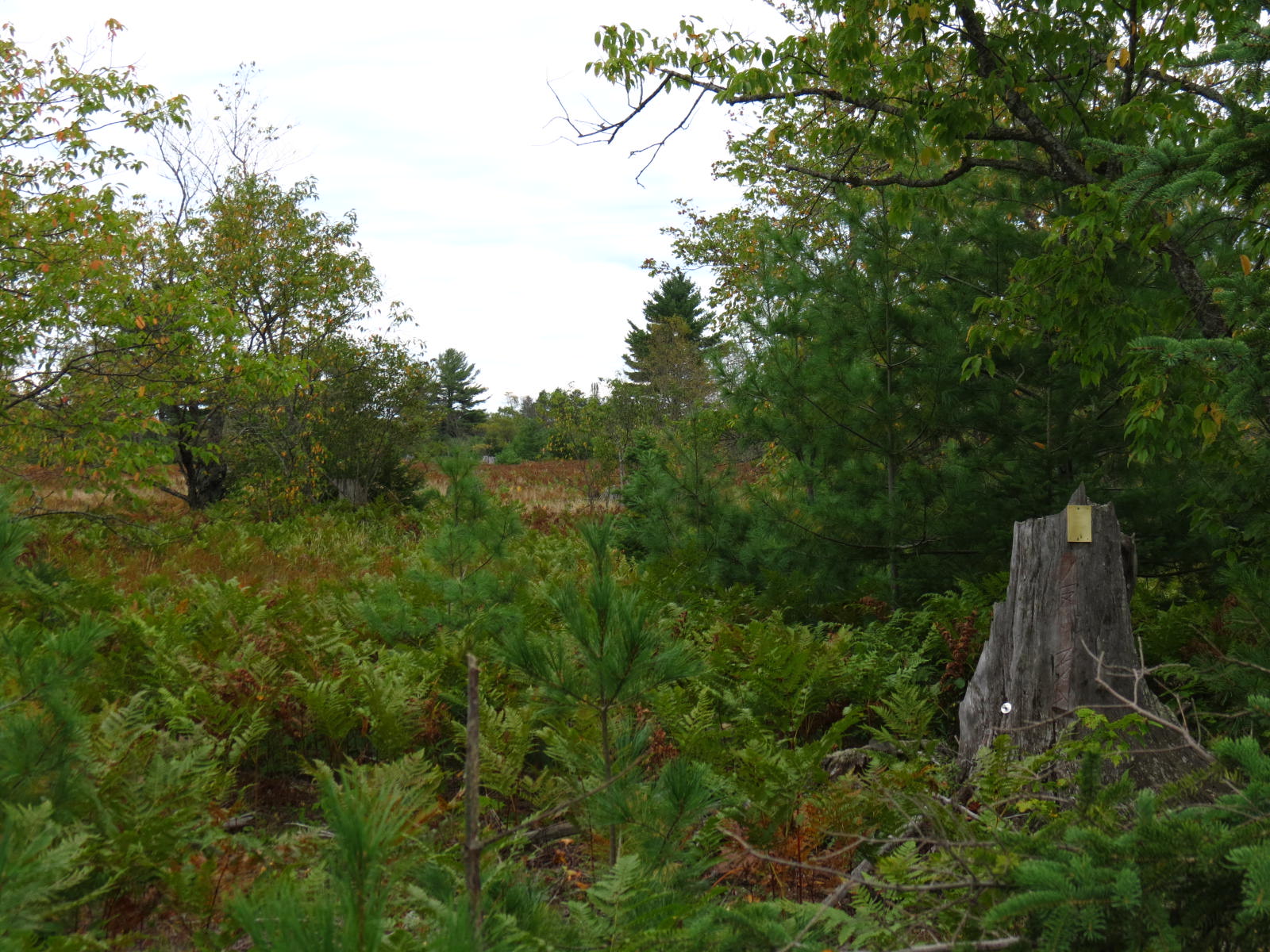
Besides a vacation swim, another pilgrimage I anticipate eagerly is our trip to Munising by way of the Kingston Plains. I find the very name “Kingston Plains” thrilling, and when I admitted as much to David, he said he had always felt that way about the Penoyer High Banks (which I may or may not be spelling correctly). Kingston Plains is what remains since lumbering days took off the original giant white pines, leaving fields of nothing but stumps. It has taken many years for small trees to appear, and most of the vegetation is still lichen, bracken, and blueberries.


But I made an exciting discovery in 2012, and since then have enjoyed returning to seek out again the remains of the old bearing tree, or, as I like to call it, witness tree.


Seeing the markers in these photos probably makes them look obvious. Spotting one old stump among many from a distance still looks easy in my photos below, but onsite it is far trickier than I have made it look here. 


Sarah is not much interested in historical survey markers, but she likes the Kingston Plains, too, because I always give her a chance to explore off-leash. Yes, it’s good to let our animal spirits expand and breathe deeply in this lovely place where nature is slowly healing the scars of the past.


I told David that if I die before he does, he should scatter at least a portion of my ashes at the foot of the witness tree but that he will probably need some help finding it. There! My wishes are on public record.


Saturday, September 10, 2016

Questions of Categories

Wednesday, Mackinac Bridge


Brown: The Last Discovery of America, by Richard Rodriguez, is a loose meditation, sometimes almost free association of thoughts, on purity’s opposites, that is, mixing, confusion, and ambiguity. Lines of skin color, “race,” ethnicity, gender, nationality, etc. are all questioned. “Brown” as a category is turned upside-down, “Hispanic” investigated and found wanting, as is the very project of sorting human beings into mutually exclusive categories.

I finished the Rodriguez book on the eve of our departure and the next day picked up what would be my reading for the next few days. There was no plan to the selection, only happenstance, and yet, as it happened, the next two books continued the journey begun with Rodriguez.

Where the Broken Heart Still Beats: The Story of Cynthia Ann Parker, by Carolyn Meyer, is an imaginative fictional account, written for young people, of the life of the mother of Quanah Parker following what I will call her recapture by whites after she had been taken as a child by Comanches in a raid and lived with them and as one of them for twenty-five years, growing up, marrying, and bearing three children. She was recaptured with her baby daughter. In the novel, she is taken to live with a brother who had escaped the raid a quarter-century earlier. When that brother’s wife becomes too unhappy with her presence, she is taken to live with another surviving brother.

But the child captured in the raid had grown to girlhood and womanhood as what white people called “Comanche,” and her language and all ways of living were of the People. Was she then “white”? In Meyer’s fictional account, imagined from the barest known facts (and even these contested, which is why I call the book imaginative rather than historical fiction or fictional biography), the sisters-in-law with whom she comes involuntarily to live -- first one then another -- say no, repeatedly objecting to her presence in the family and calling her a “savage.” The strange woman they insist on calling “Cynthia Ann” does not see or feel herself to be “white” or to be the person so named. She calls herself Naduah.” And the name “Comanche” is not one she uses, either.
“...We are Nernernuh, and that is our way, Lucy. Other is your way, white man’s way. We are not like you. I think you forget that.”
 
“But you’re white!” I said. “How can you believe those things?" 
 “You say I am white. I say I am Nerm.”
It is a strange novel to have written for young people. The points of view alternate between Lucy’s first-person diary entries and a third-person point of view from Naduah, but the diary breaks off abruptly in 1864, with everything including the Civil War still unresolved. Following the last diary entry, a letter dated 1864, written by a character who appeared only toward the end of the diary, tells Lucy that both Naduah and her daughter have died. Then narrator Lucy returns to write in 1883 that she had to cease her girlhood diary due to paper shortages during the war but later married the letter-writer and remembers Naduah and her stories of Quanah, the warrior son. A complete fiction would no doubt have ended differently, but historical truth did not allow Naduah to be reunited with her Comanche husband or sons or the way of life that had been hers for most of her years.

The story is convincingly told but cannot help raise more questions than it answers, since Quanah and his parents were real human beings, and teasingly little is known of their actual lives.

Next I turned to a small paperback edition of the English classic Robinson Crusoe, by Daniel Defoe, a story I had not read for decades but one that seemed appropriate for a vacation getaway. With surprise, then, I became reacquainted with the protagonist’s life long before his famous shipwreck and island existence. Gone to sea against his parents’ wishes, taken captive and enslaved, he made his escape to land in Brazil, where he became a successful plantation owner. But –
As I had once done thus in my breaking away from my parents, so I could not be content now but I must go and leave the happy view I had of being a rich and thriving man in my new plantation, only to pursue a rash and immoderate desire of rising faster than the nature of the thing admitted. Thus I cast myself down again into the deepest gulf of human misery that ever man fell into or perhaps could be consistent with life and a state of health in the world.
The get-rich-faster scheme on which Crusoe next embarked (literally) was no less than a sea voyage to procure slaves for other Brazilian plantation owners. How could I have forgotten all this?

Shipwrecked but saved from drowning, Crusoe does not immediately turn to God in thanksgiving, but eventually (following a long, serious, debilitating illness) he does.
...Now I looked back upon my past life with such horror, and my sins appeared so dreadful, that my soul sought nothing of God but deliverance from the load of guilt that bore down all my comfort.

Meyer gave the woman Naduah sisters-in-law who would not admit her to be family, seeing her “lost” forever to the “white” world. Defoe’s Crusoe, slave-owner and would-be slave-trader, finds in apparent misfortune an opportunity to be “delivered from sin.” And so cultural oppositions and mixings again, in these two very different novels, color the question of “purity” and bring it into question.

I have not yet met with Friday, because Crusoe has yet to find the footprint. How will subsequent pages play out in relation to the meditations of Rodriguez? Will Crusoe recognize his involvement with slavery as sin?

It is a rainy day. I read on....

Friday, Kingston Plains


Monday, September 5, 2016

Takin' a Break


Bruce Viger takes Labor Day seriously. His restaurant, the Garage Bar & Grill, is closed for the day while he serves up a big picnic at home for his employees. Since our break involves getting beyond the township boundaries, David and I are here in Northport today (see picture below: OPEN), ready for whatever business may come our way but also anticipating a fairly slow and easy day of it.


Here at the frayed end of summer, my reading train went completely off the rails. First I was reading a fascinating book about dogs but in jumping between that book and a couple of others I managed to mislay the dog book. When I’m engaged in yet another futile search at home, I think the book must be at the shop; when I come to Northport and look again, unsuccessfully, I’m sure it must be at home. So far, though, no luck either place. And it was, as a say, a fascinating book! Another one I picked up one day was a memoir, and I continued reading for many chapters even after realizing I’d read it before, but after a while my hilarity subsided, and I decided to set it aside.

So that made two books started and not finished, two books that I cannot legitimately add to my “Books Read” list for the year. I did better with Kwame Anthony Appiah’s book, Cosmopolitanism. Dealing largely in abstractions (the author is a philosopher, after all), Cosmopolitanism was most interesting to me in (1) the sections dealing with examples from Ghana and (2) Appiah’s chapter on “Cosmopolitan Contamination.” The latter resonated with me because the arguments against “purity” reminded me of Nietzsche’s, and the arguments for “contamination” – which might as well be called cultural enrichment or cross-cultural fertilization – were similar to those I employed against Nietzsche in one chapter of my doctoral dissertation, winding up that chapter with one of my favorite poems, “Pied Beauty,” by Gerard Manley Hopkins. As Appiah observes,
We do not need, have never needed, settled community, a homogeneous system of values, in order to have a home. Cultural purity is an oxymoron. The odds are that, culturally speaking, you already live a cosmopolitan life, enriched by literature, art, and film that come from many places, and that contain influences from many more.
Ah, yes, dappled things!


There is dappling in summer’s ubiquitous green these days, errant patches of yellow and orange, hints of the season to come, and with these tiny previews of fall comes the time that David and I take a little time off from work, the “summer” vacation (in September) that we begin to anticipate as early as mid-August. While we’re gone – for an indeterminate length of time – our businesses will also be, basically, “on vacation,” although there is an exciting chance that Bookstore Bruce, my helper of many years, will open up on Friday and Saturday to test the September water. And if having the bookstore open then seems worthwhile, he may come back and do it again the following week. I would suggest calling first if you would be making a long trip solely on the chance of finding Dog Ears Books open, but then, isn’t any Michigan cruise a pleasure regardless of destination? That’s certainly how we feel as we look forward to some time on the road.


If not back earlier, we will definitely be on hand for Leelanau UnCaged, the fourth annual Northport street fair with arts and crafts and live music and fun galore! That is Saturday, September 24, so mark your calendar now and plan to be here with us!


Sunday, September 4, 2016

Apple King and Queen Hold Court in Northport

Phyllis and Johnny Kilcherman arrived in state on Waukazoo Street for their Saturday evening book launch, and everything went smoothly from then on. John brought the apples, I made punch and put out cookies, and a sizable crowd quickly assembled. More than one person came early, so as to be able to make the 8 o'clock Sousa concert at the Northport auditorium up the hill (proving my contention that the conflict could be easily overcome).

Phyllis Kilcherman's chief focus in the book and in her remarks to the assembled audience was the family farm angle and the recipes. "Family farms are disappearing," she said, explaining why she wanted to document the various families who had lived and worked the land now known as Christmas Cove Farm.

John Kilcherman had stories of playing softball in an old orchard when he was a boy. "Everyone had to hit into left field," he said, "because we didn't have enough players for right field." He told how he first got interested in old apple varieties and started planting one or a few of each at a time, but only on marginal land and along fence rows, as he didn't want apple trees to take up valuable growing space.

It was 1975 when the Kilchermans first started growing apples, "and we had so much fun," Phyllis said, "that we wanted to share them with friends." They began to put together gift boxes. And the rest, as they say, is history.


Other honored guests of the evening, pictured below with John and Phyllis, were Dianne Carroll Burdick, photographer, and Susan Bays, publisher (Arbutus Press).


Those who have visited Christmas Cove Farm know that John Kilcherman has an enormous collection of antique bottles, but they may not know he also has quite a collection of old books, featuring (not surprisingly) many books on farming and fruit growing. So it is a serious compliment to the photographer when John says he thinks her photographs of apple varieties are some of the best he's ever seen. All apples were photographed in the orchard, on the tree, in natural light, and the results are spectacular.

All in all, it was an evening of celebration, a dream come true for Phyllis Kilcherman, and the response from the gathered Northport crowd was heartwarming. What a satisfying way to wind up the season's author events at Dog Ears Books!


Friday, September 2, 2016

The Apple Book Has Arrived!


I will let the pictures do the talking today, because -- yes! -- the publisher received the books from the bindery and brought me five cases this afternoon, so we will be in good shape for tomorrow and Saturday evening's official book launch, starting at 7 p.m.


Dog Ears Books will take afternoon recess on Saturday, 3 to 6 p.m. Back at 6, event at 7, open until 9 p.m. for this last Saturday of summer!


Tuesday, August 30, 2016

Back Again From Southern France


No jet lag this time around, as my travels were done from my own front porch. There were no photographs or other illustrations in Tony Judt’s scholarly study of Socialism in Provence 1877-1914, and yet, at the same time my brain was working overtime to take in his arguments and evidence, it was also picturing scenes from southern France – along with, I must admit, my grandparents’ modest little “farmette” (they called it that) in Ohio in the 1950s and today’s Leelanau orchards and vineyards and CSAs.

One of Judt’s quarrels with research previous to his in French social and political history was a tendency of researchers to lump regions and classes into large homogenous groups and make sweeping generalizations based on a composite portrait thus drawn of the populace. An area might be called agricultural, and a certain percentage of the population identified as peasants, and from that the researcher would assume conservatism and little active interest in politics.

Yet the difference between an isolated mountain hamlet (we ventured up a terrifying road to explore one in the Auvergne in 2000) and a bustling country village connected to other villages and towns by good roads was enormous in the time period Judt was studying. Moreover – as was true with my grandfather and as is true of many Leelanau farmers today – those working the land were not always themselves landless. They could be and often were owners of small property, working others’ land, as well as their own, or working in a small manufactory by day and on their land in the evenings (this was my grandfather’s pattern), or migrating from place to place with the seasons, following available work, or working part-time in the fields and part-time at other jobs. Artisanal workers and farm workers, laborers for others and property owners – these were not mutually exclusive categories. Judt found that while conservatism did reign in poor, remote areas, peasants on better land in the Var region, particularly farmers who actually owned property, were more likely to support socialist politics and programs. They saw collectivism as their best hope for being able to continue living on and working the land, despite bad crop years and market challenges from the larger world.

What impressed me most was the difficulty of categorizing the ways in which people earned their livelihoods. There was my grandfather, working in the casket factory by day and tending his raspberry patch and vegetable gardens and fruit trees in the evenings. There are farmers here in Leelanau who also work office jobs or hold political posts or teach school in the winter. I own a small business, and yet one fall I was among the county’s orchard workers, picking apples for a local grower. This has been the truth of country living for a long time, all over the world.

Another nonfiction book I mentioned here recently, Self-Theories: Their Role in Motivation, Personality, and Development, excited me greatly, and yet when I showed it to a very well-educated friend, with interests far beyond his own field, he laughed and said he would never have picked up a book with that title and cover, never imagined that it could be interesting, much less (as I found it) compelling, thrilling and inspiring. Here is what I sent him and another friend, by e-mail, under the subject heading “This book just keeps getting better and better,” when I was only halfway through the book:
It was published in 2000 by Psychology Press, an imprint of the Taylor & Francis Group, as part of a series called ESSAYS IN SOCIAL PSYCHOLOGY, so I'm talking about a book that is already 16 years old. One of the author's findings is that "we can influence students' theories [about themselves and their intelligence]. Although students came to our study with their own theories, what we told them had a clear impact. This means that people's theories of intelligence are malleable." So students who initially believe their intelligence is fixed can come to believe they can increase it, and this means they will be willing to take on challenges they would otherwise avoid. They can learn to learn! The author carefully says that the studies do not show such changes in belief to be permanent, but the initial belief wasn't permanent, either. Human beings can learn, not simply through trial and error, but by coming to believe they have the capacity to grow.   
She calls the two theories "entity" and "incremental." Entity theories think of intelligence as a fixed trait; incremental theorists (these "theorists" are all of us, at every age of life!) think of intelligence as knowledge and skill, something that can be cultivated and improved. The entity theorists are performance-oriented, and when they "fail," they fall into despair and helplessness, because to them failure is a sign that they are not smart, after all. Incremental theorists have a very different view of failure, seeing it as an opportunity to learn, to employ new strategies, to try harder or focus differently, etc.   
She doesn't stop there. She goes on to see if success and failure in relationships, and responses to perceived setbacks in relationships, follow the same pattern. She finds that they do. And then (I'm as yet only halfway through the book, and there are many, many studies conducted and cited), she finds that entity and incremental theorists not only judge themselves differently but judge others very differently, also. Entity theorists are quick to judge a person's character on the basis of a single action, but the author stresses that these quick judgments are not "impulsive," but "seem to grow out of a belief in character as a unitary thing that permeates virtually all actions and displays itself with great consistency."   
The really great thing is that students in a classroom can, with appropriate readings, change from entity to incremental theorists. The author does not know if the change in belief would be long-lasting [results of research do not preclude but do not establish such a conclusion], but imagine retraining the thinking of people who work in prisons to believe that prisoners can learn and become better, more self-aware people!
My excitement continued through to the last page of the book.

Similar to the way Tony Judt, in Part III of his study, extrapolated his findings to say something about socialism in France in general, Dweck takes her findings (about how people’s self-theories affect the way they view success and failure and influence responses to failure and challenges) and carries those into a larger theory of motivation and personality. In Chapter 18 she surveys other theories of personality and motivation. “Trait theories,” she tells us, are all about description but offer little in the way of explanation. They are particularly weak when it comes to explaining change. Not surprising, as Dweck notes: “In fact, many trait theorists don’t really believe much in personal change....” (This was my objection to the popular Please Understand Me and the Meyer-Briggs personality type test.)

“Motive theories” (she cites various in the group, but I am omitting the lists) leave out anything to do with goals, beliefs, or cognitions. Both biological theories and Freudian theories come in for criticism. Of course we inherit certain temperaments, she acknowledges, but “temperament is not destiny,” and biological theories “don’t look at adaptive functioning.” As for Freud, his theory left no room for impetus toward growth, ignored goals specific to a particular self, and posited all achievement as the result of defenses.

Growth, goals, beliefs – in Dweck’s theory, these are central, with the meaning given by the individual the most important factor in motivation, regardless of words used in explanations. Some “entity theorist” learners may believe luck is a factor but see luck not as unpredictable but as a feature of personality they either have or lack, just as they see ability.

In her final chapter, Dweck addresses questions and objections to her picture of human personality and motivation. One question is posed as follows: “Isn’t It Naive to Believe that Everyone Has the Potential to Change?” Excellent question! Here, in part, is Carol Dweck’s response:
...I have not tried to argue that anyone can become Albert Einstein or Mother Theresa, but I have tried to argue that we do not know what anyone’s future potential is from their current behavior. We never know exactly what someone is capable of with the right support from the environment and with the right degree of personal motivation or commitment. ... The danger of the entity theory is not so much that it argues for human limitation, but that it suggests we can know people’s limitations so quickly and then grants them so little potential for growth. I believe that people and society gain a great deal when we search for ways to help people realize their potential instead of labeling or punishing them when they do not.
Children can become “smarter” and more successful, Dweck has shown, when they incorporate into their belief system the idea that “failure” is an opportunity for learning and growth, not a sign of stupidity or badness. People who take on this new belief about themselves can also improve their personal relationships, no longer seeing setbacks as signals to give up. And everyone can see others differently, too – as capable of change and improvement.

Imagine! Imagine an electorate and a justice system, not only schools, believing in the possibility of personal growth. Imagine not writing off others (or allowing oneself to be written off) with “He can’t help it. It’s the way he is.” Being shy does not mean one must be paralyzed by shyness. That’s just one example.

And it is true at any age. I’ll let the author have the last word:
Some years ago, as I reached one of the landmark ages, I asked myself what I would like to be able to say at the end of my life, and it was this: I want to be able to say that I kept my eyes open, faced my issues, and made wholehearted commitments to things I valued. I did not want to be haunted by a litany of regrets or left with a bundle of potentialities that were never realized. As adults in this society our mission is to equip the next generations with the tools they need to live a life of growth and contribution. Can we make the commitment to help them become smarter than we were?


Friday, August 26, 2016

Facts and Stories


Hardly green cheese, eh?


As a reader and as a thinker, I am absolutely not an anti-fact person. Facts are important because truth is important. Living in the real world, as opposed to dreamy, wishful fantasy, demands recognition of reality, in all its complexity and all its myriad forms. And so, while we may have wanted nothing but fairy tales as children, as adult readers most of us mix the leaven of nonfiction into our reading.

If facts are going to appear in sentences, however, rather than in graphs or tables, I want something more than a mind-numbing recital of dates and numbers. I do not want an avalanche of nothing but facts. In fact (ahem!), when I suspect an author of trying to overwhelm rather than appeal to my critical faculties, I get downright annoyed.

Because under the avalanche, lost in the blizzard – what is the writer trying to hide? That’s what I ask myself when the fact storm gets too wild and woolly.

I’ve read a few books where a single unstated premise, when I plugged it in, was sufficient to undermine an argument otherwise well buttressed -- even overly so -- by a snowstorm of facts. (As a philosopher, I have learned to be very careful when reading historians, who are often tempted to tread lightly on argument and depend overmuch on fact storms.) Other authors, as becomes dismayingly apparent after several tedious chapters, try to cover so many bases that they are obviously trying to say everything that can be said on their subject (so as not to be wrong?), which boils down to saying nothing, once the snowdrifts are cleared away. Don’t waste my time!

Instead of a meaningless fact storm, I want at least one of the following: either a clear line of argument, leading to convincing conclusions or a compelling narrative. The nonfiction book that delivers both has knocked it out of the park.

My nonfiction reading these days is taking me far from home – up to Lake Superior, out to Arizona, and over to southern France -- and I've been reading some very good books. The most demanding in terms of argument and evidence is Tony Judt’s Socialism in Provence 1871-1914: A Study in the Origins of the Modern French Left, but the book is demanding not because the author resorts to blizzard tactics but because, on the contrary, he is very, very careful and clear about the claims he is making, the arguments he opposes, and the evidence for both sides. Painstakingly rigorous. It is exciting to be challenged by such a rigorous thinker, a writer so careful to avoid unsubstantiated generalization!

The temptation is great for me. No, not to leap into generalization but to pick up yet another book when I already have three or four others going. And so I could not resist looking into Self-Theories: Their Role in Motivation, Personality, and Development, by Carol S. Dweck. 

Wow! Again, a writer perfectly clear about what has been said before on her subject and what she has discovered, experimentally, that contradicts and disproves long-held beliefs still, unfortunately, quite prevalent. Not to give away the whole show here, but Dweck’s studies show that learners’ self-concepts influence their motivation more than initial success and more than praise. Does the learner hold what Dweck calls an “entity” theory of intelligence or an “incremental” theory? The former is a belief that intelligence is a fixed trait, a belief shoring up "a system that requires a diet of easy successes.” On the other hand are learners who believe that intelligence can be cultivated and increased. These are more eager to learn, not simply to take an easy path where they can succeed and reaffirm to themselves that they are smart. Dweck calls the patterns that emerge in the face of setbacks “the helpless pattern” and “the mastery-oriented pattern.” You can probably guess which pattern connects to which theory of self, can’t you?

Superior Land and the Story of Grand Marais, Michigan, by Karen Brzys, does not strain my brain as much as the Tony Judt book, but like Judt’s and Dweck’s it is clearly written and presents its facts in accessible form, not in a blizzard. U.P. blizzards are best kept in meteorological form, as the author well knows! Very good stories emerge from well-chosen facts in this book.

Then there is A Beautiful, Cruel Country, Eva Antonia Wilbur-Cruce’s memoir of her life in southern Arizona, near la frontera, when she was a little cowgirl of three to five or six years old. In her book, the facts are not only very local (as are the facts presented by Judt and Brzys) but also quite personal. They are also recollected many years after the events described. Some could no doubt be verified; for others, we must either take the author’s word for her account or remain skeptics.

Curious to learn more about the author, I searched online and found this piece from a Tucson newspaper. Holy cow! “La Pistolera” – what a nickname! It seems the grown woman was every bit as feisty as the little three-year-old self-described in the memoir. Follow the link, read the article, and maybe you’ll want to read the book, too. (I found A Beautiful, Cruel Country still in print and have ordered a couple copies for the bookstore.) But a word of warning: There are some terrible, terrible events reported in the book and in the newspaper article. The book ends with the sad removal of the Indians from Arivaca, leaving the land silent in its sudden isolation, and even in the story of young Eva’s very early years there are many painful episodes – indigenous Indians, then called Papago and now identified as Tohono O'odham near starvation; the little girl whipped by her father, and such. The ensuing feud described in the newspaper, not part of the book, is also nightmare stuff.

What do you know? Whose story do you believe? What do you see as the facts of your world?

Beliefs, although not material objects independent of believers, are as real as microbes, the operation in the world of beliefs and microbes both dependent on so many other factors that we human beings are continually surprising one another. “X had such a healthy lifestyle, I thought she would live forever!” we say, or, “I thought I knew Y,” or, “Z had that election in the bag – how could he have lost?” The beliefs we hold about the economy influence the direction of the economy, as beliefs about the past influence the course the future will take.

Draw your own conclusions. But think carefully. And don't stop thinking when you've reached a conclusion, either.

Can you doubt that fall is coming in?


Tuesday, August 23, 2016

Careening Down a Steep Mountain Road!

(We both took off our glasses!)


Everyone asks me questions I never get used to and never know how to answer: “How’s your summer been?” I usually reply that it’s been a blur, but most of the time questioners push harder, asking, “How’s business been? Have sales been good? Have you sold a lot of books?” A man we know in a nearby town answers such questions the same way, season after season: “Best year ever!” He says that regardless of his sales, whereas I often say, truthfully, that I don't take my business's temperature on a daily basis and only compare one year's figures to another's in January. Until then, I'm working as hard as I can, doing everything I know how to do, and I can't do more than that.

But now -- The end of August is almost upon us! September is coming fast!

This morning I told a friend that by late August I feel like I’m careening down a steep mountain road without brakes. There are welcome peaceful stretches when I can slow down and breathe and even look around to take in the view, like our Monday evening dinner at the home of a friend -- 

Our dinner trays ready to be carried to the deck

Lake Michigan from deck

South Fox, courtesy of the miracle of ZOOM!

whitecap

North Manitou and sun on water

varnished Petoskey stone surface

South Manitou growing dark
diners at dusk

South Fox grows dark

Manitou afterglow

-- but more often reunions with friends tend to be brief and rushed. My friend Linda, up at the head of today’s post, popped up out of nowhere on Monday. Surprise! She had her wits about her and had her husband take pictures of the two of us together, and it’s wonderful when a familiar face appears out of the past! But then – because I am, after all, at work -- on the heels of the hugs comes a box of business (i.e., books), necessitating a quick change of gears, quickly followed by a long-distance phone call (I wonder -- do young people ever think to describe phone calls as “long-distance” any more?) and another sudden shift, then a UPS delivery, questions about the dog, requests for specific books, and maybe a crying baby or people needing directions or wanting a restaurant recommendation, etc., etc. One hairpin turn after another! No, it is not – ever! -- boring!

Even quiet stretches of stolen reading time are hardly soporific. As fictional bookseller Roger Mifflin put it,
“Printer's ink has been running a race against gunpowder these many, many years. Ink is handicapped, in a way, because you can blow up a man with gunpowder in half a second, while it may take twenty years to blow him up with a book. But the gunpowder destroys itself along with its victim, while a book can keep on exploding for centuries.”
 Christopher Morley, The Haunted Bookshop
As book after book comes to hand (much switching of gears and hairpin turns here, too), I find novels and history alike filled with tales of human desires and greed and work and effort and love and failure and success, so much that reading is sometimes almost too stimulating to bear for too long, and it’s been a while since I came to the last page of any given book. (Well, it’s been maybe three days.) Instead lately I’ve been book-hopping, going from Tony Judt’s Socialism in Provence to Karen Brzys’s Superior Land and the Story of Grand Marais, Michigan to A Beautiful, Cruel Country, Eva Antonia Wilbur-Cruce’s memoirs of an Arizona childhood, all rife with personal and political controversy and occasional violence, human nature being what it perennially is.

Goldfinch lure
Yet there are, too, moments of calm beauty – in the natural world, as well as in the pages of books. Along the driveway goldfinches flit in the sunlight, and sandhill cranes fly overhead, announcing their presence with a quiet, purring rattle, stroking through the air as if the sky were a placid sea.

September is coming, almost here.... Important to make time for a morning mini-vacation now and again.

Sittin' on the dock, feet in cool water -- ahhhh!

As September comes ever nearer, it’s getting to be apple time. There are wild apples –


apples on my small homestead trees –


and apples in the book we will be launching a week from Saturday in Northport. I’ve never done a bookstore event on Labor Day weekend, but we won’t have the book sooner, and after Labor Day the apple growers will be busy in their orchards and farmstand (and David and I will need a little break after our nonstop summer). So please be with us, if at all possible, on Saturday evening, September 3, beginning at 7 p.m. If you aren’t a local, you can come and mix with the locals, for sure, at the evening event!