Search This Blog

Showing posts with label boats. Show all posts

Wednesday, April 30, 2025

My Own Personal "'Hamlet' Back-&-Forth"


 “What kind of boat is she?”


An embarrassing question; for it was suddenly apparent that this small craft could not be classified. She was neither sailor nor steamer; she was not a trader, still less a yacht. A roof, the width of the beam, had been raised over a black, flat-bottomed hull; small square-paned windows had been cut in, and a short mast raised above. Space had been left in the bow for anchor and ropes; in the stern a tiny deck gave just enough room for the sweep of the tiller.


“She’s a—well—she’s a painter’s boat.” 


The San Luca, by Cilette Ofaire, book’s title taken from the name of the boat in the travel narrative, was on a bookshelf I was looking through at home. I wondered why it hadn’t been on the shelf with the houseboat books, where I would have found it months ago when moving those books from living room to office. Although the “painter’s boat” was not exactly a houseboat, they did live aboard for years, the husband and wife, both of them painters. (It should really have been called a “painters’ boat,” with the apostrophe indicated plural artists.) In any case, the subject matter moved me to set aside a novel I’d planned to read at bedtime in favor of traveling aboard the ‘San Luca.’ 


They begin in Germany, with the plan of giving up cheap apartment hunting and the dreariness of even cheaper hotel rooms in the years following World War I, to take to Europe’s canals, living and working in their waterborne vessel. 


Charles had found her in a partly drained canal in the dreary marshes bordering the Elbe between Hamburg and the sea. She made us think of a peddler’s booth abandoned after a fair, or a broken-down circus wagon left by the roadside. On her prow she had carried the carved wooden head of a dragon, set off by daubs of green and yellow, and along the sides of the hull had been painted wings which ended in a sort of tail vanishing into the rudder. We could not help smiling at her absurd, helpless air.


Charles and Cilette did not have Harlan and Anna Hubbard’s drifting voyage down the Ohio and Mississippi rivers. Sometimes they had an opportunity to moor in some lovely pastoral backwater, but just as often they were towed from one city to another in a long “train” of barges, a tugboat the motive engine of the train, past factories and cranes and sad little remnants of pathetic, bare-limbed trees. And in fact, being towed by some other vessel seemed their primary way of moving, from Germany to Czechoslovakia to Holland and beyond, in a world of customs officials, police, required permissions, and rules.


Intermission in Northport


I left my reading at the end of Part I to begin another day, first outdoors with dog and then indoors at bookshop. Part I of the story had ended sadly, with the suspicious disappearance of their little dog in Amsterdam, suspicious because neighbors on hand had complained about the boat being moored on “their” canal, and one had falsely claimed to the police that the quiet, sleeping dog “barked all night.” 


After a couple of early customers, the shop settled down to a dead quiet until, one by one, friends trickled in. Even before being introduced to one another (those not already acquainted), lively conversation ensued. Books were purchased and ordered, recommendations made, questions asked, until the talk ranged far and wide from Waukazoo Street, ceasing only a few minutes after closing time. It was a good day in Northport. And the next day, Saturday, would be Independent Bookstore Day! 


But first, back home to Sunny. In the rain. A short walk under an umbrella, dinner preparations, and then an hour of relaxation, the momma with her book, Sunny with her bone. 


Back to the Boat


What a surprise awaited me at the beginning of Part II. Charles and Cilette sell their boat! Right in the middle of the book! The new owner, a friend of theirs, gives it a new name, and C&C purchase another boat and christen it ‘San Luca’ to continue their voyaging, now through Belgium and on to France. 


Early in the story, we were told that Charles “knew how to create an atmosphere of intimacy out of the barest of materials” and thus transformed the droll, abandoned, dragon-headed boat into a waterborne home and studio to two wandering artists. Charles’s ingenuity is exercised once again on the new boat, a “lamentable figure” when first they see her, “streaked with rust” and further disfigured with “ugly red paint.” As soon as they found her,


…Charles began to draw up plans: taking her to pieces, putting her together again, modifying her to fit all our needs and our wishes. 


“The entry here,” he said aloud, “will become the living-room.” He shut his eyes and Cilette knew that he was building the wall over in his dream.


The Artist's houseboat in Leland, Michigan!

Oh, what memories such passages evoke for me! The Artist whose life I shared was a boat dreamer, also, and could not see an old hull anywhere on land or a smart vessel in harbor without making elaborate mental changes, sometimes even committing plans and sketches to paper, and so whenever we would read aloud to each from books such as this one, he could not bear to rush through descriptions of renovations and would often say, if I were the one with the book in hand, “Wait. Read that last part again. I didn’t quite picture it.” 


Daydream material

Sketching a remodel....


Then Back in the Bookstore


On Saturday, April 26, the sun came out in Northport for Independent Bookstore Day!!! More importantly, probably, from a traditional Northport point of view, it was the day of the annual Scott Brow Fishing Derby for families of young children up at the millpond. Some people came for both books and fish, though, and that worked fine.


Discussing movies and TV series with a customer-friend from Cedar, I needed to check on the date of the 19th-century establishment of the town that became the ghost town where the Artist and I spent several contented winters. Imagine my horror, in looking up my own blog post from 2015, to discover that I had mistyped the date for the first Dos Cabezas post office! It was, of course, 1879, not 1979! All this time, and of all the people who had read that post (a popular one because of its subject matter), no one had corrected me! It’s kind of a hassle to make a correction to a post that far back in time, but I persisted until victory was mine.


Two dogs visited the bookshop on Saturday, Charlie and, later, another little dog about the same size but held in the owner’s arms. Friend Lucia also stopped by (though she had bought books only the day before) to wish me a Happy Indie Bookstore Day! 


Always good to see Lucia!


My bedtime book on Saturday was, once again, Ellen Airgood’s South of Superior, my go-to comfort book, the one that soothes my soul in troubled times and strengthens my resolve.


An excerpt from one of my favorite books


…It was hard to say who the “real” people were. She didn’t have anything against most of the new people, not the retirees or the summer people or tourists or even the snowmobilers, not on a case-by-case basis, except that they tended to expect too much, to assume too much. But they paid their taxes and kept their lawns mowed and volunteered at the school and spent money in the local stores and had as much right to be here as Gladys did, she realized that. And McAllaster had always been a tourist town, a resort town; her own parents had made a living off that fact. 


But things were changing fast now. Too fast. Half a dozen new summer places got built on the beach every year, and no one was content with a regular house, everyone had to have a mansion. At this rate she wouldn’t be able to afford the taxes on the house she’d lived in for more than fifty years….


-      Ellen Airgood, South of Superior


On the road!


Last time I went anywhere farther from home than Benzie or Grand Traverse County? Last fall I ventured all the way to Cadillac, and in late spring of 2024 I made it up to the U.P. once. 


My spring road trip 2025 took me to Reed City, the halfway point a friend from Kalamazoo and I had chosen for this season’s rendez-vous. 


Always good to see Laurie!


We did no sight-seeing, and so I have no album of photographs to share, but I did stop to hover a few moments at a little farm village called Chase, where I mailed a postcard to a friend in the U.P. and used my phone to capture a couple of old buildings, the first because it must have been very important at one time in local history, the second because it made me think of how often I have meditated on hiding out in some out-of-the-way place where no one would ever find me. Why such an idea? Don’t you have occasional fantasies of leaving everything behind?


Faded glory

No one would look for me here.


Now, in closing, another excerpt


A somewhat strange book came into my hands. The title is King Noanett, the subtitle A Story of Old Virginia and the Masssachusetts Bay, the author’s name on the title page given as F. J. Stimson, but in parentheses below that J.S. of Dale. The main character is a young man of Devon, who meets a lass and falls in love – an old story, so far. This particular story, however, is set in the time of great conflict in England, and as the young man’s grandfather is a Parliamentarian and the young woman’s grandfather a royalist, the lovers are star-crossed. And here I must reveal that the young man’s unusual name is Bamfyde Moore Carew.


Let me here skip ahead in the story. Carew is convicted of giving aid to the royalists and sentenced to “transportation” (i.e., deportation to the colonies) and several years’ servitude (I forget how many), but eventually he and an Irishman who had shared the same transport vessel escape their masters and join an army. Horrors of slaughter and dissipation drive them from that life, also, and they carry away with them a girl whom neither of them wishes to marry (because the Irishman, like the Devon man, is in love with another) but whom they cannot leave to the life of the camp. 


Enough of background. Of this convoluted story, I only want to leave you today with a speech the Irishman makes to his friend:


“Beauty is given man, the good kind of beauty to enjoy, the bad kind to tempt him and teach him strength. In this way even pleasure hath its place—and a Puritan is but a suicide that thrusts him, like a blubbering child, away from the fires that are to try him! Let monks renounce—a man is here to live, and touch and try the lives of others; to feel his life and use it to the full, and then to give it away—to the first cause, maybe? Men to be brave and true, maids to be brave and gentle—and both their highest duty to be kind.” 


“Their highest duty to be kind.” Isn’t that a noble thought for the day? 


Quietly spectacular hellebore

Monday, December 19, 2022

Smörgåsbord Grazing of the Bookish Variety

Happy holidays with (a few) jingle bells!


…There is an “idea” boat that is an emotion, and because the emotion is so strong it is probable that no other tool is made with so much honesty as a boat. Bad boats are built, surely, but not many of them. It can be argued that a bad boat cannot survive tide and wave and hence is not worth building, but the same might be said of a bad automobile on a rough road. Apparently the builder of a boat acts under a compulsion greater than himself. Ribs are strong by definition and feeling. Keels are sound, planking truly chosen and set. A man builds the best of himself into a boat – builds many of the unconscious memories of his ancestors….

- John Steinbeck, The Log From the ‘Sea of Cortez’


I wanted to title this post “Smörgåsbord of Books” and have that title in Swedish. Alas! Search as I might for a Swedish translation of the phrase, all I could come up with was books of recipes for a smörgåsbord, and it isn’t tasty food tidbits that is my subject today but a mode of reading that some of us get into from time to time, which consists of dipping into one book for a few greedy pages and then moving on to something entirely different, until one has bookmarks in half a dozen or so books.


This happened recently (once again, I should say, because it is no rare occurrence with me) because – I went to a book sale! Oh, more than that! I went twice, on the first day and again on the third and last day. I took my camera, thinking I might photograph the sale, but what was I thinking? Do I forget who I am? Of course I could do nothing but look at books, pick up books, make piles of books, until I had filled – well, never mind how many boxes! 


(How will I get all these books back to Michigan? The Artist and I had already accumulated so many books here in Arizona that the question was hardly a new one, and so, by my logic, it mattered not at all how many I added to an already-problematic collection. I’ll worry about transporting my treasures when the time comes.)


Winnowed through and rearranged #1


Before attending the sale, I was halfway through A Southwestern Utopia, by Thomas A. Robertson, the story of an experimental colony established in Mexico in the latter 1800s, based on Albert K. Owen’s principles of “Integral Co-operation,” but from my Thursday morning haul, I couldn’t resist slipping into the first few pages of Washington Irving’s A Tour on the Prairies. Irving made his expedition from the East Coast of the United States to Buffalo, New York, and from there to St. Louis and eventually into what is now Oklahoma, land that had been designated as “Indian country” but was already then, in 1832, being subjected to President Andrew Jackson’s infamous Indian Removal Act of 1830.


Winnowed through and reorganized #2


Thus I was deep in the nineteenth century of North America, with two different books competing for my attention; however, my Saturday’s repeat foray into the gigantic book sale overloaded my table of bookish temptations, and one little paperback in particular, the one quoted from at the head of this post, stole –and broke! – my heart from the very first page. 


The Artist and I were both, we had discovered early in our acquaintance, fans of Steinbeck’s Cannery Row and found the character of Doc especially enchanting. So imagine my mingled delight and heartbreak to find the first 70 pages of the little volume in my hands devoted to Steinbeck’s reminiscences of Ed Ricketts, the friend on whom he modeled the character of Doc! And then – he and Ed, a.k.a. “Doc,” are going on off together on a boat! The Artist, a self-described “stone Pisces,” although never a sailor, loved boats! Houseboats and rowing boats, mostly, though he didn’t turn up his nose at a quiet trolling motor. 


River Rat's summer abode


But he would read about any kind of adventure on any kind of boat, from Jerome K. Jerome’s Three Men in a Boat to Melville’s Moby Dick, and I am finding it almost unbearable that he never had a chance to read this book that would undoubtedly have had a prominent place on his shelf of favorites. So when I wake up at 2 a.m. and reach for the little volume, I am reading it for him as much as for myself. 


An Arizona friend had a request, though, and I turned my mind to that on Sunday afternoon. She wanted “something light” for her holiday flight back east to visit family in Michigan. When I found two different Laurie Lee titles at the sale, Cider with Rosie and As I Walked Out One Midsummer Morning, my first thought was, Perfect! But then I wondered. Maybe that wouldn’t exactly be my friend’s cup of tea. I know that when she reads novels, she focuses more on action and dialogue than description – in fact, she confesses that she sometimes skips over long passages of description. So with that in mind, I went back to my shelves, and when a little paperback edition of The Borrowers, by Mary Norton, whispered, “Take me!” I thought, yes, that’s a good choice. Still playing it safe, however, I went to my Southwest corner, where Lisa G. Sharp’s memoir, A Slow Trot Home, seemed another likely winner. There! Three books – and all together, in volume and weight, less than many a hardcover novel. This way, whichever book she tries first, if it doesn’t suit her mood, she will have backup. But then, naturally, I had to read the first few pages of both the Laurie Lee books! 


It was 1934. I was nineteen years old, still soft at the edges, but with a confident belief in good fortune. I carried a small rolled-up tent, a violin in a blanket, a change of clothes, a tin of treacle biscuits, and some cheese. I was excited, vain-glorious, knowing I had far to go; but not, as yet, how far. As I left home that morning and walked away from the sleeping village, it never occurred to me that others had done this before me. 

    -  Laurie Lee, As I Walked Out One Midsummer Morning


Also, since I had a lot of work to do, what with de-acquisitioning and rearranging books to make room for those recently acquired, naturally I was looking into several of those “new” books and couldn’t help reading a couple of chapters in Edmund Wilson’s Red, Black, Blond and Olive: Studies in Four Civilizations, which reads more like a detailed travel narrative than a sociological tract, I’m happy to say. 


Minimally rearranged; cannot eliminate much from this corner.

Tucked away -- but not completely out of sight like the 17 books in a box in the closet!


Well, Sunday was a grey day. Overcast. Chilly. I’d thought I might drive to Willcox for fresh-roasted coffee beans but decided to stay put with puppy and private library instead. Sunny Juliet and I did some more “work” on identifying her various toys (rabbit, skunk, kong, ball, bear), although she would have been just as happy or happier to have me throw the tennis ball from one end of the house to the other, over and over, if we were going to stay indoors. 


Not a reader, but I love her!


Friday, March 11, 2022

Keep Breathing


I have not blogged since my husband, the Artist, died, but have been writing and just can’t seem to stop most days. As I look through old digital photo files on my laptop, memories have washed over me in waves, and sometimes I posted only images on Facebook, but other times I put together a themed group and a paragraph of the thoughts that group of images gave me. “Keep writing,” a few friends said in their comments. Saying that to me is kind of like saying “Keep breathing” or “Keep remembering.” One dear friend of mine said in an e-mail that I may be a graphomaiac. Can’t help writing. But blogging? That’s been tough even to think about. 


So while I’m not ready to come up with a new blog post, here are some memories and a few, though not all, of the photos that have turned up along the way and found their way to my friends on Facebook, with a few small changes here and there and once in a while an amplification. It’s the best I can do right now.


Above: Grand Marais, Michigan, in the Upper Peninsula, was to us what Leelanau County is to annual visitors from, say, Grand Rapids. It was our home away from home, a place where we didn't work but went every year to catch our breaths again after a fast-paced summer of work, to breathe deeply, and to revisit old haunts and friends, not needing anything fancy, only to immerse ourselves in the dear and familiar: the Superior Hotel (Room 11), the West Bay Diner, the agate beach, Coast Guard Point, the Sucker River flowing cold into even colder Lake Superior, the serenity of the harbor, and boats, boats, boats. We walked the shore and the alleys and were always happy there, doing almost nothing after a busy tourist summer in Northport.


Above: In Northport, at any season of the year, David was always rearranging his gallery space. It was one of the constant joys of his life. The big red rug, lights over the paintings, the guest book presided over by a rubber rat bought at David Chrobak's shop, and other treasures on display were all David Grath. 


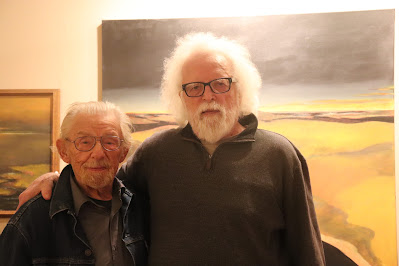
Below: Over the years, many friends visited and spent hours talking and laughing, and often if I wandered in David would say, "Take a picture of us." His friends were his treasures, also.


Another Northport artist, Bonnie Marris, sent me a couple of old digital photos from her archives. I know they were taken in the yard at our farmhouse because I recognize the blue and yellow tablecloth bought at an outdoor market in France when David and I were there in September of 2000. We had started out in Paris, of course, where we stayed at the Hotel Recamier, and then after a week or so we took the TGV (le Train de Grande Vitesse) south to Avignon, from which point we drove back north in a tiny rental car, traveling without reservations, as the spirit moved us. After a flat tire in the rain, we ditched the car in Fontainebleau and caught a train back to Paris, happy to be in familiar surroundings with great public transportation. But except for that flat tire day, the drive north from Avignon was heavenly, most especially the evening, night and morning we spent in Blesle, one of the (officially) prettiest villages in France and, to me, the French version of Glocca Morra, an almost unreal place of beautiful dreams.


To many friends and even oftener to people who didn't know all the aspects of his personality, David was known as a "car guy," and he certainly loved these big showboats -- besides the Lincolns, a beautiful yellow Cadillac that had belonged to another dear late friend. In 1986 David wrote an article called "86 Cars" for Automobile magazine and was a featured guest on the television "Today" show. When a crew came to Leelanau County to interview him and film the show, his houseboat on the Leland River made that show, as did the view looking north on Setterbo Road towards St. Wenceslaus church.


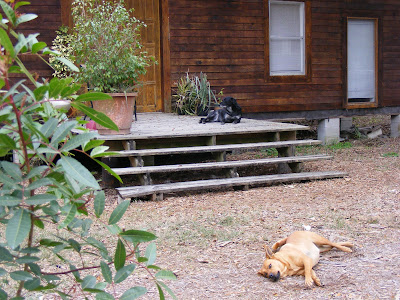
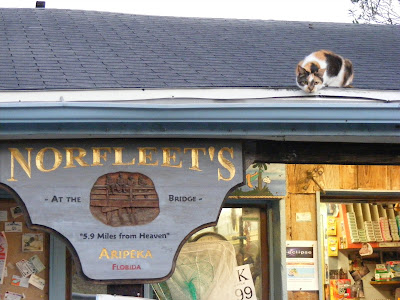
Back when Sarah was a young dog and Donny's dogs Weiser and Ida often came to spend the night (Donny, brother of David’s dear friend Michael, had lived in the house until his death, when Michael made it available to us for a few winter months), David loved his roomy studio space in Aripeka, Florida. From Aripeka we also enjoyed water adventures with with other members of the Seuss family, and David treasured his morning coffee times at Carl Norfleet’s store by the island’s north bridge.


Always messing about in boats (his own or other people's) or designing them or dreaming of them (because David always was a dreamer, as one of his grade-school teachers wrote to his parents on a long-ago report card), the Artist was very much the Rat of Wind in the Willows legend. Not surprisingly, that classic was one of our household’s all-time favorites.


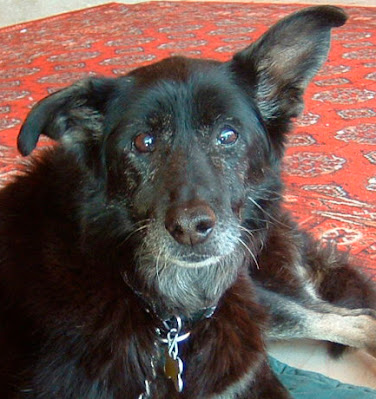
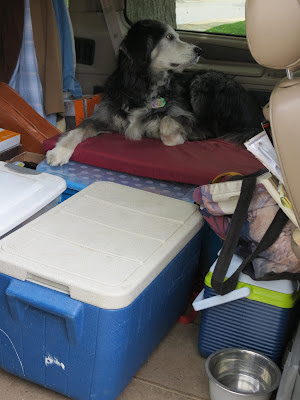
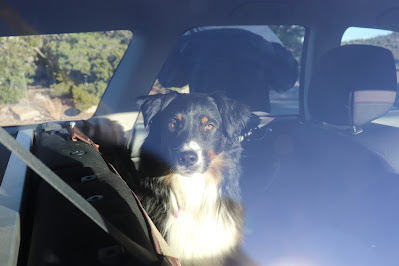
Beginning in 1993, we were always a pack of three except for short stretches between dogs. On one trip to Florida, we were exploring Plains, Georgia, and, feeling as if our poor old Nikki might not make it any farther down the road, we asked a pleasant young policewoman to take a family picture of us. Nikki rallied, and we had her for much longer, in Florida and back in Michigan. Sarah was the dog of our life, the practically perfect puppy we adopted at four months and the charming hostess at Dog Ears Books for years. She was as happy with us on the road and in Florida and in the Arizona desert as she was in Michigan, summer and winter. Queen of the Snow! David and I loved our nightly pack times with her -- and also with Peasy, the dog we had for only 13 months.


Nikki

Sarah on the road

Peasy, always ready for a ride


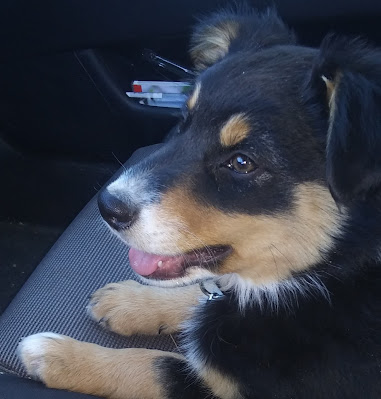
Sunny Juliet

I'm so sorry David never had a chance to meet Sunny, the puppy he had me purchase with cash he’d set aside for an Italian motorcycle (before coming to his senses), but when my sister and I went to the coffee house in Willcox -- a place David loved! -- the owner recalled the day I went to see Sunny, up north of Tucson, for the first time and put down a deposit on her. David drove into Willcox that day and visited the coffee house and told everyone at Source of Coffee about the puppy we were getting! He looked forward to us being a pack of three again (and she already has the makings of a good traveler). David was looking forward to so much -- making sculpture again, seeing friends in Michigan, making another trip to Minnesota to see children and grandchildren there. He lived right up to the end, and what more can we ask? Just more time, I guess, but sooner or later time runs out….


David Grath loved music, listening to it and making it. Playing bongos with Newt and the Salamanders was a favorite in his memory chest, and in his last weeks of life (though we didn’t know they were the last) he couldn’t resist a cello found at a thrift shop. He loved books, an incurable addiction we shared, and so he loved my bookstore, too, opened when our combined collections threatened to crowd us out of house and home, the bookstore that became, like his gallery and studio, a place for us to welcome friends old and new over the years. He loved beautiful things. Objets de virtue. And old soulful things of all kinds. He loved handsome shoes (especially Italian), beautiful hats, Harris tweed sport coats, leather bags, and cowboy boots (all things leather). He liked looking good. Especially, above all else, he loved painting. He looked at the world as a painter, always. And — my great good fortune — he loved me, and our life was rich and full.


One dear friend (who perhaps has not known me long enough to identify me as a graphomaniac) asked how I can write about losing this dear man when my grief is so new, but it's how I live -- by writing. It's how I think and sort myself out. And looking through my old photos reinforces my deep, strong gratitude for the life we shared for so many years. It's when I'm not writing or talking about David or looking at his paintings or my photographs of him and his paintings that the loss is unbearable. 


But here is a lovely story from a friend back in Leelanau County. He said that one recent cold day in Michigan, cold but very bright and sunny, he was sitting in his living room, sunlight pouring in through the windows, looking at Grath paintings on the wall (he owns several), and "Umbrous Pond" was glowing in the light. "It just glowed." That was in the afternoon, and only later, in the evening, did Tom learn that his artist friend David had died. But what would have given David more joy than to know that someone was looking at and loving one of his paintings? It was the best thing I heard all day.