Search This Blog

Showing posts with label French literature. Show all posts

Saturday, February 5, 2022

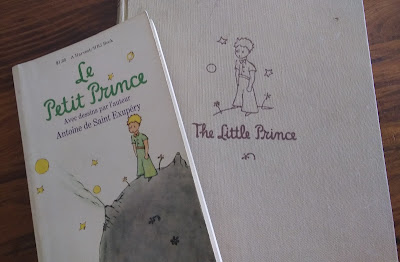
Who is the little prince, who the pilot, the fox, the rose?


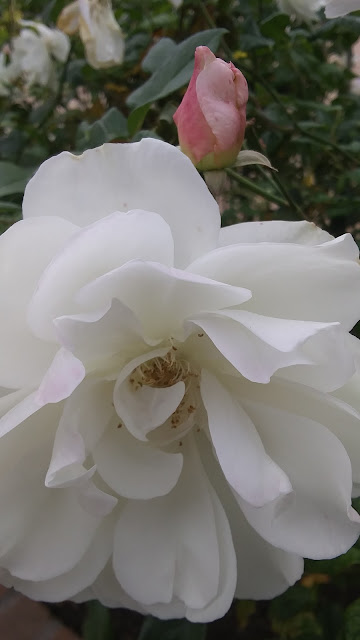
Roses are not rare on earth. No investor would assign to any rose a value of its weight in gold, however heavy with dew the petals. If you know the story of The Little Prince, the classic tale of imagination by French pilot and writer Antoine de Saint Exupéry, you will recall the little prince’s disappointment when he discovers how common roses are here and realizes that his rose, back on his tiny planet, is not one of a kind, after all. He had cared for her so tenderly, believing her unique au monde, as she had assured him she was. 


It is the fox, who begs to be tamed (which is, he explains, to have ties established, for instance between himself and the boy), who teaches the little prince the inestimable value of relationship.


“…To me, you are still nothing more than a little boy who is just like a hundred thousand other little boys. And I have no need of you. And you, on your part, have no need of me. To you, I am nothing more than a fox like a hundred thousand other foxes. But if you tame me, then we shall need each other. To me, you will be unique in all the world. To you, I shall be unique in all the world….”


“I am beginning to understand,” said the little prince. “There is a flower … I think she has tamed me….”


But there comes a time when the fox and the boy must part, and as the fox is overcome with sadness the boy thinks their friendship has done the fox no good at all. The fox tells him otherwise and explains why. -- But for those of you who have not yet read this book, I leave the sweetly poignant details for you to discover on your own. 


Did the flower tame the boy who then tamed the fox and also the pilot? As I read this book once again, I can’t help thinking of our Peasy. Did we tame him, or did he tame us? Was the Artist in the beginning the pilot, only later on to become a fox to the little prince? Or was Peasy the rose to the Artist and me? Or was Peasy the little prince, come to earth to be with us for a while and teach us about love even as he was learning? 


I see my little Pea in the rose, deluded in thinking himself so strongly defended against the world’s dangers. I see him also in the little prince, so concerned to protect the Artist and me, his roses. 


I see our Peasy in the fox,  eager to have us tame him and create ties to bind the three of us together. How happy and grateful he was to have a home and family! And I see the Artist and myself in all these different roles and also in the role of the pilot. 


Did we “waste” a year of our life on a dog like a hundred thousand other nameless dogs needing rescue? ‘Waste’ is the English word Katherine Woods uses in her translation: 


“It is the time you have wasted for your rose that makes her so important.” 


The original French reads somewhat differently:


“C’est le temps que tu as perdu pour ta rose qui fait ta rose si importante.”
 

“The time you have lost….”


We human beings lose time every day. Whether we feel we have been “productive” or “creative” or that we have “wasted” twenty-four hours, yesterday is gone, and there is no turning back. Yet as Proust discovered in his final volume, Time Regained, the past continues with us in memory. And just as there is no love created, no relationship forged, no friendship made, without taking time for it, spending time on it, losing time for it, so too love lives on in memories forged by time.


I suppose there are some among you, reading this, who think I have spent, wasted, lost quite enough time and words dwelling on my little lost boy. The Artist and I are fortunate in having each other – for many, many reasons, but one these days is being able to talk to each other about the dog we loved and couldn’t keep. Because no one else can ever fully understand why we miss him as much as we do. Only the two of us knew “the essential” loving heart of Peasy. 


And now we are the pilot, left behind and remembering, missing him, but the world is richer for us in all the ways that call our boy to mind again and again. 


Toujours dans nos âmes


Monday, May 22, 2017

Realism's Youth?


“Ontogeny recapitulates phylogeny.”

You’ve heard before that the biological development of an individual repeats, in a compressed timeline, the evolutionary development of the species of which it is a member. What I’m wondering now – and bear with me, because this may be a stretch – is if something similar might happen in reverse with cultural movements, and I’m thinking in particular of literature. That is, might not a literary movement in its younger stages share the callowness of a youthful individual with limited experience, and might not that very movement, as it develops over time, practiced by individuals learning from their predecessors, grow finally to a mellower maturity?

My mind is still on Madame Bovary and on Flaubert’s preoccupation with corruption – physical, moral, and social. It seems to me very similar to the ordinary, nonliterary adolescent response to encounters with death, deception, hypocrisy and the like. Wounded youthful idealism enters a phase when anything apparently good or beautiful can only be seen as a disguise for underlying “reality,” that is, for what the youth now believes is the true ugliness and pointless of existence. Think Holden Caulfield. Everything in the adult world is “phony” at its core.


In the same time period that Flaubert was writing, there was a movement in France of poets called the “Decadents.” This group was given its name by Maurice Barrès, an anti-Semitic, anti-Dreyfusard writer and critic who had an early “fascination with death and decay," themes apparent also in Madame Bovary. The Decadents took it as their mission, as artists, to shock the sensibilities of the middle class, people whom they saw as narrowly and unthinkingly conventional. “Épater les bourgeois!” (“Shock the middle class!”) was their rallying cry.

To shock the middle class by showing them the emptiness of their own (middle-class) pretensions and claims to any cultural achievement higher than egotistical self-aggrandizement seems very much an important facet of Flaubert’s project. Isn’t nearly every character in Madame Bovary a little would-be well-dressed emperor parading around without clothes on?

And now I’m thinking that “Épater les bourgeois!” is also “dénigrer les bourgeois.” The early realist novelists and poets set out to shock the middle class by denigrating and insulting its members, by representing them as having no redeeming features, and isn’t that very like the typical rebellion of youth, with its rejection of parents and family background and values? Can we not see in the youth of this literary movement the same wholesale (though by no means universal or inevitable) alienation of an individual seeking to establish some kind of separate sui generis existence in the world?


Please don’t misunderstand me. I do not mean to denigrate the young by saying that boredom, revulsion, and obsession with the darker, more disappointing and upsetting features of life are typical of youth. We are all young once, even if many of us are no longer, and wrestling with life’s basic facts – idealism, corruption (both physical and moral), death, etc. – is an important part of living. Not to go through it would be to miss something important. No, my point is not an argument with youth but an observation on the development of a literary movement.

Would the realist or the Decadent himself identify with those he wanted to shock? Actually, Flaubert is said to have claimed, "Madame Bovary, c'est moi"! What are we to make of such a surprising admission? That the author, like his creation, suffered crushing boredom in the provinces, looked with horror on the lives and aspirations of his provincial neighbors, felt himself above his neighbors and worthy of a more exalted position that the one he held in his own village? If so, is his self-identification with the character Madame Bovary not support for my idea that both writer and character were experiencing the trapped feeling of adolescence and, therefore, viewing “reality” with a jaundiced rather than an objective eye? Was early realism in large part sour grapes?

If I were reading nothing but nineteenth-century literature, the question of youth vs. maturity might never have entered my mind, but as a catholic and voracious reader I found the contrast leaping from the juxtaposition of successive books read, a contrast particularly acute between Madame Bovary and Colum McCann’s Let the Great World Spin. McCann’s characters come from many different walks of life, and their struggles are with much more than Emma Bovary’s boredom, yet through all their backsliding and failure, and in prose every bit as beautiful as that of Flaubert, one never feels the author is holding them up as disgusting examples. He does not tear away veils of hypocrisy to show pettiness and corruption but gently moves aside veils of materialism, even squalor, to show human beings capable, from time to time, of expressing love and recognizing beauty.


One of my all-time favorite novels is Betty Smith’s A Tree Grows in Brooklyn. There are characters in Smith’s story that one might not choose to sit next to for a long bus ride, and yet the author manages to present even her least attractive people from the inside and with sufficient complexity such that we understand why they behave as they do and feel sympathy for them. (I should note that she also does this in very simple language. A Tree Grows in Brooklyn is a remarkable literary achievement, deserving of a more prominent place in the literary canon than it is generally accorded.) And while Let the Great World Spin and A Tree Grows in Brooklyn are both New York novels, I reject out of hand any objection that their urban context vitiates my argument. My main point, after all, is not to contrast urban and rural literature but to suggest that Smith and McCann represent mature practitioners of literary realism in their ability to present flawed characters with sympathy. In the work of these authors (and many other outstanding writers of the twentieth and twenty-first century), I want to say that realism itself has achieved maturity.

Have I made a case? The beginnings of one? What do you say? I put the question particularly to my small town friends.


Tuesday, March 8, 2016

Another Outsider


The Mersault Investigation
By Kamel Daoud
Translated from French by John Cullen
(Original title: Mersault: contre-enquête)
New York: Other Press, 2015
Paper, $14.95

This book was not exactly what I expected. It was what I expected and much more.

I knew it would begin, “Mama’s still alive today,” announcing at the outset the contrast between this book and the classic twentieth-century French novel, and I knew some of what would appear in the story, such as --
The word “Arab” appears [in the book narrated by the character of Mersault] twenty-five times, but not a single name, not once.
That much I had read in several reviews. I understood that Daoud had written another version of The Stranger, had written about the fictional murder and its consequences as experienced not by the killer but by the victim’s family, and so the deep grief and implacable resentment of the surviving brother, narrator of this new story, was hardly unexpected.

Daoud’s narrator, Harun, is an old man recounting his story in a bar to a stranger, compulsively digressing and repeating himself as he speaks of his brother, his brother’s death, and the years that followed. I cannot say “as he remembers” these things, because he has been living over and over them for decades, the past more real to him than the present, memories more present than the flow of life. In a very real sense, he has had no life since his brother was killed but has been forced by his mother to live as his brother’s ghost.

Born in an occupied land, Harun was a child in the days of colonial power, and so we expect that the theme of colonialism will play a part, understanding that this story is being told from “the other side.”
He was Musa to us, his family, his neighbors, but it was enough for him to venture a few meters into the French part of the city, a single glance from one of them was enough, to make him lose everything, starting with his name....
There is a mother, and there are originally two sons, but the father disappeared from the family so long ago that he is little more than a name to Harun – and not much of a name at that.
Everything revolved around Musa, and Musa revolved around our father, whom I never knew and who left me nothing but our family name. Do you know what we were called in those days? Uled el-assas, the sons of the guardian. Of the watchman, to be more precise.
It was the way families were identified in those days.

Before I go further, I want to pause and speak of the writing itself. The controlled power is stunning.
The sun was overwhelming, like a heavenly accusation. It shattered into needles on the sand and on the sea but never flagged.
Or this:
It was a heavy old revolver that looked like a metal dog with one nostril and gave off a strange odor. I remember its weight that night, not pulling me down to earth but toward some obscure target.
A reader reaches hungrily from the end of one sentence to the beginning of the next, captivated and enthralled.

What I was surprised to find in the narrator of The Mersault Investigation was a man every bit as alienated from himself and society as was Camus’s Mersault. Harun wonders how two people in this world can ever love each other, when all are ”born alone and will die separate.” Life is absurd; therefore, Harun believes only in death. “All the rest is nothing but rituals, habits, and dubious bonding.” Like Mersault, Harun is an outsider, a stranger.
A stranger possesses nothing—and I was one. I’ve never held anything in my hands very long, I start to feel revulsion for it, I have the sensation of excessive weight.

The likenesses continue. Like Mersault, Harun rejects religion, belief in God, and conformity to social conventions. The scene he recounts of his violent rage at the imam who would pray for him is a direct counterpart of the prison cell scene between Mersault and the priest who comes to hear his confession. After he has killed the Frenchman, Harun longs to be punished for his crime and identifies with Mersault’s desire to be hated by the crowd he imagines at his execution. Those expressions of hatred, finally, would grant his life meaning.

There is a parallel in their crimes and also in the way society interprets their guilt. Mersault took the life of an Arab, Mersault the life of a Frenchman, but Mersault was convicted of failing to mourn his mother’s death properly and Harun accused for not having joined the fighters for Algerian independence.

The list could go on.

For all their similarities, however, the two characters are two opposite sides of a coin, distinct and different, rather than mirror images. Harun is telling his story to correct the absence of his brother in Mersault’s story, to bring his brother back to life, in the sense of restoring him to history with a name. Harun tells his listener (and us, his readers) early in the book that what he wants is justice.
I think I’d just like justice to be done. That may seem ridiculous at my age...But I swear it’s true. I don’t mean the justice of the courts, I mean the justice that comes when the scales are balanced.
When he kills the Frenchman, Harun briefly feels the scales have been balanced, but his sense of relief and justice is short-lived. He is given no trial, set free without punishment, not even officially charged with murder. He has gained no notoriety. Worse, his brother’s name is still unknown, while Mersault, also dead, is world-famous.

Which brings us around to the original story, narrated by a character named Mersault, the famous novel that serves as the springboard for this brilliant new novel. Daoud deals with Camus in a manner audacious and breathtaking. He treats the fictional Mersault, a literary device, not only as the first-person narrator but also as the author of The Stranger --  and the “famous book” itself is never mentioned by its title, any more than there is mention of the writer Albert Camus.

Harun speaks of Mersault and the book he wrote,
If only your hero had been content with bragging, without going so far as to write a book! There were thousands like him back then, but it was his talent that made his crime perfect.
As Hurun tells the story, Mersault not only killed Musa but also wrote the book that became world-famous, the book in which Musa’s name and everything else about him have been left out, the book in which Musa is “the Arab,” twenty-five times, but always nameless.
Judging from your enthusiasm, the book’s success is still undiminished, but I repeat, I think it’s an awful swindle.
The book was, in Harun’s eyes, Meursault’s second crime, although he is fascinated by the criminal with whom he shares so many qualities.
Read what your hero wrote about his stay in a prison cell. I often reread that passage myself. It’s the most interesting part of his whole hodgepodge of sun and salt. When your hero’s in his cell, that’s when he’s best at asking the big questions.
Drawn in spite of himself to the original outsider’s philosophy, sharing so much of his view of life, Harun continues to recoil from Meursault’s colonial blindness.
Do you understand why I laughed the first time I read your hero’s book? There I was, expecting to find my brother’s last words between those covers, the description of his breathing, his features, his face, his answers to his murderer....
Now, when Harun tells the story, in Daoud’s novel, it is Camus the writer who has been erased, blended into the character he created. The book’s title is just as thoroughly omitted. There was no Musa in The Stranger? There is no Camus in The Meursault Investigation. “Not once.”

Under colonialism, colonizers and colonized alike suffer from alienation and the corrosive effects of man’s injustice to man. In these two novels, neither fictional outsider narrator Meursault nor fictional outsider narrator Harun expects or receives understanding or justice. But Meursault has at least been visible to the larger world, in retrospect, thanks to the talent of the writer Camus, while Harun, his brother Zusa, and all their family have all been without names, as if without existence. Until now.

It is unlikely that the name of Camus will vanish from world literature any time soon, and I doubt Kamel Daoud would even wish for its disappearance. Surely Daoud and Camus, were they able to meet, would express appreciation of one another’s talent and vision, just as Mersault and Harun would recognize in each other many mutual philosophical affinities. And yet, isn’t the erasure of Camus from the history of his own novel, in the end, a triumphant literary balancing of the scales at last?

Camus is one of my heroes, and, as I have written very recently, Camus was not Mersault. Camus was not deaf and blind to Algerian suffering – quite the contrary. I think, however, that he would have been among the first to understand and admire and recommend this new version of the story and that he would have recommended it in the name of justice, as well as in the name of art.

Were she still alive today, instead of having died at age 30, my friend Annie would have been 53 years old on March 14, and I can see clearly another version of reality, one that finds Annie once again in front of a classroom, her topic again ‘alterity’ – i.e., otherness, her reading assignment this week Kamel Daoud’s The Mersault Connection. How Annie would have loved this book! How I wish we could sit down and talk about it together! Annie, dear, today’s post is for you!

Saturday, November 15, 2014

Reality and Realities, Close to Home and Faraway


Being Myself

It’s easy to tell when Bruce isn’t around. When I’m expecting him in for a spell at desk and counter, I have to clean up my act. He likes a neat desk, and if he comes in and finds a mess, he’ll clean it up himself, and then how will I find all my stuff? But Bruce is gone for the whole month of November, and I’ve been reveling in what looks like a complete letting-go of standards. Ah, but if you were to look under desk and counter, where messes usually get stashed “temporarily” and then end up accumulating for months on end, you’d see a much neater story. It's dark under there, though, so imagine it for yourself.

Dealing with the Onset of Winter

Does it look cold? It’s cold. Roads have been, in those immortal words of broadcasters, “ice-covered and slippery,” although we did not get anywhere near the two feet that dumped all at once on Lake Superior, far to our north. I wonder.... Sometimes it's easier to go into four-wheel-drive and get through deep snow than to stay on a slippery road and negotiate a thin, greasy skin of the white stuff. But we get what we get, and this past week we got slipper roads.

The Nineteenth Century Pulls Me In

Roads were so slippery, in fact, that our intrepid little band of readers, shrunk from nine down to six when Proust was selected for November, then to five when one of the six had a schedule conflict, numbered in the end only four around one of the round tables at Fischer’s Happy Hour Tavern. We were sorry not to have the others with us, but we were a congenial quartet nonetheless.

Quite honestly, if I had to choose between the 18th and the 19th century, without knowing what my place in society would be or even what country I’d land in, I think I’d take my chances with the 18th century, or about a hundred years before la Belle  Époque in France or the Gilded Age in the United States. Those overblown years leading up to the First World War have little appeal to this country mouse. But then there’s Proust, isn’t there?

“What made him different from literature that came before?” our Fearless Leader asked. 

We four agreed that Proust’s long, sensuous, voluptuous descriptions and microscopic attention to details of nature and the slightest nuances of human gesture or glance was worlds away from Voltaire, the last French writer whose work we read. Remembrance of Things Past is almost the antithesis of Candide. In Voltaire the events come fast and furious, piling up one on top of the other, whereas in Proust very little happens at all, but the moments are examined and stretched out like hours. And that makes sense, since Proustian time is very much Bergsonian time:
And besides, even from this point of view, in mere quantity, in our lives the days are not all equal. As they travel through the days, temperaments that are slightly nervous, as mine was, have available to them, like automobiles, different “speeds.” There are arduous mountainous days which one spends an infinite time climbing, and downward-sloping days which one can descend at full-tilt singing.
Now you know that’s true, whether or not you have a “nervous” temperament. You've experienced it yourself, time dragging or racing by.

We also addressed the question of the main theme of the work. It’s too easy to say (as I originally did) “time and memory,” though, and here I dug deep down to a Bergsonian and phenomenological conclusion that convinced me, whether or not my friends were convinced, but I probably won't lay that all out today.

Over and over, in the first section, “Combray,” young Marcel is hungry to get behind the world of his senses, to some deeper reality he believes is hidden.
...[S]uddenly a roof, a glimmer of sun on a stone, the smell of the road would stop me because of a particular pleasure they gave me, and also because they seemed to be concealing, beyond what I could see, something which they were inviting me to come take and which despite my efforts I could not manage to discover.
He believed that a “philosophical subject for a great literary work” would have to solve this mystery, but
...I would feel I did not have the tranquility I needed at the moment for pursuing my search in a useful way, and that it would be better not to think about it any more until I was back at home....
And then, back at home, he would think of other things, avoiding the “arduous task,” and so the images would accumulate, guarding their secrets, until one day on a drive he asks for a pencil and writes a description of the teasing images of the disappearing and reappearing church steeples marking the progress of the carriage drive. And
...at that moment, when ... I had finished writing it, I was so happy, I felt it had so perfectly relieved me of those steeples and what they had been hiding behind them, that, as I myself were a hen and had just laid an egg, I began to sing at the top of my voice.
So writing is a key – but not the complete answer.

In the central section of the volume, “Swann in Love,” Swann realizes that much of the value he places on Odette, as well as his interpretations of her actions and utterances, comes not from her but from himself. So what about her that he knows or believes is real? Again, is the real something hidden behind appearances?

All of us loved the final section, “Place-Names: The Name.” The first name we encounter here is that of Balbec. Nothing is less like his Combray bedroom in his grandmother’s house, the narrator tells us, than his hotel room at Balbec, and at the same time nothing is less like Balbec itself than the Balbec he pictured in imagination, long before seeing the place. The name ‘Balbec’ to him was a storm at sea plus Gothic architecture. He wanted to see a storm at sea because it would be pure nature, not fashioned by man, therefore “more real” than even he himself.

When his parents began planning a trip to northern Italy and said that he might go, too, for Easter holidays, his dreams altered.
From then on only sunlight, perfumes, colors seemed to me of any value, for this alternation of images had brought about a change of direction in my desire, and ... a complete change of tone in my sensibility.
To ‘Balbec’ were added the magical names of ‘Venice’ and ‘Florence,’ brought forth out of abstract Space to become specific places, determinately situated, and differentiated from abstract Time, in that days passed in one could be passed nowhere else. – That is, if one were to go to Balbec, Venice, Florence, or anywhere else. But the young, nervous boy who was the narrator in childhood becomes ill from overexcitement and cannot leave Paris. His excursions will be limited to the public garden on the Champs-Élysées, too well known to contain magic. Until he hears 
"Good-bye, Gilberte, I’m going home, don’t forget we’re coming to your house tomorrow after dinner.” The name Gilberte passed close by me, evoking all the more forcefully the existence of the girl it designated in that it ... addressed her directly; thus it passed close by me, in action so to speak....
The name called through the air is described as a “cloud of precious color,” Proust going so far as to name the color – heliotrope – and now young Marcel’s life takes on a new focus. Away from Gilberte, he can think only of seeing her again, but in her company he is frustrated, feeling that the Gilberte he plays with in the park, with other children, is not the Gilberte he loves, the one of his dreams.

He becomes obsessed with everything relating to her hidden life, the life she lives away from him – the name of the street where she lives, the name of her father, Swann, the old woman in the park (whose name for a long time he does not know) to whom the girl speaks in so friendly a manner. But eventually he realizes that Gilberte feels no answering concern or need for him, that he is “the only one who loved.” His love is not a reality they share. 

Since Swann’s Way is only the first volume of Proust’s multi-volume work, it is not to be supposed that even the last achingly poetic page of this book will completely answer the question of theme. What we do find there is the narrator, visiting the Bois de Boulogne years later and finding it so changed – the women’s hats and dresses all different, automobiles in place of horse-drawn carriages -- as to be meaningless to him, saying: “The reality I had known no longer existed.” The time he had known is now lost, le temps perdu, but we know that the final volume of the work is called in English, Time Regained, so this is not the end of the story.

The story is – forgive the term – intensely metaphysical. What is reality? What is the relationship of names to reality? Where does the real exist? And does it pass out of existence with the passing of time? If not, how can it be accessed?

But by now I fear I’ve lost not only time but readers. Time to stop. Past time to stop.

Other Books

I'm posting this on a cold Saturday afternoon, the happy, laughing morning crowd all dispersed now. The sun is not present peeking out, either, so to close on a warm note I'll include photos of a few new books.