Search This Blog

Showing posts with label survival. Show all posts

Friday, July 26, 2024

Evenings Out, Mornings Outdoors, and Books as AntifragileTechnology


Evenings Out


It is rare for me to go out in the evening, other than outdoors in my own yard, but July is the month when the Friends of the Leelanau Township Library hold their Summer Writers Series, featuring one Michigan author a week for four weeks. The third week of the series this year was author and farmer and chef Abra Berens, and not only was she FOLTL guest author on Tuesday but the following Thursday she prepared a special chef’s dinner, also at the Willowbrook Inn. Two nights out in one week!


Abra Berens at the Willowbrook Inn

Sommelier du soir

The Willowbrook is a magical event venue, elegant and at the same time simple and old-fashioned. Mimi DiFrancesca and Joel Heberlein, in transforming the 140-year-old building, have only added to its charm, such that it is always a joy to be there. The windows invite the outdoors in, giving the feeling that one is in a very grand and spacious treehouse. And this time, of course, there was Abra’s wonderful menu, served by friendly faces, many of them familiar. Quite the evening out!


Also noteworthy is that a portion of ticket sales from Thursday’s dinner went to Food Rescue, people doing much-needed and important work in northern Michigan.


My role in the program came following dessert and was – no surprise! – selling books that Abra happily signed for her satisfied diners. Sunny Juliet was ready for play when I got home, and I was ready for sleep, but we worked it out.


Books are my life.

Sunny amusing her dog momma at bedtime --

Mornings Outdoors


In my life, mornings mean outdoors, and while that’s usually in our own yard, sometimes Sunny Juliet and I go farther afield. Friday we did what I call “Go for a ride, go for a walk,” where we get in the car and have a leash walk (or two or three) somewhere other than our familiar home grounds, with stops also simply to give the dog momma a chance to photograph lovely sights. 


That pond on Alpers Road again --


Books as Antifragile Technology


Nassim Nicholas Taleb (and my, how that name keeps cropping up in my posts lately!) does not have an entry for ‘books’ in the index to his book Antifragile, but because BOOK is an important topic in my life, not only as a reader but also as a bookseller, I have added the term to his index, noting the number of each page where books enters the discussion. First, in the chapter on “Via Negativa,” he notes that “the future is mostly in the past,” by which he means that the longer a technology or a way of doing things has survived, the longer it probably will continue to survive. This means that, contrary to human beings, with technologies and ways of doing things, the older will typically survive the younger. Following that logic (and he gives several examples), we can predict with some assurance that the continued life of the printed book will greatly surpass that of the e-reader.


“No one reads books any more,” people told me when I opened my bookstore 31 years ago – hence my new motto: 


Surviving skeptics for over 200 dog years


 -- though I’m happy to say the skeptics seem fewer in number with each passing year, as more and more people seem to rediscover books and realize that paper and print are here to stay. In fact, I rarely hear the dismissive, skeptical claim about books so often voiced three decades ago.


Oldest on the premises -- at present

Taleb distinguishes between the perishable (objects) and the nonperishable, the latter having what he calls an “informational nature to it.”


A single car is perishable, but the automobile as a technology has survived about a century and a half (and we will speculate should survive another one). Humans die, but their genes—a code—do not necessarily. The physical book is perishable—say, a specific copy of the Old Testament—but its contents are not, as they can be expressed into another physical book [my emphasis added].


In this passage we deal with the technology of the book in a different way, not predicting the life of the technology but the “imperishability” of the information it carries. 


What of the perennial human craving for novelty, for whatever is “new and improved”? Anything that has an electronic on/off switch, Taleb thinks, is something that can induce neomania in us – the feeling that we have to have the very latest model – whereas what he calls “the artisanal” (and I take it this could be a book as well as a painting by an Old Master or a piece of furniture, examples he cites) continues to be satisfying even as newer items are available all around us. Thus the artisanal is antifragile, the electronic fragile to time and change. 


The e-reader is fragile in another way that the book is not. Accessibility to electric power, battery life, and the general fatigue that overtakes computerized parts all make the e-reader more fragile than the bound, printed volume. How many laptops have you gone through in the past 30 years? But do you have a paperback book from college days in the Sixties? I do – and it still “works” perfectly, as do these volumes from the late nineteenth century.
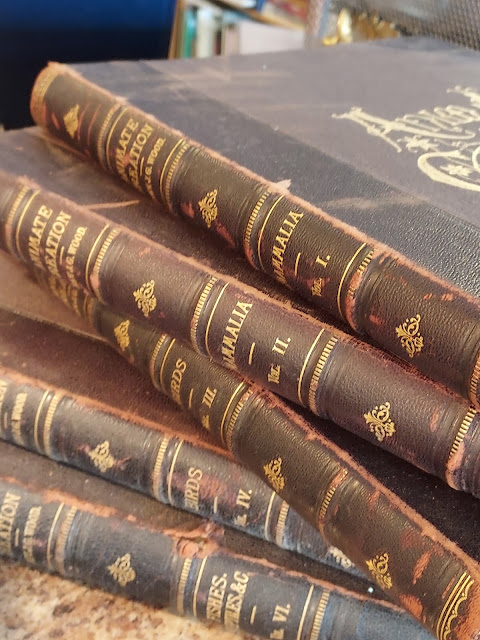

These have endured.

Taleb received a letter from a historian Paul Doolan in Zurich, asking how young people could be taught skills for the 21stcentury, since we have no way of knowing what skills will be needed. Taleb’s perhaps surprising answer (perhaps not, if you’ve been reading his work) is to have those young people read the classics. This is where the sentence appears: “The future is in the past.” 


We cannot return to the past, and few of us would choose to do so. The wisdom of the past, however, the accumulated knowledge of our culture is the legacy to us of all who have lived before, and we can avoid many errors by learning what hasn’t worked out well for our human ancestors. 


What is success, for an individual, a corporation, or a culture? Taleb tells us the most important factor is the avoidance of unsurvivable error or the unforeseeable, rare but unsurvivable event. Mere survival does not insure success, but there is no success without survival, so it is crucial to avoid that fatal misstep.


We cannot learn from what has not (yet) happened or what might happen, only from what has happened.


History: Learn from it.


Sunday, September 20, 2020

Glow, Little Glow Worm – Don’t Give Up!


 What on earth put that song into a crowded dream filling my imagination just before I woke a couple mornings ago at 5:30 a.m.? How many years must it have been since I heard the Mills Brothers singing the little glow worm song on the radio, and how much other music, how many other songs, would have come between that long-ago day and this dark morning? “Glimmer, glimmer!” What pulled that song out of some dim, long-buried storage bank and put it into my head with its surprising lyrics and close harmonies? What is it that brings a memory like that unexpectedly to the surface?


The leaves were the color of sweet potatoes and of the summer sun when it sets. They had begun to fall from the branches….

-      Isabel Wilkerson, The Warmth of Other Suns: The Epic Story of America’s Great Migration


Halfway through The Warmth of Other Suns, I was fully engrossed, nearly mesmerized, by the three particular stories the author tells, the half-century tapestry in which those particular appear as threads, and by Wilkerson’s writing itself. She incorporates historical records and statistics smoothly into the epic, always and in every line remaining, above all, a writer. Her phrase about leaves “the color of sweet potatoes” is one small example of an almost novelistic style that makes every scene vividly alive. I read the book before falling asleep and when waking up. 


Then at my bookstore one afternoon (during the midafternoon lull), I was surprised by how quickly I fell into another book I hadn’t meant to read, just peek into, Page Smith’s Trial By Fire, Volume 5 in his 8-volume People’s History of the United States. It is probably no coincidence that Howard Zinn used the same title for his own one-volume history of our country, as Page Smith, while a professor of history, considered himself – and was considered by others – very much a “populist” historian, writing not for a small academic audience but for Americans at large.


It was the final paragraph of his short introduction to Volume 5 that stopped me in my tracks and then quickly made me want to go on to the first chapter: 


What cannot be sufficiently emphasized is that since people do not exist for the convenience or the scrutiny of historians, a certain violence, or at least, disservice, is inevitably done to the full and breathtaking complexity of the truth whenever someone, assuming the role of a historian, attempts to deal with life in the mode called “history.” This is most notably true in writing about black people in America [my emphasis added]. …I am continually and painfully aware of my deficiencies as an uncertain practitioner of the art [or history] and nowhere so acutely as in trying, as a white man, to comprehend the nature of what we call today, somewhat glibly, “the black experience.” 

-      Page Smith, introduction to his Trial By Fire


Trial By Fire was published in 1982, that is, 38 years ago, while The Warmth of Other Suns bears a 2010 publication date. The older book’s author was a white man, the newer one written by a black woman, Smith a historian, Wilkerson a journalist who had to become a historian in researching her book, both of them prize-winning American authors. Something told me that reading these two books in tandem would be an even richer experience than reading only one could possibly be, although either is clearly worth any American’s concentrated time.


Because that is the question, isn’t it? How did we get to where we are now? 


I have already learned from Smith that our country’s founders had doubts and fears from the very beginning about the new union’s ability to hold together and not break up over the issue of slavery. And it should surprise no one that Wilkerson’s migrants – Ida Mae Gladney, who moved to Chicago during Depression era; George Starling, who fled Florida citrus groves for a new life in New York’s Harlem following World War II; and Dr. Robert Foster, whose successful career in California could never have been achieved by a black man in his native Louisiana – encountered prejudice and barriers in the North in the 1930s, 1940s, and 1950s, despite the absence of the odious Jim Crow laws that had held them down in the South.


As Page Smith noted,


Slavery was not, of course, the only sin Americans had to answer for to the Almighty. Racial prejudice was everywhere apparent in the North….

-      Smith, ibid.


That racial prejudice that Wilkerson’s migrants encountered in the 1950s was all the more nerve-wracking because of its unpredictability.


There were no colored or white signs in New York. That was the unnerving and tricky part of making your way through a place that looked free. You never knew when perfect strangers would remind you that, as far as they were concerned, you weren’t equal and might never be.

-      Wilkerson, op. cit.


Understanding our nation’s past cannot change the past. That should go without saying. Historical understanding is vital, however, if we hope for a better future, because in addition to generals and battles, state laws and federal policies –always, then as now, consequences fell on individuals and families, ordinary people just trying to live their lives, and so, now as then, people’s lives are at stake, children’s futures are at stake. 


But neither are we obligated to accomplish a half-century’s worth of progress in any 24-four period [since ‘ought’ implies ‘can,’ as the philosophers say]. We can, however, brighten the corners where we are (as the old Sunday school song advised), and I see people doing that everywhere I look. Road builders are laying down fresh new pavement, farmers are harvesting corn, painters are painting, quilters are quilting, and on it goes. One foot in front of the other, one day at a time. A smile, a word of encouragement, a sympathetic ear, opening our hearts and stretching our minds a little every day as we go about our ordinary lives. 


We simply cannot afford to be distracted by angry shouters throwing red herrings across the path and trying to prevent understanding. The true enemies are not our fellow Americans on “the other side” but those who would divide us into “sides” to enhance their own power gains.


Sept. 20 - Sunday morning


I began writing this post a couple of days ago. Last night I woke in the wee dark hours and finished reading Wilkerson’s book before the sun was up. She thoroughly and beautifully accomplishes the tasks she set herself, collecting oral histories and presenting intimate portraits of three selected migrants, while also searching out and distilling and incorporating newspaper, literary, and scholarly accounts of the Great Migration, from the beginning of the movement to the present, to pull that 50-year sweep of history together and examine and critique what has been said of the southern black people who moved north from 1915 to 1970 and separate truth from myth. Informative, compelling, important, and brilliant!


And now, two days after the death of Supreme Court Justice Ruth Bader Ginsberg and having come to the last page of The Warmth of Other Suns, I can’t help thinking once again that the temptation (while I certainly understand it!) to give in to weariness over the news or hopelessness over current politics – that temptation to give up – can  very well be seen as what has been called “white fragility.” Or is it “liberal fragility”? "Bourgeois fragility"? Whatever it is, we cannot afford it. 


Ruth Bader Ginsberg did not give up. Immigrants and migrants moving to strange new places for what they hoped would be better lives did not give up. Survivors of all kinds, in hellish situations, with their very lives at risk, did not give up (obviously), or they would not have survived. How delicate and fragile are we 21st-century Americans in these admittedly difficult times but – let’s face it – in material circumstances many immigrants and migrants and survivors would find enviable, even idyllic? Cowboy up! Cowgirl up! 


I am giving myself this pep talk, too, you understand, not preaching from some high-and-mighty place above the fray. Glow, little glow worms! Brighten the corners where you are.


Friday, November 8, 2019

Book Review: MOON OF THE CRUSTED SNOW

Snow was falling in Northport on Thursday afternoon, sometimes blowing horizontally down Waukazoo Street, with the temperature hovering right around the freezing mark when one of my customers arrived to pick up her special order. The book she had ordered sounded so intriguing that I’d ordered a second copy, and later that afternoon I began reading. 

The central character, Evan Whitesky, up in northern Ontario, is on the trail of a moose.
He had been out since early morning and had been tracking this particular bull since around noon. The fall hunt was drawing to a close, and he still wanted to put more food away. Food from the South was expensive and never so good, or as satisfying, as the meat he could bring in himself.  
- Waubgeshig Rice, Moon of the Crusted Snow
Evan takes pride in providing for his partner and their two young children. An accomplished hunter and fisherman, he has put away enough protein for the winter to have plenty to share with his parents, and when Evan joins his father in cleaning a hide, the two men envision future moccasins. The Whitesky family is better prepared than some others on the reserve for life without hydro power.

A missing satellite signal brings the first hardship: no morning television for the children and no Internet signal for their elders. Electric power lasts a little longer before it too goes out, but people on the remote, isolated reserve have experienced power outages before and know how to cope until the electricity comes back on. They remind each other that the old ones in times past lived without electric lights and television. When there is no signal for their cell phones, some still have landlines — until these, too, fall dead.

It is the beginning of winter, so the Council needs to plan for the future as well as for the immediate situation. Without regular deliveries of fuel and food from the South, they have enough diesel to run a generator until late February, if everyone cooperates in conserving energy, and with foresight they have stockpiled a cache of canned foods for just this sort of emergency, but surviving the immediate emergency is only the first step, and the future is unclear.
Three more cold nights passed. The generator power would only last so long. The chief called another emergency meeting at the band office…. There was still no communication with anyone in the outside world.
The world of the novel is circumscribed from the outset. Its remote backstory is one of displacement — from the Great Lakes region to the south, the people had been forced to the harsher north — the nearer backstory one of dependence on regular deliveries of groceries and fuel. But that was then, and this is now, and the demands of now throw the people back on traditional ways of life and traditional values that some have been practicing all along and others need to learn.

Peshawbestown dancers in Northport

Evan has been going to school, informally, with his elders: learning the people’s language, he and Nicole are teaching it to their children, and, somewhat awkwardly, using the native words he knows interspersed with English, he speaks traditional prayers on the appropriate occasions. His parents’ knowledge of old ways is augmented by stories and lessons given him by the band’s oldest member, a woman in her late eighties. He hunts and shares with those in need, and he is learning to pray.
Aileen brought the flickering orange light under the carefully piled sage in the shell, and the medicine caught fire. She let it burn for a few seconds before blowing it out. Thick grey smoke billowed from the shell….

One-way “contact” with the outside world comes only three times in the novel, in quietly escalating pitch. First, a homecoming: Two young members of the band arrive on snowmobiles, having fled the chaos of the town below, which is also without power or grid infrastructure and where people are panicking and growing violent. Next, an intruder: A large, dangerous-looking white man, Justin Scott, has followed the trail of the returning young men and requests asylum, promising to pull his weight on the hunt. Finally, a while later, four more white refugees turn up and are taken in, nominally by the band, more immediately by Scott. What will the presence of these outsiders, especially the frightening and mysterious Scott, mean in this tight-knit community?

Words and phrases of Anishinaabemowin are a natural fit in Rice’s characters’ speech and are generally translated immediately, so a reader unfamiliar with the language can understand and perhaps learn a little along the way. Dreams are handled naturally, as well, either told by one dreamer to another character or presented without transition but also without confusion. When the legendary windigo enters the story, it does so naturally and quietly at first, without undue drama and literary special effects, so that we are gradually prepared for its full-blown presence.

Waubgeshig Rice’s Moon of the Crusted Snow, like Station Eleven, by Emily St. John Mandel, imagines a world suddenly bereft of electricity, electronic and digital devices, and energy systems we take for granted in our daily lives, but the imagined worlds of the two novels are very different. In the Mandel novel, we roam cities and countryside with groups of wandering Shakespearean players, a “family” brought together by interest and necessity rather than inheritance, and in the end the world as we know it is restored. The people in Rice’s world, many of them related to each other by blood, remain in place. We follow their lives in that place through the first hard winter and leave them in the spring following their second winter, the latter — and the longer-term future — left to our imaginations. 

Both novels, you might say, are stories of post-apocalyptic survival, but Rice’s character Aileen dismisses the apocalyptic notion. She has heard of the notion from young people but puts no credence in it.
“Yes, apocalypse! What a silly word. I can tell you there’s no word like that in Ojibwe. Well, I never heard a word like that from my elders, anyway. 
Evan nodded, giving the elder his full attention. 
“The world isn’t ending,” she went on. “Our world isn’t ending. It already ended. It ended when the Zhaagnaash came into our original home down south on that bay and took it from us. That was our world. When the Zhaagnaash cut down all the trees and fished all the fish and forced us out of there, that’s when our world ended. They made us come all the way up here. This is not our homeland! But we had to adapt and luckily we already knew how to hunt and live on the land. We learned to live here.” 
We’ve always survived, and we always will, Aileen tells Evan. 

An Indigenous People’s History of the United States presents the past of the North American continent from a perspective not taught in schools with curricula set in place by whites, and Moon of the Crusted Snow presents a possible future from a non-white point of view — one possible non-white point of view, of course. That Rice’s compelling story is told in beautiful language with sympathetic characters in a setting not difficult to imagine as the first real snow blows into northern Michigan seared it into my brain, and I recommend it for your winter reading, wherever you live and whatever your ethnic background or connection to the virtual world.

Our reading world is enriched as more voices come to be heard in fiction from different cultural, ethnic, and historical perspectives. 


Monday, February 15, 2016

Another Wild Spirit


Dog Man: An Uncommon Life on a Faraway Mountain
by Martha Sherrill
NY: Penguin, 2008

What did I expect when the title Dog Man caught my eye? Some yeti-like legend of northern Michigan? Perhaps at first glance, but when I picked up the book that expectation had to be quickly discarded. The dog man of the title was an Akita breeder in the snow country of Japan.

So, a tale of dogs set in the North -- much more appealing....

At home I began reading and found the book once again exceeding expectations, taking me not only far from home but back in time and to a part of Japan that was itself far behind the times in Tokyo and other large cities. Dog Man is as much about the man’s wife, Kitako, and their life together as it is about Morie and his dogs. The couple marry in 1940 in a Shinto ceremony held at the grand former residence of General Maresuke Nogi and his wife, 

held as paragons of virtue for killing themselves on the evening of Emperor Meiji's funeral.

Immediately after the wedding, Morie and Kitako, a 20-year-old city girl raised all her life in comfortable circumstances (she is college-educated with a teaching degree), set off on a 22-hour train ride to the north where Morie was raised. Kitako feels out of place in the midst of Morie’s big, noisy family (he is the youngest boy in a family of five boys and five girls) but is even more confused by the snow country itself and its primitive isolation, far from the nightclubs of Tokyo.
...”Where do we go tonight?” she’d asked Morie, who looked at her with an expression she didn’t understand. It was so cold—still winter, with snow everywhere, as though spring was hesitant to arrive in such a serious place. And so dark—no streetlights or city lights, nothing but black sky and looking black mountains.
To Kitako’s dismay, Morie turned down a job in Tokyo, choosing instead an assignment in distant Manchuria, then a new colony of imperial Japan. Had Morie been happy there, Kitako would have had to endure life in Manchuria much longer, but neither of them was immune to the resentment of the local population.
The Japanese expansion into Manchuria had been particularly violent and the Manchurians, beleaguered and beaten down, carried a strong, lingering resentment of their conquerors, who were now immigrating in great numbers into their towns and cities. Kitako was shocked by the way her countrymen behaved in Manchuria, treating the Chinese like lesser beings, “as if they weren’t really human,” she says. And when she went to the market, she felt self-conscious, suspecting that she was hated by the local vendors simply for being Japanese, and for having money....
Their first child is born in Manchuria, but after only two years Morie and Kitako, still without dogs, return to Japan, where Morie will be in charge of building and running a power plant in snow country, not far from his family home.

The place name “Pearl Harbor” does not come into this story, but the war does. Due to circumstances, Kitako must make the long, difficult return trip to Japan alone with her baby. Resettled at last in snow country, a place of hardship and poverty, she finds the dialect hard to understand. A young mother, she has no friends or family in the cold winter world. And life in the north, never luxurious or easy, is made more challenging by war and rationing. No electricity, no gas, no hot water – a woodstove for cooking (all kindling and firewood to be gathered in the woods behind the house) and kerosene lamps for light. But when the firebombing of Tokyo begins, Morie brings members of Kitako’s family to the north to live with them, and Kitako sells her wedding kimono for enough money to buy three days’ worth of rice.

But into these dark, hard times of struggle comes Morie’s first dog.
Nobody talked about the thing in the woodshed—the creature that was now eating six pounds of food a day—or said anything directly to Morie about his dog. Morie never raised the subject either. He fed it quietly, walked it quietly [in the dark of morning and dark of evening], and tried to keep it out of sight. Actually, he wasn’t sure if his in-laws even knew about it. But they knew. They all knew. And they were speechless with disgust. You weren’t supposed to feed dogs when people were starving. You weren’t supposed to give dogs rice when your family got only potatoes.
It went beyond that: possession of dogs was illegal at that time in Japan. But Morie, who had never had a dog in his life, was seized by a “sense of mission.” He made discreet but careful investigations and estimated that only sixteen Akitas, so long the pride of the snow country, had survived the years of extreme hardship and prohibition against dogs. The breed was close to extinction. His mission, as he saw it, was to save the breed and return it to its former glory.

Who can say what inspired his love for these dogs? Something in them called to something in him.

After the war, life became easier and more pleasant. Morie applied his engineering inventiveness to the growing family’s wilderness home, bringing hot water into their lives. Their traditional Japanese soaking tub with hot water was available to all guests and neighbors. The hospitality of the house became legendary, and Kitako learned from local women how to prepare regional dishes life was no longer lonely. Her life was no longer lonely.

As for Morie, a Mitsubishi supervisor, who earns his salary by electrifying rural Japan, his passion, more and more, is dogs. Akitas. Acquiring dogs and puppies, learning about them, breeding and raising and showing and talking about Akitas with other dog owners and breeders. Had his character been different, Morie’s obsession might have become, as it did for so many others in Japan at this time, all about increasing his personal wealth and prestige.

But Morie made a decision early on: he would never sell a dog. He gave dogs away, he traded a puppy for stud service, and he loaned dogs--sometimes for the dog’s lifetime. But he would not sell a puppy or a dog, nor would he let one go to a stranger.

Each chapter in Dog Man has for a focus one particular dog. Anyone whose life has been blessed by dogs will understand the reason: the succession of dogs marks epochs in the owner’s life. There was Manchuria, without dogs. There were the war years, bringing the first dog. And so on. The author understands and builds on this way of marking time so that Morie’s engineering career, his wife’s life at home, their growing family, additions and expansions to the family home – an entire way of life in the faraway snow country at that time in rural Japan – are all, beautifully and naturally, revealed and integrated into the story. The early illustrations in the book show only dogs, later ones a few people, but the houses and forests and mountains of the snow country life we must (and do) imagine from the author’s richly detailed descriptions.

One of my favorite individuals in the story is Uesugi, the matagi, or migratory hunter-forager and “forest inspector” in a tradition older than samurai. Uesugi becomes a regular visitor to Morie and Kitako’s home in Kamaguchi, where Morie’s work had taken them in that period of their lives.
Uesugi came by quite often that autumn, until the deep winter snows in December drove him away, farther south. He traveled all the way to Osaka then, on foot, in his tabi and snowshoes, migrating from snowy forest to snowy forest, sleeping in abandoned bear caves and beside fallen trees. His clothing grew heavier and more eccentric: fox pelts around his neck, wool scarves wrapping his head, a wide-brimmed hat with rabbit fur earflaps. He carried a shotgun inside his coat, a knife at his waist, and a fishing hook and line curled in a pocket. And in the fabric pouches that he slung over his shoulder, he kept dry rice, miso, toasted green tea, shavings of ginseng, and chunks of kumanoi—the dried gall bladder of a Moon Bear.
Only Uesugi can still find wild ginseng in the forests. Uesugi has the best kumanoi to slice sparingly into green tea. And other than visits to the various mothers of his children, the only house he sleeps in that of Morie and Kitako. Although Uesugi is practically a wild man, Kitako feels a connection to him from the first, and he recognizes both husband and wife as kindred spirits from the start.

Morie himself, a native of snow country, becomes more at home in the wilderness every year, with Uesugi as his mentor. Although largely responsible for the region’s modernization, as time goes by Morie values more and more the wildness of the country that is becoming increasingly difficult to find.
...He’d be gone for days sometimes. He slept in snow dens and built fires in caves. He pole-vaulted across creeks and ponds with tree branches. He studied the differences between poisonous wild mushrooms and the edible varieties.... He tracked rabbits and deer and learned to catch fish using the maggots inside the bark of a beech tree for bait. 
Everybody else had gotten faster and busier. Morie had gotten slower and more single-minded. And while modern life seemed more complicated but more convenient, Morie had gravitated to the essential and the difficult. He craved the natural world, the mysteries of its woods and groves and meadows, the primal focus of the hunt, and the company of dogs. 
His life was changing as much as anybody’s had, but seemed to have gone in the reverse direction.
His life altered by dogs and the matagi, Morie becomes more and more himself with the passing years.

At the book’s beginning, we found Morie and Kitako rising in the dark, at 2:15 a.m. on a morning in late May to “open the mountain,” an old religious tradition now become part of popular culture. They have gotten up earlier on this festival day every year, because Morie likes to be first at the snow line, and this year Kitako, his 83-year-old wife, will be with him, along with Shiro, a 13-year-old Akita.

I write this post before reaching the end of the book. If Morie is still alive today, in 2016, he would be 100 years old. Not impossible.

Eventually, I will reach the last page and close the book, and sometime later I’ll search online to see if I can find anything about Morie and Kitako after 2008. But for now I am content, in the dark of my own northern winter morning, to be sharing one couple’s unfolding life with dogs in the wilderness of the legendary Japanese snow country. I am in no hurry to come to the end of their fascinating story.