Search This Blog

Showing posts with label prediction. Show all posts

Friday, July 26, 2024

Evenings Out, Mornings Outdoors, and Books as AntifragileTechnology


Evenings Out


It is rare for me to go out in the evening, other than outdoors in my own yard, but July is the month when the Friends of the Leelanau Township Library hold their Summer Writers Series, featuring one Michigan author a week for four weeks. The third week of the series this year was author and farmer and chef Abra Berens, and not only was she FOLTL guest author on Tuesday but the following Thursday she prepared a special chef’s dinner, also at the Willowbrook Inn. Two nights out in one week!


Abra Berens at the Willowbrook Inn

Sommelier du soir

The Willowbrook is a magical event venue, elegant and at the same time simple and old-fashioned. Mimi DiFrancesca and Joel Heberlein, in transforming the 140-year-old building, have only added to its charm, such that it is always a joy to be there. The windows invite the outdoors in, giving the feeling that one is in a very grand and spacious treehouse. And this time, of course, there was Abra’s wonderful menu, served by friendly faces, many of them familiar. Quite the evening out!


Also noteworthy is that a portion of ticket sales from Thursday’s dinner went to Food Rescue, people doing much-needed and important work in northern Michigan.


My role in the program came following dessert and was – no surprise! – selling books that Abra happily signed for her satisfied diners. Sunny Juliet was ready for play when I got home, and I was ready for sleep, but we worked it out.


Books are my life.

Sunny amusing her dog momma at bedtime --

Mornings Outdoors


In my life, mornings mean outdoors, and while that’s usually in our own yard, sometimes Sunny Juliet and I go farther afield. Friday we did what I call “Go for a ride, go for a walk,” where we get in the car and have a leash walk (or two or three) somewhere other than our familiar home grounds, with stops also simply to give the dog momma a chance to photograph lovely sights. 


That pond on Alpers Road again --


Books as Antifragile Technology


Nassim Nicholas Taleb (and my, how that name keeps cropping up in my posts lately!) does not have an entry for ‘books’ in the index to his book Antifragile, but because BOOK is an important topic in my life, not only as a reader but also as a bookseller, I have added the term to his index, noting the number of each page where books enters the discussion. First, in the chapter on “Via Negativa,” he notes that “the future is mostly in the past,” by which he means that the longer a technology or a way of doing things has survived, the longer it probably will continue to survive. This means that, contrary to human beings, with technologies and ways of doing things, the older will typically survive the younger. Following that logic (and he gives several examples), we can predict with some assurance that the continued life of the printed book will greatly surpass that of the e-reader.


“No one reads books any more,” people told me when I opened my bookstore 31 years ago – hence my new motto: 


Surviving skeptics for over 200 dog years


 -- though I’m happy to say the skeptics seem fewer in number with each passing year, as more and more people seem to rediscover books and realize that paper and print are here to stay. In fact, I rarely hear the dismissive, skeptical claim about books so often voiced three decades ago.


Oldest on the premises -- at present

Taleb distinguishes between the perishable (objects) and the nonperishable, the latter having what he calls an “informational nature to it.”


A single car is perishable, but the automobile as a technology has survived about a century and a half (and we will speculate should survive another one). Humans die, but their genes—a code—do not necessarily. The physical book is perishable—say, a specific copy of the Old Testament—but its contents are not, as they can be expressed into another physical book [my emphasis added].


In this passage we deal with the technology of the book in a different way, not predicting the life of the technology but the “imperishability” of the information it carries. 


What of the perennial human craving for novelty, for whatever is “new and improved”? Anything that has an electronic on/off switch, Taleb thinks, is something that can induce neomania in us – the feeling that we have to have the very latest model – whereas what he calls “the artisanal” (and I take it this could be a book as well as a painting by an Old Master or a piece of furniture, examples he cites) continues to be satisfying even as newer items are available all around us. Thus the artisanal is antifragile, the electronic fragile to time and change. 


The e-reader is fragile in another way that the book is not. Accessibility to electric power, battery life, and the general fatigue that overtakes computerized parts all make the e-reader more fragile than the bound, printed volume. How many laptops have you gone through in the past 30 years? But do you have a paperback book from college days in the Sixties? I do – and it still “works” perfectly, as do these volumes from the late nineteenth century.
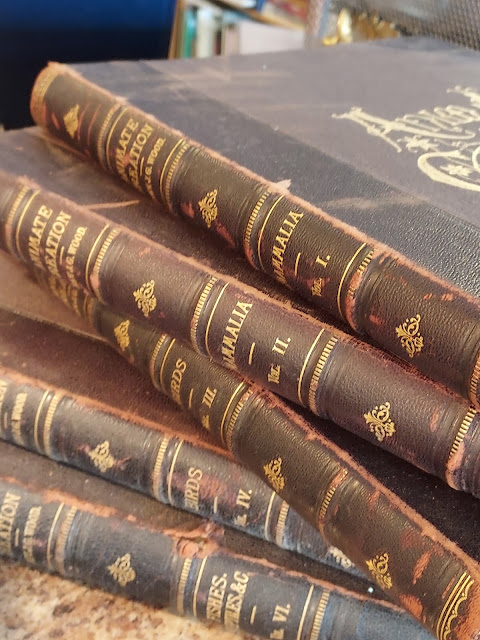

These have endured.

Taleb received a letter from a historian Paul Doolan in Zurich, asking how young people could be taught skills for the 21stcentury, since we have no way of knowing what skills will be needed. Taleb’s perhaps surprising answer (perhaps not, if you’ve been reading his work) is to have those young people read the classics. This is where the sentence appears: “The future is in the past.” 


We cannot return to the past, and few of us would choose to do so. The wisdom of the past, however, the accumulated knowledge of our culture is the legacy to us of all who have lived before, and we can avoid many errors by learning what hasn’t worked out well for our human ancestors. 


What is success, for an individual, a corporation, or a culture? Taleb tells us the most important factor is the avoidance of unsurvivable error or the unforeseeable, rare but unsurvivable event. Mere survival does not insure success, but there is no success without survival, so it is crucial to avoid that fatal misstep.


We cannot learn from what has not (yet) happened or what might happen, only from what has happened.


History: Learn from it.


Wednesday, November 14, 2018

Do You Need a Weatherman?

Many years ago — and it’s been so many that I don’t want to put a number on them — back when “long distance” was so different from “local” that the former kind of telephone call was still for most of us a special occasion, I was in New Jersey and speaking to a dear friend at the time in El Paso, Texas. An impatient note was pressed into my hand: “Weather is boring.” Yes, my friend and I were sharing weather news, but no, it wasn’t boring. 

“Small talk” is a label applied, often derisively, to safe topics of general interest. People with conflicting political opinions or religious beliefs antagonistic to each other are unlikely to get into a shouting match over weather reports or forecasts. “Everyone talks … no one does anything about….” the weather, Mark Twain is said to have said, but that’s exactly what makes it a safe topic. We are not called upon to do anything about it, other than prepare for it. Lay in supplies (blizzard) or prepare for evacuation (hurricane), but no one expects us to stop a weather event in its tracks.

Small talk? More to it than that. 

In the course of our evolution and yet today, leaving our homes to venture out on land, sea, and air, knowing about weather conditions is important to our survival. “How are the roads?” is no idle question asked to fill in awkward silence. But while the roots of our perennial interest are undoubtedly in the history of our species, fascination with weather goes beyond our need to know. I in New Jersey and my friend in west Texas had no survival issues at stake in the road conditions of each other’s temporary places of residence. No, what we wanted, we two friends from Michigan, both far from home and missing all that was familiar to us, was to place each other in the alien landscapes we were then inhabiting. 

For several years now I have corresponded with a friend in New South Wales, Australia, a friend who has never been to Michigan, as I have never been to Australia. (We may never meet! But we are friends.) And not only do we experience different weather but also opposite seasons: winter in Michigan is summer in New South Wales. Somehow Kathy and I never cease to be amazed at that. If one of us picks up the phone to call (as she did once, years ago) instead of relying on e-mail and the occasional package, we are speaking together in real time across what feels like a six months’ time difference (instead of only 17 hours). Intellectually, we understand about the northern and southern hemispheres, the tilt of the earth on its axis, but experientially we are all wonderment.

But to backtrack — because already I’ve oversimplified, as you may have noticed. We know very well that the need for response to weather and other natural events (e.g., fire) events is not an argument-free topic, particularly in the wake of catastrophe. Who should have done more to prepare? Who failed to respond adequately? Some of the discussion has to do with improving future preparation and response, but there’s also that pesky business of assigning blame. Oh, we can do that, all right! And I’m only talking here about natural disasters. Whatever happens, there is always some group of people at fault, and that’s just the weather! 

Stakes of the blame game get much, much higher when we shift from “small talk” to anything remotely political. Do you need a weatherman? What direction do you think the winds of change are blowing? Because time, after all, is change, consequently the times are always a-changin’. For better, for worse — it all depends on your point of view. Or does it? 

I guess, though, that the good news (it’s always important to look for a bright spot, if not a bright side, isn’t it?) is that — oh, darn! Now I’ve forgotten what the bright spot was! That we don’t have hurricanes in northern Michigan? What could have flitted through my mind there?

Well, the Artist and I made an odyssey to Indiana last weekend. It felt odyssic (is that a word?) to us, anyway, though Indiana is only one stay away from Michigan, in that we worried about weather and driving conditions and only very reluctantly left our Sarah (dog) with neighbors for four days. (Sarah and the neighbors had a wonderful time — a change of pace for everyone.) Reasons for the trip, however, were happy ones. After losing my mother, a neighbor, and an old friend (three funerals), at last I was going to a wedding! It was lovely. And we made it home on dry roads before Monday evenings snowfall began.

One question in our house, whenever we are preparing for a trip, is: “What are you taking to read?” I took along the book I had set aside over a week before, Frederick Jackson Turner’s The Frontier in American History, originally published over a hundred years ago as separate papers on frontier topics. Turner’s view — new at the time he articulated it, persuasive in its time, hotly debated and rejected by many between then and now — was that American history and the American character were essentially shaped by a westward-advancing frontier. 

I am still puzzling over and wondering about “the American character,” though Turner does list features of his paradigmatic American. It’s interesting that he acknowledges a large percentage of immigrants in his frontiersmen, so his “American” character was not limited to those born in the American colonies or, later, states. Was not each successive wave of immigrants resented in East Coast cities in the late eighteenth and early nineteenth century? Did the frontier accept each ethnic group equally? I do not find answers to these questions in Turner’s papers.

As a research assistant in the 1980s I learned that nineteenth-century Michigan farms were established by waves of settlers first from Pennsylvania and New York and later from the European states eventually consolidated as the German nation. It was common practice for pioneers to settle, “improve” the land (clear the forest, plant crops, fence acreage, build houses and barns), and then sell and move farther west to do the same again, new Western immigrants replacing the older as the frontier moved west.

Turner stresses ongoing conflict between established East Coast colonies and cities and the more sparsely settled agricultural lands on the frontier. Such conflict was part of the differences that led to the Civil War but was also much larger and longer lasting. No doubt if he could return to the United States in 2018 Turner would find evidence to justify himself in holding to his thesis, and it can be a compelling lens or grid, though it is not the only possible or useful organizing principle of American history. And it’s kind of a shell game, each theory presenting some gap or contradiction, so it’s a question of which intellectual problems you want left at the end of your say.

As I read, for instance, I am dismayed at Turner’s claim that westward expansion was “peaceful.” He sees the pioneers as naturally democratic, holding “equality, freedom of opportunity, [and] faith in the common man” as ideals acted out in their everyday lives, holding themselves independent of state and national power insofar as they could do so without detriment to their own interests. 

…The importance of the result can hardly be overestimated. It ensured the peaceful and free development of the great West and gave it political organization not as the outcome of wars of hostile States, nor by arbitrary government by distant powers, but by territorial government combined with large local autonomy. These [local] governments in turn were admitted as equal States of the Union. By this peaceful process of colonization a whole continent has been filled with free and orderly commonwealths so quietly, so naturally, that we can only appreciate the profound significance of the process by contrasting it with the spread of European nations through conquest and oppression.

There. I have restrained myself and not added italic emphasis to a single word in the passage quoted above. I will simply urge you now to go back and re-read it, slowly, a phrase at a time. What stands out in your mind?

Earlier in the same chapter, “The Middle West,” originally published as a paper in the International Monthly in December 1901, Turner wrote of the “removal policy” that “effected the transfer of most of the eastern [Native American] tribes to lands across the Mississippi,” with later “removal” clearing Kansas and Nebraska for westward-migrating Eastern whites and European immigrants, and he notes — as again I restrain myself and add no emphases:

A period of almost constant Indian hostility followed, for the savage lords of the boundless prairies instinctively felt the significance of the entrance of the farmer into their empire. In Minnesota the Sioux took advantage of the Civil War to rise; but the outcome was the destruction of their reservations in that State…. The systematic slaughter of millions of buffalo … put an end to the vast herds of the Great Plains, and destroyed the economic foundation of the Indians. Henceforth they were dependent on the whites for their food supply, and the Great Plains were open to cattle ranchers. 

How are these two accounts in a single published paper by a single author to be reconciled? Was the frontier pushed west in orderly, peaceful fashion or by a relentless series of destructive forces upon established inhabitants? If Turner had ignored the Indians entirely, we could simply reject his claim of peaceful expansion. As it is, he acknowledges the presence of the Indians, their hostility to the pioneers, and the destruction of their economy, so that, even while he has remained silent on more direct destruction of human populations, we need to explain somehow why it is he sees no inherent contradiction in his story.

Sadly, I think I see the way he interprets pioneer history, and the key is the contrast he asks us to draw between American expansion and “the spread of European nations through conquest and oppression.” Think about it. He does not see displaced Native American tribes as conquered and oppressed. Why not? How can he see them any other way? The key, I believe, is his characterization of the Indians as “savage lords” of the prairies. (That the prairies were not “boundless” is another matter.) In Europe, conflicts of “conquest and oppression” were between what Turner recognized as civilizations, whereas conflict between a civilization and “savages” fell outside the scope of “conquest and oppression.” He does not even defend this aspect of his thesis. It is an assumption rather than an explicit premise or defended conclusion. 

Abraham Lincoln made the public statement that the nation could not survive half slave and half free. Weatherman Lincoln had his eye on the slavery question. Following the Civil War, many displaced Southerners, both white and black, sought new lives for themselves in the American West, and one path open to them was fighting Indians. History frequently refers to the “Indian wars.” Were the “hostilities” not “wars” in Turner’s eyes because the “tribes” were not organized as “States”?

Halfway through the Turner book, once again I set it aside. Though I will finish the reading of it, I have to ration my intake, just as I try to ration my daily intake of national and world news. 

Weathermen look for patterns, predicting the future on the basis of the past. These forecasts work best in the short term. Low chance of precipitation today, sunshine this afternoon and more tomorrow. A 10-day forecast can be helpful in planning life events but will usually be revised during that period, so check it every day if you need to know. 

Has heavy snowfall come this early in the previous seven years? That was the question of one friend, and I looked back over a few blog posts for the answer and quick found this one from 2014. Snow before Thanksgiving — not unprecedented.

Weather patterns are not fixed by human calendars. They are not even identical from one century to the next. How much more uncertainty attends human predictions of economic activity and of war and peace! This is 2018. We have never been here before.