Search This Blog

Showing posts with label housing. Show all posts

Friday, June 12, 2015

Revisiting “Affordable” in a Larger Context: Is There a “Common Good”?


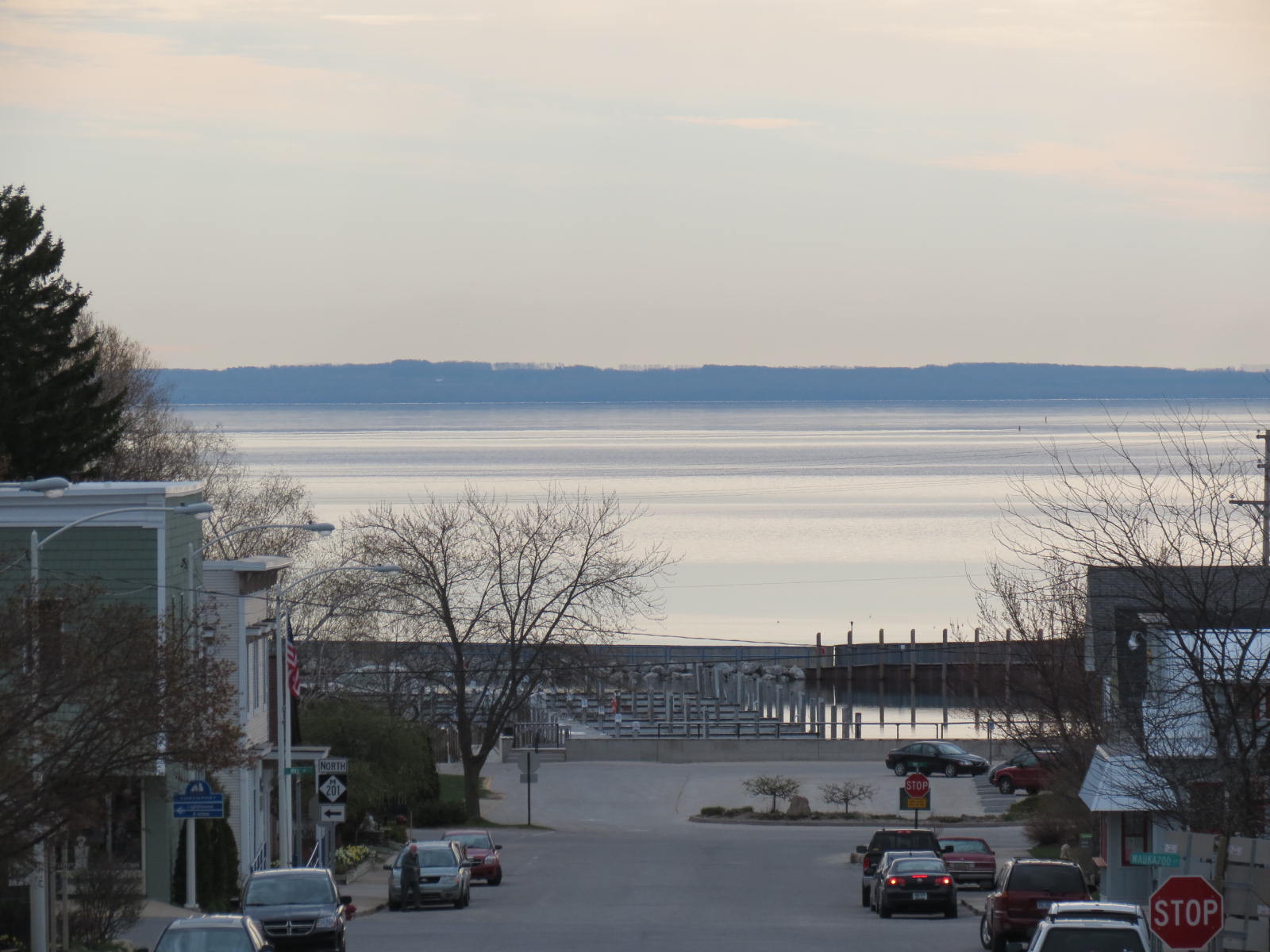
Before the leaves, before the boats


Some thoughts are like perennial itches: you can scratch and scratch away at them for years, and they never go away. One such thought, for me, is that of the common good, a venerable idea in Western philosophy but seemingly in decline in our day.

For instance, the original idea of public schools in the United States of America was that it is for the public good that all citizens of a republic be educated. Self-government demands general education for all. (The words chiseled over the proscenium of my high school auditorium were from Diogenes: “The Education of Every State is the Education of Its Youth.”) In the current American climate, parents are much more likely to see education as something they want their children to have as a competitive edge over other kids in the country. In this new discussion, I don’t hear concern for the future lives of those educated, successful children and their children in a country of increasing inequality. If this sounds like an accusation, I suppose it is, in part, but another important part is that I simply don’t understand. I don’t understand wanting that kind of world. It isn’t what I want for my kids and grandkids.

As Leelanau County tackles  the difficult and thorny issue of affordable housing (see previous post), schools are part of the discussion, but what is at stake in our little villages is not keeping poor kids out of our public schools but keeping enough kids in school to keep the schools open! What is a community without a school?

It’s probably more than coincidence  that NPR last night had a feature on a proposed affordable housing project in Marin County, California, since northern Michigan communities are far from the only ones faced with the issue. (Interesting that the headline reads “debate against [sic] affordable housing.”  A debate presents opposing arguments, not the arguments of a single side, and in fact the Californians in the story fell onto both sides of the issue, not always on the basis of who was in the boat and who was in the water.) On my way to Northport this morning, headed for my little, 23-year-old, independent bookstore, a particular word in one Marin County man’s complaint about the proposed project kept bouncing around in my head, unable to settle in a comfortable resting place. The word was sacrifices.
“I made great sacrifices to be here,” he says. “I think it's selfish to expect that someone else should be able to acquire (it) for little or next to nothing.”  
That’s only a snippet, and it doesn’t tell me much, but I can’t help wondering what the man means. I can understand parents sacrificing for their children. I can understand soldiers sacrificing for their country. But if I give up something to gain something I want more, how is that a sacrifice? Isn’t it simply a question of priorities, of knowing what is most important to me? Isn't a sacrifice something given up?

What of another household in which the homeowners’ inherited wealth enabled them to buy into the neighborhood? They could not be said to have sacrificed, could they? Do we want to say their parents made the sacrifices? Well, maybe they did, and maybe they didn’t. Who knows? And how many generations back do we want to go -- until we reach unscrupulous ancestors?

To believe that everyone with wealth earned every single penny by the sheer sweat of his or her own brow, with no help from anyone and no advantages of upbringing, and that every poor person is poor merely because he or she does not work hard is nothing but self-serving myth. No one has more than 24 hours a day in which to live, and not all those hours can be devoted to work. Sleep has to figure in. Do people with 100 times as much money work 100 times as many hours a day? I’d say not.

Back to my original thought-itch, that of the idea of the common good? What is it? A Santa Clara University site defines it as “social systems, institutions and environments on which we all depend” working in such a way as to “benefit all people,” which would surely include public safety, schools, and conservation of natural resources, at a minimum. The Santa Clara site is worth visiting for discussion of problems associated with the very idea of the common good. In a pluralistic society, individuals hold different values have different priorities. Moreover, a “common good,” by definition, is one in which everyone benefits, while some will have contributed more than others.

Some people might make an entirely different objection, not to practical problems but with the theoretical object itself. Like Socrates, questioning his friends, shredding their definitions, and deconstructing social practices to demonstrate that everything we believe is unreal (perfect “forms” existing only in some other realm), a Platonist would show you that the common good on earth is nonexistent. Have you ever seen it? Can you point to an instance of perfect benefit to all?

Some work harder, some not as hard, and some pay more dearly than others. That’s all true. It’s also true, I’d say, that all of us in this country have the advantage of certain unearned benefits, beginning with being here at all. Working toward the common good, then, toward an ideal (what else is “liberty and justice for all” but an ideal?) can be seen as making payments for what we have already received. Credit was extended to us. We need to earn, after the fact, what we received without having prepaid.

It is not individuals we are rewarding (whether “deserving” or not) but society we are paying back by ensuring its continuity. We are building a better world. And it we can only make our payments one person, one action at a time.


Thursday, June 11, 2015

Book Review: BEING MORTAL


Being Mortal:
Medicine and What Matters in the End
by Atul Gawande
NY: Henry Holt/Metropolitan, 2014
Hardcover, $24

I learned about a lot of things in medical school, but mortality wasn’t one of them. ... Our textbooks had almost nothing on aging or frailty or dying. How the process unfolds, how people experience the end of their lives, and how it affects those around them seemed beside the point. The way we saw it, and the way our professors saw it, the purpose of medical schooling was to teach how to save lives, not how to tend to their demise.
So begins Gawande’s latest book, important and well worth reading, as his writing always is, and particularly relevant to individuals in what the French call the “third age” of life (think of the riddle of the sphinx) and those who are or soon will be caring more and more for that generation as time brings about the inevitable.

Every doctor, every nurse, sooner or later must confront death, but Gawande notes that until recently few in modern medicine were given tools to deal with the situation. Instead, American medical training has focuses on testing, recording, gathering facts, prescribing drugs, and offering patients an increasing number of choices among an array of procedures with hoped-for but unclear outcomes. Death was the elephant in the living room, the one everyone knew was there but no one wanted to mention.

Medical costs in the final year of life are astronomical, as everyone knows but equally unfortunate (perhaps worse), Gawande believes, is the harm inflicted when people are “denied ... the basic comforts they most need.” And “basic comforts,” it turns out, are more than food and shelter and safety.

The most frequent complaint Gawande hears from nursing home patients is, “It just isn’t home.” However homelike in appearance (appearances often geared to appeal to residents’ adult children rather than residents themselves), in most facilities designed for care of the frail elderly, residents lack the privacy and autonomy most of us take for granted all our lives.

Gawande traces the history of the “assisted living” movement from its origin in the vision of a West Virginia coal miner’s daughter. When Keren Brown Wilson’s mother, Jessie, needed help with the basic tasks of living, there was nowhere for her to go but a nursing home. The daughter, a college student at the time, never got over her mother’s frequent plea, “Take me home,” and because of those pleas, Keren Wilson developed an interest in issues related to aging and eventually earned a doctorate in gerontology. What her mother had in mind for “home” was not a place designed for her health and safety (placement considerations important to most children of the elderly) but a place where she could be herself again, not a patient, but Jessie the person. Dr. Wilson wrote a paper to outline what such a place might look like.
The key word in her mind was home. Home is the one place where your own priorities hold sway. At home, you decide how you spend your time, how you share your space, and how you manage your possessions. Away from home, you don’t.
For a variety of reasons, Wilson’s original idea became diluted beyond recognition as “assisted living” facilities popped up all over the country, but Gawande visits and describes a few places where privacy and autonomy, key to Wilson’s original vision (rather than regimentation) are the rule.

Paramount at every stage of aging, whether or not it involves terminal illness, is “how to make life worth living when we’re weak and frail and can’t fend for ourselves....” What makes life worth living will vary from one individual to another, and the point of the “hard conversations” with family members and medical staff is to determine, in each case, what makes life worth living to this particular individual. For one man, being able to eat chocolate ice cream and watch sports on television was enough. “My dad,” Gawande tells us, in one of the passages focusing on his own experience with his frail, aging surgeon father, “didn’t think that would be good enough for him at all.”

Not surprisingly, there is a lot in Being Mortal about hospice and palliative care. The idea of offering “concurrent care” actually came from an insurance company. Instead of having to choose between hospice and other treatments, policyholders with less than a one-year life expectancy could continue their regular treatment and receive hospice care. Since they did not have to give up anything, enrollment in hospice jumped from 26 to 70 percent. More surprising were some of the other results:
They visited the emergency room half as often as the control patients did. Their use of hospitals and ICUs dropped by more than two-thirds. Overall costs fell by almost a quarter.
Gawande cites a 2010 study from Massachusetts General in which patients with stage IV lung cancer were randomly assigned to two different groups.
Half received usual oncology care. The other half received usual oncology care plus parallel visits with a palliative care specialist ... The result: those who saw a palliative care specialist stopped chemotherapy sooner, entered hospice far earlier, experienced less suffering at the end of their lives—and they lived 25 percent longer.
In other words, not only was it cheaper to add hospice care to other treatments, but terminally ill patients lived longer, had fewer emergency incidents, and their quality of life was higher. Gawande attributes much of the difference to the open conversations that hospice encourages and the focus of its staff on the person and his or her individual values and goals rather than on hope for recovery.

Conversations about end-of-life choices, he admits, are not easy. They take time and may “unleash difficult emotions” for all involved. In the end, however, they can make all the difference. The battle analogy he uses to make his point comes from the 19th century and pulls no punches:
Death is the enemy. But death has superior forces. Eventually, it wins. And in a war that you cannot win, you don’t want a general who fights to the point of total annihilation. You don’t want Custer. You want Robert E. Lee, someone who knows how to fight for territory that can be won and how to surrender when it can’t, someone who understands that the damage is greatest of all if all you do is battle to the bitter end.
The author of Being Mortal shares with readers not only his medical experience and the fruits of his research into how society deals with aging and dying, but also his own personal story, that of a loving son distressed to see his father losing ground.

My only wish – I will not call it a complaint – is that an index would have been helpful. I highly recommend this book.


Tuesday, June 9, 2015

A Local Issue in Leelanau and Beyond


An e-mail message from the president of Cherry Republic in Glen Arbor, Bob Sutherland, has been making the rounds this week. The issue is important not only for Leelanau County but for every high-end tourist region in the country. When I asked Bob’s permission to post his message on Books in Northport, he sent me a slightly reworked version, so here is Bob Sutherland on the subject of affordable housing in Leelanau County:
Finding workforce housing is an increasingly daunting challenge for my southwest Leelanau-based company. Housing in Glen Arbor and Empire is difficult to find, and when it can be found, it is too expensive. Many of our employees will purchase a house in a more affordable area, like Benzie County, and drive 30 minutes or more to Glen Arbor. Turnover is much higher with these employees, because long commutes diminish their time with family and their quality of life.We continue to pay some of the top salaries in our region. But our employees are often competing against owners of second homes, who are making $200,000 or more. As the second-home owners purchase more of our properties, Empire and Glen Arbor are becoming even emptier in the winter. This challenges the businesses that try to stay open year round, it challenges the schools, and it even challenges the psyche of those that stay. And for us, without being able to find affordable housing, it becomes even more difficult to find employees during the summer. 
What can we do? One thing is to set apart land in Glen Arbor and Empire for year-round housing. We can put an affordable price on it and specify it be sold only to people that can prove they live and work in one of those towns. If that sounds like a pipe dream, it’s not. There are state and federal programs available to help make this possible. It’s already happening all across the country in regions similar to ours. From Ann Arbor to Aspen, Colorado, affordable housing is successfully being built. 
To make this happen, cities, counties, and townships are providing local funding. It isn't going to happen in any significant way in Leelanau until local contributions, whether in land or money, are provided.We know that it would be better for our company if we moved our offices and factories to an area with access to more affordable housing. But in the last two years, we chose to do the right thing for our communities, for our school, and our county. We chose to build and grow here in southwest Leelanau County. We want to be a part of building and cultivating a thriving year-round economic base for the area. 
To do that, however, we need the county’s help. We need the help of our villages and townships. We need the non-profit organizations. We will donate as much as we can to supporting these initiatives. It is going to take money, land, hard work, dedication and vision to make it happen. But if we all work together, we can succeed at this.
Bob’s original message prompted a quick reply from Andy Thomas of Thomas & Milliken Millwork in Northport, Petoskey, and Traverse City, who also gave me permission to reprint his message to the community group, and here’s Andy on the same subject:
Bob’s letter captures the essence of the environment that owners of small and growing businesses face in this area.  Their presence here is the main bulwark against the potential loss of genuine community, a place that provides work, home, school, and recreation.  Competition for the privilege of owning property in this unique and beautiful place can pose a danger of hollowed out towns and waterfronts.  Resort and seasonal property owners help provide tax revenue and support our restaurants and shops, but must be brought to see the value of an intact and healthy year-round community.   It is in their interest that our towns be capable of not only providing a broad range of goods and services for their seasonal stay, but a stable and thriving community should they discover that they or their children would like to live here year-round, whether employed or as retirees.   
We now need to support Bob and others like him.  He is pounding a stake into the ground and saying, “ We are here and we are staying here because we love this town.  We will do whatever it takes, but we need everyone’s help to make this happen.”  As stakeholders we are tying the future of our businesses and welfare with the faith that our community will be a supportive partner.  It is time for us as community partners with our area employers  to gather a broad base of support so that we provide this missing asset which is the availability of employee housing.    
For each community, this need for employee housing can be divided into three groups:  
·     Year-round employees 
·     Seasonal agricultural employees 
·     Seasonal resort and retail employees  
Having employees living in the community will mean they will spend money here, and in the case of year-rounders, send their children to school here, and perhaps become stakeholders themselves.  
We are all stakeholders.  The challenge has been identified and quantified.  It won’t be solved with a single development, but using the Aspen model and dividing efforts into categories could get us started.  I will volunteer for the Northport year-round team.
I was curious about Andy’s reference to the “Aspen model,” since I went to Aspen for a weekend conference back in the early l990s (my only visit to the area; note that in 1994 the average home price in Aspen had risen to $2 million) and was shocked at the price of housing. My rough estimate, based on prices I saw, was that any comparable home in Leelanau County would have an additional zero at the end of its price in Aspen. I was told that workers in Telluride, Colorado, were enduring longer and longer commutes, as rents soared in that Western ski town.

(By the way, for general informational purposes I recommend the City Data site. You can find facts for just about any town in the United States, and not just housing costs but just about anything else you want to know.)

Whether you are a year-round Leelanau resident, a summer person, an occasional visitor, a worker needing housing or the owner of multiple properties, as Andy says, "We are all stakeholders." All of us want the place we love to continue to be a real community, with space and welcome for people from all walks of life.


Wednesday, October 16, 2013

Rocky Mornings Begin Early, in the Dark


[WARNING: Not a feel-good post, though I did come back to add the sumac photo above. Sigh!]

Angry Tuesday:

I’m trying to remain upbeat in public, but sorrow and frustration fill my heart. We were expecting sad news from friends on Monday so were relieved to get good news for and from other friends to balance the day, but before bedtime the good news turned bad, too. I got to sleep but woke before 4 a.m., wide-awake and too upset to read myself back to sleep or meditate away the blues by drawing. Long-neglected bookkeeping benefited from the pent-up energy that needed somewhere to go, and paying bills and posting expenses occupied my mind for a while, pushing trouble to a rear burner. But when the paperwork was done, trouble leapt back again to the foreground, and even drawing paper and pencil could not banish the dark clouds. 

One friend was dying (I learned a couple of hours later that she had in fact died about the time I was waking in the dark), and the other friends had suffered yet another severe disappointment in their search for a year-round home. Feeling helpless, I couldn’t get either couple out of my mind.

Losing a friend to cancer isn’t easy. Her husband said she did not want friends to mourn her passing, to remember instead the good times we shared, but I am doing both. I’m not “Zen” enough that I can accept a friend’s dying without a tear – and anyway, if we hadn’t had good times together, there would be nothing to grieve. I miss her already. Maybe some of my friends are, as people say, more “philosophical.” (My philosophy is that grieving and gratitude are perfectly compatible.) Another friend notes that “grief is the price of love.” Indeed!

So there was that. With such a death, though, there’s no one to blame. Hers was a very rare form of leukemia. Fewer than 50 cases have been diagnosed and studied worldwide. It’s pernicious, and it’s fast. The first round of chemo gave her a reprieve, and her family and friends were able to enjoy a few months of high-quality togetherness, our friend able to spend time outdoors in nature nearly every day, living the end of her life just as she wanted to live it. Given the circumstances and constraints, everyone did very well with the limited time available.

The other situation is, in some ways (although it is still reversible, as death is not, I realize), more difficult to accept than death, in that it came about initially through a terrible set-up (evident only in retrospect) and betrayal, and the friends suffering from that initial blow have been knocked down repeatedly since. They have lost their business, and along with it their home, and every time they get their hopes up that they’ve found a new place to live, those hopes are dashed. They are decent, responsible, hard-working people, and they just can’t catch a break.

Leelanau County is sometimes called, even by people who live here, “La-La Land.” It’s beautiful, it’s a tourist and second-home and retirement Mecca, and, increasingly, owners of multiple properties do not want to be “bothered” with a year-round rental (one man actually said that to our friends, dismissing his neighbors’ plight with “I just don’t want to be bothered”) when it’s so much more remunerative to operate a seasonal rental. Some owners of seasonal rental property don’t want to rent it out at all in the winter; others will rent it reasonably until spring, but “You’d have to be out by May first.” And go where? There is nothing to rent in the summer that isn’t priced for the vacation/resort market.

And it’s a growing trend: people retire here, bring their pensions and portfolios, buy anything on the local housing market that’s reasonably priced, put some money into it to cutes it up, and operate it as a seasonal vacation rental. What it means is that fewer people, the ones with more money, own more pieces of property, and that the year-round rental housing market is vanishing utterly.

Once I went, on a graduate fellowship, to a weekend conference at the Aspen Institute. I remember looking at prices of property in the little town of Aspen, Colorado, and thinking that anything available there was like a Leelanau County price times ten. There were jobs in that little town full of movie star residents, but the waitresses and bartenders and baristas and carpenters and landscape crews couldn’t afford to live anywhere near the town. Many Colorado towns fit that description, and now the situation is being replicated in northern Michigan.

(“You know you’re __________ when you need a second job to pay for the gas to drive to your first job.” Joke? Funny?)

It didn’t used to be like this here. It used to be that there were people of all income levels, and they mixed socially, and there was room for everyone. To me, it was, along with natural beauty, one of the most attractive features of Up North life. There’s a lot more talk about “community” now than there used to be back then, but is there more community? More people caring? Working together? On certain projects, yes, always -- in part because there are more and more well-educated, well-off retired people who want to contribute in meaningful ways -- and yet the gap between haves and have-nots yawns wider with each passing month, and I wonder how long the middle will hold.

Is there any middle left in Aspen? Or is it all nothing but top?

Still-Sad Wednesday

This morning, driving county roads, walking along one favorite dead-end road with Sarah, appreciating fall colors under lowering skies, I found my mind drifting again and again to the friend who just died, thinking of the last long, wonderful country walk she and I (and Sarah) took together and the laughter-filled brunch another friend arranged for a group of us. Even as I miss her, what I’m remembering is good times shared.

I’m also remembering very serious talks we had on a wide variety of subjects. She and her husband were comfortably well off in their retirement, but at the same time they lived very simply -- one car, modest home and material belongings. For “entertainment,” they read books, took long walks, cross-country skied in winter, spent time with friends, watched old movies, and volunteered in local groups. They “had theirs,” but they weren’t looking to “pull up the ladder," and it would be so good to brainstorm with her today on disappearing rental housing. Knowing how deeply she cared about such issues, I don’t have to feel I’m neglecting her memory by dwelling on problems faced by other people.

But I have to retreat somewhat from yesterday’s frustrated outrage, because in many (not all!) cases, there’s more than greed behind the trend that’s bothering me. High taxes are another big factor. “Nice” houses, waterfront property, housing within incorporated village limits – all can push owners of rental properties up against the wall, especially if they have to depend the income as part of their livelihood. Who can afford to rent year-round at a reasonable, affordable price if twelve months of such income will do nothing more than cover property taxes and sewer bill and a minimum of maintenance? Some -- hallelujah! -- can afford to do that and do it. Others can't afford to. Then -- well --. But it's a factor, one way or the other.

One issue leads into another, inexorably. The United States is the only major country in the world to fund public education through property taxes. Unequal tax burdens and resulting inequality of schools result from the system of taxation, and the widening gap between wealthy and poor is exacerbated by differences in schooling opportunities. The nest of complications is staggering.

And yet, my immediate concern is that my friends find a home for themselves and their son before snow flies. They are responsible, decent, hardworking, energetic, intelligent, wonderful people! They are not asking for a handout! There has to be a solution to this problematic situation.


Sunday, February 17, 2013

Could a "Boom" Knock Us Right Out of the Ring?


The London Review of Books had a page-and-a-half “Diary” feature in the 7 February 2013 issue. Rebecca Solnit was the author, and her topic was the Silicon Valley economic boom and how it has affected housing availability and prices in San Francisco and the surrounding area. Where high-paid, high-tech workers (“routinely make six-figure salaries, not necessarily beginning with a 1”) commute 3-1/2 to 4-1/2 hours to work, the corporations they work for provide buses with wifi, so employees can start work before arriving at their offices (and unfortunately undermining community support for improved public transportation).

“Where orchards grew Apple stands.” 

Why does that one sentence make me, an Apple user, so sad? Because I live in orchard country? Because I could live more easily without the Internet than without fruit?  Once wild and creative San Francisco, now a bedroom community for Silicon Valley, is the scene of regular evictions, and prospective home buyers bid up property minute by minute.

It’s a boom.

The story was fascinating enough (to me, it was fascinating in the manner of a disaster story), but then Solnit changed the subject somewhat: “San Francisco’s tech boom has often been compared to the Gold Rush....” In the mining boom, there was a population explosion, runaway inflation, and, while the boom lasted, high wages for the workers flooding in. Booms are like that.
The oil and gas boomtowns of the present, in Wyoming, North Dakota and Alberta, among other places, follow this model. Lots of money sloshes around boomtowns, but everyday life is shaped by scarcity, not abundance. The boom workers are newcomers. They work long hours, earn high wages, drive up the cost of housing for the locals, drive out some locals.... Like a virus, mining destroys its host and then moves on. There are ghost towns across the west full of dying businesses with the landscape around them ground into heaps leaching toxic residue.
Silicon Valley, she writes, returning to her main subject, is different from mining towns in many ways—“clean, quiet work, and here to stay in one form or another.” It’s the similarities that interest her, though—the “mass displacements and the casual erasure of what was here before.” Mining or high-tech, she is saying, there are similar losses for those not in on the boom.

I couldn’t help thinking that there is another connection between the two kinds of booms that Solnit did not explore. This is not criticism: she had a certain focus, certain points she wanted to make, and the piece does that very well. But the truth is that there could be no Silicon Valley industry, no high-tech boom, without nonrenewable mineral resources. Mining is part of San Francisco's boom today.

Okay, I’m not a hermit, and I write this blog on a laptop. I even have a cheap, pay-as-you-go cell phone for emergencies. It’s almost impossible to be an American these days and not be connected. As I've said before, I’m not a Luddite. But neither do I want the electronic devices in my life to proliferate like those animated brooms poor Mickey Mouse, would-be sorcerer, had to deal with in “Fantasia.”

Soil, water, food grown in soil, minerals under the earth—these must be protected and conserved. It doesn’t make sense to pollute water and soil by mining and processing finite, nonrenewable materials. It isn't in California's backyard, but the high-tech industry is not as "clean" as it appears from that one geographical area. We can do better. We can insist that the industry do better.

Does all this seem a long, long way from your backyard? No, it's right at your fingertips!