Search This Blog

Showing posts with label affordable housing. Show all posts

Friday, June 12, 2015

Revisiting “Affordable” in a Larger Context: Is There a “Common Good”?


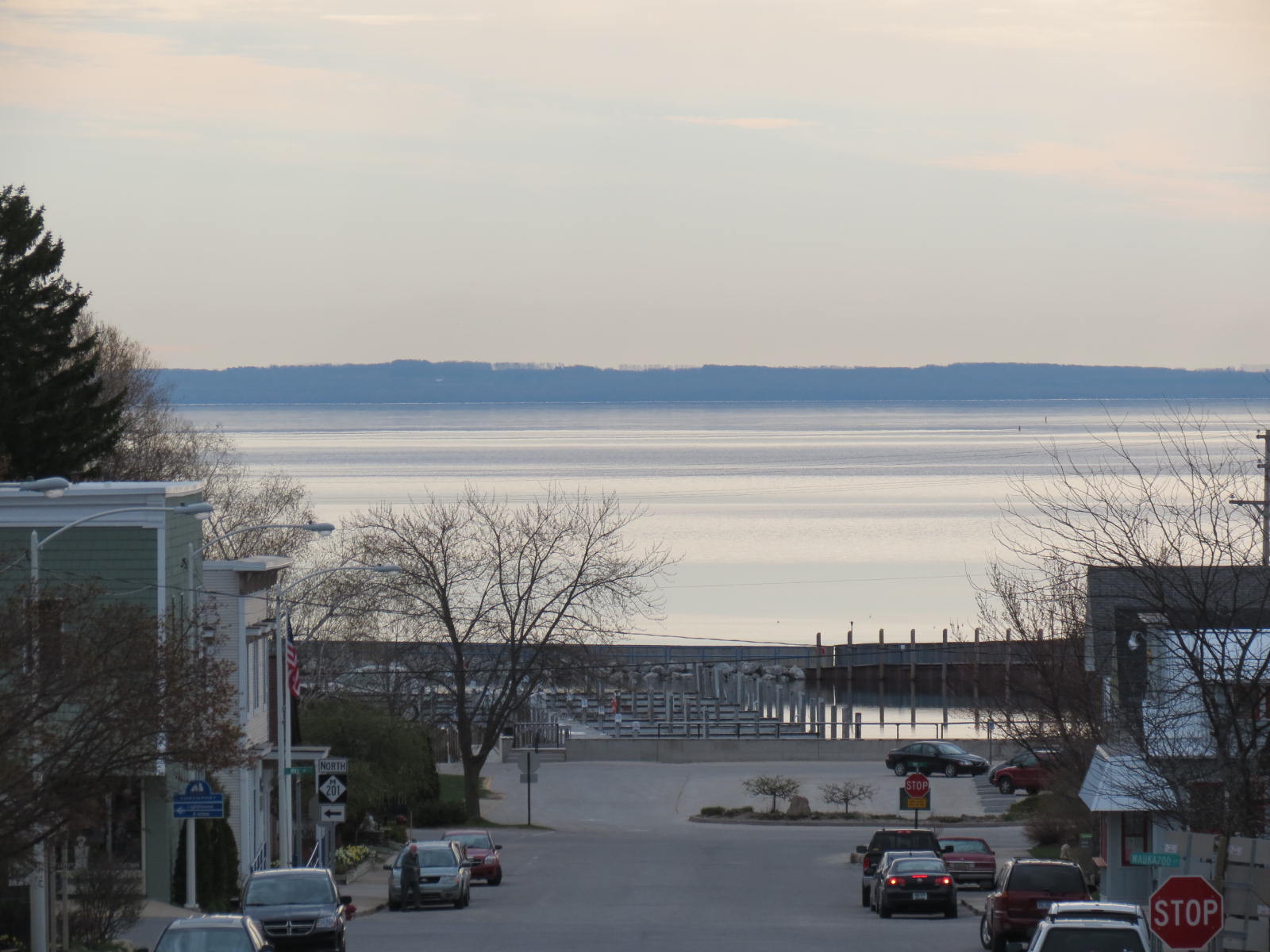
Before the leaves, before the boats


Some thoughts are like perennial itches: you can scratch and scratch away at them for years, and they never go away. One such thought, for me, is that of the common good, a venerable idea in Western philosophy but seemingly in decline in our day.

For instance, the original idea of public schools in the United States of America was that it is for the public good that all citizens of a republic be educated. Self-government demands general education for all. (The words chiseled over the proscenium of my high school auditorium were from Diogenes: “The Education of Every State is the Education of Its Youth.”) In the current American climate, parents are much more likely to see education as something they want their children to have as a competitive edge over other kids in the country. In this new discussion, I don’t hear concern for the future lives of those educated, successful children and their children in a country of increasing inequality. If this sounds like an accusation, I suppose it is, in part, but another important part is that I simply don’t understand. I don’t understand wanting that kind of world. It isn’t what I want for my kids and grandkids.

As Leelanau County tackles  the difficult and thorny issue of affordable housing (see previous post), schools are part of the discussion, but what is at stake in our little villages is not keeping poor kids out of our public schools but keeping enough kids in school to keep the schools open! What is a community without a school?

It’s probably more than coincidence  that NPR last night had a feature on a proposed affordable housing project in Marin County, California, since northern Michigan communities are far from the only ones faced with the issue. (Interesting that the headline reads “debate against [sic] affordable housing.”  A debate presents opposing arguments, not the arguments of a single side, and in fact the Californians in the story fell onto both sides of the issue, not always on the basis of who was in the boat and who was in the water.) On my way to Northport this morning, headed for my little, 23-year-old, independent bookstore, a particular word in one Marin County man’s complaint about the proposed project kept bouncing around in my head, unable to settle in a comfortable resting place. The word was sacrifices.
“I made great sacrifices to be here,” he says. “I think it's selfish to expect that someone else should be able to acquire (it) for little or next to nothing.”  
That’s only a snippet, and it doesn’t tell me much, but I can’t help wondering what the man means. I can understand parents sacrificing for their children. I can understand soldiers sacrificing for their country. But if I give up something to gain something I want more, how is that a sacrifice? Isn’t it simply a question of priorities, of knowing what is most important to me? Isn't a sacrifice something given up?

What of another household in which the homeowners’ inherited wealth enabled them to buy into the neighborhood? They could not be said to have sacrificed, could they? Do we want to say their parents made the sacrifices? Well, maybe they did, and maybe they didn’t. Who knows? And how many generations back do we want to go -- until we reach unscrupulous ancestors?

To believe that everyone with wealth earned every single penny by the sheer sweat of his or her own brow, with no help from anyone and no advantages of upbringing, and that every poor person is poor merely because he or she does not work hard is nothing but self-serving myth. No one has more than 24 hours a day in which to live, and not all those hours can be devoted to work. Sleep has to figure in. Do people with 100 times as much money work 100 times as many hours a day? I’d say not.

Back to my original thought-itch, that of the idea of the common good? What is it? A Santa Clara University site defines it as “social systems, institutions and environments on which we all depend” working in such a way as to “benefit all people,” which would surely include public safety, schools, and conservation of natural resources, at a minimum. The Santa Clara site is worth visiting for discussion of problems associated with the very idea of the common good. In a pluralistic society, individuals hold different values have different priorities. Moreover, a “common good,” by definition, is one in which everyone benefits, while some will have contributed more than others.

Some people might make an entirely different objection, not to practical problems but with the theoretical object itself. Like Socrates, questioning his friends, shredding their definitions, and deconstructing social practices to demonstrate that everything we believe is unreal (perfect “forms” existing only in some other realm), a Platonist would show you that the common good on earth is nonexistent. Have you ever seen it? Can you point to an instance of perfect benefit to all?

Some work harder, some not as hard, and some pay more dearly than others. That’s all true. It’s also true, I’d say, that all of us in this country have the advantage of certain unearned benefits, beginning with being here at all. Working toward the common good, then, toward an ideal (what else is “liberty and justice for all” but an ideal?) can be seen as making payments for what we have already received. Credit was extended to us. We need to earn, after the fact, what we received without having prepaid.

It is not individuals we are rewarding (whether “deserving” or not) but society we are paying back by ensuring its continuity. We are building a better world. And it we can only make our payments one person, one action at a time.


Tuesday, June 9, 2015

A Local Issue in Leelanau and Beyond


An e-mail message from the president of Cherry Republic in Glen Arbor, Bob Sutherland, has been making the rounds this week. The issue is important not only for Leelanau County but for every high-end tourist region in the country. When I asked Bob’s permission to post his message on Books in Northport, he sent me a slightly reworked version, so here is Bob Sutherland on the subject of affordable housing in Leelanau County:
Finding workforce housing is an increasingly daunting challenge for my southwest Leelanau-based company. Housing in Glen Arbor and Empire is difficult to find, and when it can be found, it is too expensive. Many of our employees will purchase a house in a more affordable area, like Benzie County, and drive 30 minutes or more to Glen Arbor. Turnover is much higher with these employees, because long commutes diminish their time with family and their quality of life.We continue to pay some of the top salaries in our region. But our employees are often competing against owners of second homes, who are making $200,000 or more. As the second-home owners purchase more of our properties, Empire and Glen Arbor are becoming even emptier in the winter. This challenges the businesses that try to stay open year round, it challenges the schools, and it even challenges the psyche of those that stay. And for us, without being able to find affordable housing, it becomes even more difficult to find employees during the summer. 
What can we do? One thing is to set apart land in Glen Arbor and Empire for year-round housing. We can put an affordable price on it and specify it be sold only to people that can prove they live and work in one of those towns. If that sounds like a pipe dream, it’s not. There are state and federal programs available to help make this possible. It’s already happening all across the country in regions similar to ours. From Ann Arbor to Aspen, Colorado, affordable housing is successfully being built. 
To make this happen, cities, counties, and townships are providing local funding. It isn't going to happen in any significant way in Leelanau until local contributions, whether in land or money, are provided.We know that it would be better for our company if we moved our offices and factories to an area with access to more affordable housing. But in the last two years, we chose to do the right thing for our communities, for our school, and our county. We chose to build and grow here in southwest Leelanau County. We want to be a part of building and cultivating a thriving year-round economic base for the area. 
To do that, however, we need the county’s help. We need the help of our villages and townships. We need the non-profit organizations. We will donate as much as we can to supporting these initiatives. It is going to take money, land, hard work, dedication and vision to make it happen. But if we all work together, we can succeed at this.
Bob’s original message prompted a quick reply from Andy Thomas of Thomas & Milliken Millwork in Northport, Petoskey, and Traverse City, who also gave me permission to reprint his message to the community group, and here’s Andy on the same subject:
Bob’s letter captures the essence of the environment that owners of small and growing businesses face in this area.  Their presence here is the main bulwark against the potential loss of genuine community, a place that provides work, home, school, and recreation.  Competition for the privilege of owning property in this unique and beautiful place can pose a danger of hollowed out towns and waterfronts.  Resort and seasonal property owners help provide tax revenue and support our restaurants and shops, but must be brought to see the value of an intact and healthy year-round community.   It is in their interest that our towns be capable of not only providing a broad range of goods and services for their seasonal stay, but a stable and thriving community should they discover that they or their children would like to live here year-round, whether employed or as retirees.   
We now need to support Bob and others like him.  He is pounding a stake into the ground and saying, “ We are here and we are staying here because we love this town.  We will do whatever it takes, but we need everyone’s help to make this happen.”  As stakeholders we are tying the future of our businesses and welfare with the faith that our community will be a supportive partner.  It is time for us as community partners with our area employers  to gather a broad base of support so that we provide this missing asset which is the availability of employee housing.    
For each community, this need for employee housing can be divided into three groups:  
·     Year-round employees 
·     Seasonal agricultural employees 
·     Seasonal resort and retail employees  
Having employees living in the community will mean they will spend money here, and in the case of year-rounders, send their children to school here, and perhaps become stakeholders themselves.  
We are all stakeholders.  The challenge has been identified and quantified.  It won’t be solved with a single development, but using the Aspen model and dividing efforts into categories could get us started.  I will volunteer for the Northport year-round team.
I was curious about Andy’s reference to the “Aspen model,” since I went to Aspen for a weekend conference back in the early l990s (my only visit to the area; note that in 1994 the average home price in Aspen had risen to $2 million) and was shocked at the price of housing. My rough estimate, based on prices I saw, was that any comparable home in Leelanau County would have an additional zero at the end of its price in Aspen. I was told that workers in Telluride, Colorado, were enduring longer and longer commutes, as rents soared in that Western ski town.

(By the way, for general informational purposes I recommend the City Data site. You can find facts for just about any town in the United States, and not just housing costs but just about anything else you want to know.)

Whether you are a year-round Leelanau resident, a summer person, an occasional visitor, a worker needing housing or the owner of multiple properties, as Andy says, "We are all stakeholders." All of us want the place we love to continue to be a real community, with space and welcome for people from all walks of life.