Search This Blog

Showing posts with label value. Show all posts

Thursday, January 15, 2026

Could I Become a Stoic?


Monday the sun shone in Northport.


Long ago, back in the Middle Ages of my life—my early Middle Ages, that is—in the university office where I worked for a while there was a faculty member whose positive attitude and relentless good cheer bordered on mania. Over time I came to appreciate Jack's irrepressible good humor but could not buy into his oft-proclaimed belief that “There are no problems! Only opportunities!” 


Now, however, in early old age, I find myself, maybe, being won over to that way of thinking. 


Easier to feel hopeful when the sun is shining --

My change of mind and heart probably began before the death of my husband, although that enormous loss certainly made everything else I might have named a “problem” earlier in life seem trivial by comparison. As Jamie Raskin wrote of the death of his son by suicide at age 25, what was there to fear, now that the worst had already happened? And yet, even before that had come a cascade of crises, each to be met with calm and resolve, because no situation is helped by panic. Driving the Artist to the ER or calling for an ambulance, waiting out a surgery, living through days when he was “unresponsive” (hospital staff avoided using the word coma, until I finally asked if that’s what it was) were all situations that called on me to respond with something other than screaming hysteria. I had no choice but to rise to each difficult occasion and deal with it as it was. I could hardly welcome those situations as opportunities, and even now it’s a stretch to think of them that way, but they definitely demanded that I stretch in other ways. 


—But that might not have been the start, either, because over previous years I had gradually managed to leave behind, for the most part, my younger, reactive, self-dramatizing, often self-pitying and resentful self. Having a child and going back to work and navigating those paths simultaneously demanded that I deal with the world as a grownup, although growing up was for me, as it is for most of us (I think), a lifetime process. I should say it is, because I hope to keep growing as long as I live.


Growth. Rarely steady. Gradual but also subject to plateaus, to backslidings, to rushes ahead and then stalls. Sometimes to simple determined and dogged trudging forward.


On Wednesday, winter came back.

Living alone (with a dog, thank heaven!) has given me a fair share of opportunities for growth. Losing my billfold on a cross-country trip (which meant traveling without driver’s license and credit card); flat tire in Kansas on another trek; coming home to a failed septic pump that had to be replaced; having the farmhouse furnace give up the ghost (fortunately, that happened in the spring and not in the dead of winter)—all were unwelcome and unchosen situations that, nevertheless, had to met head-on. 


Scary time: when my puppy had a fever!


Another piece of the adult puzzle I had discovered back in the late 1980s was that taking action was empowering, all by itself, regardless of results. Does that sound obvious? The thing is, I didn’t have to take monumental action or even, all the time, action having anything to do with the unwanted situation. Sometimes it was as simple as pulling my head out from underneath the covers and sweeping dust bunnies out from underneath the bed. Looking back on my days of frenetic housekeeping in the face of situations beyond my control, I see that I was proving to myself that I was not helpless. I might have been only a pawn in their game, but in my own game I was the queen!


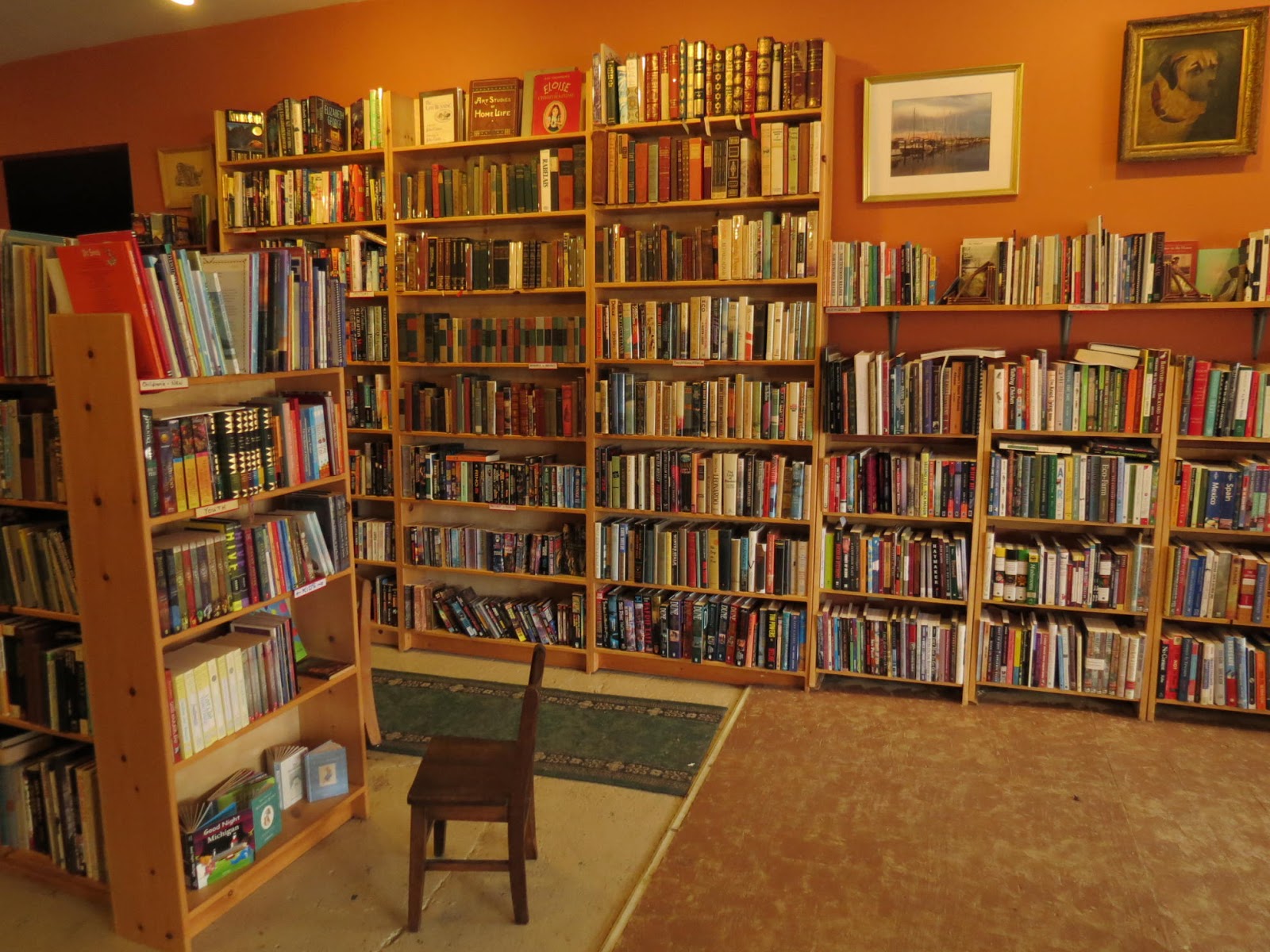
In the course of the past year, my fourth as a widow, more or less adjusted to that inescapable reality, I was helped not only by supportive friends and family and the companionship of my dog but also by the business I started back in 1993, little foreseeing then how vital it would be to my future life. My bookshop provides me with social life, morale support (and that is not a typo: I insist on morale, rather than moral for the real meaning of the phrase), and with daily literary and intellectual and, yes, casual, friendly conversations, as well as not only the excuse but the necessity of ordering new books on a regular basis.


I haven’t changed the subject.


Last year I ordered a book by Mel Robbins, Let Them, because I had gotten so much out of her various short video clips that I wanted to share her ideas with others. 


While reorganizing my spices at home on Tuesday this week (a dismal, rainy day), I listened to a conversation between Robbins and the “Daily Stoic” podcaster, Ryan Holiday, intrigued to hear him compare what Robbins calls her “Let Them theory” to stoicism, as both are about accepting what you cannot change. (Sounds like AA, doesn’t it?)
 Robbins takes pains to assure readers and listeners and viewers that she is not counseling the acceptance of disrespect or abuse. You don’t have to stay in a job forever with a disrespectful boss (although you might have to stay until you find something else), and you don’t have to stay in an abusive relationship with someone who puts no value on you, only on what he can get out of you. (Change pronouns as necessary for different situations.) What you are accepting is reality, the fact that you cannot change anyone but yourself, and that no one else is going to change because you would like them better a different way. 


First you do the “Let Them” step, and then, crucially, comes the “Let Me” step, where you decide what you will do in response to someone else's behavior that you don't like. It won’t be attempting to change that other person. You’ve already realized you have no power to do that. What you have power over is your response. In this conversation with Ryan Holiday, Robbins says you don’t even have to buy her book! She'll tell you what’s in it! What I have written here is my nutshell version.


The Meditations of Marcus Aurelius, the sixteenth emperor of Rome, who lived from 121 to 180 BCE, has been having a massive resurgence in popularity in 21st-century America, and it’s not hard to understand the reasons for that. The long, gradual “fall” of the Roman Empire was already underway when the Stoic emperor (adopted, not born, into a family of aristocrats) came to power. War and conflict, the Antonine Plague and famine were some of the hardships in Rome during the 16th emperor's reign. He knew some tough times and had advice for getting through them.


As an experiment, I open the Meditations at random, and there on page 75 is a pithy bit of advice: 


Don’t align your thinking with that of a man who’s dishonoring you. Don’t think as he wants you to think, but see things as they truly are.


I close the book and open it once more, again at random: 


Perfection of character lies in this: to live each day as though it were your last, without turmoil, without listlessness, and without pretense. 


I can’t say I have ever studied Marcus Aurelius, and it’s been years since I read Epictetus, but clearly the times are nudging me in the direction of the Stoics, and so this week, in that spirit, and because each day could be my last, I have been focusing on telling people clearly how important they are to me, in ways large and small. As one of Northport’s beloved elders, Reverend Marshall Collins, told me once while we were still next-door business neighbors, “I’m giving you flowers while you’re alive.” (A good friend of his had recently died, and he was reflecting on all the flowers at the funeral.) Too often we think that surely people already know that we value them, but even our closest friends and family, secure in our love for them, get a boost from hearing appreciation put into words. I told our postmaster in Northport how much I love the post office and gave her a big hug! “Spread the word! These are strange times!” she urged, and I told her I do sing the praises of the USPS, often.


A last word today in closing: “Let Them” does not have to mean disengaging from politics. Don't waste your time and mental energy on conversations and activities that make you feel powerless, in politics or anywhere else, but please take a stand for kindness and justice and law (the real kind of law, with features like due process!), if you can find it within yourself to do so (here are some suggestions from Robert Reich), because—just as Rome was not built in a day, neither did it fall in a day.


Don’t act as if you were going to live for ten thousand years. Fate is hanging over your head. While you live—while you can—be a good man.


Man or woman, be a good person--while you can!


Gift from and memento of that good man,
Rev. Marshall Collins - 
Today's post is dedicated to him.


Monday, September 25, 2023

My Kind of Positivity (More than $$)

My work environment --

Megan Greenwell, in an article “Can Private Equity Be — Nice?” (published 9/19/23 in Moneybox), makes a clear statement about the publisher Simon & Schuster being bought by private equity firm KKR (Kohlberg Kravis Roberts & Co.): "Private equity’s entire M.O. is maximizing profits.” Greenwell posed questions to the co-head of KKR about what it means to employees that they will now be “given a stake” in the company. 


Q. How would KKR maximize publishing profits to enrich employees as well as high-level officers and big-money investors? 

"I’m sure you know the brand Zara. The entire success of Zara is their supply chain. Zara basically said, 'We’re going to massively shrink lead times. We are going to more locally source everything that we do, and we are going to have the most responsive supply chain in the world. We will test at the beginning of a season, colors, fits, and we’ll see what sells. And then we’re going to shift our whole supply chain to what’s selling.' That’s how Zara made gazillions of dollars. No one has ever tried that type of thinking in book publishing, and there’s no reason those types of ideas can’t work, right? It’s just, what’s the incentive?” - Pete Stavros, KKR’s co-head of global private equity, quoted by Greenwell from interview with him

"No one has ever tried that type of thinking in book publishing." He said that. Shifting the supply chain to what sells best — whatever that may be — in order to maximize profits is to be the new face of publishing under the old name Simon & Schuster. The best-case scenario that Stavros outlines would result in more employee engagement and fewer people quitting their jobs: 

"I think people would agree, if those two metrics move meaningfully, it’s irrefutable that the culture has improved. The other part, from an employee perspective, is that they generate meaningful wealth for themselves, and it’s great for our investors. That’s the home run you’re always trying to hit: People are happier, they participate in the value creation, and investors did great. That doesn’t have to be a blowout deal. It can be a good deal and people can make a lot of money.” - Pete Stavros

Two important points, less anyone misunderstand me: 

1) I am not saying KKR is some kind of evil entity. Reading their public statements, one finds strong commitment to employee welfare and also to investments that are environmentally as well as financially sustainable, worthy principles that certainly cast maximization of profits in a kindly light. And I don't know much more about them.

2) Nor do I believe that making a profit is bad. Modest as my own business is, if it hadn’t turned some kind of profit over its history, it would not exist today, 30 years after its inception. 

(I am not anti-capitalism, only anti-unregulated/unrestrained capitalism that leaves no area of human life untouched, but even that is a bigger topic than I have in mind today.)

My only concern with a private equity company owning a publishing house is the idea that a publisher should crank out “whatever sells.” Not that they shouldn’t make money, not that they shouldn’t share profits with employees, but in my ideal world a book publisher would also be concerned with quality of its list -- value apart from dollars; a different kind of value -- and that I don’t see anywhere in the interview.

A private equity company buying a publishing house is one way employees can be given a stake in the business, but it’s not the only way. W. W. Norton & Company has been an independent, employee-owned publishing house since 1952. Here is a link to the fascinating Norton story, concluding that Norton’s “Books That Live” motto, adopted in the 1930s, meant then and means now that the books Norton publishes are “not for a single season but for the years.

And that, my friends, as I insist on continuing to see the world, is the best principle of traditional publishing: to publish books the house believes will be of lasting importance. Books are not hula hoops or pet rocks, and manufacturing and selling them in the same way as those fad items cheapens the history of literature.

Mint -- nothing to do with my story.

Postscript: Since I drafted the foregoing, a happy story has come from Ann Arbor, Michigan, to the effect that Zingerman's partners are "giving the store away" -- to their employees. Quoting from the Ann Arbor Observer

Zingerman’s Perpetual Purpose Trust will be the legal owner of the Zingerman’s brand. Its terms prohibit the company from going public, being sold to an outside company, or franchising. “The intent is that it keeps the decision-making power and the profit local,” says Weinzweig, “as opposed to what generally happens [when founders sell], which is both of those move further and further geographically afield”—a process he likens to “colonialism.”
You can read the whole story here. When I re-read the story or even think about it, I can't stop smiling! 


Postscript two days later:


The latest issue of the New York Review of Books (October 19, 2023) takes a look at two new books that scrutinize private equity firms, Plunder: Private Equity’s Plan to Pillage America, by Brendan Ballou, and These Are the Plunderers: How Private Equity Runs – and Wrecks – America, by Gretchen Morgenson & Joshua Rosner. I don’t have the books at hand but already find plenty to worry about in Kim Phillips-Fein’s review, entitled “Conspicuous Destruction” (NYRB, Vol. LXX, no. 16). Before considering the titles under review, Phillips-Fein gives readers an introduction to what “private equity” is.


At its most basic level, a private equity fund is a type of exclusive investment fund – a pool of money managed by professionals to maximize returns for rich investors. Because private equity funds are not subject to regulation by the Securities and Exchange Commission, investors must be accredited and provide proof of family wealth, and funds often have minimum investment requirements of $10 million or more…. [They] buy up all the shares of publicly traded companies, gaining complete managerial control. …Usually a purchase is financed with heavy borrowing, so that a newly acquired company is saddled with debt that it needs to repay quickly – often by selling assets or laying off workers.


Later in the piece she writes –


Distant investors [who have managerial control, unlike other forms of investment] have little knowledge of day-to-day operations.


Nor do they have any commitment to community or workers. In effect, private equity funds are the newer, leaner, hungrier model of what were “leveraged buyouts” (LBOs) in the 1970s and 1980s, many financed by junk bonds that brought about the bankruptcies that brought us bailouts of banks “too big to [be allowed to] fail.”


Note that private equity funds are only for the very, very wealthy who can prove their financial worth. Note also that they are exempt from SEC oversight. 


Now, here is a partial list of the kinds of businesses that private equity likes to take over: hospitals, nursing homes, medical billing centers, day care centers, for-profit universities, medical practices, dental practices, veterinary practices, payday loan companies, ambulance companies, hospices, and prison services, from collect phone calls through ankle monitors to debit cards. In other words, private equity likes businesses that rely on vulnerable populations, are often funded in part by government programs, and can be counted on to generate debt for the populations “serviced” and profit for investors in the funds


Reading this makes me say again, with Christopher Morley’s fictional character Roger Mifflin, “Thank God I am a bookseller!” And then I add, “And not a millionaire!”


"Merely a medium of exchange" (to quote my father)


Tuesday, July 9, 2019

Novel Worth Reading, Physical Copy NOT Incredibly Valuable

Where are we?
Whoever wrote the entry on Marjorie Kinnan Rawlings in Merriam Webster’s Encyclopedia of Literature offers a pretty opinionated view of the writer’s work: 
Rawlings took her material from the people and land around her, and her books are less fiction than vivid factual reporting.
Really? Is that shocking? Did F. Scott Fitzgerald and Ernest Hemingway not take their material from people and places familiar to them? Willa Cather and Eudora Welty? Marcel Proust? John Steinbeck? I could go on and on, but so could you, I’m sure. 

Marjorie Kinnan Rawlings was born in 1896, and her first novel, South Moon Under, written from her rural home in Cross Creek in interior northern Florida, was published 1933. The writer of the Encyclopedia of Literature piece acknowledges the author’s “magical description of the landscape” of the area in and around Cross Creek, brought to the attention of other Americans in her most famous novel, The Yearling. But it’s South Moon Under I’ve been reading — for the first time — and on the very first page the Florida scrub habitat springs to life:
Light still hung raggedly above the hammock west of the cleared acres. Here and there a palm shook its head against the faint orange of the sky, or the varnished small leaves of a live oak were for a moment luminous. There was an instant when the hammock reared back against the west; when the outline of each tree-top was distinct; when the clearing gathered about it the shreds of twilight. Then there was no longer scrub or clearing or hammock. Blackness obliterated them with a great velvet paw and crouched like a panther on the cabin doorstep.  
- Marjorie Kinnan Rawlings, South Moon Under
I can see the palm tree shaking its head and then the black velvet paw of the panther blotting out the trees and everything else. Rawlings does indeed capture the uniqueness of the scrub habitat, its moods and effects on moods as well as its flora and fauna. 


But her artistry does not end there. All the while as you are reading along, lulled by scenery and character and dialect and the small events that form the society of the Florida scrub, a world completely different from the one most of us inhabit (and all the more so in that she was describing it as it was over eight decades ago), Rawlings is building a subtle, almost invisible narrative arc. My opinion is that this surprising first novel has been terribly underrated and deserves far more serious attention. 

I want to turn my attention now, however, to the physical book in my hands and ask you to look at it with me. How can this possibly be a first edition, although the Scribner’s “A” is there on the copyright page?


Look carefully at the pages. The type is not crisp and clear. The binding, however, is in excellent condition, though, isn’t it? For a book from 1933, without a dust jacket, to look so good is -- or would be, if it were that old -- astonishing. Sure enough, when we search online we find that the cloth binding of the first edition was light green, not dark blue, thus the volume that came into my hands is a modern reprint masquerading as a first edition. What individual or company is responsible for its production? There is no hint in or on the book. 


Book piracy is rampant online, and there are few protections against it. Know your book dealer!

Coming soon: Thoughts about literary regionalism. Do you have questions about it?

Thursday, October 20, 2016

Their World and Mine – Light Years Apart


With the exception of the man who wanted to haggle with me over price a few days back (I posted about the incident on Facebook but don’t want to dwell on it any further), my recent bookstore conversations have been happy ones, for the most part, pleasurable for me and for my customers.

One local man who buys used paperback books by the bagload and brings them back after reading for trade credit, then buying “new” (used) books for a 50% discount, came in for one of his regular visits, and when he brought his stack of books to the counter for purchase, his face was wreathed in smiles. “This is so much fun!” he said. “I love buying books this way!” I thanked him for his appreciation. What a great way for both of us to start the morning! 

Without the press of summer heat or crowds, there is more time to visit with customers, taking note of books they select and talking about what they and I have been reading. We give each other ideas. We share experiences. And it’s been very pleasant, day after day, especially in this politically trying season. I feel as if my bookstore is an oasis for many people. Actually, people often tell me that it is.

So when another late middle-aged couple strolled in on Wednesday afternoon, I anticipated another pleasant encounter. I asked what they were particularly interested in, so I could make sure they found subject matter they might otherwise miss. “Oh, bookstores, libraries,” the woman responded airily, and I inferred from her answer that they didn’t want help and would be happier exploring by themselves, but that’s always fine with me. I often feel the same way in bookstores.

But then the woman stopped to explain that she and her husband were “downsizing,” and next, right away, she demanded in an almost accusatory voice, “Do you have any idea how hard it is to get rid of books?!”

The question took my breath away! I was (for a change) speechless.

Given their circumstances and feelings, why would they come into a bookstore at all? And why would the woman be compelled to share with me a sentiment so obviously opposed to my way of life and my way of making a living?

Selling books has always been more of a challenge than selling beer or burgers, but I have managed to keep my head above water as a bookseller for nearly a quarter of a century. That is to say, I sell books. On occasion, I do an inventory purge, and then I donate boxes of books to charitable resale organizations. Sometimes, either impulsively or after thoughtful consideration, I give books away.

But getting rid of books? That is a concept I do not understand.

Termites, now. Having to get rid of termites, I can see, would be a serious problem. Working to get rid of mold – there’s another terrible problem people sometimes have in their houses. Less drastically, in certain seasons, some of us fret about getting rid of fruit flies or mice. But books?

Never do I “get rid of” books! I help books find homes, either first-time homes or new homes. The difference is one between something no one would want, e.g., termites, and something of value.

I said none of this to the downsizing couple but simply urged them, as they walked out the door again, to enjoy the day. I’ve learned over the years that not everything that goes through my mind needs to come out my mouth. Wasted breath is wasted energy, anyway, and at my age I no longer have energy to waste.


Friday, May 4, 2012

What’s the Difference Between ‘Writers’ and ‘Bloggers’?

That could be phrased differently. I could load the question by making a distinction between bloggers and real writers, as was made in my presence once, on hearing which a couple of friends shot me alarmed looks. Would I rise to the bait? But I didn’t think it was bait and didn’t see myself as the speaker’s prey, and it didn’t seem the time or place to push the question.

On the other side are those who find ‘blogging’ itself a ridiculous and unnecessary term. “You’re not blogging,” one said to me. “You’re writing!” Well, I never denied that, but we make distinctions, after all, between poetry and prose, between journalism and drama, etc., etc., and certainly not all writing is blogging (whatever one thinks of all blogging), so clearly there is some kind of distinction to be made, and can't I be doing both at once sometimes?

But let's start over. Maybe I could come at the question from the other side by asking what defines a real writer. Is it –
  • Someone who writes every day? (That’s pretty much what I do.) 
  • Someone who writes for money? (Occasionally I write for money and would be happy to do so more often. Anyone want to write me a paycheck?)
  • Someone who makes a living solely by writing? (Nope, not me.)
  • Someone whose work is recognized by other professional writers? (And are they professional because they are paid for their writing, in which case either the second or third possibility would seem sufficient and this one unnecessary?)
  • Someone who cannot cease and desist from writing, whether money or recognition ever follow? (Or is this merely a sign of mental illness?)
  • Someone whose name appears in a cultural literary canon? (Who decides? And doesn’t it usually help to be dead?)
  • Only a good writer? (Who decides? Is it a general popularity contest, or do we go by the critics? Or by awards? Or something else altogether?)
  • Someone who puts himself or herself forward to others, publicly, as a writer? (I think there’s a lot to this, just as there is to being an actor or a musician or any other kind of creative artist, but is it necessary?) 
A couple of years ago someone who became a friend confided that she was “trying to write a novel.” I corrected her. She was writing a novel. She might not finish it, and if she did finish it might never be published, but she was, that year, writing a novel. Two years ago I spent a winter writing short stories, and when people asked, that’s what I told them I was doing, but I did not say, “I’m a writer.” David sometimes told people I was a writer--until I asked him to stop, because the next question would invariably be, “What have you published?” (Uh, a doctoral dissertation? No one cares.) And then would come, "What are you going to do with them?" So although I have been asked from time to time, “Are you a writer?” I don’t present myself that way to the world--except in my blogging profile, where I also call myself a gardener, but you can read my qualification of that term on the profile, also! No, I am a bookseller. Right now in my life, that is my central public identity.

But—coming back to my sheep--I do write this blog and have been doing so since the fall of 2007, and while I have never been paid a cent for writing it, I think my perseverance speaks to the seriousness of my commitment to the forum. I did not undertake blogging for monetary reward; does that make the effort something less than writing? If audience size is taken into account, my commitment may begin to look like madness indeed! But again, I don’t do it to win large numbers of readers. Does that make it less real? Or is it not real writing because I don’t have an editor or am not working on assignment? (How many fiction writers work on assignment?) You tell me.

Most of my life has been spent around creative people, and every single one of them has struggled with the relationship of work to money. For me, finally, the heart of the matter is to take pains with one’s chosen work to make it as expressive and as valuable as possible. If and when someone steps up and offers to pay for it, that can be taken as a kind of affirmation from the outside world, but if no patron or client materializes, if the work is never subsidized or purchased, its value has not been neutralized or negated. The value is intrinsic to the process.

In giving one’s time and care, one gives one’s life, and in this the meaning of one’s life resides. This is the stand I am taking.

As for my other, at least equally real writing—the nonblogging stuff, those short stories mentioned earlier--I may throw some more out into the blogosphere soon. A couple people liked the first Burger Shack story enough to ask for more. And why not? What do I have to lose?


Monday, December 26, 2011

Book Review: DRIVE: THE SURPRISING TRUTH ABOUT WHAT MOTIVATES US


What motivates you? Do you think you know? For a long time, everyone thought motivation was obvious.

Just like dogs, according to the popular belief, people want to gain rewards and avoid punishment, and they will work harder if rewarded or if threatened with punishment. Do you think that’s how human beings are motivated? Do you think it’s how dogs and horses or monkeys or rats are motivated?

Daniel H. Pink, author of Drive: The Surprising Truth About What Motivates Us, draws on a wealth of experimental research which points in a very different direction, and what researchers in motivation have been putting together isn’t esoteric knowledge. It pertains to our everyday world and is practical knowledge in a very immediate sense, because it has to do with how we raise and educate children, how we treat employees, coworkers and friends--even how we nurture successful behavior in ourselves.

Harry F. Harlow, psychologist, stumbled by accident in the 1940s on a phenomenon he identified as a third biological drive. Besides basic drives urging them toward food and sex, it seemed that monkeys were also motivated by a challenge: they liked to solve puzzles even without rewards. “The joy of the task was it own reward,” as Pink puts it. The reward was intrinsic to the activity. The finding surprised Harlow. What followed, however, was so surprising and went so strongly against entrenched belief that no one would even touch it. The radical finding was that when food rewards were introduced into the experiment, the monkeys’ performances went downhill. They made more mistakes and did not solve the puzzles as often.

(Think about the usual rationale for inflated CEO salaries and the performance of overpaid banking and finance CEOs.)

Not until almost 1970 did another researcher, Edward Deci, pick up the dropped ball and design further experiments in motivation and rewards.
In an echo of what Harlow discovered two decades earlier, Deci revealed that human motivation seemed to operate by laws that ran counter to what most scientists and citizens believed. From the office to the playing field, we knew what got people going. Rewards—esp;ecially cold, hard cash—intensified interest and enhanced performance. What Deci found ... was almost the opposite. “When money is used as an external reward for some activity, the subjects lose intrinsic interest....” Rewards can deliver a short-term boost—just as jolt of caffeine can keep you cranking for a few more hours. But the effect wears off—and, worse, can reduce a person’s long-term motivation to continue the project. [My emphases added.]
There’s more to the story. Only contingent extrinsic rewards eroded motivation—that is, rewards given on an if-then basis, i.e., “If you do x, you will receive y.” What seems to go on in such cases is that what was pleasure becomes paid work. An unexpected reward does not have the same effect. If an unannounced reward is routinely given afterward, however, it becomes expected and then functions like any contingent extrinsic reward, lowering interest and performance.

The lesson to be learned here is not that extrinsic rewards are always bad. For routine, boring, repetitive tasks, if presented in the right way (acknowledging that the task is boring but making clear that it is necessary and giving workers the latitude to complete the task in their own way), they can be effective. For any kind of creative work, however, an extrinsic reward scheme is a deadly recipe. Moreover, giving employees “clear goals” in the form of minimum production levels to be met, for example, or demands for compulsive time-keeping, guarantee low performance, because when extrinsic rewards are the "...only destination that matters...[,] some people will choose the quickest route there, even if it means taking the low road."

Autonomy, mastery and purpose: these are intrinsic motivators in both personal and professional life. Children early in life show concern for purpose, as well as with autonomy and mastery. The last section of Pink’s book includes a “toolkit” for motivating yourself and others.

I think about classrooms I’ve been in, both in a student chair and at the front of the room; about jobs I’ve had and which ones felt good and which were living nightmares; and about this odd, financially marginal life I’ve put together here in Up North. My personal experience is confirmation of everything in this book.

If you want to hear this straight from the horse's mouth, click here.

Are you still skeptical? Why do so many retired people work so hard at volunteering and hobbies? What motivates armies of unpaid writers to devote themselves to their blogs? What will you be doing today—and why? As the new year approaches, many of us are forming resolutions. What are those all about?

The research does not say that money doesn’t matter. It does. We all need to make a living. But we also need satisfactions that money can’t buy, and woe to anyone who offers to buy the best that’s in us. Behaviorism is (or should be) dead! Long live self-determining individuals!