Search This Blog

Showing posts with label Dr. Michael Petty. Show all posts

Sunday, August 14, 2016

We Talk to the Artists – Then Go to the Dogs

Kaye, Ken, Kaye's painting, their book

Not knowing until the day of the event whether Ken Scott and Kay Krapohl planned to give a formal presentation or sign books, I advertised their appearance as “Conversation with the Artists,” and that’s exactly what it turned out to be. Ken’s message on Thursday was that they would do a Q&A if anyone who came to buy a book had questions, so I set up a few chairs in the front of the bookstore, with a signing table for the photographer and the painter. People came. They had questions. They had really good questions. The answers were fascinating. I didn’t write down everything that was said but did take a few notes.

What gave rise to the idea of two people trekking the Leelanau shoreline together. Ken cited the safety factor first and stressed that safety was particularly an issue in winter cold and on winter ice. Two people also meant two cars, one that could be left at the take-out point while the other (to be retrieved later) could be driven with both trekkers to their put-in location. Ken was also interested in what it would be like to work alongside another artist, especially one working in a different medium.

As a photographer and a painter, it was a given that the two of them would work differently. Ken Scott composes his frames onsite and does not manipulate images later, so his premise is “You get what you get,” in the moment. Very different, of necessity, was Kaye Krapohl’s way of working. She could not afford to stand in one place long enough to complete a painting and keep up with her trekking partner, too, so she made many studies (“scribbles,” she calls them) and photographs and notes for later use in her studio. There were also days when her usual “big picture” vision did not fit the weather, and then she learned to focus on small details she would not otherwise looked down to see.

I have a bit in my notes about an event Kaye and Ken did, sponsored by Inland Seas. It involved an exhibit, mostly of Ken’s photographs, and people with science backgrounds were invited to this free forum that gave the artists an opportunity to point to aspects of what they saw and ask the science people, “What’s going on here?” Sometimes it was sand structures, other times zebra mussels or something very different. Kaye was intrigued to find that environmentalists are not always opposed to docks, in that docks can provide habitat.

Live wire painter and Zen photographer
There were many more questions and answers and discussion, and altogether the conversation was fascinating. Somehow I prevailed upon both artists to stay long enough to sign most of the rest of my books, too, although Ken Scott was in a hurry to get outdoors with his camera, not wanting to miss “the light” as skies cleared after the rain and rainbows appeared. I’m sure he will have gotten some fantastic shots. [Have seen one of them since! Beyond belief gorgeous!] Mine from the front door of the bookstore leave a lot to be desired, but you may get a little feel for the evening.


I’d had our reading circle over for a picnic on Wednesday, but although a camera was mentioned early on, somehow we all forgot about it later, so – no pictures! We had not all read a book to discuss together, but each of us reported on what we have been reading, and there were several recommendations for a group read. I’m not sure which books fall into which category (reports/recommendations/group recommendations), but some titles mentioned were: Independent People, the Icelandic classic by Laxness; something by Hemingway; Huckleberry Finn; Madame Bovary; McTeague; John Le Carre’s A Perfect Spy; The Way Things Are, by Lucretius (translation by Humphries); The Way of All Flesh; and All the Light We Cannot See, which two people reported they had tried to read and couldn’t get into, though everyone else who has told me (in the bookstore) that they read it loved the book. One group member has decided she will read one short story a day for 365 days. A noble goal! I want to introduce her to the stories of Valerie Trueblood.

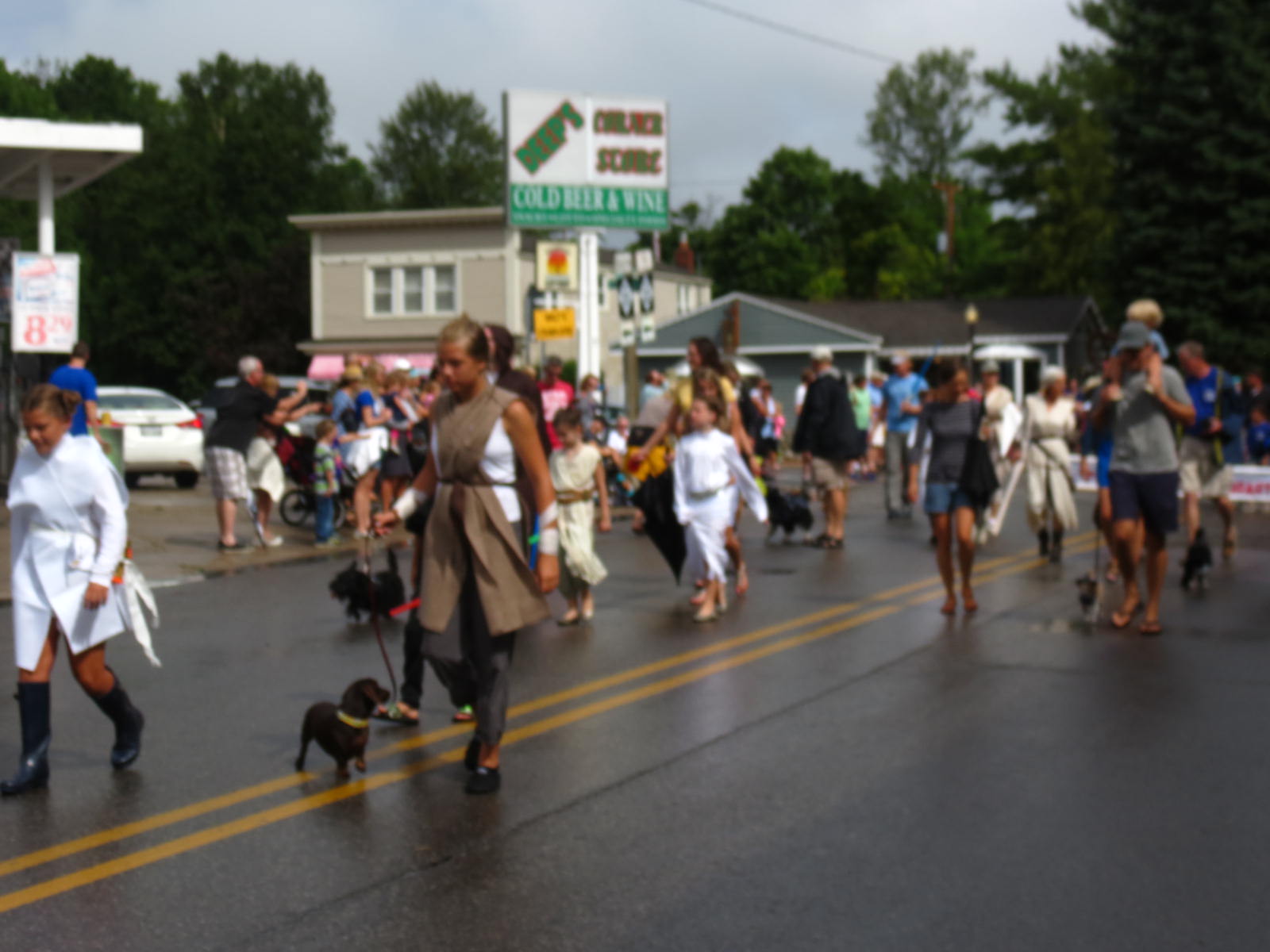
So, Wednesday was the picnic; Thursday, conversation with artists; Friday, farm market; and then Saturday – dog parade and presentation by veterinarian Mike Petty, author of Dr. Petty’s Pain Relief for Dogs! You have to understand that “going to the dogs,” in Northport, is a good thing. Maybe you already know this, having read in the Leelanau Enterprise that the Northport Dog Parade began 20 years ago. (Yes, once again, time flies.) David Chrobak, then-owner of the Old Millpond Inn, was the instigator and force behind the parade, which quickly won the hearts of locals and visitors alike.

Ready and waiting -- early!


Hi, Chris!


The gap -- as we wait for the second half of the parade to catch up
Rudy #1
Rudy @2

Rudy #3


There he is! Dr. Mike Petty!


Like Thanksgiving dinner, the dog parade is long anticipated, planned for all year, and over in a trice. 


One major dog parade sponsor this year was Dr. Michael Petty, my guest author for Saturday afternoon following the parade. Mike’s book is Dr. Petty’s Pain Relief for Dogs, which I read and reviewed and highly recommend. As David Chrobak noted in last Thursday’s Enterprise, our pets grow old just as we do and, sadly, actually overtake us in their aging. As long as their quality of life can be maintained, however, Dr. Petty’s dog parade banner, on the trailer carrying his old dog (and other dogs with age and mobility issues), was “You’re never too old!” 

Dr. Petty's dog was pretty tired when they showed up at the bookstore for the signing, but one thing is sure: no one is too young or too old to enjoy the Northport dog parade! A limited number signed copies of Dr. Petty’s Pain Relief for Dogs available now at Dog Ears Books -- a reference book for your dog’s aging future and for all the dogs of your life! 


Sunday morning calm after storms


Wednesday, February 17, 2016

Book Review: DR. PETTY'S PAIN RELIEF FOR DOGS


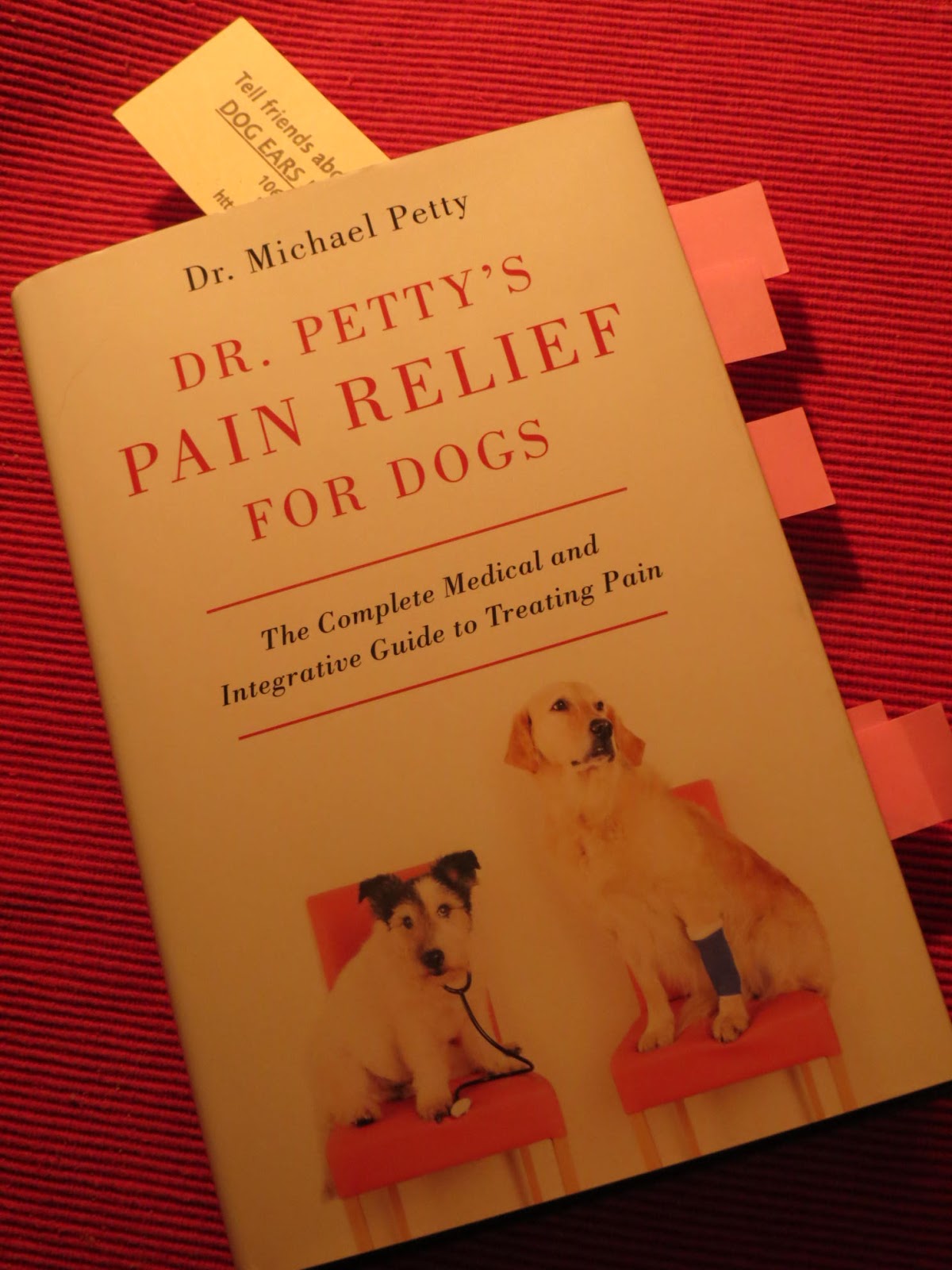
Dr. Petty’s Pain Relief for Dogs: The Complete Medical and Integrative Guide to Treating Pain
by Michael Petty, D.V.M.
NY: Norton, 2016
Hardcover, $24.95

Dr. Petty’s Pain Relief for Dogs is NOT a do-it-yourself book. The author states very clearly – and more than once – that no book, even his own, is a substitute for having a dog examined and treated by a qualified veterinarian. What he offers is an informative survey of various causes of pain in dogs, treatment options professionally available, and special care owners can provide. Primarily, the author is concerned that dog owners realize: (1) that dogs do feel pain (he thinks they may feel it more than we do, and he explains why); (2) that there are usually ways that pain can be relieved; and (3), that pain treatment does not have to lead to bankruptcy.

Just as the paternalistic model of medicine has been rejected, Dr. Petty rejects paternalistic veterinary care. He believes owners can and should be informed – about causes of pain, possible treatment, and expected outcomes – in order to be partners with veterinarians in decision-making for their companion animals.

Each reader of this book will be struck by different facts not previously encountered elsewhere. One that hit me between the eyes was the reference to a 1997 Lancet article on a study of infant response to pain subsequent to neonatal circumcision. It was long believed that any pain during circumcision was minimal and brief – over, done with, not registered as memory. A 1995 study showed something very different. One group of neonates was circumcised with local anesthetic, a second group without anesthetic. At their four-month and six-month vaccinations, it was found that babies circumcised without anesthetic had an increase in pain response compared to the group circumcised with the local anesthetic cream. The name for this effect is hyperalgesia: untreated pain can be responsible for physiological changes that intensify subsequent pain. Naturally, Dr. Petty’s concern is what this finding means for treating pain in dogs, but the finding itself is fascinating and would seem to have important broad consequences.

The chapter order in the book is logical, and illustrations are helpful in clarifying text. For example, in the chapter on acute pain, illustrations show how to make an emergency muzzle (to avoid being bitten by an injured dog trying to protect itself) and how to pick up an injured dog. In the following chapter on chronic pain, we are shown (from the side) the typical stance of a pain-free dog, followed by a contrasting image of a dog suffering from hip dysplasia. The first dog stands with front feet directly under shoulders, the second with front feet farther back to ease pressure on weak hips. The difference is obvious once it is pointed out.

I particularly appreciated Dr. Petty’s discussion of acupuncture, both the general explanation of how it works (briefly, by enhancing natural pain-inhibitory signaling, but Chapter 9 gives a longer, more detailed explanation) and the author’s clear statement, “I can’t think of a single type of pain that won’t respond, at least in part, to acupuncture.” Possibly skeptical readers should know that the type of acupuncture the author advocates and practices is based on modern Western medicine-based research and has nothing “mystical” about it.

In sections on various other therapies, including botanical remedies, the author gives his own best assessment, based always on serious research rather than product claims or anecdotes from convinced customers. There is even a chapter frankly titled “Pain Relief Therapies Best Avoided,” in which the doctor pulls no punches.

Whether he is providing pharmaceutical or physiological explanations, recommending stretching exercises, or advising on the choice of dog bed or socks, Dr. Petty’s voice as it comes through his writing is authoritative caring, and conversational. As a reader and dog owner, you trust him. And then he makes you laugh. Cookie stretches! Those are great! (You have to read the book to find out.) He also includes helpful appendices, endnotes, and – hallelujah! – an index.

There was one analogy in Chapter 6 that I had some trouble getting my brain around at first. The author compares the pain pathway -- from nerve endings to the spinal cord and eventually to the brain – to a commuter returning home at the end of the day. My problem with the analogy was that it is, presumably, desirable that the commuter reach home, whereas relieving pain requires not allowing pain signals to reach the brain but instead blocking them from that natural destination. Re-reading made the point clear, but it would have been clearer from the beginning if the person in transit in the analogy had been someone the reader wanted to prevent from reaching his destination – say a terrorist or other criminal.

Also in the same section there is passing reference to “agonist action on receptors.” Readers with background in medicine, philosophy, or classics will not pause in perplexity over “agonist,” but other readers may, and a parenthetical definition would be helpful at that point.

But overall, and all in all, Dr. Petty’s Pain Relief for Dogs is highly readable and informative. I learned a lot and recommend the book highly. I know that as our Sarah ages, I'll be using some of the knowledge I gained from the good doctor.

Now here’s the surprise I’ve been saving all along: Dog Ears Books will probably have the honor of hosting Dr. Petty this summer in Northport! Maybe (depending on his book tour schedule) on Dog Parade day! I’ll put a notice on the blog as soon as we fix on a date, but contact me any time to order the book now (to read and bring with you to his event for signing) or to reserve a signed copy for purchase on the day of the event.

P.S. 5/25: Dr. Petty will be at Dog Ears Books on the day of the dog parade, Saturday, August 13, from 1 to 2:30 p.m. He will give a short presentation and take questions from the audience before signing books for customers. We're excited!!!

So start now making notes of what you want to ask he doctor. This will be a very special opportunity – and a memorable one, I’m sure -- for Dog Ears Books customers.