Search This Blog

Showing posts with label companionship. Show all posts

Sunday, February 22, 2026

Going Places

Choosing a book is like choosing a road.


Going Places In Fiction


Mutual understanding in the world being nearly always, as now, at low ebb, it is comforting to remember that it is through art that one country can nearly always speak reliably to another, if the other can hear at all.

- Eudora Welty, Place in Fiction” 


I want to pause here after this sentence, written by Eudora Welty in an essay called “Place in Fiction,” because I want to call your attention to the first thirteen words: “Mutual understanding in the world being nearly always, as now, at low ebb….” This essay of Welty’s, which I encountered in a collection entitled The Eye of the Story: Selected Essays and Reviews, was originally published in 1957. The 1950s are generally portrayed as a time of calm prosperity in America, and yet Eudora Welty, a writer from Mississippi, would have had a front row seat from which to observe battles over school desegregation

yet another reminder that there is no short, simple answer to the question of what the Fifties were “like,” those years (as was true of the Sixties and any other era in the life of our country) having been different for different people in different parts of the country with different skin color or economic status. How much “mutual understanding” was there between the races, between regions of the United States in the 1950s? 


But let us return to Welty’s discussion of place in fiction: 


Mutual understanding in the world being nearly always, as now, at low ebb, it is comforting to remember that it is through art that one country can nearly always speak reliably to another, if the other can hear at all. Art, though, is never the voice of a country; it is an even more precious thing, the voice of the individual, doing its best to speak, not comfort of any sort, indeed, but truth.


Fiction, Welty writes in the middle of the following paragraph, “is properly at work on the here and now.” Even a historical novel must transport us to “the past made here and now,” and that is because for us to enter the world of the novel “we have to be there.” And so it is that “fiction is all bound up in the local.” 


A few of my friends become impatient with descriptive passages in fiction. They want action and accept dialogue only insofar as it advances plot. Not me. For me, whether in a short story or a memoir, classic novel or murder mystery, I take pleasure in the time an author takes to draw me into the locale of the story. Alan Paton’s Cry, the Beloved Country begins with a lyrical passage:


There is a lovely road that runs from Ixopo into the hills. These hills are grass-covered and rolling, and they are lovely beyond any singing of it. The road climbs seven miles into them, to Carrisbrooke, and from there, if there is no mist, you look down on one of the fairest valleys in Africa. About you there is grass and bracken and you may hear the forlorn crying of the titihoya, one of the birds of the veld. Below you is the valley of the Umzimkulu, on its journey from the Drakensberg to the sea….


- Alan Paton, Cry, the Beloved Country


Immediately we are in a specific place. Then, downhill from the grassy hills, he takes us to a different specific place.


The path is dropping into the red land of Ndotsheni. It is a wasted land, a land of old men and women and children, but it is home. The maize hardly grows to the height of a man, but it is home.


--It is dry here, umfundisi. We cry for rain.


--I have heard it, my friend.


--Our mealies are nearly finished umfundisi. It is known to Tixo alone what we shall eat.


The path grows more level, it goes by the little stream that runs by the church. Kumalo stops to listen to it, but there is nothing to hear.


The stream, dry for a month, does not run, and the women must walk to the river every day for water.


Kumalo is the individual through whose eyes we see his home, and when he makes the long journey to Johannesburg to search for his son and his sister, we hear the noise of the city through his ears and feel his confusion and fear. It is Kumalo’s truth, at home with his wife and in his meetings with other individuals in Johannesburg, that the novel allows us to see. 


It can take you somewhere you've never been before.


...For Book Reviews


Big news in the book world is the demise of The Washington Post’s “Book World” section, with its small number of fulltime reviewers and an ever-changing cast of guest reviewers. Was it reviewer Ron Charles who commented on NPR that there are now fewer fulltime book reviewers in the U.S. than the number of people who have walked on the moon? Whether fact or hyperbole, you get the point. As the number of newspapers shrinks, fewer and fewer of the surviving papers give any space at all to newly released books. Bestselling, big-name authors have the money of their publishing houses behind them because sales of their books keep the publishers alive, but what of small publishers, new authors, books that don’t fit neatly into a genre or niche with a loud and loyal fan base?


My customers and I trade recommendations.

Where do you learn about new books? I read reviews in the New York Review of Books (an article there persuaded me to read, at last, Larry McMurtry’s Lonesome Dove) and local publications, listen to reviews and interviews on NPR, read my daily “Shelf Awareness” newsletter, and make notes of books and authors recommended to me by my friends and bookshop customers and authors (overlapping categories). 


I look over the new arrivals at our local library. Also, as a dealer in used and rare books, as well as a reader of the old, I often follow up clues, learning of an author or a title in something I’m reading and then searching out the writers or work mentioned, which is what led me to Mary Webb’s Precious Bane


...In Books and Memory


Armchair travel! How I love it! Four decades or so ago, I was obsessed with the Arctic and sought out everything I could find about that part of the globe, particularly books written by women, such as Arctic Mood, by Eva Alvey Richards; Woman in the Polar Night, by Christiane Ritter; and Spring on an Arctic Island, by Katharine Scherman. There is a wealth of armchair travel available in fiction, too, and I have loved visiting on pages of books lands I will never see in person. Thanks to reading, I have also “owned” horses!


I thought of them fondly as mine.

My memory travels are made possible by daydreams, old journals, photo albums, even by digital images stored on my phone. Looking this morning at images from three years ago in Arizona, I thought for the first time that, odd as it may sound at first, Arizona gave me something of what I longed for in my Arctic dreamsa challenging environment. The Arctic would have given me the challenge of cold and treelessness. Cochise County challenged me with relentless sun, with dry, thin air (thinner with every hundred feet of altitude), primitive roads beneath my tires, and loose, unstable gravel and rock underfoot. There were times when my endurance was tested.


Solo destination was more challenging than photo portrays.


While my yearning for the Arctic has evaporated with age, I am sometimes “homesick” for the Chiricahua and Dragoon Mountains, and reliving hikes with friends and dogs is a pleasure I feed by (besides my own writing and photographs) reading books set in the area, such as stories of Cochise and the Chiricahua Apaches, as well as J.A. Jance’s Sheriff Joanna Brady series. 


“Were you homesick for Michigan when you were in Arizona?” a friend asked. “No,” I said, “I didn’t have to be, because I knew I would be back.” Every winter in Arizona, on the other hand, was a gift I knew might not be repeated, and indeed my last winter in the ghost town was 2022-23, but I remain grateful to have had my time there and for the friends I made.


...At Home in Michigan!


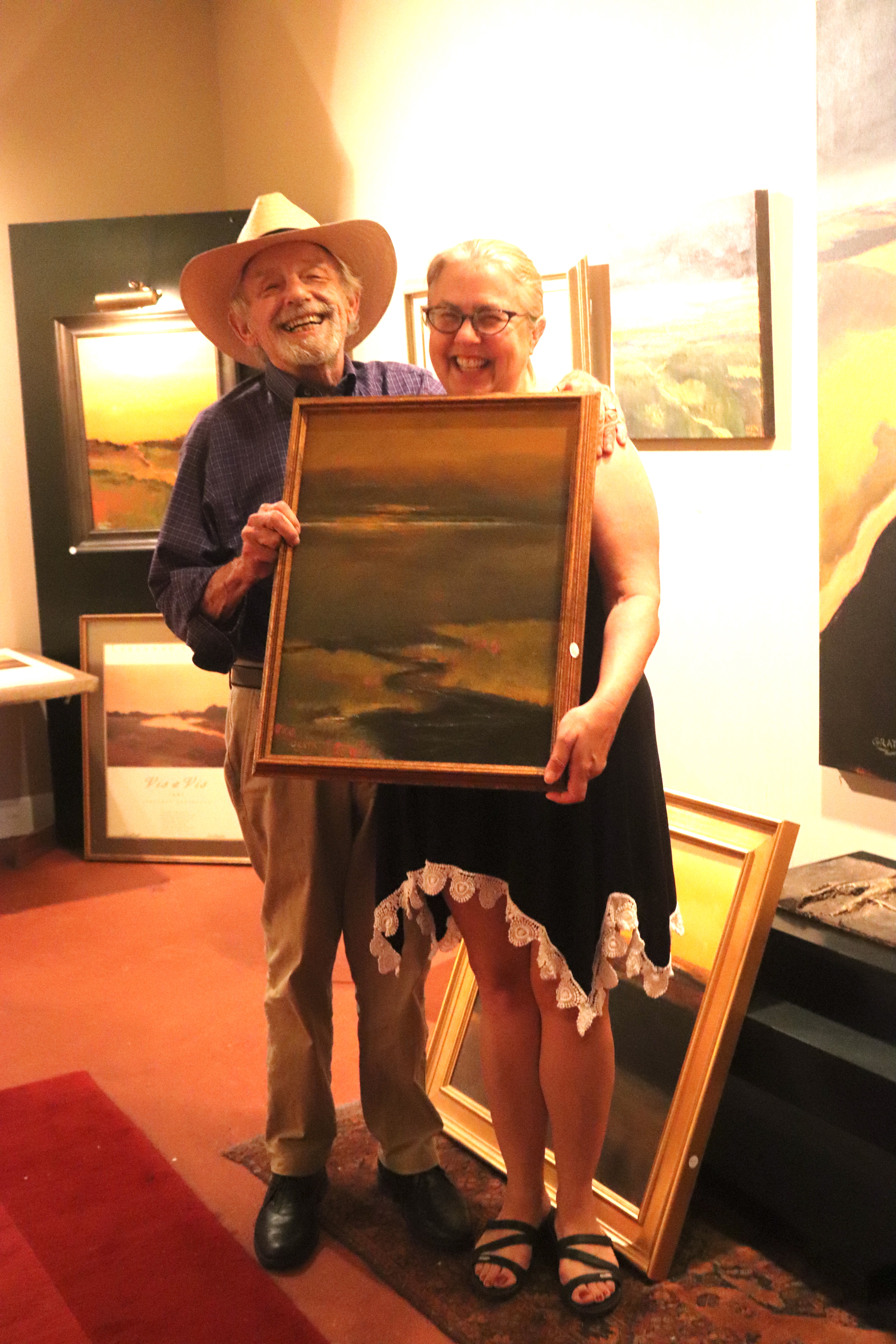
“We live in a beautiful place,” the Artist used to say often, and since he’s been gone I’ve made that remark frequently to Sunny Juliet, as my dog rides shotgun with me in Leelanau County.


With dog on Michigan back road -- heaven!

Michigan’s two green peninsulas, their lakes, rivers, creeks, fields and hills, sandy beaches and rocky shores—my family fell in love with Michigan when we came camping in a heavy old canvas umbrella tent, back when I was 12 years old, and it has been my great good fortune to call Michigan home for decades since. 


What do you look for in a companion? Common values, interests, background? Sharing a love for Michigan, both the familiar places and those not yet explored, is essential to me. Then, please, let him be a woodsman. Well, okay then!


Wednesday, March 15, 2023

Life With Dog: "It's just us, girl."

When she was Tiny Girl

When the Artist left Willcox, Arizona, for the last time, it was in a helicopter after hours spent in the ER at North Cochise Community Hospital while the ER doc scoured the state for a hospital that had a room available and could provide the necessary surgery. I had put a deposit down on the puppy only days before, and now, as the Artist was wheeled out to the helicopter on a gurney into the dark hours past midnight, I told him he had to get through the next ordeal, because “the little girl needs a daddy.” He was amused, knowing I was talking about the puppy. 


As the medical people were getting him situated in the helicopter, though, the pilot asked me curiously, “What is your relationship to Mr. Grath?” Oh, good lord! Did he think I had been referring to myself in the third person as “the little girl” needing “a daddy”? But I just said, “I’m his wife” and stood watching as the helicopter lifted into the night sky – for a flight the Artist described to me afterward as “transcendent.”


I won’t recount all the events that followed (have already done so), but three weeks later my husband was gone forever, and I had to start my much diminished life alone with “the little girl” we thought we would be raising together – the puppy, Sunny Juliet. 


Now I often say to her, “It’s just you and me, girl!” She doesn’t have a clue. 


Other than her first eight baby weeks, a traumatic parting from beloved siblings, and then 10 days with one of my neighbors (while I sat by the Artist’s hospital bedside), life with me is all she has ever known. Here in the ghost town, of course, she has her Auntie Cheryl and Uncle John and Auntie Therese, as well as her dog-buddy and playmate, little Siberian Husky puppy Yogi, but home is the quiet cabin with her dog mom. Or, in Michigan, our quiet farmhouse. Or rides in the car, again just the two of us. Sleeping on my bed at night. But outdoor exercise and adventure and exploration off-leash every morning, these days with Yogi and Auntie Therese as well as the Momma, so she has a pretty good life overall.


Unlike me, she doesn’t know what she’s missing.


Whether here in southern Arizona in winter or back in northern Michigan in summer, the Artist sometimes worried about my outdoor rambles. “There could be bears,” he warned more than once, “and what would you do?” Forget bears! What about a bad fall? I used to urge our dog Sarah to “go find David!” in the house or the yard, reasoning that if she got in the habit, I might be able to send her home for help if I needed help. (“What’s that, Lassie? Timmy’s fallen into the well?”) But never did I consider for one minute giving up the long walks, with or without a dog. And “without” never lasted long because, as the Artist put it to me once, “I need you, and you need a dog, so we need a dog.” 


The last time we had that conversation, it led to the search that led to Sunny Juliet. From the hospital in Chandler, waiting for his system to be clear of blood-thinning medication so he could have surgery, he urged me to bring the puppy home without delay, and then, when I had, he would ask every day, “How’s the little girl? Tell me about the little girl.” All his nurses knew about the puppy!


But he and Sunny Juliet never had a chance to meet, and she has no idea what she’s missing. To her, life must seem complete -- which seems unutterably strange to me when I miss so much of the way life used to be!


(“Lucky dog!” we used to say to each other in moments of envy when I was young.)


I just finished reading, for the first time, A Man Called Ove, and what brought me to tears was Ove missing his late wife’s laugh. The Artist had an irresistible smile, and when he laughed, ah! Who could help laughing happily with him? I miss exploring the world with him, holding hands, our conversations, his smile, his laugh – so much!


So now it’s up to Sunny Juliet to make me smile and laugh. And when she and Yogi are wrestling, tumbling all over each other, or trotting down a cow path side by side, or when they are sitting politely, eagerness and impatience barely holding them still as they wait for treats, what could be more enchanting? So good fortune is mine, in that I have a good and dear little companion, day and night, wherever I am. Also, in both Arizona and in Michigan, I have good friends and neighbors, and my dog and I have beautiful open space to explore, just the two of us or with friends. We have good health, both of us. And we have each other.


Michigan dog play

Arizona dog play


How does anyone face life, day after day, without a dog? The momma loves her little girl!


The momma with Tiny Girl, before she grew big


Monday, March 6, 2023

Doesn’t Everyone Want to be Rich? Adventure in the Mountains

Where did we go? What did we see? Read and find out!


[This adventure took place on 2/18/23, but I've fallen somewhat behind in posting, and the last adventure post (I just looked) was February 14. Sorry! There is another exciting overland adventure "in the can" that I'll try to post before the end of the week. If not then, first thing next week.]


***


My random reading – picking up books without a reading list or syllabus prepared ahead of time -- is good for finding all kinds of interesting information, and I never know when it may apply. For instance, lately at bedtime I’d been reading Anthony Trollope’s North America (reading this book for quite a long time, prolix writer that he was when not crafting fiction), and he kept mentioning “Dives” in passing, as if no one needed that explained. I did, though, so I did a little digging, and it turns out to be a reference to a “certain rich man,” unnamed in the New Testament, the one in the parable who refused to give poor hungry Lazarus so much as a crumb (Luke, 16: 19-31). Although the Bible does not give the rich man a name, readers over time found mistranslation of the Latin handy, and thus poems and songs (e.g., see here and here) came to be written about Lazarus and “Dives,” and as more time went by, “Dives” became a generic name for a rich man.


So when my hiking and dog-walking partner here in the ghost town proposed an expedition to the site of the old Dives Mine, only days after I’d learned the background of the name, the coincidence struck me forcibly. My friend had never heard of Dives as the name of the rich man in the parable, either, but I was sure that must be the reason behind the name of the mind: “They all wanted to get rich!” I exclaimed. “Well, of course!” was her response. She was too kind to add, "Duh!" But why else would anyone bother to open a mine?


Dos Cabezas as a mining town had a checkered history. The Dives Mine was first opened in 1877, but since it “reopened” between 1911and 1914, clearly it was not in continuous operation through all those decades, and 1942 saw it closed for good. Enormous rocks of white quartz are beautiful, but it was gold that the owners wanted, and the $60,000 worth of gold ore mined between 1882 and 1931 – five decades -- was not enough to make them rich. If you want to read more about mining in Dos Cabezas, see my 2015 blog post, which drew heavily for historical background from Phyllis de la Garza’s The Story of Dos Cabezas.


What to take --

Girls just wanna have fun.


The hike my friend planned for us would not be a deep exploration of mines, however. We visited some old mine structural ruins, but the real payoff was, as it so often is, just getting up into the mountains with our dogs.


dry stone wall

layers of depth


 Look carefully at the scene just above. Can you discern the two deep gullies we will have to negotiate to get to what is, as yet, the hidden site of the old mine? Down and up again, down and up again -- and then --


We approach the site


I don’t need signs or a fence to warn me to stay away from the entrance! But it’s good that the fence was there to keep our dogs out; we let them (as if we could have stopped them) explore water and mud instead. There were no cows there on the Saturday we hiked to the mine, but my friend says they love to gather there in summer, where there is always shade and cool water. No doubt!


Below is a kind of scene I love -- lichen on old ruins, drowsing in sun-dappled shadows.


What I hadn’t realized beforehand was that the mine site and ruins were only the preface to the real hike of the day. Somehow I neglected to photograph the old high road from below, but here is my friend on – does this look like a road to you? Once it really was....


Now look back down (below). Within that black oval is the mine site, where we were, with the trees and water, lichen-overgrown walls, and the old mine entrance guarded by the giant white quartz rock. 


Looking down on the mine site just visited.


And our road above the mine site is still climbing.


I keep looking back down and then up at the rocks ahead, trying to imagine reaching them.


Staggered themselves, staggering sight!

And yet there were buildings up here once!

This foreground rock formation was BLINDING white in the sun.

Ah, a tree! Lovely relief! 


(We have passed the tree now.)


Another mine entrance, this one not fenced off – a direction to discourage dogs from exploring. I breathe easier once we are past it. Bats? Bears? Or just a deadly fall straight down -- ???


We saw no bats or bears, but there were plenty of vegetable souls (pace Aristotle) all around us.


Look closely.

There it is on the ledge: a claret cup cactus.

Beautiful lichens dare the highest peaks.

Another brave old tree beyond the mine tailings. 

Lofty century plant overlooks distant valley.


Now we are bushwhacking. Puppies have youth's boundless energy!


Do I seem to be running low on words? Maybe because I am running out of breath. Legs are protesting, and thorns are mercilessly attacking hands and arms. My hiking partner, had she been with someone younger that day, would have gone farther and higher still, but I had reached my limit -- because, remember, as far as you go in one direction, you have to retrace that same distance returning, and the image below shows you how distant we were from our little ghost town. 


Dos Cabezas is inside the black oval. Beyond is the Sulphur Springs Valley and Dragoon Mountains on the valley's western perimeter.

Many years ago, my son complained aloud one day, “I’m tired of being poor!” The Artist told him, “We’re not poor. We’re just broke. We have a very rich life.” I often feel that way – rich without any kind of ultimate, worldly wealth. The cloud formations above the rocky spine of the mountains were beautiful. I didn’t need to strike gold or copper or encounter bats or bears. It was enough to hear a northern flicker laughing at us as we made our careful way back down what had long ago been a road. Even being exhausted, once back home, an afternoon spent reading and dozing on the couch, with sun coming through the blinds, felt luxurious


Dives? No, that's not me. Mine is another kind of rich life: life with a wet, muddy, stinky dog whose coat was so full of weedy prickers she needed an immediate (though very amateur) trimming job. Companionship and outdoor adventure. That's true wealth for me.


Come back soon for an expedition to another exciting, hidden-away corner of Cochise County, Arizona!