Search This Blog

Showing posts with label classics. Show all posts

Wednesday, March 25, 2026

Scenes & Thoughts From Life & Lit

"Can we play ball?"


This is what spring looks like. 


At least, it is what the month of March so often looks like here in northern Michigan, as the calendar announces spring in the midst of continued snow and ice. 


But a thaw brings its own troubles. Frozen mud ruts are jarring, but a slithery mud wallow can be much more difficult to navigate. And do we want the 70-degree temperatures in March that family in Minnesota and Illinois had recently? I should say not! Heaven forbid the “darling buds of May” be tempted to open any earlier and risk a killing frost!


Future Mudbath Here


Meanwhile, living in a book –


Published in 1859, the action of George Eliot's Adam Bede takes place in 1799 against the backdrop of the Napoleonic Wars, but world-historic events are not the author’s concern. We are told the time only because the narrator insists that “all this happened, you must remember, nearly sixty years ago,” and so, she says, we should not be surprised that Adam exhibits a touch of peasant superstition along with his keen intelligence or that “Hetty’s sphere of comparison was not large.” The novel's world is a circumscribed rural world of a bygone past but also includes the inner, infinitely complex worlds of the people who lived there in that time.


Reading Eliot's classic novel in the 21st century, it is difficult to view it, as many did in 1859, as the “vile outpourings of a lewd woman’s mind.” Seduction, pregnancy, and infanticide do occur in the story, but hardly in “lewd” language. Of the seduction, we see only kisses and an arm around a waist, while the infant is more abandoned than murdered—criminal, yes, but neither violently nor without feeling—and between the seduction and the abandonment, the terrified flight of a young woman never before on her own in the world has her pregnancy named to us by the author only, circumspectly, as her “hidden dread.” There are no graphic scenes or language.


Winter continues.
Seasonal road season is not here yet.


Shocking readers was not George Eliot’s aim. Rather, she encouraged the enlargement of sympathy for our fellow creatures.


The story takes place at the turn of a century over 300 years ago. We see the faces of George Eliot’s characters as their own friends and families see them, and at the same time we feel the beating of their hearts as if those hearts were our own. Hopes, illusions, doubts and all the rest of the changing weather that passes through their souls we experience along with them as, along with what we see, there is what the author allows us to feel, which is more than we might for our own neighbors and friends whose hearts are hidden from us. As the omniscient narrator tells a story so universal that it might have taken place at any time in human history, we are introduced not only to people as they appear to each other but also to the inner lives of each. We see clearly the querulous, jealous mother-love of Lisbeth Bede, the near-worship of young Seth for his brother Adam, Adam’s hard and unforgiving judgment of those who lack his devotion to work, Hetty’s inability to feel sympathy for anyone’s feelings other than her own, and Dinah’s gentle saintliness that asks nothing for herself—and if Lisbeth and Seth and Adam, Hetty and Dinah were our neighbors we might stop with what we see and judge them by a single standard, much as does the voluble Mrs. Poyser, with her rock-ribbed sense that her view of things was the only right view. But granted access to their inner doubts, fears, and hopes, we share (if we are sympathetic readers) in the author’s sympathy for them all.


Weak sun trying its best to shine --


A friend and I were texting one recent morning about writers able to move readers to such sympathy. As I have long said of Betty Smith’s A Tree Grows in Brooklyn, you might be unable, in real life, to tolerate sitting next to one of her characters on a long bus ride, but thanks to her insights into that character’s experiences and the marks it has left on the soul, a reader understands the why behind, for example, someone’s maddening anger or overwrought sensibility. By contrast, no subtlety or great knowledge of hearts is required to create a fictional hero or villain, only the willingness to play God and divide the human race into the saved and the damned. “An author needs a vision of human nature and unusual writing skill to produce characters that truly reflect reality,” my friend noted. 


Vision, skill—I would add that it takes generosity of spirit on the part of the writer, a largeness of soul. And a reader willing to open her own heart and mind to the vision of such a writer cannot help but feel increased sympathy for mankind in general.


How can it be that I never read this novel before? To think that I might have missed it entirely! It will be part of my mission as a bookseller to urge its reading to others, though I realize that not all readers will find it as compelling as I did because Adam Bede presents a couple of possible stumbling blocks for 21st-century readers. 


First, there is the dialect. Repetition and context aid in translation, however, and a reader quickly realizes that ‘mun’ stands for ‘must,’ ‘war’ for ‘were,’ and ‘nor’ for ‘than.’ Also, the dialect is stronger in some characters’ speech than in others and occurs not at all in the exposition, so screw up your courage and dive in!


A more general stumbling block for many would be the novel’s opening pace. The story begins slowly and builds slowly. We see country people at their work and at their worship, the author in no hurry to cut to the action, her paragraphs long and dense with description. While impatience on the part of a reader will be ill rewarded, I can promise that once things begin to happen there are plenty of sudden scene changes and increasing drama.


Ice moving out of Omena Bay at last!


With eyes on the forecast –


I’m back in my bookshop today, for the first time since—was it really Thursday, March 12? Almost two weeks ago?! That’s what the double whammy of a couple feet of snow plus a debilitating cold will do to the most determined and intrepid bookseller. But she is back among the living, friends, and happy to be here for you once more.


Somewhere in the future will be more blue skies.
Without the blue snow!

And now? Will I take spring break next week along with everyone else in Northport, the public school and our hardworking friends at New Bohemian CafĂ©? Is there a road trip in my near future? Or will I stay put and be a destination for someone else? Much depends on the weather, my friends, as is so often the case in our extraliterary lives, but I am here this week, Wednesday, Thursday, and Friday, for sure, March 25-27, 11 a.m. to 3 p.m., so stop by if the spirit moves you. 


And someday soon Sunny will be rolling in clover!

Thursday, January 30, 2025

Forty-five Years Later?


On Waukazoo Street in Northport, Michigan

First, some bookshop news and blog notes:


Reminder: Dog Ears Books is open four days a week this winter, Wednesday through Saturday, from 11 a.m. to 3 p.m.


Reminder: you can order audio books through Libro.fm and choose Dog Ears Books as your bookstore on the Libro.fm site, and we will earn a little something from each audiobook you buy that way. It will help us get through the winter. Thank you!


Blog note 1: This blog, Books in Northport, has been around since September of 2007. It has always been free and will be free as long as it survives. I make my living as a bookseller, not as a blogger. Neither will I be moving to a Substack account, although many professional writers and independent journalists are there now, and I encourage you to follow a few, upgrading to a paid subscription if you can afford it, especially those whose work is crucial to giving us real news, e.g., Dan Rather, Heather Cox Richardson, and others. The importance of these sources will increase sooner than you might imagine.


Blog note 2: Call my blog a “labor of love” or call me a graphomaniac – however you want to characterize it and/or me, I’ve stuck to this project for over 17 years. Some of you have been with me from the beginning, while others are brand-new readers, but I appreciate every single one of you, however long you have been reading. My morale this year, however, could use a little extra support (I’ll be trying to provide support for the morale of my readers, too), so I encourage you to (1) sign on as a follower, (2) comment on posts, and (3) send links to your family and friends for posts you find particularly meaningful. There is no financial advantage to me in this, only personal satisfaction.


That’s it for bookshop hours, audiobooks, and blog! Now, for some book thoughts --.


Still relevant!

George Orwell’s dystopian novel 1984, an “instant classic,” first appeared in 1949 and hung over us like the sword of Damocles for 35 years. When the fateful year of his title passed, we in “the real world” heaved a sigh of relief. It didn’t happen! We’re still free! Did we then become complacent? Oh, gripes about government continued, with “Big Brother” now used as an epithet. It took until 2019 for worry about corporations keeping tabs on us to start catching up with worry about government. In 2023 concern over corporate surveillance surpassed the worry about government. 


Where are we now? Is Big Brother watching us? Follow-up question: are Big Government and Big Corporations separate? 


In Orwell’s novel, was the fictional Big Brother an individual modeled on Stalin or a figurehead personifying the ruling party of the totalitarian state? Follow-up question: Does it matter? 


In the novel, there is no life of significance without Party membership, and for Party members there is no such thing as private life, as they are frequently reminded by ubiquitous posters and ever-on telescreen messages: “Big Brother is watching you.” Is it ironic or just pitiful that Americans in the 21st century have not waited for the government to install telescreens in homes but rush to put their own personal lives online in videos for all the world to see, even grooming their toddlers as video stars? Follow-up question: How will that play out in the future of those children? 


Admittedly, this blog of mine has not been restricted to book reviews and bookshop news, and over the years I’ve shared quite a bit of my personal life, from photographs of my dogs to an account of my husband’s death and my cross-country trip home to Michigan without him. It's been kind of a memoir in installments. (This blog is not AI-generated. I am a real person, as well as a live bookseller.) I do, however, maintain a degree of privacy and intend to keep it that way.


January 30, 2025, Up North

However, back to the book --.


Winston, the protagonist in 1984, lives in constant uncertainty and fear. He doesn’t have to worry that he is breaking the law because there is no law! There are only bad thoughts. But if he is suspected of having them (as we pretty much know from the beginning he will be), there will be no possible defense. He is guilty when accused, accused because guilty, and all that remains is for him to confess and name names, specifically the name of his lover, since he is not supposed to have a private life. But no, that’s not all he has to do. He can’t just give a name. He must be broken. 


We Americans in 2025, forty-five years after the date Orwell's book predicted world totalitarianism, can keep our lives relatively private if we choose to stay offline and buy local with cash. All of us can do our best to seek truth and hold onto it in a whirlwind of public lying and stories that change from one hour to the next. Certainly we can ration our viewing of “reality” videos and so-called “news,” even completely unplugging for days at a time. 


All that done, even so, it’s hard to live in a country whose leaders have turned their backs on law. 


When, as now, in the last week and a half, the rules change day by day … and people appointed or elected to run government are not restrained by laws or held accountable for breaking them … and individuals formerly in positions of authority are persecuted because they believed in and followed laws and testified against law-breakers … then, with or without constant surveillance, with or without thought police continually monitoring our posture and facial expressions, we have been taken hostage by the world of 1984.


And yet--. And yet--. 


This morning on a back road I came upon a pickup truck that had run off the road and was half-buried in deep snow, and a little way up the road a man was walking. “Is that your truck? Do you need a ride?” He did. 


In the afternoon the sun came out and shone for hours, and our cold northern Michigan world was so beautiful. Shadows on snow are so beautiful! Sun on snow is so beautiful! 


We can still help each other and see beauty in the world, and each one of those small moments is important. Each such moment is resistance to tyranny.


In the wake of the Wednesday night air tragedy that resulted in the loss of 67 lives, the Blamer-in-Chief wasted no time in pointing the finger—in an absurd direction, naturally. It is his way. He does not want Americans to come together, either in joy or in sorrow and certainly not in understanding and love and mutual aid. Instead he wants all eyes fixed on him, his followers’ eyes in endless admiration, his opponents’ eyes filled with fear. He incites hatred, constantly whipping up frenzies as Americans with different agendas consider each other from across the political and moral chasm he keeps digging, very intentionally, deeper and deeper. He’s got the whole country in a dire game of the prisoner’s dilemma, and as long as he can keep us from joining together, he will keep pulling the strings and jerking us off-balance.


I must believe more people will finally see his naked narcissism and incompetence when it begins to affect their lives--although when hardships fall on MAGA families, of course he will tell them it’s someone else’s fault. It’s always someone else’s fault. President Harry Truman’s famous motto was “The buck stops here.” In the DJT White House, the buck doesn’t have time to catch its breath before it's thrown in someone else’s face. And it’s hard not to react to the absurd nonstop blaming with anger, but we cannot live every waking moment in outrage. It’s important to deny the Blamer his childish satisfaction. It’s also important for us to continue to love each other and love the world, our poor, broken world.


What helps you remain hopeful about our ability to heal the world? What strategies do you have to contribute to healing yourself and others? For putting the pieces back together again? To mend the world? 


P.S. Watch this. She pretty much covers everything, where I only gave sketchy hints.

Friday, January 10, 2025

Voluptuous Winter Pleasures

Indoors, winter need not be monochrome.


Long Days, Long Trails


Though winter days be the shortest of the year, they often seem longest, when for days on end we see not the sun. –The voice of that sentence, although I am its author, is an echo of the long book that occupied my bedtime reading for a week, a novel written in the late 19th century, its story set in the 15th. But more of that anon!


Back to the present year, 2025, Sunny and I encountered a pair of interwoven coyote trails one recent January morning. I noticed that one animal of the pair had veered briefly from the straightaway to leave a circular path before returning to its mate’s side. What was the motivation for that detour? I could spot no clue.


Can you see the circle?

Closeup of tracks

We see—and Sunny Juliet scents—the trails of many neighbors in the snow this time of year. We discovered a wild turkey trail on Christmas Day. Deer, coyotes, squirrels, rabbits, mice, and more live near us all year ’round. It is in winter, though, that the paths they take appear most sharply to me, an eye-dependent explorer.


Her nose tells alerts her to secrets hidden in the snow.

What did you find, girl?


Long Creations and Events


Thinking how to ease into a discussion of long books, I considered other ways that life’s gifts are enriched by length of time spent on them. Long friendships came first to mind. Then long travels and long residences in particular places: an entire month spent in Paris on my first trip to France; the months the Artist and I spent in our rented mountain cabin in an Arizona ghost town for several winters; past years in Kalamazoo and recent decades in Leelanau. For me there was one year, beginning in January, when I spent an hour each week sitting outdoors in one place, with only a sketchbook in which to make occasional notes, the object being awareness of everything around me in the natural world. Not rushing from one encounter to another or one place to another but immersing oneself over time: That is the common thread, also to be found in reading a long book.


The Artist had a gift for friendship!

Long, Slow Books


Are long books also always slow books? Maybe others have thoughts on this question. I do think the long book generally invites slow reading. When I first came across The Flowering of New England, by Van Wyck Brooks, earliest (I believe) of his volumes of American literary history, it seemed to take forever to get underway, and for a while I was impatient at his slow setting of the stage, until finally it dawned on me that this was not mere introduction but the overall pace of the book, and my reading spirit slowed to an almost voluptuous pace as the author carried me back in time. Delicious!


When a friend wanted me to read Vikram Seth’s A Suitable Boy, at over a thousand pages, I quailed at the prospect. “Just read the first hundred pages,” she urged. I was thoroughly hooked long before that, and while I thought the novel would last me a complete summer, the month of June saw me from start to finish. Still, an entire month! At that pace, my year’s reading list would be very short! But the aim of a list is not to make it as long as possible, only to keep a record. (Note: I do wish Seth would make good on his promise of a sequel to that story, and I would happily give it a month or even an entire season!)


Book lovers of the long and the slow can hardly omit Proust’s In Search of Lost Time, though I admit I have read and re-read only the first and last volumes of that monumental work. The first volume alone constitutes a long book, not to be hurried through. Proust took pages to describe the angle of light coming through a window, a description which, like descriptions of hand-to-hand fighting in books of swashbuckling adventure, take much more time to put into words than the incidents would take in living time. 


But that’s just the point. We’re not in a hurry. We are giving ourselves time! Delicious! And while I read A Suitable Boy in June, winter is the more obvious season for a long, slow book.


A Forgotten Classic


And now I come back to the sheep I left grazing in the first paragraph of this post. 


Describing Charles Reade’s The Cloister and the Hearth is a tall order. It is a love story; a tale of innocence lost and redemption found; an epic of the road and a “buddy movie” on printed pages. It is an exposĂ© of the absurdities of war and religion, as well as an encomium for true bravery and piety; a tale of danger and adventure, with cliff-hanger episodes; and a soap opera of characters we come to know better and better as we progress with them through time and their lives’ changes. How likely is it that the hired assassin would be the husband and father of the woman and child the intended victim saved from death in a storm at sea? How believable that the masked woman seeking to wash the wandering friar’s feet as an act of penitence for her sins would be the woman who hired the assassin to kill this very man? In all of Europe, throughout all the countries encompassed by this meandering, melodramatic tale, a small cast of characters intersect again and again, as in a television soap opera—or, truly, in the stories of Victor Hugo or Charles Dickens—but a reader accepts these amazing coincidences, as we do in Hugo or Dickens, realizing that the meetings are integral to the story being woven, a story in which every page draws us further in. We as readers find ourselves deeply invested in these people and their conflicts. 


The single illustration in the Modern Library edition.

What do you think of Chaucer? Maybe find his language difficult? Reade’s on-the-road chapters are written in English close enough to our own that they are much easier to read, with plenty of adventure, danger, violence, humor, and vivid characters that make the Middle Ages seem not so very different from our own times, though there is a strong flavor of Canterbury Tales, as well as echoes of Don Quixote. 


I would say more and urge all my friends to seek out this novel, but I realize that an 1880s bestseller, set in the 15th century, has tough competition with so many new books—and worthy, too!—coming out continuously in our own times. I do, however, recommend it, along with Proust, along with Vikram Seth, along with Van Wyck Brooks, Yourcenar’s Memoirs of Hadrian, and others. While blustery winds blow, you can give yourself a travel vacation without leaving home.


"Except for outdoor adventures, right?"


Books to Own


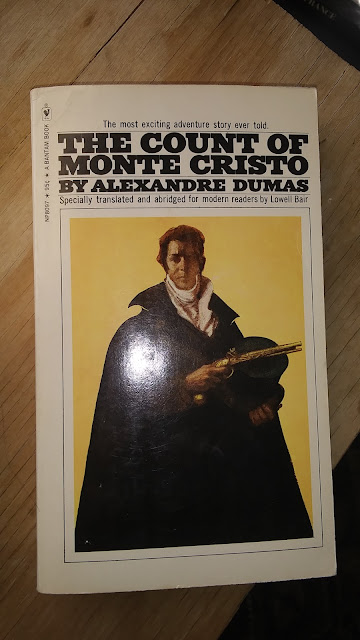
My last post contained a paragraph on libraries, with the admission that one need not always buy a book in order to read it, and yet all of us who are lifetime readers surely have a few books that we must own. The list may be short or long and would vary from person to person and household to household. In our home, the Artist and I always had more than one copy of Wind in the Willows, by Kenneth Grahame, along with its human equivalent, Harlan Hubbard’s Shantyboat. I had my Proust, of course, and the Artist his Painting Nature’s Quiet Places, by Thomas Aquinas Daly. Jane Austen and Jim Harrison share shelf space in our home. How many copies of Malabar Farm have I bought and given away? The Artist loved to read Machiavelli but also the Tao Te Ching. In the last weeks of his life, I had finally persuaded him to read The Little Prince, and as he lay unconscious in the hospital I read aloud to him from one of his lifetime favorites, The Count of Monte Cristo.


One reading corner in our old farmhouse


My personal copy of The Cloister and the Hearth, Modern Library edition, will not be offered for sale in my shop. Text block having parted company completely with binding boards, the book came home with me because of that condition, an orphan I could neither sell nor discard, and I am so glad that it did! The condition was another feature that suited it for life in the slow reading lane and led me to begin reading it at last. After all, Modern Library—how could it not be worth my time?


Rubber band holds cover to text block on this orphan volume.

Are you immersed in a long book yet this winter? Maybe instead, several of moderate length? What books call your name when the temperature remains stubbornly below the freezing mark for days on end?


For my thoughts on the state funeral of former President Jimmy Carter, visit one of my other of my blogs. Thank you for taking this time with me today.


The book I began reading Thursday evening


Sunday, February 20, 2022

Rules of Thumb

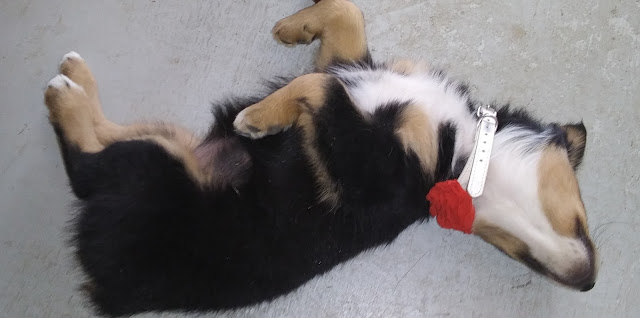
Napping puppy! Break for puppy mom!


My life these days seems to be governed by rules of thumb. Here are a couple of examples I’m finding especially pertinent:


o  For each day in a hospital, expect recovery to take a week. Ten days in a hospital, then, make for a ten-week recovery time.


o  A puppy can go an hour between eliminations for every month of age, so expect a two-month-old puppy to be able to last two hours from one pee/poop session to the next.


Merriam-Webster defines ‘rule of thumb’ this way:


(1)       A method of procedure based on experience and common sense;

(2)       A general principle regarded as roughly correct but not intended to be scientifically accurate


Apparently there is no evidence linking ‘rule of thumb’ to legal wife-beating in 18th-century England! 


Those words “roughly correct” in the Merriam-Webster definition reminds us that a rule of thumb is not hard and fast. Some patients recover more quickly after hospitalization and surgery, others take longer than the one day/one week rule suggests, and some two-month-old puppies can sleep for five hours at night before waking and needing to go out. There is wide variability in individual cases. Faced with unfamiliar situations, however, as I have been recently, it's helpful to be able to estimate outcomes and adjust expectations somehow, and a rule of thumb gives us a compass, however wobbly, rather than leaving us completely at sea.


My analogy above set me to wondering about what kinds of rules of thumb might be applicable to sailors. One I found says, “When in doubt, take the longer tack first.” No doubt sailors will understand what’s meant by that. Here’s another one for deciding how much anchor chain is necessary in a given situation:


...So how do you decide what is safe before looking elsewhere to anchor? Traditionally you use the scope – a multiple of the water depth to determine the length of anchor chain you’ll need to use. The RYA suggest a scope of at least 4:1, others say you need 7:1 but in crowded anchorages 3:1 is quite common.


A moment’s thought, however, tells you that a static rule of thumb in an environment that can significantly change in different conditions will not sufficiently account for the main forces acting on your boat, namely the wind and the tidal stream....


Given that reminder that a static rule of thumb is not sufficient in every situation, sailors will want to read the entire article!


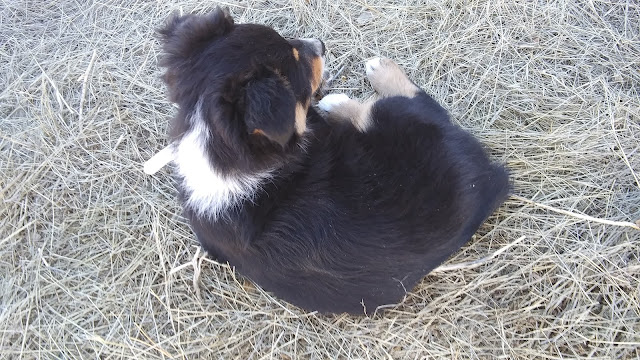
Sunny Juliet taking a brief rest break from outside tomboy play


A kind friend and neighbor (I have wonderful neighbors here in Dos Cabezas, AZ!) did the driving yesterday on my commute to see the Artist in the hospital in Chandler, up southeast of Phoenix, and that same friend and neighbor puppy-sat with Sunny for over three hours so “dog parents” David and Pamela could have a good, long visit in the hospital. Back home in the evening, it was early night-night for me here in the ghost town. Missing my life partner, I chose one of his favorite books, The Count of Monte Cristo, for my bedtime reading but never got beyond the first page. In fact, I had to read the first sentence over several times to get it to sink in.


On February 24, 1815, the watchtower at Marseilles signaled the arrival of the three-master Pharaon, coming from Smyrna, Trieste, and Naples. 


-      Alexander Dumas, The Count of Monte Cristo


Would you have been able to name that novel, given the first line?


Speaking of the Artist, his birthday is tomorrow, 2/21, and I would be happy to convey birthday wishes to him from far-off friends. Just leave a note in a comment here, and I will read him what you write. Thanks!


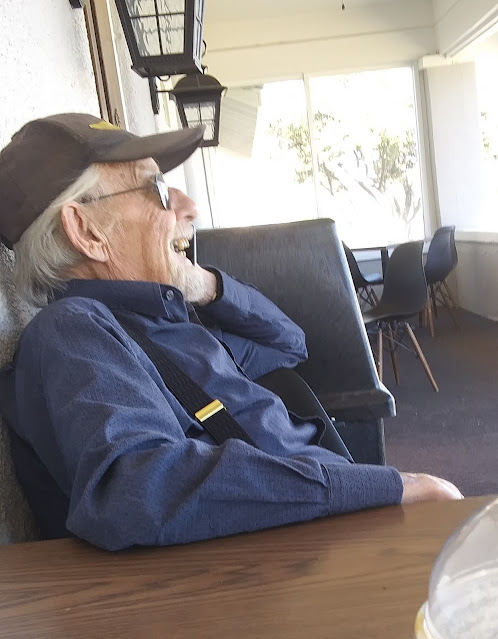
Okay, I found the picture I really wanted! Both were taken on the porch at Source of Coffee, in Willcox, AZ, but I love David's laughter in the one below. Now, if only I could remember who he was talking to that day!

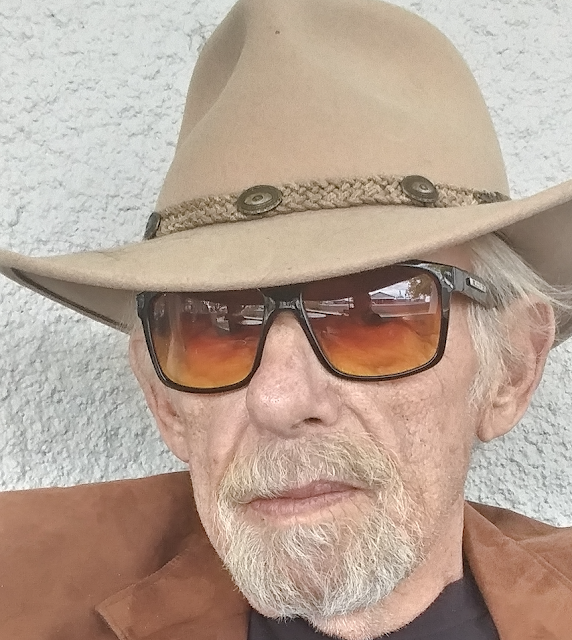
THIS is my guy
THIS IS MY GUY!

Saturday, February 5, 2022

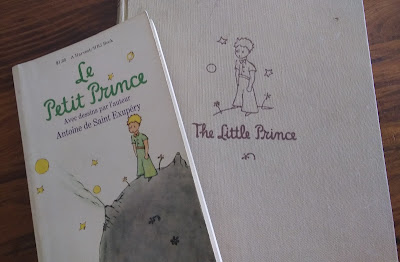
Who is the little prince, who the pilot, the fox, the rose?


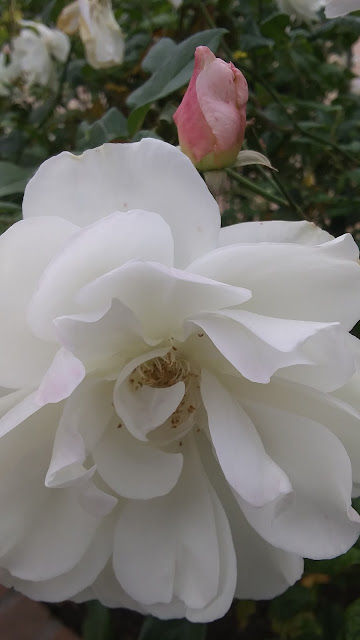
Roses are not rare on earth. No investor would assign to any rose a value of its weight in gold, however heavy with dew the petals. If you know the story of The Little Prince, the classic tale of imagination by French pilot and writer Antoine de Saint ExupĂ©ry, you will recall the little prince’s disappointment when he discovers how common roses are here and realizes that his rose, back on his tiny planet, is not one of a kind, after all. He had cared for her so tenderly, believing her unique au monde, as she had assured him she was. 


It is the fox, who begs to be tamed (which is, he explains, to have ties established, for instance between himself and the boy), who teaches the little prince the inestimable value of relationship.


“…To me, you are still nothing more than a little boy who is just like a hundred thousand other little boys. And I have no need of you. And you, on your part, have no need of me. To you, I am nothing more than a fox like a hundred thousand other foxes. But if you tame me, then we shall need each other. To me, you will be unique in all the world. To you, I shall be unique in all the world….”


“I am beginning to understand,” said the little prince. “There is a flower … I think she has tamed me….”


But there comes a time when the fox and the boy must part, and as the fox is overcome with sadness the boy thinks their friendship has done the fox no good at all. The fox tells him otherwise and explains why. -- But for those of you who have not yet read this book, I leave the sweetly poignant details for you to discover on your own. 


Did the flower tame the boy who then tamed the fox and also the pilot? As I read this book once again, I can’t help thinking of our Peasy. Did we tame him, or did he tame us? Was the Artist in the beginning the pilot, only later on to become a fox to the little prince? Or was Peasy the rose to the Artist and me? Or was Peasy the little prince, come to earth to be with us for a while and teach us about love even as he was learning? 


I see my little Pea in the rose, deluded in thinking himself so strongly defended against the world’s dangers. I see him also in the little prince, so concerned to protect the Artist and me, his roses. 


I see our Peasy in the fox,  eager to have us tame him and create ties to bind the three of us together. How happy and grateful he was to have a home and family! And I see the Artist and myself in all these different roles and also in the role of the pilot. 


Did we “waste” a year of our life on a dog like a hundred thousand other nameless dogs needing rescue? ‘Waste’ is the English word Katherine Woods uses in her translation: 


“It is the time you have wasted for your rose that makes her so important.” 


The original French reads somewhat differently:


“C’est le temps que tu as perdu pour ta rose qui fait ta rose si importante.”
 

“The time you have lost….”


We human beings lose time every day. Whether we feel we have been “productive” or “creative” or that we have “wasted” twenty-four hours, yesterday is gone, and there is no turning back. Yet as Proust discovered in his final volume, Time Regained, the past continues with us in memory. And just as there is no love created, no relationship forged, no friendship made, without taking time for it, spending time on it, losing time for it, so too love lives on in memories forged by time.


I suppose there are some among you, reading this, who think I have spent, wasted, lost quite enough time and words dwelling on my little lost boy. The Artist and I are fortunate in having each other – for many, many reasons, but one these days is being able to talk to each other about the dog we loved and couldn’t keep. Because no one else can ever fully understand why we miss him as much as we do. Only the two of us knew “the essential” loving heart of Peasy. 


And now we are the pilot, left behind and remembering, missing him, but the world is richer for us in all the ways that call our boy to mind again and again. 


Toujours dans nos âmes