Search This Blog

Showing posts with label American literature. Show all posts

Sunday, January 19, 2025

Small readings from small writings bring large thoughts.

"Books are my rivals for her attention!"


When I take on the reading of a very big book, one that will require a long stretch of days and nights to get through, I always have on hand a few volumes of lighter literary weight, fiction or nonfiction or a mixed stack of the two. The past few days, when I finish a chapter from Jimmy Carter’s presidential memoir, Keeping Faith, I’ve turned to a modest book from the category of “books on books,” William Dana Orcutt’s From My Library Walls: A Kaleidoscope of Memories. Published in 1945 under wartime conservation restrictions, the book’s author refers several times to aspects of World War II, but his main topic in each short chapter, or essay, is a memory evoked by a photograph or drawing or framed autograph letter on the walls of his private home library.


Playtime in the single digits!

Lovers and collectors of both art and books will understand my astonishment at the number of framed items Mr. Orcutt found room to hang on his library walls. Though the Artist and I managed to find room for both in our old farmhouse, visual art and bookshelves are always competing for wall space—and the items that prompt Mr. Orcutt’s memories are not, for the most part, pieces of art but framed ephemera he collected along with his books. The memorabilia even includes (he admits in both cases) a couple of items given as gifts not to him but to his wife, though he calls them “my,” not “our” library walls. His home library, I muse in wonder, must have been a very large room! Unfortunately, the book’s only photograph is a portrait of the author. We are not given a look at his library.


Sunny thinks she's cuter than WDO, and she's right!


William Dana Orcutt was born in 1870 in New Hampshire and lived into the 1950s. Entering young into the business of printing set his life’s course: In addition to writing books, he made a career of book and type design, with a reputation as a historian, as well. See this entry on the Dorcester Atheneum if you are interested in the history of American books, because Orcutt is an important figure in that story. His long, rich life, as the book I'm reading makes clear, intersected with many other important literary figures of his day. 


But my intention today is not to dwell on Orcutt’s life but to give you an idea of this one little book. He wrote many, most of them larger and more “important,” but anyone interested in American history and literature will find fascinating gems in this small volume. 


A small package reveals gems of history.

Each—let me call them essays--. Each essay in the book is no more than three to six pages in length, reminiscences that are grouped geographically, with the last two parts, “The Literary Hub of the Universe” [Boston] and “Star-Spangled Banner,” devoted to American topics. This Sunday morning I reached those final sections of the book, which were perhaps the most fascinating to me of all, particularly Orcutt’s memories of his relationship to Lincoln’s Gettysburg Address. 


As a schoolboy assigned to memorize Lincoln’s famous speech, young Orcutt pictured in his mind a great auditorium filled with people who received the president’s words with thunderous applause. Years later, when a “charming” volume was issued, reprinting and glorifying the address for a worshipful public, Orcutt happened to meet a “picturesque, elderly military gentleman” who had been a member of the Gettysburg Commission and who was the last living person to have been on the platform at Gettysburg that day! The elderly gentleman sputtered and scoffed at the glorified picture that day given in the new book. He told Orcutt:


“…Instead of being greeted as a masterpiece at the time of its delivery, most of those who heard the Address, and practically all the critics, considered it a colossal failure. Lincoln himself was mortified and chagrinned.” 


This, we must understand, was after a crowd of 100,000 people had been standing for two solid hours while the speaker of the day, famous orator Edward Everett, the main speaker of the day, read his two-hour-long speech. When Lincoln's turn came, the weary crowd met his brief words with silence, and his Secretary of State, William Henry Seward, remarked to the man sitting next to him that the president had “made a failure. With his mind on the war and its human cost, not on polishing his personal legacy for the ages, Lincoln probably did not declaim in strong, ringing tones. And after all, he had been asked to say only a few dedicatory words. 


Across the country, newspapers (except for five who reviewed it positively) reported the Address as a flop.


…[S]ome even went so far as to criticize its political philosophy. It remained for the Edinburgh Review to discover its greatness. Here the statement was unequivocally made that the Eulogy delivered by Pericles in memory of the heroes of the Peloponnesian War could alone be compared with President Lincoln’s classic words. 


Abashed, American editors took another look and changed their tune. All these years later, who in the world ever quotes from Everett’s two-hour speech?


I am not—please do not mistake me!—comparing President Biden’s farewell address in stature to Lincoln’s words at Gettysburg, but there are a few similarities: Both men were exhausted by the burdens of office when they spoke. Biden, like Lincoln, spoke briefly. Both spoke from the heart of the test the nation was undergoing. 


President Biden’s short address to the American people did not receive a failing mark from the country as a whole, but his critics on the Republican side of the aisle (see Fox News if you care to) spared no insult. It’s true that the elderly president, aged by the office (as it ages all who pass through it), as well as struggling against the stutter that he has worked so hard in his political career to overcome, sometimes fumbled his words. “He can’t even read!” jeered his detractors. They called his message the “worst” in history and “dark,” refusing to acknowledge that we are living in dark times, much of that darkness their own intentional creation. 


If history survives into the future, which seems rather an open question as this brave new world grows more and more shameless in mendacity and subject to more and more manipulation of fact, perhaps all this will get sorted out. For now, I can only make my own judgment. Without television, I watched President Biden’s entire speech on my little phone screen, and I give him high marks not only for honesty, sincerity, and truthfulness but also for seeing and facing the world as it is and asking us to do the same. I wish I shared his optimism, but certainly I agree that not giving up hope is essential to the future of our country. 


On Monday, in honor of the national holiday for Martin Luther King, Jr., I will be reading from a book on King's life. My radio will be silent. I’ll only look at my phone for texts from family and/or friends. When I come back to this blog with a new post, perhaps by the end of the week, perhaps not until the following week, I'll have a lovely surprise to share. Meanwhile, let's pray for peace in Gaza, freedom for Ukraine, and relief for those made homeless by fires or other blows of fate.


Honor him on January 20.


Tuesday, September 29, 2020

You Wanna “Debate”?


What do you want to debate? How much the president paid – or, more to the point, didn’t -- in federal income tax? Whether or not there should be hearings for a Supreme Court nominee not only in an election year but as the election process is already underway? What each candidate proposes as far as the nation’s health care is concerned? 


No, I will not be watching – or listening, either. What each man will say is pretty much a foregone conclusion, and my only question is how big a train wreck it will be. Will there be name-calling? Shouting? Will there be onstage stalking? We will find out soon enough, but the morning after will be soon enough for me, so although I know many of you will, I don’t need to follow it “in the moment.” I’d rather be elsewhere.


We are having a lot of rain this week here in northern Michigan, but bright, fast-changing colors gleam in the rain, and this morning we had a shot of bright, bright sunshine, welcome for however long it may last. And yes, I am here in Michigan. But I am also on the Great Plains, and for a few minutes of every morning and evening I am in France before I was born. Mine, you see, is a magical life, and if you are a reader (as I hope you are), your life is magical, too, not limited by time or space. Is that not a rich blessing?


The drowsy heat of middle August lay heavy as a furred robe on the upper country of the Shell River, the North Platte of the white man. Almost every noon the thunders built themselves a dark cloud to ride the far crowd of Laramie Peak. But down along the river no rain came to lay the dust of the emigrant road, and no cloud shaded the ‘dobe walls and bastions of Fort Laramie, the soldier town that was only a little island of whites in a great sea of Indian country two thousand miles wide. 


-      Mari Sandoz, Crazy Horse: The Strange Man of the Oglalas


So it begins, this lyrical biography called “one of the great stories of the West” (Atlantic Monthly), a “glorious hero tale” (John C. Neihardt in the New York Times), and “a splendidly done thing” (Washington Star). Mari Sandoz wrote many books set in her native Great Plains country (Old Jules, the story of her father, among them), and thanks to the University of Nebraska Press, with their Bison Books imprint, these titles are available in well-designed modern paperback form for a new generation of readers, as well as those of us still catching up to books missed earlier in our lives. I’m already thinking that Crazy Horse belongs on the American classics list. Maybe Old Jules, too. (I’m sure many people would think so.) The books Sandoz wrote were and probably are still considered “regional,” but every book set in the United States is set in one or more regions of the land; there is no reason, then, to set “regional” in opposition to “American,” in my opinion, that is, the opinion of someone who loves to travel, either by automobile, train, or armchair.


If you’re the kind of reader I am, you usually have more than one book going at a time (sometimes as many as four, in my case), and the other one I’m enjoying at an extremely leisurely pace -- only a page or two at a time -- is one I’ve read before, the first volume of Proust’s Remembrance of Things Past. I’ve written about Proust before and will not try your patience with a long quote in French, but I’ll tell you that the two pages I read this morning performed a near-miracle, pulling me out of the Slough of Despond and into the light of day. “Life is worth living so we can read Proust,” I exclaimed happily to the Artist over our morning coffee. “He saw and felt and noticed every last detail in his surroundings and then every association those details called up. What a rich life!” The Artist was amused.


Once in a while the Artist gets bogged down, as so many of us do, in the relentless stream of what seems like uniformly bad national and world news. “They’re not telling us the good things,” I say, and he asks rhetorically, “What good things? What’s happening that’s good?” In truth, sometimes I’m the one who’s down, and he has to remind me of all our blessings. I’m only reporting our conversation from this one Tuesday morning.


There was bad news from the agencies too – more soldiers there, with little soldier chiefs for agents and more treaty men coming to buy the Black Hills, making a strong talk of starving the Indians into going to the Missouri or the south place called Indian Territory.


The news! When has it ever been good? One of the hardest things about reading the story of Crazy Horse is that he lived during dreadful times for the Lakota Sioux. “Culture clash” is one way those times are sometimes described, but the phrase completely leaves out the power dynamics of a strong, armed national government and a relentless flood of pioneering homesteaders overwhelming traditions of those who had lived off the land for generations. 


The news! Big, bad happenings! Disastrous events and ongoing horror shows! 


I think the good things -- some of the best things – never make the news cycle precisely because they are not disasters or horror shows. Not “newsworthy,” in other words. Instead they are background constants, such the regularity of night and day and the annual round of seasons; parts of ordinary life too easily taken for granted because of their ordinariness, like family and friends and health and beauty; and stunning moments encountered in the natural world or in human interaction that surprise us with their grace. A peach tree growing in the compost or an understanding smile where we fearfully anticipated an angry frown.


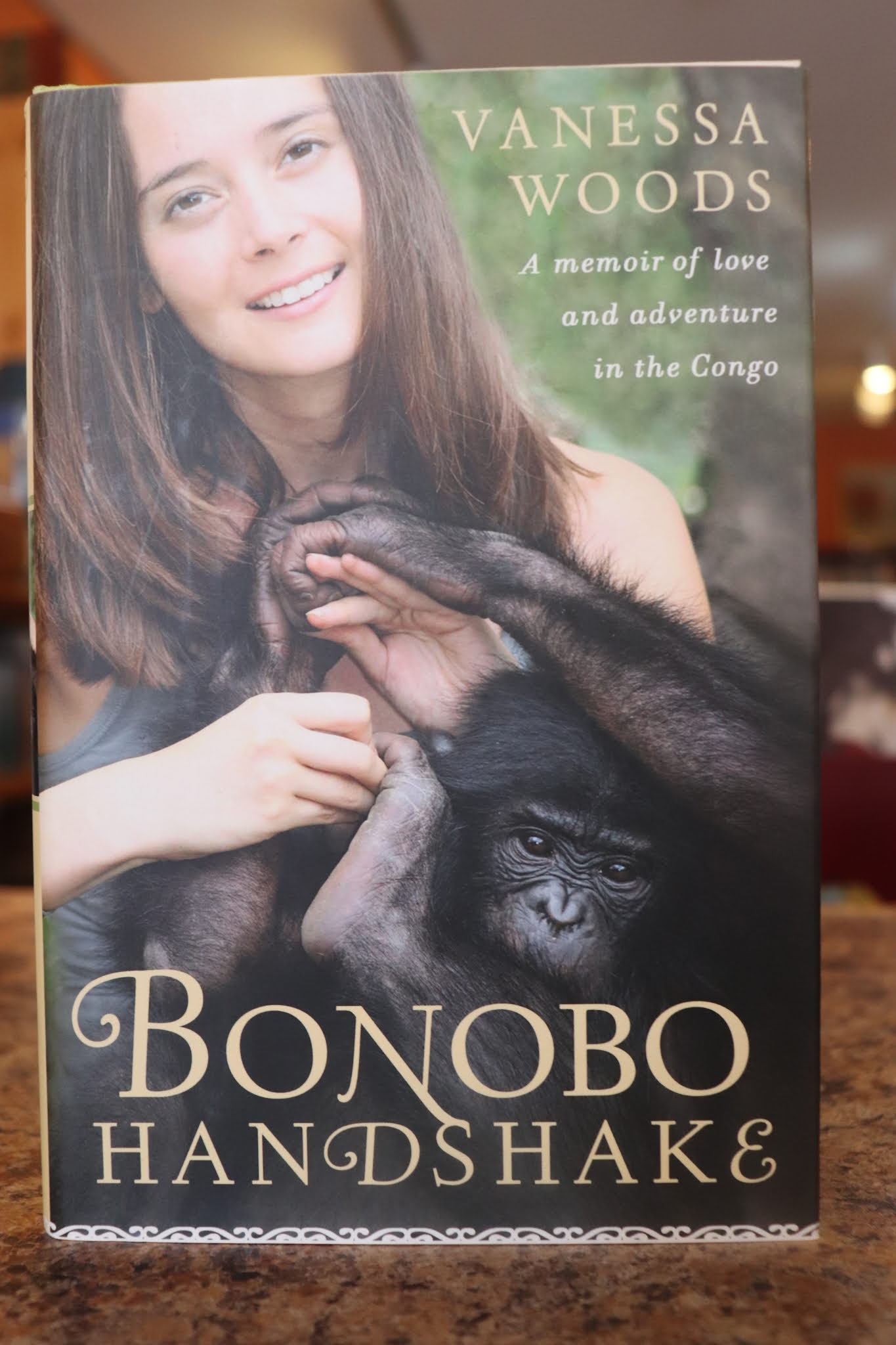
May you experience today moments of grace, as well as the strength, although we cannot literally shake hands these days, to extend a metaphorical hand of friendship to someone rather than yield to the temptation of an angry gesture. Are we to be outdone by bonobos?


Monday, April 13, 2020

Which Side Are You On?

When I went to work in my fields [following his marriage], I worked with more alacrity and sprightliness. I felt that I did not work for myself alone, and this encouraged me much. My wife would often come with her knitting in her hand, and sit under the shady tree, praising the straightness of my furrows and the docility of my horses. This swelled my heart and made every thing light and pleasant, and I regretted that I had not married before. I felt myself happy in my new situation, and where is that station which can confer a more substantial system of felicity than that of an American farmer…? 
-  J. Hector St. John de Crevecoeur, Letters from an American Farmer

Crevecoeur, an Anglicized Frenchman (born Michel-Guillaume-Jean de Crevecoeur -- and I apologize for not having the proper accent mark available to me on the program I'm using), initially began his New World life in Canada, fighting under General Montcalm until the defeat of the French on the Plains of Abraham. Then, resigning his commission, he traveled through New York, Pennsylvania, and Connecticut. In New York he was naturalized as a British subject and also adopted into the Oneida tribe as an honorary member. He married Mehitabel Tippett in 1769 and spent the following seven years happily farming and raising a family at home, Pine Hill, cultivating friends among his Hudson Valley neighbors, and traveling. 

But his very name — “broken heart” — perhaps presaged what was to come in the author’s life. Count seven years ahead from 1769. Crevecoeur felt himself thoroughly “American,” but to him that meant being a loyal subject of the English king. 

Susan Manning, who edited and wrote the very scholarly introduction to the Oxford World’s Classics edition of Letters from an American Farmer, calls the work “a book about identity — specifically American identity — struggling into being.” 

The book that took shape in the years before and during the American Revolution embodies the personal crisis induced by momentous political events. It is at once the fullest literary expression of America’s coming into being … and a moving exploration of the meaning of ‘revolution’ in the personality of any previously established self. 
- Susan Manning

It is easy for us to see the march of history exclusively in broad strokes: migrations, social change, important primary source documents (e.g., in this case, the Declaration of Independence), battles, treaties, etc. What gives Letters from an American Farmer its importance is not only that it was written at all and widely published but that it is a record of one man’s emotions, passions, and responses to the larger events which engulfed his life. We occasionally ask ourselves what we would have done in such-and-such a place in such-and-such a time period. More often we judge the actions of individuals in the past, forgetting to imagine ourselves in their shoes. But there is no possibility of forgetting the man and his family as we read Crevecoeur’s Letters, an epistolary-literary account of real people caught up in world-changing events beyond their control. 

So the Letters constitute a much-neglected American classic, but reading it now, during the COVID-19 crisis, when not only the United States of America but the entire world is struggling and looking for ways to maintain a semblance of normal life and find a way forward while also doing everything possible to avoid contagion in the present and “flatten the curve” (the rising curve of numbers of people infected with the virus), a year that is also an important election year in the U.S., I find added resonance in Crevecoeur’s cries of anguish.


Throughout the early Letters, the author idealizes the American experience and work ethic, particularly that of English and Scottish colonists. (Irish, not so much.) Farmers work hard and bring forth the land’s bounty, while fisherman on Nantucket and Cape Code brave the ocean to harvest subsistence and, for some, even wealth. He is full of admiration for the modest Quaker way of life but paints a picture of religious tolerance, with families of diverse faiths living side by side without acrimony. He admires also the Native Americans, calling their manners “respectable,” in sharp contrast to some of the rude European pioneers along the frontier, who live in “sloth and inactivity.” Those “back-settlers,” he remarks reprovingly, are much more in need of conversion than the Indians. But in general, he presents life along the Eastern Seaboard, on its farms and in its towns and villages, as a veritable pastoral idyll, a dream come true for the poor who fled the nobility-crushed and heavily-taxed Old World, where they had no hope of advancement.

From pastoral idyll, however, Crevecoeur descends into nightmare when he travels in the South and learns firsthand the horrors of slavery. In Charleston and in the countryside, the stories he hears and one particularly gruesome sight he sees stand in such sharp contrast with the threadbare arguments presented to him in defense of the “peculiar institution” that his very belief in God’s beneficence is shaken to the core, and he cries out from his heart —

Is there then no superintending power who conducts the moral operations of the world as well as the physical? The same sublime hand, which guides the planets round the sun with so much exactness, which preserves the arrangement of the whole with such exalted wisdom and paternal care, and prevents the vast system from falling into confusion, doth it mankind to all the errors, the follies, and the miseries, which their most frantic rage, and their most dangerous vices and passions can produce? 

As he looked about him and saw “crimes of the most heinous nature, committed from one end of the world to the other,” he could not help doubting in the existence of wise deity guiding history and ensuring progress. 

Loudly though his every feeling cried out against the evils of slavery, however, Crevecoeur himself was in no immediate personal danger as he traveled through the colonies. He was a white man, after all, an educated man, with apparently sufficient income to leave his farm in other capable hands for long periods while he traveled. A visit farther south, to self-taught botanist John Bertram in Florida, soothed for a while the agitated feelings aroused by his painful encounters in South Carolina. 

But Time is marching on, inexorably, and both Crevecoeur’s scholarly social visits and his peaceful life at home will soon be violently interrupted. The Revolution is at hand! What hope is there now for a loyal subject of the king? 

Now danger has become personal and immediate — as it was already for the slaves on those Southern plantations — and the writer now fears for the lives of his wife and children, as well as himself. Though he declares himself ready to sacrifice his own life for that of his family, staying home on the farm and helplessly waiting “the end of this catastrophe” becomes more and more unbearable. And once again the feelings that agitate his soul find expression in larger questions about the human condition.

It is for the sake of the great leaders, on both sides, that so much blood must be spilt; that of the people is counted as nothing. Great events are not achieved for us, though it is by us that they are principally accomplished; by the arms, the sweat, the lives, of the people.

Resenting historical convulsions that disrupt and even destroy ordinary, peaceful lives, at the same time he knows that he must decide

What must I do? … Shall I discard all my antient [sic] principles, shall I renounce that name, that nation, which I once held so respectable? … Must I be called a parricide, a traitor, a villain; lose the esteem of all those whom I love to preserve my own; be shunned like a rattle-snake, or be pointed at like a bear? 

As much as he loves England, he also sees “the powerful attraction” of the call to revolution, and he cannot help blaming the king for pursuing a course that will guarantee the shedding of so much innocent blood. He is a man caught in the middle. 

I cannot count the multitude of orphans this war has made, nor ascertain the immensity of blood we have lost. Some have asked whether it was a crime to resist, to repel, some parts of this evil. Others have asserted, that a resistance so general makes pardon unattainable and repentance useless…. What one party calls meritorious, the other denominates flagitious [criminal]. … What can an insignificant man do in the midst of these jarring contradictions…?

It is, after all, not only coronavirus that hovers outside our doors these days. There is also the unsettling and continuing political discord and paranoia, amazingly and alarming not set aside in the midst of a life-threatening pandemic. If anything, it is exacerbated. And what one side calls necessary, another calls criminal, while millions of ordinary Americans, who want only to work and live in peace within their families and communities, are caught in the crossfire. 

What will Crevecoeur do as the clamor of strife comes nearer? Will he be a “traitor” to the king or a “traitor” to the revolution? Of course, his future then is now long past, so what was his ultimate fate and that of his family? 

Don’t look for spoilers here. If we are going to learn anything from history, it is important that we hear not only competing interpretations but also individual voices of real human beings, as they lived through and experienced those distant times. We are not that different from those colonists — or those slaves — in eighteenth-century America. As did they, we work and love and hope, feel joy and fear, and the questions we ask of ourselves and of the universe have been asked by every generation that came before us.


Wednesday, October 2, 2019

Goodness in the Work of Toni Morrison


In an essay on “Goodness,” published in the September 8, 2019, issue of the New York Times Book Review, the late author Toni Morrison wrote of her search for goodness in American literature of the 19th and 20th century. She found that, generally speaking, with the exception of satirical works such as Don Quixote and Candide, it was evil that inspired writers to “vivid language” and gained for them a “blockbuster audience.” Those novels of earlier times ended, however, with redemption and the restoration of order, virtue its own reward in the triumph of the long-beleaguered protagonist. 

Twentieth-century novelists gave us very different stories. 
The movement away from happy endings or the enshrining of good over evil was rapid and stark after World War I. That catastrophe was too wide, too deep to ignore or to distort with a simplistic gesture of goodness. 

As was always true in her fiction, Morrison uses forceful, succinct, and vivid language to express her findings on good and evil in literature. “Evil grabs the intellectual platform and its energy,” she notes. 
It hogs the stage. Goodness sits in the audience and watches, assuming it even has a ticket to the show.
She finds modern novels -- again, in general — uninterested in goodness, except to expose “the frailty, the pointlessness, the comedy” of it. The conditional “in general” is important because the importance of Morrison’s own work cannot be overstated, and she herself was very interested in goodness and its role in fiction. 

Searching for definitions of goodness in philosophy and science, she finally narrowed the concept down to altruism and theories of altruism down to three: (1) learned behavior; (2) a form of narcissism; and (3) “instinct,” a genetic predisposition passed down through (genetic) evolution. She turned then to her own work and took examples illustrating the three theories from, respectively, A Mercy; The Bluest Eye; and Sula

Expressions of goodness are never trivial or incidental in my writing. In fact, I want them to have life-changing properties and to illuminate decisively the moral questions embedded in the narrative. It was important to me that none of these expressions be handled as comedy or irony. And they are seldom mute. 

What a breath of fresh air, even in the midst of the most horrible tragedies in literature (horrible because we as readers know such events took place not only in the lives of fictional characters but in our own country’s history), to find goodness given un-ironic voice! Morrison concludes her essay by telling us that “[a]llowing goodness its own speech” is crucial because it allows a character to learn something, “something vital and morally insightful….” Articulating goodness is an expression of, as well as a means to, self-knowledge. 
Such insight has nothing to do with winning, and everything to do with the acquisition of knowledge. Knowledge on display in the language of moral clarity — of goodness.

I had reached the next-to-last page of the first section of Morrison’s novel Beloved when her essay came serendipitously into my hands. I think Paul D’s words of judgment would have leaped off the page at me, anyway, but there’s no saying for sure. Anyway, Sethe is telling him that her act of violence against her children worked, in that it kept them from being returned to the plantation where she (before her escape) and others had been violated. Paul D insists she should have found some other way to save her babies. 
“There could have been a way. Some other way.”  
“What way?” 
“You got two feet, Sethe, not four,” he said, and right then a forest sprang up between them, trackless and quiet. 
Is Paul D’s articulation of a moral difference between human beings and animals without language an expression of moral clarity? Does it enlarge his self-knowledge at the time of his speaking the words?

Paul D had only come to know what Sethe had done when Stamp Paid, the self-named man who smuggled other enslaved people to freedom, showed him the story in a newspaper. Stamp showed him the paper because he believed in truth and felt Paul D should know the truth of the woman whose life he had re-entered, but afterward he had doubts. He tried to set that truth-telling, going behind Sethe’s back to Paul D, against other “sneaking” things he had done, “always for a clear and holy purpose.” He had sneaked

…runaways into hidden places, secret information to public places. Underneath his legal vegetables were the contraband humans that he ferried across the river. Even the pigs he worked in the spring served his purposes. Whole families lived on the bones and guts he distributed to them. He wrote their letters and read to them the ones they received. He knew who had dropsy and who needed stovewood; which children had a gift and which needed correction….

In other words, Stamp Paid was a good man. But was telling Paul D what Sethe had done a good thing, as he believed it was when he did it?

Afterward—not before—he considered Sethe’s feelings in the matter. And it was the lateness of this consideration that made him feel so bad. 

Motivation is what matters to Morrison, as it did to Kant, in determining goodness. Amy’s apparent kindness to Sethe in caring for her wounds, and Baby Suggs’ seemingly generous neighborhood feast — despite the gentle, effective nursing in the one instance and the joyful sharing in the second — both appear imperfect in the author’s eyes, tainted by pridefulness, illustrating the narcissistic theory of goodness. We don’t see either Amy or Baby Suggs growing in self-knowledge as a result of reflecting on their own behavior, though it seems impossible to say that what either did was not good. Certainly, neither was a bad person. And neither, certainly, was Sethe herself, though her goodness through most of the story can be seen as instinctually motivated. 

Stamp Paid looks to me like the clearest example of goodness, the character who gains the most, articulately, in self-knowledge (his author’s own definition). He not only practiced goodness as a habit (Aristotle’s definition) but reflected on his deeds and their meaning, and in questioning his own motives in revealing Sethe’s story to Paul D, he created his own opportunity for further moral growth. 

Sethe and Paul D take longer to open themselves to self-knowledge, but who can blame them? It’s a long road because they have had so much pain and are protecting themselves from more until, finally, their shared past allows them to face a future together and to see not only themselves but each other in new and important ways.

I haven’t told you anything really about the story, because that you should read for yourself. Beloved is one of the most powerful American novels ever written, Toni Morrison an outstanding American writer. And for me her literary investment in “making sure acts of goodness … produce language” is as important as her command of language itself. 

Go elsewhere for superficial cleverness or smart irony. Come to Toni Morrison’s work for clarity, truth, and fiction to help you grow your soul.


Wednesday, August 14, 2019

Who Is Regional, and Who Is American?


She swung her horse about and cantered him to where Johnny waited. When she came up, he grinned at her. “What do you think?” 
“I think,” she said, “you would either die miserably in this place or learn to love it very much.” 
His face sobered and he searched her eyes. Then he smiled. “You won’t die.” 
She smiled back at him. “No, I won’t die.”
The lines above come near the end of Voyage to Santa Fe, by Janice Holt Giles, published in 1962. How have I missed this wonderful American novelist for so long, only now stumbling on her (serendipity again!) and looking forward eagerly to reading much more of her work? The headstone on her grave reads “Kentucky Writer,” although three of her novels have the great American West as their setting, and others are set in her native Arkansas. 

It’s odd, I think, that her Western novels did not break Giles out of the “regional” category. They did it for Jim Harrison. As long as his stories had Michigan for their setting, his work was considered regional, but when Jim and his novels moved out to Montana he became “American.” Is Montana more American than Michigan? The West more American than the Midwest? But even if the West is so all-American, so much more American than the Midwest (which I deny accept momentarily for the sake of argument), why did Voyage to Santa Fe, the story of an epic wagon train traveling from Three Forks in the Arkansas Territory to Santa Fe, a city in Mexico only just freed from Spanish dominion, not establish an already popular novelist as an American writer?

(Is it more difficult for a woman than a man to break out of the regional category? Knowing male writers who have chafed being geographically segregated, I’m not sure. The question was raised by one of my bookstore customers, who cited the case of Willa Cather, but we agreed that in recent decades that writer’s work has become much more highly regarded and widely known.) 

New York, Boston, Baltimore … Los Angeles, San Francisco, Seattle … New Orleans, Savannah — among American cities, these have their shining places in national literature, while the Midwest and Great Plains seem, with the exception of Chicago, to present themselves to literary criticism as one large, blank expanse, with here and there a small regional twinkle. Ah, yes, Detroit! St. Louis! Kansas City! But the small towns, the woods and farms and lakes and prairies? Where are they? Are they not as much America as places fronting Atlantic, Pacific, or Gulf of Mexico?

Nor is the question of literary regionalism limited to fiction. Essayists — whether working in large themes or small; with nature, human nature, or the inevitable combination  of the two — are also hampered not by a glass ceiling but by glass walls that keep them within their own geographical regions. Eastern, Western, and Southern writers seem to break through. No one would think Wendell Berry’s work applicable only to Kentucky or that of Edward Abbey only to Utah. Kathleen Norris has brought Dakota to national awareness, and Terry Tempest Williams has done the same for the Great Salt Lake. But of all the Great Lakes writers, fiction and nonfiction, writing here today in America’s heartland, how many names are recognized on the East and West coasts? 

It is baffling (and frustrating) to me. Does not the best writing take us out of ourselves and usher us into a different world, and to do this must it not provide all manner of sensual detail — sights, sounds, tastes, smells, and textures? In other words, is not the specific place where a story is set as important as the characters living there? After all, we are shaped as much by the places we inhabit as by our times.

What do you think?

Tuesday, February 20, 2018

A Perfect Storm of Reading

We drove toward and right into a low-lying cloud
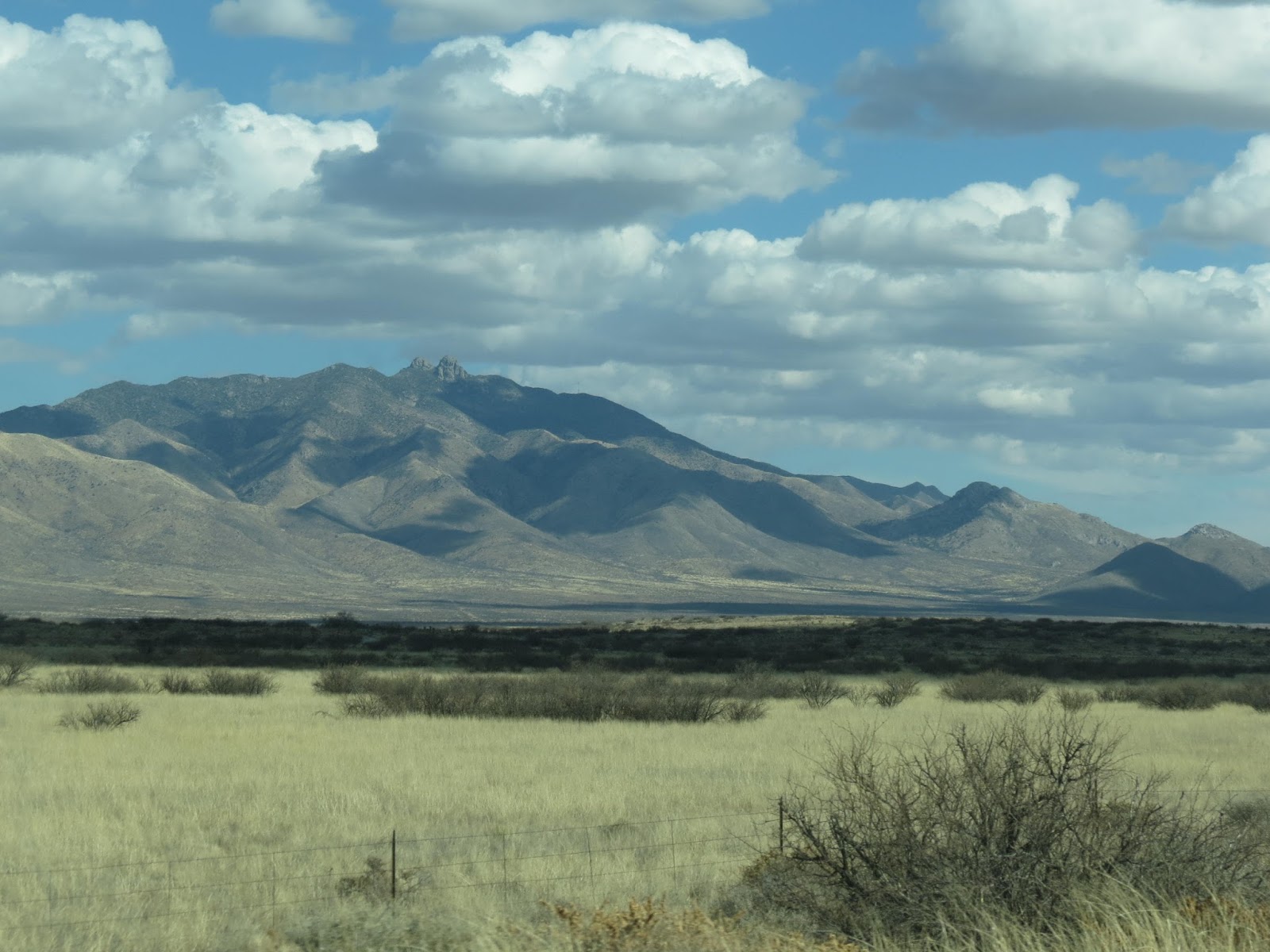
After three solid days of rain, a day of blue sky and enormous, slowly drifting cumulus clouds arrived. Maybe it was the clearing weather that gave me the impetus to finish, on one morning, three books I’d begun reading over two weeks before, going back and forth among the three for day after day. Our Sunday was primarily a day of rest, with only a short expedition to Willcox and a visit to Twin Ponds to look for sandhill cranes. For the second time this winter, we could hear cranes in the distance but caught only the briefest glimpse of one small group high in the sky. 


They were lighting on the ground too far from us to be seen. Still, the dancing wind, beautiful sky, golden grasses, distant mountains, and the unusual sight of an expanse of water at our feet lifted our spirits. 


Back at the cabin once more, after a late lunch, I picked up a novel I’d happened on by chance in a thrift shop in Safford. I was not familiar with Yonnondio From the Thirties, by Tillie Olsen, but something about the dust jacket caught my eye, and the text on the flyleaf sealed the deal.

I’ve never read a book like this. To begin with, Olsen began the writing of her novel when she was only nineteen years old and worked on it intermittently for four or five years while moving around the country from one city to another. Somewhere along the way, though, it disappeared from her sight, and for years she thought the work was “lost or destroyed.” Subsequently, for twenty years, while raising four children and working a series of non-writing jobs, her creativity was also “lost” — but it was not destroyed. Tell Me a Riddle, a novel published in 1969, gave her a place in American literature, and her subsequent life was that of a minor literary star, with awards and fellowships and all the rest. 

Then one day, looking for another manuscript in what must have been voluminous papers, the author turned up some pages of her youthful beginning. 
A later, more thorough, search turned up additional makings: odd tattered pages, lines in yellowed notebooks, scraps. Other parts, evidently once in existence, seem irrevocably lost. 
From fourteen different versions of fragments, “penciled over scrawls” written 38-41 years earlier, Olsen did what she could to combine and reconstruct the pieces — with, however, “no rewriting, no new writing.” The result is an unfinished masterpiece in American literature, one that deserves being retrieved yet again from obscurity. 

We cannot know what the author at age 19 had in mind for the end of the story of Maizie and her family, and on the last page of this book published by Delacorte Press in 1974 we leave them still in the hell of an urban slum in August. They had moved from a mining town to a tenant farm to “packingtown,” the parents always hoping to make a better life for themselves and their children. But it is not the story line alone, much less the way it came together, in bits, over an interval of decades that makes Yonnondio memorable. Rather, it is the writing itself, writing so immediate and poetic and natural on the page, as it seems to race along with the breathing and heartbeats of the characters, that even to call it “style” seems all wrong. For example, although the family’s happiest times came when they lived on the farm, that life too was one of hardship, especially in winter:
Days were dim and short. Snow lay on the earth continually—blinding white at noon, yellow and old at dusk, ghost white at night. Life ceased beyond the kitchen. In the circle of warmth around the stove, everything moved and revolved. Distance was enormously magnified by the cold. Far and far it seemed to the woodpile; to the henhouse, where the hens gathered in drooping ovals of dejection, their cheeps coming out in little frozen spears; to the stable, where the sweet rotting smell of hay and the great cloud of warmth from the cow stained the air. They scarcely moved from the stove. 
And this is one of the more prosaic passages in the book. Here is an earlier passage, addressed to a young man newly gone down to work in the mine, where his brother has already died:
Breathe and breathe, Andy, turn your eyes to the stars. Their beauty, never known before, pricks like tears. You belong to a starless night now, unimaginably black, without light, like death. Perhaps the sweat glistening on the roof rock seen for an instant will seem like stars. 

And no more can you stand erect. You lose that heritage of man, too. You are brought now to fit earth’s intestines, stoop like a hunchback underneath, crawl like a child, do your man’s work lying on your side, stretched and tense as a corpse. The rats shall be your birds, and the rocks plopping in the water your music….
Often I have heard — and understood — the complaint that literary classics are generally “depressing.” Yonnondio, in common with finished and widely recognized giants in American literature, gives us human beings with ordinary hopes and dreams who must pit themselves against social and historical circumstances of huge, impersonal, and crushing power. The family’s dream of the farm was crushed by the tenant system. The horrors of coal mine and slaughterhouse have been told in other novels, but never from the point of view of a child whose limited understanding confuses reality and nightmare so thoroughly in a perspective that captures reality as no other book has done.

Once again, serendipity guided me to a book I would never have been looking for. The title and the author’s name were on no “wanted” list of mine, mental or written, and I cannot recall seeing them on other people’s must-read lists, either, although my unfamiliarity may have led me to slide over the book’s title without pause. It isn’t bad to look for particular books. I’m not saying that. What I am saying is that it is always good to be open to the book not looked for, the book stumbled on by chance, the unknown book that one day calls out from a shelf, saying, “Pick me up!”

There was no strong connection between Yonnondio and Sky Island or Old Southwest New Southwest, but for me Olsen’s novel bore a definite connection to William H. McNeill’s The Global Condition. Although McNeill’s lectures look at American history in the wider context of world events and processes, leaving aside details to focus on broad, sweeping currents of change, the detailed picture is there between the lines. In the story of the ever-expanding role of improved transportation and the substitution of market pricing for imperial command, McNeill is very much aware that there always continue to be winners and losers and that the big winners are always those on top of the economic power pyramid. In fact, when he pulls back even further to expand this global view, adding in the role of microparasitism and disease in the transformation of human societies, he also throws in macroparasitism, using the term metaphorically but arguing that he is not doing injustice to the term.
Certainly, most peasants who see someone else eat what they have produced or find themselves conscripted to work for another’s benefit find that access to resources required for their own personal well-being has been reduced in proportion to the quantity of goods and services transferred by such transactions. When armed raiders break in upon a village of farmers, resemblance to the macroparasitism of one animal species on another is obvious enough. When it is tax or rent collectors who come to seize their share of the harvest, the resemblance is less obvious, since sudden death is not normally at stake in such situations. Still, if one thinks not of individuals but of biological populations, the dependence of a macroparasite on the survival of the plants or animals whose tissues it eats is similar to the dependence of the tax and rent consumer on the survival of tax and rent payers. Accordingly, customs and institutions that regulate the amount of tax and rent payments so as to allow the survival of the payers are analogous to the balance of nature that keep predators relatively few and their prey comparatively numerous—as, for instance, is true of lions and antelopes in the African game preserves.
In this sense, then, McNeil feels justified in using the term macroparasitism to apply to and describe “exploitative relations among groups and classes of human beings.” 

I want to pause here and look at Tillie Olsen’s characters and their situations through McNeill’s lens. In the first part of the novel, the mine owners and managers, who never went down into the mine themselves, were the obvious predators on site. Others, of course, are so far removed from the scene that they never appear, either in the story or in the imaginations of the mine workers, but whether we look at the mining town itself, the nation as a whole, or owners and investors and workers the world over, we see that the prey are much more numerous. And while “sudden death” is not the given that it is when a lion runs down an antelope, it does occasionally come into play, and only large numbers of new workers available to replace those who die in the mines make continuation of the system possible.

When Olsen’s fictional family moves to the farm, that brief, bucolic, sometimes-idyllic, sometimes-hellish life (its character depending on the season), we see the family’s hard work taken from them in the very way McNeill describes peasants being preyed upon in earlier centuries. 
Coming to the kitchen, she heard her father’s angry voice: “They’re taking all of it, every damn thing. The whole year slaved to nothing. I owe them—some joke if it wasnt so bloody—I owin them after workin like a team of mules for a year. They’re wanting the cow and Nellie . . . takin Fred Benson’s farm and Eldridge’s. Batten on us like hogs. The bastards. A whole year—now I’m owin them.”

In the third phase of the family’s life, the farm left behind, the hell of the mining world is replaced by the hell even worse, if that is possible, of the slaughterhouse and meat-packing life. Here it is not coal dust but an ever-present stench that pervades the air they breathe. But with no land of their own, they are dependent on jobs provided by others, and since those seeking jobs always outnumber the jobs themselves, there is no bargaining for better wages or conditions. Some will not survive, but enough will….

McNeill is not carrying a socialist (or even a union) banner and certainly is not arguing against the free market system. Far from it. He believes in progress and in civilization. At the same time, he recognizes it as a double-edged sword and sees that every advance in civilization, every technological or market advance, comes with a cost — and that the cost is paid by those at the bottom, time and time again. Nor does he think this problem (for those of us who see it as a problem, which not everyone does) or any other will ever be finally solved for all time, because — if you will allow me to put one of McNeill’s themes into my own language — every solution to a previous problem creates new problems. It is not a question, then, of how to eliminate all problems: it is, rather, a question of which set of problems humanity can tolerate and survive.
Humanity, in short, is not likely to run out of problems to confront nor of changes needing to be made in prevailing practices…. Action and reaction within a complex ecological web will not cease, and efforts to understand its functioning fully and to foresee future side effects will continue to elude human beings for some time to come, and perhaps forever.

I used to look at this solution-creating-new-problems truth as a choice, but I am coming more and more to see it as McNeill does. Since in any given case and for any particular problem, we may choose one “solution” over another, but since we cannot see all the future effects of that solution, all the new problems it will create, we are as much in charge of our future as a herd of antelopes, swerving this way and that across the grassy plains. Our individual, group, and national purposes, that is, may well be lost in the swirl of global processes, economic and otherwise, beyond our ken.

That scarf of cloud above became a fog that lasted all the way to town.

I finished reading Olsen’s and McNeill’s books in the course of the same morning, and that afternoon I took from the shelf my big, fat, hardcover copy of Adam Smith’s An Inquiry Into the Nature and Causes of the Wealth of Nations. This particular edition includes the “classic” introduction (so the cover announces it) by Ludwig von Mises. Well, far be it from me to put myself on the same level as a “classic” economist, but the brief introduction by von Mises failed to overwhelm me. Perhaps it was in part because I was just coming off the larger, longer view of William McNeill, but it seemed that all von Mises had to say was that Adam Smith was right about everything, that capitalism was responsible for every bit of improvement ever made in human life, and that anyone who disagreed could only be guilty of indulging in a shallow, barbarian smear. (Yes, he used those terms.) He cites no particular arguments of Smith’s opponents, and so he is under no necessity to refute them. Instead, after tossing them into the dustbin, he trots out the praise of various “authorities” for Smith’s work. 

Prepared as I am to find much wisdom and food for thought in Smith’s work — certainly a Western classic for good reason — my philosopher’s soul rebels at an introduction that substitutes informal logical fallacies for serious analysis. Surely von Mises was capable of better? Moving on, I limited my first sitting’s reading of Smith to his own introduction and his first chapter, “Of the Division of Labor,” and what I propose is to read a chapter and set the book aside for a while, taking time to reflect on the chapter read.

Adam Smith’s “division of labor” has little, if anything to do with a household in which the husband goes out to work for pay while the wife remains behind to cook and clean and raise children. No, he is interested in industrial production, the manufacture of goods for sale. He begins with the simplest of manufactured goods, pins and nails, and shows that one person making such an item by himself can never make anywhere near the number produced by a group of workers when the process is broken down into simple steps and each worker performs only one step, over and over. With division of labor, ten persons may make 48,000 pins a day, where one man working by himself would be hard pressed to make twenty.

Irrefutable, no? And yet, in just the short seven pages of this first chapter, I found myself pausing over a couple of claims. 

One was Smith’s argument that with the division of labor workers are more apt to discover “easier and readier methods” to make their work easier. His example is that of a boy adding a string to a valve handle to “save his own labor.” The boy’s job had been to open and close the valve, but now — has he not put himself out of a job? This result Smith does not discuss, let alone pursue. And in McNeill’s perspective, certainly a technological advance has been made, civilization has been nudged forward, and the job of one now-unnecessary worker counts for nothing in the great scheme of things. 

Well, that is the way of technology. I paused much longer over an earlier point, one made just previous to that of the labor-saving invention. Smith claims that in passing from one kind of work to another, say from one aspect of production to a different aspect, both time and focus are lost. Let me quote directly here, because what I have to say about this claim needs the particularity of an example.
…A man commonly saunters a little in turning his hand from one sort of employment to another. When he first begins the new work he is seldom very keen and hearty; his mind, as they say, does not go to it, and for some time he trifles rather than applies to good purpose. The habit of sauntering and indolent careless application, which is naturally or necessarily acquired by every country workman who is obliged to change his work and his tools every half hour, and to apply his hand in twenty different ways almost every day of his life; renders him almost always slothful and lazy, and incapable of any vigorous application even on the most pressing occasions. Independent, therefore, of his deficiency in the point of dexterity, this cause alone must always reduce considerably the quantity of work which he is capable of performing. 

In Smith’s picture, the country worker (note the urban sophisticate’s denigration of the “country workman”) “saunters” and “trifles.” He is “slothful and lazy,” “incapable of … vigorous application,” and, we are asked to take as a given, deficient of dexterity. The worker's mind, we see, cannot refocus quickly enough on the new task. He is almost necessarily “indolent” and “careless,” simply by the circumstance of moving from one task to another. 

Oh, my, where to begin? Adam Smith was the son of a customs official, not a workman. Smith himself began studying philosophy at Glasgow University at the age of 15. Anything he knew of manual labor, therefore, he did not know first-hand, and his claims about the workman’s mind can only be speculative. 

As for a mind’s focus on one small task, repeated minute after minute, hour after hour, does not Smith assume too much? Perhaps because it is not part of his experience? Does not the very repetition dull a mind’s focus and allow it to wander? Perhaps lead it irresistibly away from the familiar (and therefore contemptible) task? 

Finally, I would argue that in moving from one task to another — let us imagine a farmer, taking feed to his animals, then turning his attention to a fence that needs mending, and moving on to clean and sharpen and oil the tools upon which his livelihood depends — a worker’s mind will be all the more active. Or we might look to the examples of a carpenter or a seamstress, workers more immediately producing goods. Here, also, I would argue, the man or woman who sees the “big picture” also sees the interrelated nature of various tasks, the necessity of each, and ways in which each task as well as their interrelationship might be better and more expeditiously — and even more beautifully —accomplished. 

In short, my speculations on the minds of a single-task workman and a workman moving from one task to another lead me to a conclusion opposite that of Smith’s. I think of work done with what Wendell Berry would call "affection" as work more likely to be done well.

But here is the clincher, the single word that gives Smith the victory over me: quantity. In evaluating the industrial work force, his concern is exclusively on the quantity of goods produced. It is not important that Smith’s factory worker see the “big picture,” and he does not address even the quality of the goods produced. It is only quantity that counts, with resultant cheapness to buyers. In Smith's picture, therefore, it is all to the good if the worker himself becomes almost literally a cog in the machine, because the more machinelike the work process, the more efficient, the greater the mass of goods cranked out, and the greater the mass of goods, the lower the price and therefore the larger the market for the goods. 

Again, in McNeill’s objective global calculation, this makes sense. It is civilization that moves forward, the human species that advances. Any individual is of little account, especially the antelopes put to work as machine parts for the greater good. 

*****

What kind of world do we want? What kind of lives do we want, for ourselves and for our fellow human beings? Is the accumulation of wealth and the continual increase of material production more humanly valuable than individual lives? Is, for example, the financial health of the weapons and armaments industry and the profits it makes so indicative of the progress of civilization that the deaths of a few schoolchildren weigh nothing in the balance?

Such are my own thoughts and questions and pondering after reading Adam Smith’s first seven-page chapter.

Another day, another set of clouds

Postscript 2/25

First, in relation to the novel by Tillie Olsen discussed in this post, I since read this of Helen Levitt’s photography in the 2/22/2018 issue of the New York Review of Books: “Right up until her death in 2009, Levitt was continually revisiting the exposures she had made on the streets sixty or seventy years earlier…. She had every right, of course, to remain engaged with her early negatives, but it is sensible to distinguish between the young artist doing her first street work, the middle-aged one shaping it into book form, and the nonagenarian approaching it with a lifetime’s experience.” 

As to William McNeill’s metaphorical application of the term “macroparasitism” to describe relationships between different human groups, I think it fair to extrapolate from his usage to distinguish not only a simple predator-prey relationship but also to see a “food chain” of parasitism, as it were. Children, unfortunately for the modern liberal perspective that sees human young as deserving of protection, must be seen as the largest, most readily available group of “prey.” Every layer of predators moving up the chain feeds on the layer beneath it, and thus every level of social parasitism, at bottom, is parasitic on the world’s children. They are not yet contributing members of society; moreover, they can easily be replaced. I hope it is crystal-clear that I am not advocating the metaphorical parasitism on children, any more than McNeil was advocating metaphorical parasitism between any two groups of human beings. He was merely describing what he saw. Looking through his lens, then, I see children at the bottom of the pyramid. They are the oceanic plankton of the parasitic human “food chain.” 

There were no comments in response to my questions ending this post as it originally appeared, so I will repeat here the last question in that paragraph. I asked if the deaths of a few schoolchildren were outweighed by profits to a global weapons and armaments industry. What I have come back to say now is that the picture of an industry as predator and children as prey was vastly oversimplified. In truth, there are many layers of parasitism, many layers of predators between the bottom and top of the metaphorical food chain. My question, however, still stands, as does the first in the paragraph, namely, What kind of world do we want?