Search This Blog

Showing posts with label farming. Show all posts

Thursday, July 9, 2026

Of Farms and Books


The days were long and fine and very warm. They practically abandoned the house. They worked together, all three of them in the hay-field.

- Adrian Bell, Shepherd’s Farm

If Shepherd’s Farm is, as I suspect, typical of Adrian Bell’s fiction, many readers I know would not care for it. I can easily imagine some literary critics calling it a weak novel, if a novel at all. There is little drama; what there is of conflict never boils over. Our main characters work hard and strive patiently and gradually achieve their goals, and while they ultimately lose, in a material sense, all they have gained, it is not through tragic flaws of their own or wickedness on the part of some antagonistic force or other character in the narrative, and they are not driven to despair or madness by their losses. Simply, life goes on.

Since I don’t believe Shepherd’s Farm has ever been published in the U.S. (Bell's stories are set in England), I'll give here what would be ‘spoilers’ if I expected any of my blog readers to be picking up the novel: 

We fear initially that Miriam will choose the wrong man and create tragedy for three people. She does not. When the wrong man marries elsewhere, it seems he may go frightfully more wrong and lose himself entirely. Nothing like that ensues, and his life goes on as it was expected to go on, in conformity with his family values. When Miriam’s uncle, who is her guardian, opposes her marriage to Luke, threatening to have Luke's dear-won farm bought out from under him if she persists in wedding plans, she and Luke quietly agree to wait, not seeing each other at all for the time being. Eventually the uncle dies, and they marry. Again, quietly. Everything is done quietly, without, as I say, drama. The gypsy girl does not seduce Luke. The horse does not trample the child. There are no murders, no suicides, no hatred-fueled feuds. 

I loved the book and only wish it had been three times as long and three times fuller of agricultural and environmental detail, all those descriptive passages that readers longing for action find tedious. 

All summer, market day at Winslowe was desultory and unsatisfactory. People would run in for half an hour and then hurry back to their hay-carting. There was a sense that the centre of gravity was elsewhere. But now winter bore in; the town was cheery; farmers came early and left late. Down the street pigs and cattle went in droves; barley, wheat and oats lay spilled about the steps of the Corn Exchange, where farmers appraised each other’s samples.

Or --

…It was a bad time with the ewes. The weather had been so wet that they had strained themselves heaving their heavy bodies through the mud from the field to the yard, and several lambs were born dead. In the living room of the farmhouse there were always one or two new-born lambs before the fire hand their bleating sounded loud indoors.

On the shepherd’s farm, horses are of prime importance. It’s horses that make or break a farm, and it’s best to have a pair that pull well together, plus a third that can do other jobs when the pair are harnessed together. Feeding the horses is Luke’s first job every morning. Miriam will make the fire, milk the cow, and churn butter. Luke loves the feel of the horses’ oats running through his fingers. Miriam pitches into the hay-making from the start of the book to the end.


A dear, loyal bookstore customer and reader of this blog once mused that perhaps I romanticize farming life, which is in reality dirty, hard, repetitive work, but I don’t see the contradiction. A career in fashion design or event planning would never have suited me, but if I had married differently and had farm work all my life, I don’t think I would have been discontented. Outdoor work that challenges physical strength and perseverance is much more to my liking than housework, although without livestock or poultry and with no field crops, my work life outdoors is limited to mowing grass, planting and tending gardens, pruning my apple trees once a year, picking fruit in season (soon, black raspberries; later, apples), and keeping the dread autumn olive at bay—that last a never-ending chore but one I keep at, year after year, because I will not give over my small piece of land to the invader. There is satisfaction both in the work and in surveying the results, temporary (the grass grows back, and the autumn olive rears its head in new corners) though they will always be. 

The other day I was thinking of books I love and feel are not well enough known, and I realized how many of them have agricultural or at least outdoor themes: Mary Webb’s Precious Bane; Louis Bromfield’s Malabar Farm; Conrad Richter’s The Trees and The Fields. Richter was awarded the Pulitzer for The Town, the third book of his “Awakening Land” trilogy, but it’s the first two that I love. Even in Mary Norton’s series of children’s books about the little people called borrowers, it’s the second in the series, The Borrowers Afield, that is my favorite, the time in the little family’s life when they live out-of-doors and must live off the land. 

Why would anyone think life has to be easy to be good? Where is the pleasure in not working? In my winters of seasonal retirement with the Artist, our seasons in the Arizona ghost town cabin, my days were filled with hiking, learning the desert vegetation, feeding wild birds, cooking and baking and writing and studying Spanish, all that indoor activity with sun flooding through the windows and, whenever possible, doors open to the air, so that—not in the middle of winter but as winter segued into spring—indoors and outdoors became one.

Indoors and outdoors as a seamless whole, going from one to the other without putting on or shedding extra clothing—that is another glory of summer, along with the outdoor work. “They practically abandoned the house,” writes Adrian Bell, and I smile happily at that sentence, although I certainly do love my porch!


For now, the grass in my yard is mowed (hours of satisfying work for me, my exercise, lots of “steps,” as people say) and Sunny’s jumps set up again so we can keep at our agility teamwork, also. She and I did well at last Monday's session after a winter away from the sport.


Getting there --

Black raspberries are beginning to ripen, and I have warned Tree Guy that soon we will be harvesting berries morning and evening, day after day, filling the freezer against the time of jam-making. In the orchard surrounding me, many varieties of grasses grow tall, and there is alfalfa blooming now, its flowers from deep purple to pale lavender and even a light yellow. Alfalfa is so lovely! Farmers Tom and Kathleen Koch down on South Lake Leelanau (he also has the Polish food truck in Cedar, behind his wife’s wonderful shop of Polish wares) feeds his animals on barley, not corn. It was good to enjoy Polish food and farming talk one evening with Tom. I'll bring photos from Cedar the next time we go.

Grasses in morning rain

Alfalfa, coming back year after year --

Adrian Bell again --
Hill Field was the best of it: this field would grow the finest malting barley, with that delicate almost silky look to the skin and pale golden. And when one cracked a grain it was not steely inside like that which grew on the light land, but white and mealy.

Meanwhile, of course, for me, my bookshop life continues, and lest I grow melancholy over reminders that I am not a farmer and don’t have time left in my life to become one, I thank my lucky stars ever day that I am a bookseller. (Especially, yes, a bookseller lucky enough to live in the country!) Schlepping heavy boxes of books, I think of my graduate school friend James, who when we were graduate assistants to professors called us “donkeys for philosophy” and then of the Artist, who, loving James’s phrase, when joining me in a big book move (such as Tree Guy and I undertook last week), called himself a “donkey for literature.” Bookselling is a much more physical line of work than many casual shoppers might imagine! 


Just as many people claim affiliations to larger groups, groups so large they can never know all the members personally, some political, and others consider themselves related by a sports team or a university (and of course there are many other possibilities), thinking it over I realize that book people are my tribe. 

Ah, yes, book people are my tribe, farmers are my neighbors, and I am a lucky woman!

In the shop

Outdoors

Visual fruits of my labors

P.S. To see some cool barn stuff, visit here.

P.P.S. I come back to add a few lines from Delacroix’s journals written in the 1850s, a page I opened to only because it was a July entry. He notes that man can often take comfort in misfortune, thinking himself so much better than his situation —

...but it far more frequently happens that man is bored in the midst of prosperity, that he even considers himself unfortunate while possessing. LaFontaine’s shepherd, when he had become prime minister and was surrounded in his elevated position by jealousy and intrigue, must have been an object of pity and must have felt himself to be one; he must have experienced a vivid moment of happiness, when he had donned his simple shepherd clothes and when they gave him his standing in the eyes of all men, so that he could return to the scenes and the life where, with this costume, he had tasted the happiness the most genuinely suited to man, that of a simple life devoted to work.

- Eugène Delacroix, Journal, the Walter Pach translation with a new introduction by Robert Motherwell

Friday, July 25, 2025

Raspberries, Books, and Eudaimonia

Sunny harvesting black raspberries

Too tired after a very busy bookshop day to make another batch of jam on Wednesday evening, I fell asleep over a book until awakened by high winds and rain battering the front porch windows. Time to close windows and go to bed. Up early in the morning, there was time for jam-making, even for a second cup of coffee. 

Mixed with Bardenhagen strawberries

Coming to a rolling boil

My evening reading this week is The Merrimack Valley: A Farm Trilogy, by Jane Brox, which is not the idyllic escape reading you might imagine from the title. Her grandparents came as immigrants, mother’s parents from Italy, father’s from what was then Syria, and life was not a bowl of cherries for anyone. As the author saw local history, stories of “failure” flowed through the lives of valley inhabitants, from indigenous peoples forced out by Europeans to later small farm operators pressured to sell out for financial reasons. Where one generation struggled to make a living, newcomers brought with them (or adopted) different ways of life, and the older ways of living on the land were supplanted by newer methods and technologies, as well as suburban encroachment. 

There was no way to compete with crops being grown more cheaply and efficiently on better soils, or soils that simply had not yet been exhausted. The poorer upland farms were the first to go, though I still see one now and again—a handful of cattle wandering a rocky slope or picking out grasses among the pines, a wrackline of saved, rusted machinery alongside the house. One light selves the night, and every time I pass by I wonder who or how?

- Jane Brox, In the Merrimack Valley: A Farm Trilogy 


The author’s parents hung on in the stony valley. Early on, the family’s original 35 acres deeded to an immigrant grandfather in 1902, though small by standards farther west, was large enough to sustain a dairy herd. When the dairy operation was no longer feasible, her father kept working the orchards (mainly apples) and fields of the popular vegetables (he saved Hubbard squash seed every year) that the family sold at their roadside farmstand each year. Jane made a place in the stand for fresh herbs, but it was corn and tomatoes and beans, squash and pumpkins that the customers wanted. Those and the apples.

Anyone who would plant an orchard must be undaunted by time, willing to wait long years with little chance of seeing the finest seasons. And since an orchard is land narrowed to one crop only, anyone who would plant an orchard must abide by the final decisions. The chosen rootstock, size, variety, the methods of pruning, are promises that can’t be gone back on, promises requiring care to the end.

An orchard is a commitment.

A third-generation Leelanau farmer grows cherries around my home on land leased from another neighbor, but Jane and her sister left their Massachusetts farm, while their brother’s drug use, celibacy (no children to help on the farm), and general unreliability made him an unlikely candidate for another farming generation. Her parents growing old, Jane came home and tried to work with her brother but found it impossible. Then their father died. 

Jane Brox is a poet. (Her father had a hard time seeing writing as work—the fate of many artists whose parents shake their heads over their children's life choices.) Because she lives by words and employs them so masterfully, her stories of “failure” have a beauty not found in most stories of what the world deems success, and even if history is a tragic progression through time (as it so often seems), surely the finding and sharing and preserving of beautiful moments is a worthwhile life’s work. But I have only just begun reading the second book in the Brox trilogy so cannot tell you where it will go in the end. 

My current morning reading (one book for bedtime, another to start a new day) pleases me in a different way.

Aristotle’s Way: How Ancient Wisdom Can Change Your Life was written for a popular audience by one of the foremost classicists in England, Edith Hall, a professor at Kings College, London. Dr. Hall, however, the first woman to have been awarded the Erasmus Medal of the European Academy, is no narrow scholar, and the way she champions Aristotle is, to me, absolutely delightful--undoubtedly because (I admit) it affirms my own preference for Aristotle over Socrates and Plato. 

In her introduction, Hall directly addresses the question of Aristotle’s views on women and slaves, the most troublesome parts of his philosophy for those of us who love all the rest. “I stress,” she writes, “Aristotle’s consistency in arguing that all opinions must always be open to revision."

If you receive incontrovertible evidence that your opinion is wrong, then changing your mind, which some people might condemn as inconstancy, is worthy of high praise. ...[So] I like to think that if we could talk to Aristotle, we could persuade him to revise his opinion on the female brain.

- Edith Hall, Aristotle’s Way: How Ancient Wisdom Can Change Your Life


(And his opinion of slavery, as well, I would add.)

Hall admires Aristotle for the same reasons I hold his writings dear: Aristotle did not see human embodiment as loathsome or regrettable, and he neither accepted nor promulgated absolute rules for behavior. (Dr. Hall finds his writings in many ways “very modern.”) He was interested in the entire physical world (not only life in the polis), in the senses and the emotions, and he was very concerned with the practical matter of how human beings could live good lives.

What was a good, happy life? How could it be achieved? Aristotle wondered about and pondered many aspects of the universe but perhaps this above all—eudaimonia, the good life.

Aristotle thought that general principles are important, but without taking into account the specific circumstances, general principles can often be misleading. This is why some Aristotelians call themselves ‘moral particularists.’ Each situation and dilemma requires detailed engagement with its nitty-gritty particulars.

I love Aristotle’s metaphysics, in that there are no ghostly (Platonic) Forms apart from matter, and I love his idea of the soul (the beginning of action) and his fascination with all of living nature, but it is the primacy of his ethics that, for me, too, makes his philosophy important. Edith Hall’s contention is that his way of looking at Aristotelian ethics is as relevant today as it was for the ancient Greeks. 

I am only in the initial pages of this book but already so excited by it that I couldn’t wait to write something here on the blog and have ordered a couple new paperback copies for store stock. Not that I expect everyone to start loving philosophy, but doesn’t everyone want to be happy? And what if, as Aristotle believed, it is impossible to be happy without trying also to be good? How can you live in such a way as to be happier, no matter what your life situation? 

Confession: I do not wake up happy every day. I miss my life partner, the Artist. Nightmare gremlins can hang on into the morning dark, too. Then, taking only one day off from my bookshop a week this summer and still having a dog to exercise, laundry to do, grass to mow, and gardens to water and weed, I occasionally feel overwhelmed, because whatever needs doing in my home or business, if I don't do it, it doesn't get done.


So it takes dog kisses and good coffee to put me in a better morning mood and remind me what a fortunate life I have. My own bookshop? Sunny Juliet? An old farmhouse with trees and flowers and room for Sunny to play? How lucky is that? It's the life the Artist and I dreamed about for years before we were able to make the dream come true, and I still have everything but him—which is a huge, unfillable lacuna, but still, every moment and every inch of my life is enriched by memories of our life together.

Picking berries and making jam, which seems today like a never-ending task, will soon be at an end for another year, and the fruits of my labors will last all winter long. Come January, I'll be spreading summer sunshine on my toast and sharing it with family and friends. And yes, I can afford to become a sustaining member of Interlochen Public Radio, too. I don’t want to imagine northern Michigan without that resource, and thinking about Aristotle and eudaimonia has inspired me to step up. 

Life is not always easy, but it is good.


Sunny says, "Life is good, and ricotta is delicious!"

Monday, July 22, 2024

Any Day Now…

"Cherry-ripe," wrote poet Robert Herrick of Julia's lips.

Trees are full of cherries, and equipment is in place (shaker, truck, vats) for tart cherry harvest in the orchard around my old farmhouse. My guess is that the farmer is only waiting for the Brix reading to be right where he wants it. 


Meanwhile, trees so full of cherries are not so full of leaves, so there’s another question, and my tentative answer is tied to the fact that my black walnut tree (not sprayed with anything) is also dropping a lot of leaves. I think the trees are hedging their bets. In the economy of a plant, it’s the seeds that matter for the future: leaves are there to take in needed nutrition, and when that work is done, and as we come into hotter, drier weather, the tree’s economy is best served with fewer expenditures of moisture – a sparser population to provide for, in other words. That is the explanation of a bookseller, not a scientist, you realize.


Yes, summer is hurrying along, and on Sunday morning I saw the season’s first goldenrod in bloom. In July!


Sneaky little devils!

I have monarda and tall phlox blooming now in my garden. Black raspberries keep on coming, too, and I finally have two batches of my patented (not really, but it is my specialty) ‘blackstraw’ jam made, with no end in sight. I use twice to three times the amount of raspberries to the smaller amount of Bardenhagen (local) strawberries, and mine is cooked, not freezer jam, because I don’t want to worry about losing all my work in the event of a winter power outage. For the same reason, when fall arrives I will be drying and saucing my apples. Let’s not have fall arrive too soon, though! That goldenrod makes me nervous….


Jammin'!


Time flies by because these are busy days, and the coming week will be an endurance test for this old bookseller. I will be closing at 3 p.m. on both Tuesday and Thursday this week, selling books at events at the Willowbrook Inn both evenings. Tuesday is the third of four FOLTL Summer Writers Series evenings, with Abra Berens as guest author. Northport claims Abra for her eight years at Bare Knuckle Farm and Friday farmers market. Her three cookbooks are Grist (grains), Ruffage (vegetables), and the latest, Pulp (fruit). Doors for her presentation open at 6:30 (with cash bar), and the event will begin at 7 p.m. It's free, and the public is cordially invited.


Showcasing Abra's books today in Northport --

Abra will be doing a special chef’s dinner on Thursday, but if you don’t have tickets already for that, you're too late. Not surprisingly, tickets to the dinner sold out early. Here is an interesting, if slightly outdated, interview where you can learn more about author/farmer/chef Abra Berens.


Is it any wonder my reading is suffering these days for lack of time? Between customers at the bookstore, slowly I make my way through Antifragile, by Nassim Nicholas Taleb, but at home there seems to be very little reading time at all, what with (Sunday, for example) hanging laundry out in the sun, watering gardens when it doesn’t rain, mowing grass, making jam, and, on all-too-rare occasions, vacuuming floors and catching up on recording and filing business expenses and decluttering (which means picking up things I dropped on chairs rather than putting them away throughout the week, because the majority of my time at home, when not sleeping, is spent outdoors). Every morning lately has also held a stint of editing, rather than the reading in bed with morning coffee that I did all winter and spring. But soon I will make time to read new books, and then I will report to you on some of them.


Part of every single day, of course, involves outdoor time with Sunny Juliet. We take long walks, work on agility practice, and have agility sessions with Coach Mike. I throw tennis balls for her, and there are frequent though unscheduled romps with her new friend and neighbor, Griffin. Below are Griffin and Sunny at rest (rather than running like crazy or wrestling and rolling around, which allowed me to get a halfway decent photograph of them for a change), although they are “resting” in this shot only because Sunny had retreated from the field of play, determined to keep possession of one of her precious tennis balls. 


Griffin and Sunny take a little break.

Do you think life is going to slow down? Any day now? Ha! Not a chance! Yet I recall, dimly, the long summer days of girlhood, when hours barely seemed to move at all, and if we try we can still find a few moments like that now and then. Make them, I should say. 


My little heaven on earth --


Another point of view --

Thursday, September 21, 2023

Michigan People in the Middle: An American Classic

Sunrise over cornfield

This past week I re-read Bonnie Jo Campbell’s novels, Once Upon a River and Q Road. I could say that my re-reading was in anticipation of the new novel coming out in January 2024, but in truth that was not in my thoughts at all. I just wanted to be on the river again with Margo and on the farm with George and Rachel and David. 


I have written about these books before. In the order of writing and publication, Q Road came first; in the chronology of the two fictions, however, Once Upon a River, the second of Campbell’s novels, begins the saga. Campbell wrote Once Upon a River when readers (and probably the author herself) wanted to know more about Rachel’s shadowy mother, a strange, unsociable, gun-toting woman who had lived for years on an old homemade houseboat on the Kalamazoo River and made her living by hunting and trapping, but who disappeared early in the Q Road story, leaving teenaged Rachel to find her own way in the rural world outside Kalamazoo. 


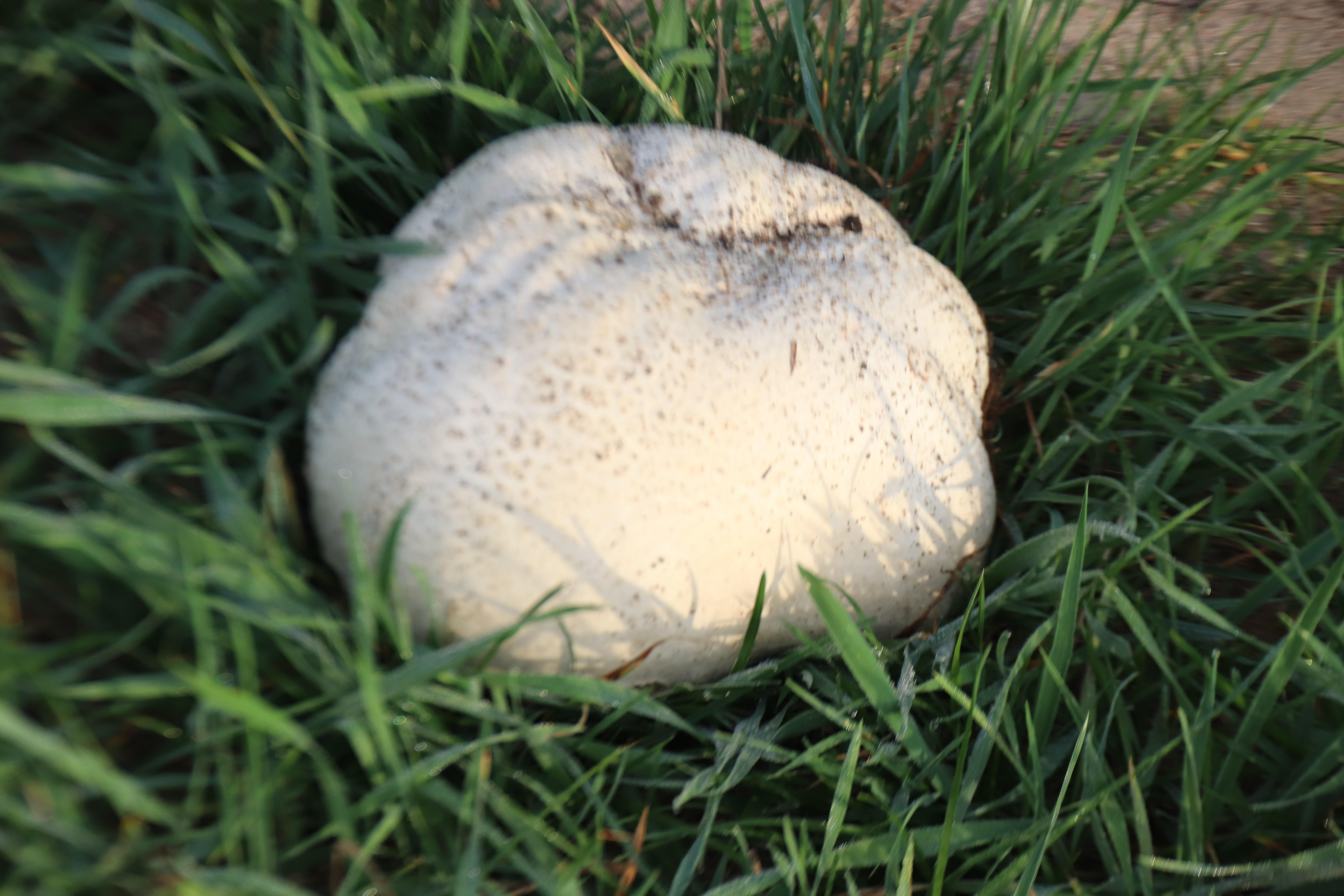
Margo Crane fried slices of puffball fat from a duck she killed.

In my re-reading this time around, I began with the river journey that brought Margo Crane to the Kalamazoo River and followed with her daughter’s story, choosing fictional rather than publication chronology.


Campbell’s characters in these novels, as is the case with those in her short stories, do not dwell on the shores of Lake Michigan, Superior, or Huron. They live in the state’s interior, often in somewhat scruffy, forgotten corners – or, like George Harlan and David Retakker of the Queer Road neighborhood, on land originally farmed by the Potowatomi, then in the 19th century by white settlers, and now, at the end of the 20th century (Q Road is set in the year 1999), threatened by fast-encroaching suburbia. Rachel is there because her mother moored her houseboat on that particular stretch of the river, at the outlet of a freshwater creek, before Rachel was born. George is in the area because his great-grandfather was one of the pioneer white farmers. 


There is always water in Bonnie Jo Campbell's books.

The new book coming next year is simply called THE WATERS.
 

Campbell’s central characters are individuals that psychologists call satisficers rather than maximizers. They don’t ask for everything. Instead they welcome hard work and can live, satisfied, with a lot of imperfection and difficulty, as long as what is most important to them is in their daily lives. Here, for instance, is the boy David:


…If he lived with George, he’d get up early every morning and feed the animals. David would go to school if George insisted, but he would make it clear he’d rather stay home and help with farm work.


Ripening field corn

George inherited his devotion to barn and fields, but boy David and adolescent Rachel love the same acres with equal ferocity. Asked why she married an “old” man like George, Rachel replies, “I wanted his damn land.”

Field horizon


Other characters have different feelings about the land they inhabit or, in the case of George’s friend Tom Parks, the land they have lost. Sally, David’s mother, lives rent-free since her husband, George’s hired man, took off for parts unknown, but Sally longs for California: the house sheltering her and her son and the land surrounding it mean nothing to her. Another young woman, Nicole, feels that marriage brought her life to an end, rather than giving it a real beginning, and she fantasizes about murdering her husband. An older married woman on the same stretch of road, retired from her job as a school bus driver, awaits the coming of aliens from outer space.


Milton converts a barn into a bar and grill, in hopes of bringing people to Jesus, while Steve (whose wife dreams of murdering him) bemoans the monogamy imposed on him by marriage. Neither Steve nor Milton can get anywhere with Rachel, although both of them try. They just don’t have anything she wants. 


History, both recent and long ago, comes into the picture also in the minds of the key characters: the Potowatomi, marched off their ancestral lands in a previous century; a schoolteacher driven away when it was discovered she had been “in a sinful way” with one of the neighborhood’s farmhands; a barn consumed by fire when the husband of the wife whose family built it ignored her warnings and filled the barn with fresh hay not yet dry; and a tornado that blew away the house the driven-away teacher had lived in. Everywhere, too, graves marked and unmarked, known and unknown.


Q Road conforms to a classic form. Like Greek tragedy, James Joyce’s Ulysses, and Virginia Wolff’s Mrs. Dalloway, the story unrolls in a single 24-hour period. Written in the third person throughout, the novel’s point of view shifts among various characters, and thanks to Campbell’s sympathy for her characters, the reader also is able to feel sympathy for them all, though probably in varying degrees. 


George’s story began with his great-grandfather and will continue on this land as long as he lives, whereas Q Road will doubtless be only a dusty chapter in Sally’s life by the time her life story comes to an end. Rachel’s longing is clearly to imprint herself on the land and incorporate the land’s story into her own. We are also given brief glimpses of this rural world through the eyes of a cat, a bird.


Throughout the 24 hours, from one autumn morning to the following day, woolly bear caterpillars are ceaselessly performing their seasonal migration, crossing the road in an attempt that will end in death for many of them. “It is land they have occupied for centuries,” we are told in the novel’s first paragraph, and throughout the novel the woolly bears’ periodic appearances are remarked in different ways by the various characters.


Wild apples behind old barn are good eating and good keeping.


Later we are told –


Autumn woolly bears didn’t ask for much, just a little protection from automobiles, tractors, stomping livestock, and spiked golf shoes, so they could survive long enough to freeze, thaw, and build a cocoon of silk and their own bristles, so they could make it to that most remarkable of days in late spring when they would awaken into wings and become invulnerable to the old dangers. Next spring, just like this spring and the one before, a good number of the caterpillars would wake up from under logs, spin cocoons, and emerge as small white moths to dance like pieces of ash above a fire, with only a short time in which to mate before dying.


Like the woolly bears, George, Rachel, and David don’t ask for much and are willing to endure anything to hold onto the “little protection” given them by the farm. As we read, we ache for their fears and sorrows and are thoroughly invested in hopes for their future on Q Road.


For the life of me, I cannot understand why this novel is not more widely known and more highly acclaimed. As far as I’m concerned, it belongs in the all-time top rank of Michigan fiction and is a pure American classic for the perfection of its form, its deep and loving knowledge of Midwest farmland past and present, and for characters brought to life on the pages of a book, people who surely “dance like pieces of ash above a fire” in readers’ mind long after the book has been closed – until the next re-reading.


Roadside alfalfa remnants of former hayfield....

Monday, October 17, 2022

The World of Men and Women

New-mown hayfield, Leelanau County, Michigan


The classic Scottish novel, Sunset Song, by Lewis Grassic Gibbon, is one I had never heard of before, so if I’d gone into a bookstore asking for some specific book, it wouldn’t have been this one, and if whatever book I’d asked for wasn’t in stock and I’d left without a serious browsing session, serendipity wouldn’t have had a chance. But as chance determines the large majority of books I read, good fortune had it that this one came into my hands. The cover was attractive. It was called on that cover “The Scottish Masterpiece.” The introduction by Nicola Sturgeon left me no alternative but to turn another page and begin to read the novel.


The story begins in 1911, with a prelude that introduces us to the fictional farming hamlet of Kinraddie and all its folk, a small place of nine households with land leased to farmers carved out of a larger estate. Not on a railroad line or very near a large town, its red clay soil not the easiest to farm, Kinraddie, surrounded by woods and guarded by the nearby Grampian Mountains, has honeysuckle and rabbits and birds, and its fields are worked with teams of horses, wagons of grain then taken to the local mill. The outside world seems so far away it might be on another planet. 


Young Chris Guthrie is the novel’s central character. The Guthrie family, John and Jean and their six children, leave the country up by Aberdeen when John loses the lease on his land due to an outbreak of temper against a member of “the gentry,” and the family comes to Blawearie in Kinraddie. Between John and Will, his eldest, whom he drives like a beast, there is no love lost. The girl Chris, Will’s sister (quean is the old Scottish word for girl, used throughout the novel, as a “full-grown, responsible male” is called a childe), discovers the world of books at school and for a while has ambitions to become a teacher and escape Kinraddie, but her dreamy side is also captured by her surroundings, the fields and woods and neighbors and the old standing stones, so that she feels herself two different people.


Though her mother's own life hardly seems enviable, Jean tells the girl there is more to life than books. The life the mother loved and misses, however, was the brief period of freedom between childhood and motherhood – “the countryside your own, you its, in the days when you’re neither bairn nor woman.” And so Chris Guthrie finds it, after first her mother dies and then her father and she hires a woman to do the indoor work while she herself works in the fields.


Then one New Year’s Eve she becomes Chris Tavendale, wife of Ewan.


So that was her marriage, not like waking from a dream was marrying, but like going into one, rather, she wasn’t sure, not for days, what things they had dreamt and what actually done—she and this farmer of Blawearie who could stir of a morning at the jangle of the clock and creep from bed, the great cat, and be down the stairs to light the fire and put on the kettle. She’d never be far behind him, though, she loved even the bitterness of those frozen mornings, and a bitter winter it was, every crack and joint of the old house played a spray of cold wind across the rooms. He’d be gone to the byre and stable as she came down and sought out the porridge meal and put it to boil, Blawearie’s own meal, fine rounded stuff that Ewan so liked. She’d leave it to hotter there on the fire and then bring the pails from the dairy and open the kitchen door on the close and gasp in the bite of the wind, seeing a grey world on the edge of morning, the bare stubble of the ley riding quick on the close, peering between the shapes of the stacks, the lights of the lanterns shining in byre and stable and barn as Ewan feeded and mucked and tended horses and kye.


-      Lewis Grassic Gibbon, Sunset Song


Contented and even joyous these two were, working side by side and making love besides.


The times, however, as always, bring change. More and more machines appear, on the roads and in the fields. The “Great War” comes, at first something far away that barely seems to concern Kinraddie, but then pushing and pulling on even their quiet rural lives and drawing men away to be killed in faraway France. Rumors of war atrocities and urgings to patriotism pit neighbor against neighbor. Even the appearance of the countryside changes, as to feed the war and the machines the woods are all cut down. New trees will be planted, but no one alive in the second decade of the twentieth century will live to see those trees as a two-hundred-year-old mature forest.


Alongside changes, though, some things stay the same, and one of the abiding facts of life is that lovemaking leads to babies. John Guthrie had ever loved his quean’s golden hair, and Ewan and Chris loved each other bodies, too, but without any means of contraception other than abstinence, men’s and women’s choices put them between a rock and a hard place – “nothing but a wife you hardly dared touch in case you put her in the family way….” And so Jean Guthrie ends her own life and that her of last-born, the twins, with poison … and John Guthrie is tempted by the body of his own daughter … and Ewan Tavendale, home on leave from the army and become a coarse stranger to Chris, tells her he might better have stayed in town and spent the night with a “tart.” Some of his anger and hatred came from the war, yes, but between Chris and Ewan also came the hardship of abstinence. It was not to abstain that they had married, after all!


Not work in the house or in the fields it was that starved these couples of love but the impossibility of limiting their families. This is not at all a “theme” of the novel or one of its overriding “messages,” so it’s nothing a literary critic would point out, but as a reader in 2022 when reproductive rights are being seriously challenged in the United States, as elsewhere, I see the tragedy of these couples’ lives standing out sharp and clear. 


Men and women. The marriage bond. Children can strengthen the bond, if children are desired. Children can also drive apart two people brought together by desire if those children come too fast or too many or before the lovers are ready for them or after they feel their family is complete. 


Both couples in this novel came together in love and began married life in love, but the facts of life conspired to make enemies of them. Alternatives were not available to them in the early twentieth century. Are we now to make alternatives once again unavailable and once again turn too many marriages to battlegrounds? My own happy life with the Artist would never have survived six children!


Of course there is much more to the novel than pregnancy vs. abstinence. There are the charming place names, Peesie’s Knapp one of my favorites. There are the eccentric locals, from the “dafties” that board with Mistress Munro to the philandering minister of the kirk to the atheist and pacifist, Rob of the Mill. And there is the countryside itself, the beauty of the land that Ewan and Chris both so love.


So she went down to the shore, the tide was out, thundering among the rocks, not a soul on the beach but herself, gulls flying and crying, the sun strong and warm. She sat on a seat in the glow of it and shut her eyes and was happy. Below her feet the ground drummed and tremled with reverberations from that far-off siege of the rocks that the sea was making out there by the point of the bay, it was strange to feel it and be of it, maybe folk there were who felt for the sea as last night she had felt in the rain-drenched fields of Kinraddie. But to her it seemed restless, awaiting and abiding nowither, not fine like the glens that nestled and listened high up in the coarse country, or the parks sun-heavy with clover that awaited your feet at evening.


Chance. Happenstance. Serendipity. My reading comes as much by these means as any others, and I am glad of it.